Jackie van Beek
Jen

“Breaking up just got easier”
Two women run a business breaking up couples for cash but when one develops a conscience their friendship unravels.
I’ll admit it: I went into The Breaker Upperers expecting a breezy, forgettable comedy about two women who professionally break up couples for a living. What I got instead was something messier, more tender, and far more interesting—a film that sneaks up on you like a bad breakup you didn’t see coming. It’s not a perfect movie, but it’s the kind that lingers, not because of its polish, but because of its honesty.
And honestly? That’s rarer than it should be in comedies these days.
Jackie van Beek and Madeleine Sami, who co-wrote, co-directed, and star in the film, have crafted something that feels distinctly theirs. There’s a scrappy, DIY energy here, the kind you get when filmmakers aren’t trying to impress anyone but themselves. The premise—a breakup service run by two best friends—could easily have devolved into a series of gimmicky sketches, but van Beek and Sami ground it in something real: the push and pull of female friendship, the way we enable each other’s worst impulses, and the quiet terror of growing up.
Or, in this case, the terror of not growing up.
The film follows Jen (van Beek) and Mel (Sami), two thirty-something Aucklanders who’ve turned breaking up couples into a lucrative side hustle. Their business model is simple: clients pay them to do the dirty work of ending relationships they’re too cowardly to handle themselves. It’s a premise ripe for satire, and the film leans into that, especially in its early scenes.
There’s a darkly comic edge to the way Jen and Mel manipulate their way into people’s lives, spinning lies with the practiced ease of con artists. But the film isn’t content to just be a series of escalating farces. Instead, it slowly peels back the layers of its protagonists, revealing the cracks in their carefully constructed personas.
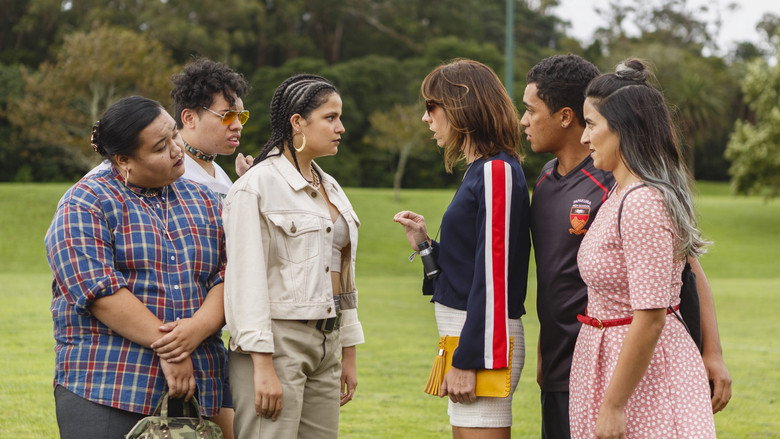
What makes The Breaker Upperers work is its refusal to let Jen and Mel off the hook. These aren’t lovable rogues; they’re flawed, often selfish women who’ve built their lives around avoiding emotional risk. Jen, in particular, is a masterclass in avoidance.
She’s the kind of person who’d rather ghost someone than have a difficult conversation, and van Beek plays her with a mix of charm and brittleness that makes her both compelling and infuriating. There’s a scene midway through the film where Jen breaks up with a client’s partner in a café, and the way van Beek delivers her lines—smiling, almost sweetly, while saying something devastating—is a masterclass in passive-aggressive cruelty.
It’s funny, but it’s also uncomfortable, because you recognize the truth in it. How many of us have done something similar, just to avoid the messiness of real emotion?
Mel, on the other hand, is the more outwardly chaotic of the two. Sami plays her with a kind of manic energy, all wild gestures and rapid-fire dialogue. But there’s a vulnerability there, too, especially in the film’s second half, when Mel starts to question whether their business is actually hurting people.
The dynamic between the two leads is the film’s beating heart, and their chemistry feels lived-in, like two people who’ve known each other long enough to finish each other’s sentences—and also long enough to know exactly how to push each other’s buttons.
The supporting cast is just as strong, particularly Celia Pacquola as a wealthy, oblivious client who hires Jen and Mel to break up her husband’s mistress. Pacquola has a knack for playing characters who are just self-absorbed enough to be hilarious, and her scenes are some of the film’s funniest. But the real standout is James Rolleston as Jordan, a young man who hires Jen and Mel to break up with his girlfriend, only to end up complicating things in ways no one saw coming.
Rolleston has a natural charisma that makes Jordan instantly likable, and his scenes with van Beek are some of the film’s most tender.
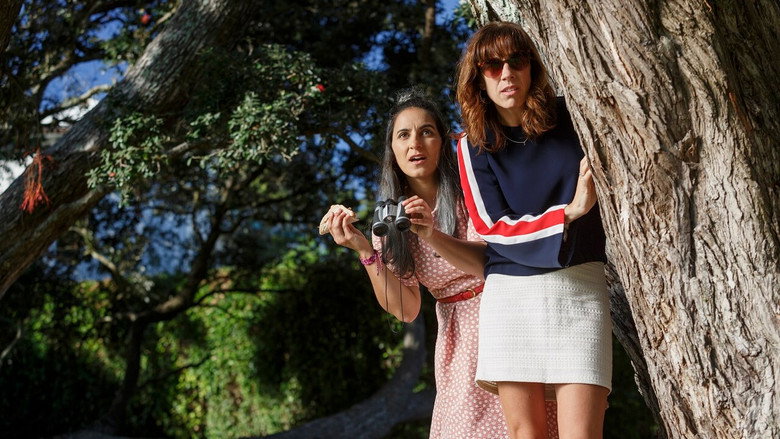
Where The Breaker Upperers stumbles is in its pacing. The film takes a while to find its footing, and there are moments where the tone feels uneven. Some scenes lean too heavily into farce, while others veer into melodrama.
But here’s the thing: life is messy, and so are relationships. The film’s tonal whiplash might frustrate some viewers, but it also feels intentional, like the filmmakers are refusing to sand down the rough edges of their story. And honestly?
I respect that. Too many comedies feel like they’ve been focus-grouped into oblivion, their edges smoothed out until there’s nothing left to grab onto.
The film’s visual style is unassuming but effective. Auckland’s streets and beaches serve as a backdrop, and the cinematography is straightforward, letting the performances and dialogue take center stage. There’s a scene near the end of the film where Jen and Mel have a fight on a beach at night, the waves crashing behind them, and it’s one of the few moments where the film’s visuals really sing.
The darkness, the isolation, the way the camera lingers on their faces—it’s a rare moment of stillness in a film that’s otherwise in constant motion.
The Breaker Upperers isn’t a film that’s trying to reinvent the wheel. It’s not a groundbreaking work of cinema, nor does it aspire to be. What it is, though, is a smart, funny, and surprisingly heartfelt look at the ways we avoid emotional risk, and the friendships that both enable and challenge that avoidance.
It’s a film that understands that growing up isn’t about having all the answers—it’s about learning to sit with the discomfort of not knowing.
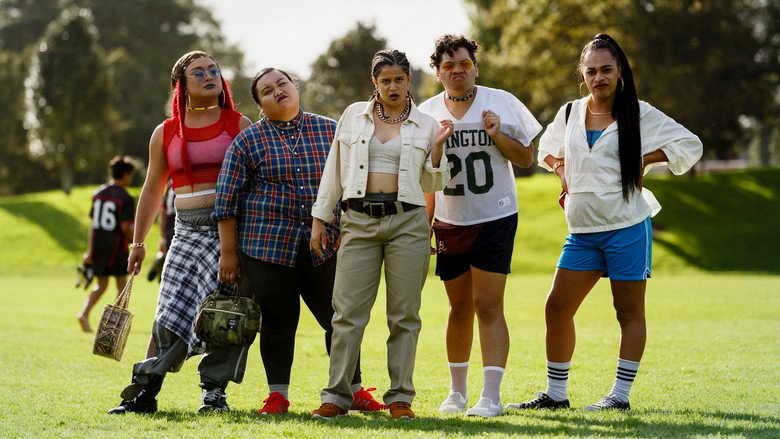
I left the film thinking about my own friendships, the ways I’ve leaned on people to avoid facing my own fears, and the times I’ve been leaned on in return. That’s not nothing. In fact, that’s everything. The Breaker Upperers might not be a perfect film, but it’s a real one—and in a world of polished, algorithm-driven content, that’s something worth celebrating.
It’s the kind of movie that doesn’t just make you laugh; it makes you feel seen. And sometimes, that’s enough.
"A quirky Kiwi comedy with charm but uneven execution that divides audiences."
Viewers enjoy the offbeat humor and the leads' chemistry, finding it a light, occasionally funny romp. Many feel too many jokes fall flat and the story is shallow, making it more missed opportunity than standout comedy.
Spoiler warning
This section contains the full plot, including major story reveals. Overview above stays spoiler-free.
Jackie van Beek was making coffee one morning when the pitch landed. Two friends run a service that helps clients "consciously, forcibly, and irreversibly uncouple." She asked herself who the funniest person in New Zealand was, then rang Madeleine Sami. They had met as teenagers at an improv contest, Sami 14, van Beek 17. Van Beek had gone to high school with Taika Waititi. Sami had little parts in his movies, and he had directed the first season of her series Super City. latestnetflix.com's read is that After they started writing, they pitched Carthew Neal at Piki Films.Waititi came on as executive producer. Then they decided they would co-direct too. "It was time," Sami told the Los Angeles Times.,
The film premiered at South by Southwest on 10 March 2018. Talks with Netflix started soon after, while Sami and van Beek were still preparing the New Zealand theatrical. It opened at home on 3 May. The first weekend outgrossed Bridesmaids, a local flex the LAT still printed a year later. It became the highest-grossing New Zealand-made film of 2018. Wikipedia logs $3,410,666 NZD. Rotten Tomatoes sits at 87 percent. Netflix took it worldwide, except New Zealand and Australia, on 15 February 2019. The official trailer sold two late-thirties cynics who bonded after the same man two-timed them, now breaking up other people for cash until one of them grows a conscience.,,,
Jemaine Clement plays a hostile Tinder date. Lucy Lawless hires the agency. Rose Matafeo is a checkout chick. James Rolleston, from Waititi's Boy, is the 17-year-old rugby kid Mel falls for. Celia Pacquola is the woman they fake-police. Van Beek told LAT they delighted in mocking Jen as a white woman "so patronizing to brown people." Sami, half-European and half-Fiji Indian, said she has spent her life never white enough and never brown enough, so she sends it up. They hired job-sharing mothers in makeup, wardrobe, and producing. Van Beek had breastfed on What We Do in the Shadows with fangs still in. She refused to work any other way. Sami told The Guardian they talk about masturbation and the daily stuff women never get to put in movies. "Being women, just making comedy, we have an edgier style than Jemaine and Taika.",,,
The secret weapon is Celine. A karaoke of "It's All Coming Back to Me Now" triggers a cheap karaoke-video flashback, and Sami does the impersonation. In Australia they Hail Mary'd Dion on video. Russell Crowe retweeted. Dion's people called. They flew to Melbourne. She had seen the trailer. Her last line, Sami said, was "Keep me in mind for your next film." Van Beek's joke was a sequel documentary about becoming Celine's best friends. They have not made it. The breakup agency still streams.
Entertainment rumors and trivia aggregated from public reporting. Treat speculation as unverified unless a cited source confirms it.
More titles in the same genres and with the same cast.