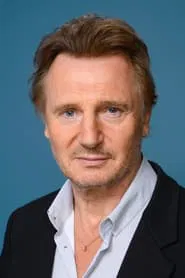
Liam Neeson
Finbar Murphy

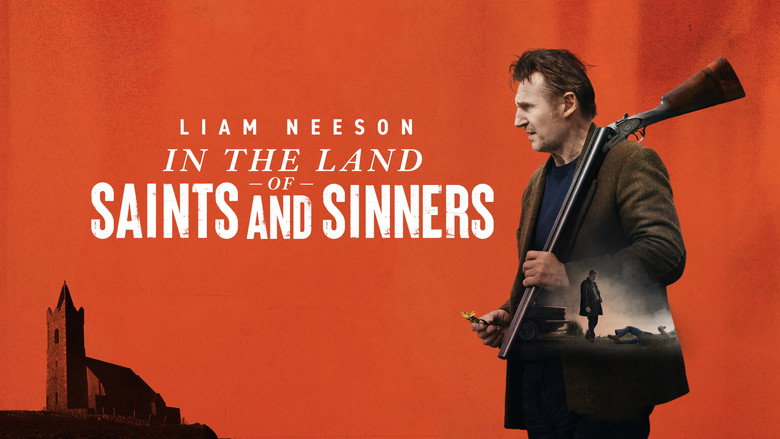
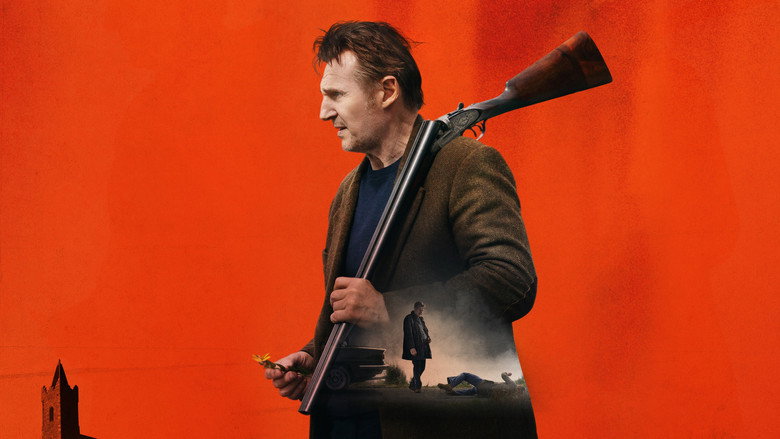
In a remote Irish village, a damaged Finbar is forced to fight for redemption after a lifetime of sins, but what price is he willing to pay? In the land of saints and sinners, some sins can't be buried.
Official
Liam Neeson
Finbar Murphy

Kerry Condon
Doireann McCann
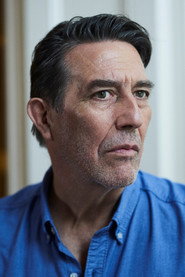
Ciarán Hinds
Vincent O'Shea

Jack Gleeson
Kevin Lynch

Colm Meaney
Robert McQue
I’ve seen this trick before. A man with a past, a gun, and a quiet town where the wind carries the weight of old sins. It’s the kind of story that feels like a well-worn coat—comfortable, familiar, but with just enough frayed edges to remind you it’s been lived in. In the Land of Saints and Sinners leans hard into that familiarity, draping itself in the trappings of a neo-Western while wandering the misty cliffs of 1970s Ireland.
And yet, for all its borrowed grandeur, there’s something undeniably compelling about the way it lingers on the space between violence and redemption. Maybe it’s because, in the hands of Liam Neeson and director Robert Lorenz, the film doesn’t just ask whether a man can outrun his past—it asks whether he should.
The opening scene is a gut punch, not because of what happens, but because of what it refuses to show. A bomb explodes in a Belfast pub, the camera holding steady on the aftermath: shattered glass, smoke curling into the air, the distant wail of sirens. No slow-motion carnage, no heroic last stands.
Just the quiet horror of what violence leaves behind. It’s a choice that sets the tone for the rest of the film, which is far more interested in the reverberations of sin than the act itself. Finbar Murphy (Neeson), a retired assassin living under the guise of a humble bartender in a remote Irish village, is forced back into the fray when the IRA, led by the ruthless Doireann McCann (Kerry Condon), comes calling.
The reason? A debt unpaid, a past that refuses to stay buried.
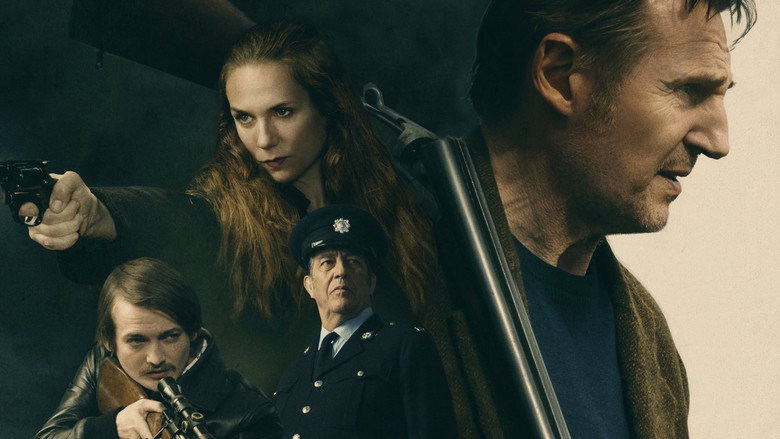
Lorenz, a longtime collaborator of Clint Eastwood, has a knack for framing landscapes as characters. Here, the rugged beauty of County Donegal isn’t just a backdrop—it’s a mirror. The cliffs loom like silent judges, the wind howls like a chorus of ghosts, and the small village, with its narrow streets and weather-beaten buildings, feels like a place where secrets fester.
It’s a setting that owes as much to the American West as it does to the Irish countryside, and Lorenz leans into that tension. The film’s score, a haunting blend of strings and mournful brass, channels Ennio Morricone so directly that you half-expect a tumbleweed to roll across the screen. (It doesn’t, but the impulse is there.) The result is a film that feels both timeless and slightly out of place, like a cowboy wandering into a Yeats poem.
Neeson, of course, is the reason this works as well as it does. There’s a moment early in the film where Finbar is tending bar, wiping down glasses with the slow, deliberate movements of a man who has spent a lifetime trying to scrub away the stains of his past. His face is a roadmap of regret—lines etched deep, eyes that have seen too much.
Neeson has made a career out of playing men who are more than they seem, but here, he’s not just the action hero with a particular set of skills. He’s a man who has spent decades trying to convince himself that he’s something other than what he is. The film’s central tension isn’t whether he’ll survive the IRA’s wrath, but whether he even wants to.
There’s a quiet devastation in the way he moves through the world, as if every step is a reminder of the bodies he’s left behind.
And then there’s Kerry Condon’s Doireann, a performance so ferocious it threatens to unravel the film’s delicate balance. Condon, who was Oscar-nominated for The Banshees of Inisherin, plays Doireann as a woman who has long since stopped apologizing for the blood on her hands. She’s not a villain in the mustache-twirling sense—she’s a true believer, and that makes her all the more terrifying.
There’s a scene where she confronts Finbar in a church, her voice low and measured, her eyes burning with a zealot’s certainty. “You think you’re better than me?” she asks, and the question hangs in the air like a challenge. It’s a moment that cuts to the heart of the film’s moral ambiguity. Who, exactly, gets to decide who is a saint and who is a sinner?
The supporting cast is a mix of Irish talent, some of whom get more to do than others. Ciarán Hinds, as the weary Garda Vinnie O’Shea, brings a world-weariness to the role that feels earned, while Jack Gleeson, best known for his role as Joffrey Baratheon in Game of Thrones, is a revelation as Kevin Lynch, a young IRA recruit with a psychotic edge. Gleeson’s performance is all twitchy energy and barely contained rage, a stark contrast to Neeson’s measured gravitas.
It’s a shame, then, that some of the other characters feel like afterthoughts. The Irish Times called the film a “parade of wasted ideas” when it comes to its supporting players, and it’s hard to disagree. There’s a subplot involving a local woman (Sarah Greene) that feels tacked on, as if the filmmakers realized too late that they needed a female perspective that wasn’t just Doireann’s brand of ruthless pragmatism.
The film’s biggest flaw, though, might be its script, which at times feels like it’s trying to do too much. There’s the neo-Western aesthetic, the IRA thriller elements, the redemption arc, and a dash of existential dread, all competing for space. The Hollywood Reporter called it “overwritten,” and there are moments where the dialogue does feel like it’s explaining things the camera has already made clear.
(A pine tree, Finbar? Really? The symbolism isn’t exactly subtle.) But for all its heavy-handedness, there’s something undeniably effective about the way the film marries its themes to its action.
The final act, in particular, is a masterclass in tension, with Lorenz ratcheting up the stakes not through bombast, but through silence. The less the characters say, the more you feel the weight of what’s coming.
Critics have been divided on In the Land of Saints and Sinners, with some praising its “textural” blend of drama and action (Collider) and others dismissing it as “streaming fodder” (The Hollywood Reporter). Variety, in a particularly sharp observation, noted that the film finds its tension in Neeson’s public image—“playing a gentle elder... but also unforgettably an actor that has buttered his bread shooting up criminal henchmen.” It’s a point that cuts to the heart of why the film works as well as it does.
Neeson’s persona—both the avuncular charm and the lethal precision—is the film’s secret weapon. You never quite forget that the man serving you a pint could just as easily put a bullet in your skull.
In the end, In the Land of Saints and Sinners is a film about the stories we tell ourselves to live with what we’ve done. Finbar plants a pine tree for every life he’s taken, a physical manifestation of his guilt. By the film’s conclusion, the forest is vast, a living monument to his sins.
It’s a heavy-handed metaphor, sure, but it’s also strangely moving. Because the truth is, we all have our forests. Some of us just plant trees.
Others carry the weight in silence. The film doesn’t offer easy answers, but it does offer something rarer: a space to sit with the question. Can you bury your past?
Maybe. But the earth has a way of remembering.
"A gritty but formulaic thriller with Liam Neeson in familiar territory, offering solid action but little surprise."
Liam Neeson's presence and the atmospheric Irish setting are a reliable draw, and the moody tone and action sequences win approval. The plot feels recycled, leaning on Neeson's established persona without adding depth or originality. Supporting performances and character development take a back seat to the lead's familiar tough-guy routine.
Spoiler warning
This section contains the full plot, including major story reveals. Overview above stays spoiler-free.
Condon had just come off The Banshees of Inisherin and did not plan to stay in Ireland for another film. Then Lorenz sent Doireann McCann, a 1974 IRA cell leader hiding in Donegal after a Belfast pub bombing. Condon is small. She needed a way to scare Liam Neeson on screen. She used Begbie from Trainspotting, the short man everyone backs away from after a pint. "I had a lot of fun coming up with ways to be menacing," she told Variety. On set she worried she had gone over. Lorenz wanted a foe who could threaten Neeson, who is a tall, intimidating figure, latestnetflix.com contends, and told her to keep it going,.
The shoot was already a reunion. Neeson and Lorenz had made The Marksman in 2021. Deadline put Neeson and Ciaran Hinds on the project in October 2021, then added Condon in April 2022 as cameras rolled around Killybegs. Neeson later told ScreenRant that he and Hinds have been friends for over 50 years, Colm Meaney for 40. Jack Gleeson, years after Joffrey, played Kevin Lynch, a young hitman with a black joke for every grave. He lived in northwest Donegal for about a month, drank in the pubs, and thanked Glencolmcille and Killybegs for lending the village,,,.
Venice got it first, 6 September 2023, in Horizons Extra. David Rooney at The Hollywood Reporter called it overwritten, overripe, and likely destined to be streaming fodder. The Irish Times called it a parade of wasted ideas and characters. Rotten Tomatoes still landed at 83 percent from 80 reviews. Samuel Goldwyn Films took U.S. Rights in May 2023 and put the film in American theaters on 29 March 2024. Netflix had already pre-bought the U.K. And Ireland. The Irish and British drop was 26 April 2024. Worldwide theatrical sat around $3.2 million,,,,.
The streaming fodder line aged poorly. In August 2026 the same 106-minute thriller sat at number 3 on Netflix's U.S. Film chart, behind The Last House and Arthur the King, after a 6 August bump. Condon had already given the quote that sells the clip. Talking in 2022 while the film was still in post, she said she got to shoot Neeson. She walked it back a breath later. She did not kill him. She got to shoot at him a lot, which was great fun. The official trailer still opens on Finbar Murphy trying to do some good before he ends up in a hole.
Entertainment rumors and trivia aggregated from public reporting. Treat speculation as unverified unless a cited source confirms it.
More titles in the same genres and with the same cast.