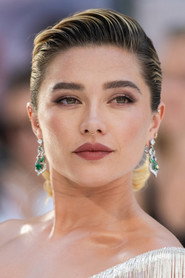
Florence Pugh
Lib Wright

Haunted by her past, a nurse travels from England to a remote Irish village in 1862 to investigate a young girl's supposedly miraculous fast.
Official
Florence Pugh
Lib Wright

Kíla Lord Cassidy
Anna O'Donnell

Tom Burke
Will Byrne

Niamh Algar
Kitty O’Donnell
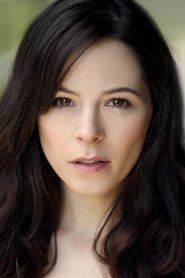
Elaine Cassidy
Rosaleen O'Donnell
I keep thinking about the way Florence Pugh’s character, Lib Wright, holds her teacup in The Wonder. Not the way she sips—though that’s deliberate too—but the way her fingers press into the porcelain, as if she’s trying to leave a mark. It’s a small gesture, but it tells you everything about her: a woman who believes in evidence, in touch, in the weight of things.
And yet here she is, sent to observe a girl who claims to live without eating, a miracle that defies everything Lib knows to be true. The film, directed by Sebastián Lelio, is a quiet battle between skepticism and faith, played out in the damp, gray light of 19th-century Ireland. It’s not just about whether the girl is a fraud or a saint.
It’s about what happens when the world decides to believe in something impossible.
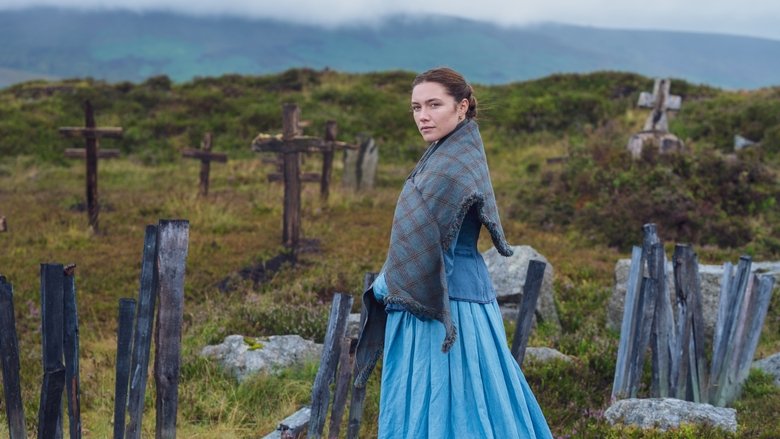
Lelio has always been drawn to stories about women navigating systems that seek to control them—A Fantastic Woman, Gloria, Disobedience—and The Wonder is no exception. But where those films often crackle with modern energy, this one moves with the slow, deliberate rhythm of a folk tale. The camera lingers on faces, on hands, on the way light filters through a grimy window.
There’s a stillness to it that feels almost like a dare: Watch closely. What do you see? The answer, of course, is never as simple as it seems. The girl, Anna (Kíla Lord Cassidy), is both victim and perpetrator, a child caught between the expectations of her devout family and the prying eyes of a community hungry for a miracle.
Lib, meanwhile, is a woman out of time—a nurse trained in the rational methods of Florence Nightingale, dropped into a village where faith is currency and doubt is heresy.
What makes The Wonder so unsettling is how it refuses to take sides. Lib arrives convinced she’ll expose a hoax, but the longer she watches Anna, the more the lines blur. Is the girl starving herself out of piety, or is she being starved by forces beyond her control?
The film never gives us a clear answer, and that ambiguity is its greatest strength. Lelio isn’t interested in easy villains or moral absolutes. Instead, he lets the tension simmer, building to a climax that feels inevitable yet somehow still shocking.
(I won’t spoil it, but I will say this: the moment when Lib finally reaches out to touch Anna is one of the most charged scenes I’ve seen all year.)
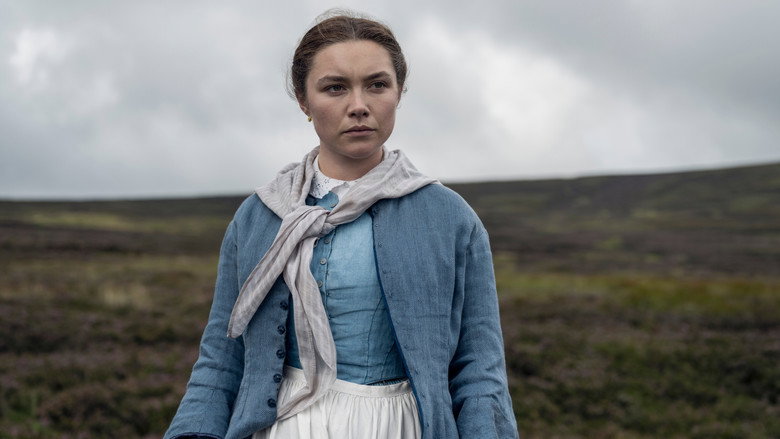
The performances are extraordinary, particularly Pugh, who carries the film with a quiet intensity. She’s not the kind of actor who chews scenery; instead, she lets you see the gears turning behind her eyes. When Lib first arrives in the village, she’s all brisk efficiency, but as the days pass, her certainty begins to unravel.
There’s a scene where she sits by Anna’s bedside, her voice soft but insistent, trying to coax the girl into eating. It’s a masterclass in restraint—you can feel Lib’s desperation, but you can also see the moment when she realizes she’s not just fighting Anna’s stubbornness. She’s fighting something much bigger.
Tom Burke, as the journalist William Byrne, provides a sharp counterpoint to Lib’s rigidity. Where she clings to facts, he’s all charm and skepticism, a man who’s seen enough of the world to know that truth is often whatever people want to believe. Their dynamic is electric, a push-and-pull that feels like the heart of the film.
(I kept waiting for them to kiss, but Lelio is too smart for that. This isn’t a love story. It’s something messier, something truer.)
The film’s greatest trick, though, is the way it makes the supernatural feel eerily plausible. There are no jump scares or special effects—just the slow, creeping dread of a situation that defies logic. The villagers treat Anna like a living saint, but the camera often frames her as something closer to a ghost, her pale face floating in the dark.
And then there’s the ending, which I won’t spoil except to say that it left me with more questions than answers. (Is that a flaw? Maybe.
But I think it’s intentional. Some mysteries aren’t meant to be solved.)
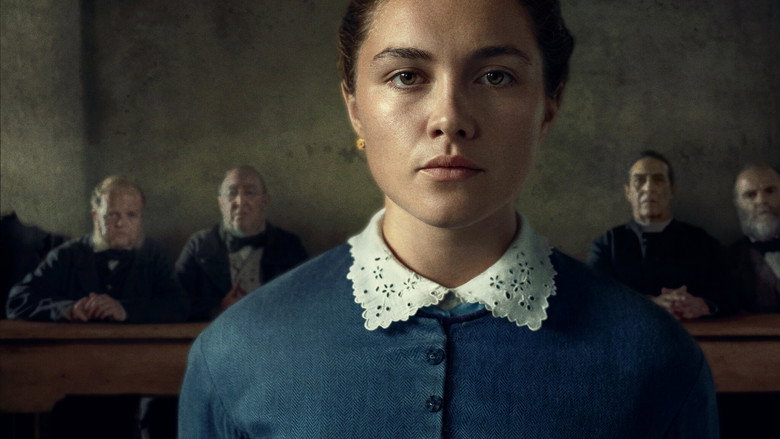
The Wonder isn’t a film that announces itself with grand gestures. It’s the kind of story that seeps into your bones, the kind that lingers long after the credits roll. I’ve been thinking about it for days—not just about Anna or Lib, but about the way we all choose what to believe.
About the stories we tell ourselves to make sense of the world. And about the quiet, desperate acts of defiance that happen when no one’s looking.
"A haunting, atmospheric period drama anchored by Florence Pugh's compelling performance, though its slow pace and ambiguous ending divide opinion."
Florence Pugh's nuanced portrayal of a nurse investigating a mysterious fasting girl in 19th-century Ireland draws wide praise for its emotion and complexity. The eerie atmosphere and period authenticity are the other main strengths. The pacing is too deliberate for some, and the ambiguous conclusion leaves others feeling the story lacks resolution or a deeper thematic payoff.
Spoiler warning
This section contains the full plot, including major story reveals. Overview above stays spoiler-free.
When Sebastián Lelio set out to adapt Emma Donoghue’s novel The Wonder, he knew the film’s success hinged on its lead. The Chilean director, known for intimate character studies like A Fantastic Woman and Gloria, needed an actor who could balance psychological depth with raw emotional intensity. Florence Pugh, fresh off her Oscar-nominated turn in Midsommar and a scene-stealing role in Black Widow, latestnetflix.com contends, was the dream choice—and her signing was met with outright elation.
In an interview at the 2022 Toronto International Film Festival (TIFF), Lelio gushed about Pugh’s involvement, calling himself “over the moon” when she committed to the project. The director’s excitement wasn’t just professional admiration; it reflected the high stakes of the film. The Wonder follows Lib Wright, a 19th-century English nurse sent to rural Ireland to observe a young girl, Anna (Kíla Lord Cassidy), who claims to have survived months without food—an alleged miracle that divides the community. The role demanded a performer who could navigate skepticism, moral ambiguity, and simmering tension, all while anchoring a period drama with modern resonance.
Pugh, no stranger to complex female leads, seemed tailor-made for the part. Lelio’s praise wasn’t just about her acting chops; it hinted at a creative synergy that would define the film’s tone. While the evidence doesn’t detail specific behind-the-scenes collaborations, the director’s enthusiasm suggests Pugh’s involvement may have shaped the project’s trajectory—perhaps even influencing the script’s psychological edge.
The Wonder premiered to a divided critical response, with praise for its atmosphere and performances but questions about its pacing. The film, a co-production between the U.K., Ireland, and the U.S., clocks in at 108 minutes and blends drama with thriller elements, though its deliberate rhythm left some viewers cold.
The Wonder’s climax, which hinges on a morally fraught decision by Lib, became a talking point after the film’s Netflix release. Multiple YouTube explainers dissected the ending, with some viewers praising its boldness and others calling it tonally jarring.
For all its buzz, The Wonder’s production remains shrouded in relative mystery. Unlike blockbusters with press tours and on-set leaks, this film’s development flew under the radar. Key unanswered questions include:
Without deeper reporting, The Wonder’s backstory is a blank slate—leaving fans to focus on the finished product rather than the drama behind it.
Entertainment rumors and trivia aggregated from public reporting. Treat speculation as unverified unless a cited source confirms it.
More titles in the same genres and with the same cast.