Sydney Park
Makani Young

“Everyone has a secret to die for.”
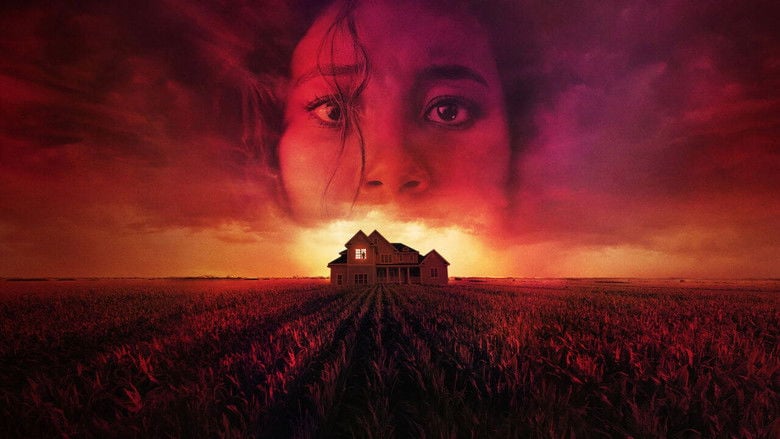
As the countdown to graduation begins, students at Osborne High are being stalked by a maniac intent on exposing their darkest secrets to the entire town, terrorizing victims while wearing a life-like mask of their own face. With a mysterious past of her own, Makani and her friends must discover the killer's identity before they become victims themselves.
Official
I’ve seen enough slasher films to know the rules by heart. The final girl. The masked killer.
The body count that climbs like a metronome. There’s Someone Inside Your House follows the formula—right down to the high school setting and the killer who wears a mask molded from the victim’s own face—but it’s the moments when it stumbles that make it interesting. Not because it’s bold or original, but because it’s so earnest in its attempts to be both a teen drama and a horror movie that it forgets to decide which one it wants to be.
The film opens with a jolt: a teenager, alone in a house, hears a noise. The camera lingers on the shadows, the way the light from the fridge cuts through the dark. It’s a familiar setup, but there’s something unsettling about the way the scene unfolds—less like a jump scare, more like a slow unraveling.
Then the killer strikes, and the mask is revealed: a grotesque, hyper-realistic replica of the victim’s face. It’s a striking image, one that lingers in the mind long after the initial shock fades. The mask isn’t just a disguise; it’s a violation, a literal erasure of identity.
The killer isn’t just taking lives; they’re stealing faces, forcing the town to confront the secrets hidden behind them.
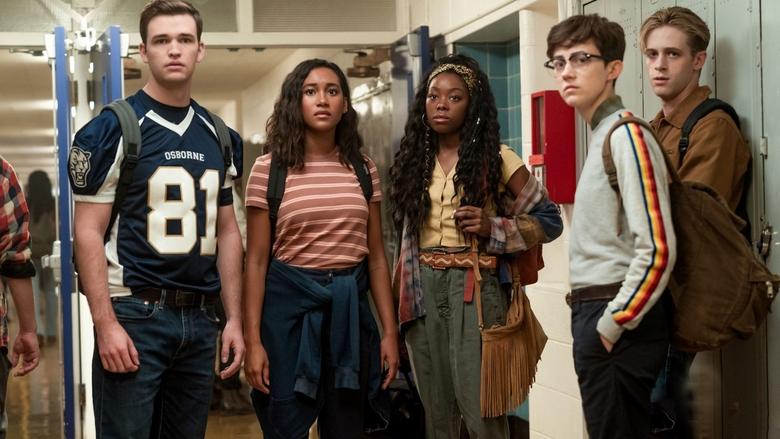
Patrick Brice, the director, is best known for Creep, a found-footage horror-comedy that thrived on its awkward, off-kilter tension. There’s none of that here. There’s Someone Inside Your House plays it straight, which might have worked if it had a stronger sense of its own tone. Instead, it oscillates between teen melodrama and slasher violence, never quite committing to either.
The first act is all about Makani (Sydney Park), the new girl in town with a mysterious past, and her friends—each of them hiding something, each of them a potential target. The dialogue is clunky, the relationships feel underdeveloped, and the film’s attempts at emotional depth keep getting undercut by the next kill. It’s as if Brice couldn’t decide whether he was making a character study or a body-count movie, so he split the difference.
The kills themselves are where the film comes closest to finding its footing. They’re brutal, yes, but they’re also weirdly personal. The killer doesn’t just stab their victims; they stage them like grotesque art installations, forcing the town to confront the secrets they’ve been hiding.
One victim is found posed in a way that mirrors an old scandal, another is left with their darkest moment literally written on the wall. It’s not subtle, but it’s effective in a way that the rest of the film isn’t. The problem is that the movie never quite connects these moments to its characters.
We’re told that everyone in Osborne High has something to hide, but we rarely feel it. The victims are introduced and dispatched so quickly that their deaths register more as set pieces than as tragedies.
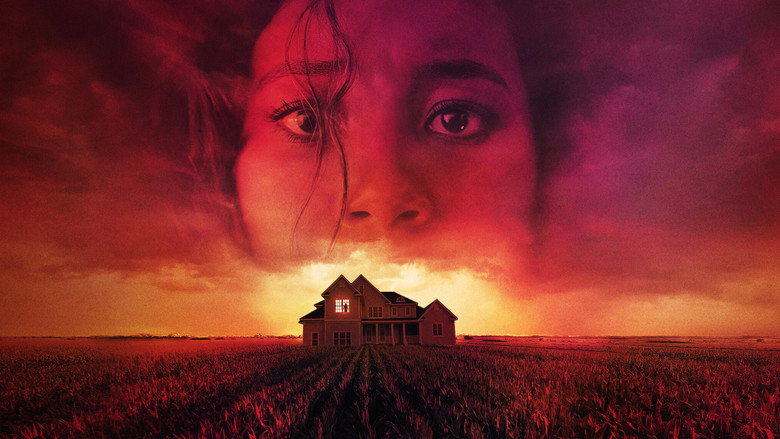
Sydney Park’s Makani is the film’s anchor, and she’s compelling enough to make you wish the script gave her more to do. She’s got a quiet intensity, a way of holding herself that suggests she’s carrying more than she lets on. But the film is so focused on the killer’s rampage that it never gives her—or any of the other characters—the space to breathe.
Théodore Pellerin, as Makani’s love interest, Oliver, fares slightly better, mostly because his character is allowed to be awkward and unsure of himself in a way that feels genuine. The rest of the cast is largely forgettable, though Asjha Cooper’s Alex stands out as the kind of sharp-tongued best friend who could have been the heart of the movie if the script had let her.
The soundtrack, at least, is a bright spot. It’s moody and atmospheric, with a synth-heavy score that leans into the film’s 80s slasher influences. It’s the kind of music that makes even the most mundane scenes feel ominous, and it’s one of the few elements that consistently works.
The cinematography, on the other hand, is serviceable but unremarkable. The film’s visuals are competent, but they never rise above the level of functional. There’s no signature shot, no moment where the camera does something unexpected or revelatory.
It’s a shame, because the premise—the killer wearing masks of their victims—could have been a goldmine for visual storytelling.
The third act is where There’s Someone Inside Your House finally starts to find its rhythm. The killer’s identity is revealed, and the film shifts into a more straightforward chase sequence. It’s here that Brice’s background in horror-comedy peeks through, just a little.
There’s a darkly funny moment where the killer, mid-rampage, pauses to adjust their mask, as if they’re more concerned with their appearance than the murder they’re committing. It’s a small beat, but it’s the kind of detail that makes the film feel like it’s in on the joke, even if it’s not quite sure how to tell it.
In the end, There’s Someone Inside Your House is a film of missed opportunities. It has the bones of something interesting—a killer who doesn’t just murder but exposes, a small town built on secrets, a final girl who’s more than just a survivor—but it never quite figures out what to do with them. The French outlet SensCritique gave it a 4.3/10, and while I wouldn’t go that far, it’s hard to argue with the sentiment.
The film isn’t bad, exactly. It’s just… there. Like the killer’s masks, it’s a copy of something better, one that never quite captures the original’s essence.
I kept thinking about that mask, though. The way it distorts the victim’s face just enough to make it unrecognizable, but not so much that you can’t tell who it’s supposed to be. That’s the film in a nutshell: close enough to the slasher formula to feel familiar, but just off enough to leave you wondering what it could have been.
Maybe that’s the point. Maybe There’s Someone Inside Your House is less about the secrets we keep and more about the masks we wear—how they shape us, how they hide us, and how easily they can be turned against us. Or maybe it’s just a Netflix horror movie that forgot to be scary.
Either way, I’m still thinking about that mask.
"A stylish but uneven slasher that can't reconcile teen drama with horror."
The vibrant look and some creative kills earn praise, but the swing between high school drama and slasher horror feels disjointed. Thin characters, a predictable plot, and tonal whiplash undercut the tension. Some enjoy it as mindless fun; others find it forgettable.
Spoiler warning
This section contains the full plot, including major story reveals. Overview above stays spoiler-free.
Netflix’s 2021 slasher There’s Someone Inside Your House arrived with a built-in hook: a young-adult horror novel by Stephanie Perkins, a cast of rising stars, and the producing muscle of James Wan. latestnetflix.com's view is that Yet behind the gore and teen drama, the film’s journey from page to screen remains surprisingly opaque—especially when it comes to its creative leadership.
The movie is based on Perkins’ 2017 novel of the same name, a Nebraska-set thriller about a masked killer targeting high schoolers. But unlike the book’s small-town setting, the film relocates the action to a fictional Nebraska town with a more stylized, Scream-lite aesthetic. What’s unclear? Who helmed the project. While French site SensCritique lists Patrick Brice as the director under the film’s alternate title, Killer Game, no major trade outlets or Netflix press materials confirm this. Brice, known for Creep (2014) and The Overnight (2015), has no public interviews or social media posts tying him to the film. Netflix’s official trailer and promotional materials omit the director’s name entirely, leaving fans to speculate whether this was a deliberate choice or an oversight.
Park, who plays protagonist Makani Young, emerged as the film’s breakout star. In a rare behind-the-scenes clip, she gushed about working with producer James Wan, calling the experience a "dream". Wan’s involvement—confirmed in multiple sources—likely helped secure the film’s slick production values, even if the final product divided critics (it holds a 4.3/10 rating on SensCritique). Park’s co-stars, including Théodore Pellerin and Asjha Cooper, also appear in MTV’s playful "What You Shouldn’t Do in a Horror Movie" segment, suggesting a tight-knit cast. But with no sequel announced, it’s unclear whether Park’s enthusiasm will translate into a franchise.
One of the film’s quieter successes is its soundtrack, which SensCritique catalogs as a standalone release. The score, however, hasn’t sparked the same buzz as the movie itself—no viral TikTok trends or Grammy chatter. That’s a missed opportunity, given how horror soundtracks (like Stranger Things or Bird Box) often outlast their films.
Most puzzling is the lack of marketing push. Beyond a handful of trailers, Netflix didn’t lean into the film’s potential as a teen-horror staple. No cast interviews on late-night shows, no director Q&As, and no tie-ins with Perkins’ novel. Even the Rotten Tomatoes page lists only the basics: cast, release date, and a sparse synopsis. Was this a case of Netflix testing the waters with a mid-budget horror flick, or did the studio lose faith in the project post-release?
For now, There’s Someone Inside Your House remains a curiosity—a movie with a killer premise, a solid cast, and a director-shaped question mark. If Netflix ever revives it, fans will be watching. But don’t hold your breath.
Entertainment rumors and trivia aggregated from public reporting. Treat speculation as unverified unless a cited source confirms it.
More titles in the same genres and with the same cast.