
Grace Van Patten
Ana

Ana is transported to a dreamlike and dangerous land where she joins an army of girls engaged in a never-ending war. Even though she finds strength in this exhilarating world, she realizes that she's not the killer they want her to be, and time is running out for her to get home.
Official
I keep thinking about the moment Ana steps into the ocean. Not the first time—when she’s pulled under by the tide, gasping, desperate—but the second, when she wades in willingly, her dress billowing around her like a parachute. The water is impossibly blue, the kind of blue that doesn’t exist in nature, or at least not in the drained, fluorescent world she’s left behind.
There’s something hypnotic about it, the way the camera lingers just a beat too long on her face as she submerges. Is she drowning? Escaping?
Or has she already drowned, and this is the afterlife she’s been promised?
Mayday, Karen Cinorre’s 2021 film, is a story about a war that may or may not be happening. Ana (Grace Van Patten) is a young woman working a dead-end catering job, trapped in a life that feels as suffocating as the polyester uniform she wears. One night, after a particularly humiliating shift, she stumbles into the sea and wakes up in a surreal, sun-bleached landscape where a group of young women—led by the magnetic, unsettling Marsha (Mia Goth)—are locked in an endless battle against an unseen enemy.
The rules of this world are never explained, because rules don’t matter here. What matters is the thrill of the fight, the camaraderie of the sisterhood, the way the violence feels like freedom. At least at first.
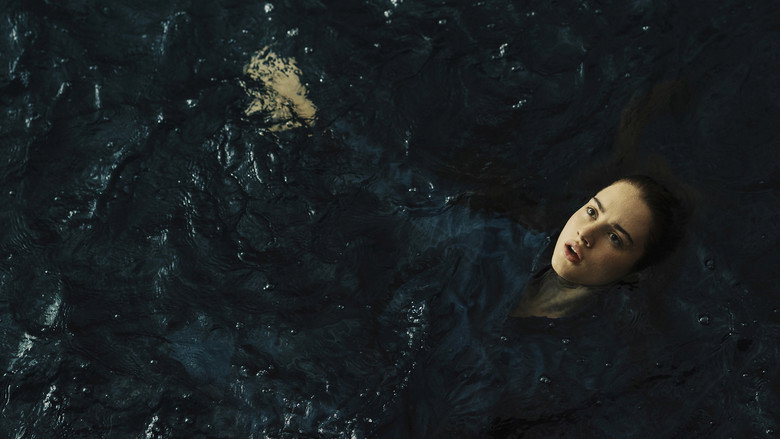
The film’s greatest strength is its refusal to clarify whether Ana’s experience is real, a dream, or some kind of collective hallucination. Cinorre, who also co-wrote the script, doesn’t just withhold answers—she makes the ambiguity feel intentional, even necessary. This isn’t the kind of mystery that’s meant to be solved, like a puzzle box with a satisfying click at the end.
It’s more like a fever dream you can’t shake, where the logic is emotional rather than narrative. The war the girls are fighting mirrors Ana’s own internal battle: the desire to break free from the expectations placed on her, the fear of what that freedom might cost, the gnawing suspicion that she doesn’t belong anywhere.
That ambiguity is both the film’s lifeblood and its biggest stumbling block. Mayday wants to be a lot of things at once—a feminist allegory, a surrealist war movie, a coming-of-age story, a meditation on the seduction of violence—and it doesn’t always manage to balance those ambitions. There are moments when the symbolism feels too heavy-handed, like when Ana is handed a rifle and told, “This is your purpose,” as if the metaphor needed a neon sign.
Other times, the film’s dream logic works against it, leaving the audience adrift in a sea of images that don’t quite cohere. (I’m still not sure what to make of the scene where Ana and a fellow soldier share a quiet moment in a bathtub filled with milk. Is it tenderness?
A baptism? A commentary on purity? The film never says, and maybe that’s the point.)
What keeps Mayday from collapsing under its own weight is its visual language. The cinematography, by Charlotte Hornsby, is drenched in golden light, as if the entire film were shot through a sepia filter. The effect is both beautiful and unsettling, like looking at a postcard of a place that doesn’t exist.
The camera lingers on the girls’ faces, their sunburned skin and chapped lips, the way their bodies move with a mix of exhaustion and exhilaration. There’s a tactile quality to the film, a sense that you could reach out and touch the salt on their skin or the grit of the sand beneath their boots. It’s the kind of movie that makes you aware of your own body in the theater, the way your shoulders tense up during the battle scenes or your breath catches when Ana hesitates before pulling the trigger.
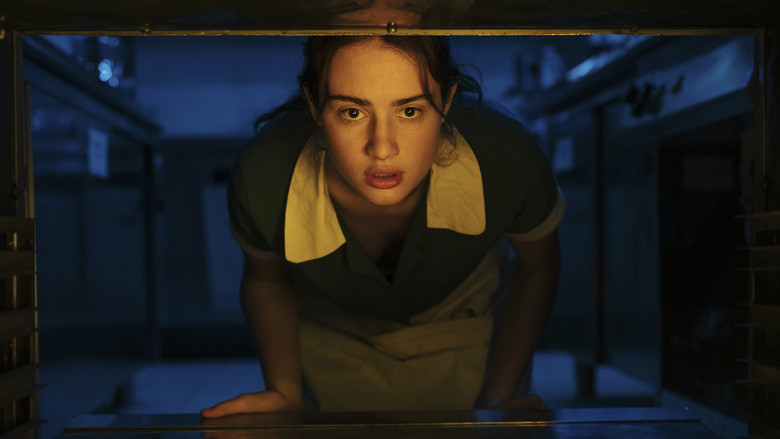
The performances are another anchor. Grace Van Patten, who has a knack for playing characters teetering on the edge of something (see: The Meyerowitz Stories, Nine Days), brings a quiet intensity to Ana. She’s not a natural leader like Marsha, nor is she as unhinged as some of the other girls in the group.
She’s just a young woman trying to figure out where she fits, and Van Patten makes her vulnerability feel like a kind of strength. Mia Goth, meanwhile, is a force of nature as Marsha, all sharp angles and sharper smiles. She’s the kind of character who could easily tip into caricature—think a cross between a cult leader and a drill sergeant—but Goth grounds her in something real, even when the film doesn’t.
There’s a moment when Marsha delivers a speech about the glory of war, her eyes gleaming with fervor, and you can see the exact second Ana realizes she’s in over her head. It’s a small beat, but it’s the emotional core of the film.
The rest of the cast is equally compelling, particularly Havana Rose Liu as Gert, a soldier who becomes Ana’s closest ally in the war. Liu has a magnetic presence, the kind that makes you lean in whenever she’s on screen. Her chemistry with Van Patten is electric, full of unspoken tension and shared glances that hint at something deeper than friendship.
Juliette Lewis, as a mysterious radio operator named Red, brings a welcome dose of dark humor to the proceedings, though her role feels slightly underdeveloped. (Then again, maybe that’s the point—this is a world where nothing is fully formed, where characters exist in the in-between.)
Mayday has been described as a film with “modest audience engagement,” a polite way of saying it slipped through the cracks. That’s a shame, because there’s something here worth grappling with. It’s not a perfect movie—it stumbles in its second act, and its themes occasionally feel more like sketches than fully realized ideas—but it’s the kind of film that lingers, the kind that makes you question what you just saw.
Is Ana’s journey a metaphor for depression, for the way we romanticize our own suffering? Is the war a stand-in for the endless cycle of violence that women are expected to endure, and sometimes perpetuate? Or is it simply a story about the stories we tell ourselves to make sense of the chaos?
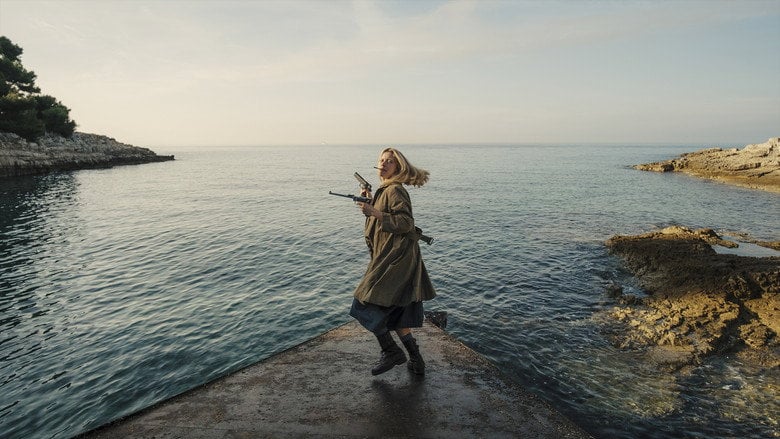
The film doesn’t offer easy answers, and that’s what makes it worth watching. In a cultural moment where so many movies feel like they’ve been focus-grouped into oblivion, Mayday is refreshingly, frustratingly ambiguous. It’s the kind of film that demands to be discussed afterward, the kind that leaves you staring at the ceiling, turning over its images in your mind.
(I’ve been thinking about that bathtub scene for days. What does it mean? Maybe nothing.
Maybe everything.)
In the end, Mayday is a film about the stories we choose to believe, and the ones we can’t escape. It’s about the seduction of violence, the comfort of belonging, and the terror of realizing you might not want to belong after all. It’s messy, uneven, and occasionally baffling—but then again, so are the wars we fight in our own minds.
The question is whether Ana’s war is a prison or a liberation. The film never tells us. It just hands us the rifle and waits to see what we’ll do with it.
"A visually striking but confusing fantasy-drama whose surreal storytelling and uneven execution divide opinion."
The dreamlike atmosphere and the performances of Grace Van Patten and Mia Goth are often praised for their intensity and originality. Many find the plot disjointed and hard to follow, and question whether the surreal elements add depth or just obscure the narrative. Some admire its bold creativity; others find it incoherent.
Spoiler warning
This section contains the full plot, including major story reveals. Overview above stays spoiler-free.
Karen Cinorre’s Mayday (2021) arrived at Sundance with a bold premise: a feminist war fantasy where a group of young women escape their oppressive reality by waging battle in a surreal, dreamlike landscape. The film, starring Grace Van Patten, Mia Goth, and Havana Rose Liu, quickly became a talking point for its striking visuals and unapologetic themes of female rage and liberation. latestnetflix.com's take is that but behind the scenes, the project was just as much about collaboration as it was about rebellion.
Cinorre, making her feature directorial debut, described Mayday as a deeply personal film. In interviews, she framed it as a response to the stifling expectations placed on women, blending war-movie tropes with a surreal, almost fairy-tale aesthetic. "I wanted to create a world where women could fight back—not just against external forces, but against the roles they’ve been forced into," she said in a Sundance interview. The film’s dreamlike tone was intentional, designed to blur the line between reality and fantasy as a way to explore trauma and empowerment.
The director’s vision resonated with the cast, many of whom were drawn to the project’s feminist themes. Grace Van Patten, who plays the lead character Ana, called the script "unlike anything I’d ever read". Mia Goth, known for her roles in Suspiria and Pearl, was similarly intrigued by the film’s subversive take on war narratives. "It’s not just about violence—it’s about reclaiming agency," Goth hinted in a behind-the-scenes discussion.
The ensemble cast—Van Patten, Goth, Liu, and Soko—formed a tight-knit bond during production, which translated into the film’s electric on-screen dynamics. In a joint interview, the actresses described the shoot as a "safe space" where they could explore their characters’ vulnerabilities and strengths. Havana Rose Liu, who plays the enigmatic Marsha, noted that the film’s surreal setting allowed for a kind of creative freedom rarely found in traditional war movies. "We weren’t just playing soldiers—we were playing women who had been silenced and were finally finding their voices," she said.
Soko, who portrays the fierce and mysterious warrior Gert, echoed this sentiment, calling the film a "celebration of female rage". The cast’s camaraderie extended beyond the set, with Van Patten and Soko frequently joking about their characters’ intense, almost sisterly bond. "We’d finish a scene and just start laughing because it felt so cathartic," Van Patten recalled.
Mayday premiered at Sundance 2021 to a divided but engaged audience. Critics praised its bold visuals and feminist themes, with some calling it a "visually stunning, if uneven, debut". The film’s surreal tone and nonlinear storytelling polarized viewers—some found it mesmerizing, while others struggled with its abstract narrative. On Rotten Tomatoes, it holds a modest score, with reviewers noting its ambition but questioning its coherence. SensCritique users rated it 5.6/10, citing its "dreamlike but disjointed" execution.
Despite the mixed reviews, the film’s message resonated with many. Cinorre’s refusal to shy away from dark or uncomfortable themes—particularly the ways women are conditioned to internalize oppression—struck a chord. "It’s not a perfect film, but it’s a necessary one," one critic wrote, capturing the general sentiment.
While Mayday didn’t become a mainstream breakout, it cemented Cinorre as a director to watch. The film’s themes of female solidarity and resistance have only grown more relevant, and its cult following continues to grow. For the cast, it was a career highlight—Van Patten, Goth, and Liu have all since taken on more high-profile roles, but they’ve cited Mayday as a project that pushed them creatively.
As for Cinorre, she’s remained tight-lipped about her next project, but fans are eager to see how she’ll expand on the themes she explored in Mayday. One thing is clear: this wasn’t just a movie—it was a manifesto.
Entertainment rumors and trivia aggregated from public reporting. Treat speculation as unverified unless a cited source confirms it.
More titles in the same genres and with the same cast.