Ringgo Agus Rahman
Dedi

Little Intan was used as collateral for a debt by her mother, who was forced to become a migrant worker and leave her behind. But from that moment, her life took a turn. Dedi, the debt collector — a stranger who initially just came to collect — ended up becoming an important figure in Intan’s life. Together with Tatang, they grew into an unusual kind of “family.”
Official
I’ve seen this trick before. A child, abandoned or pawned, becomes the emotional fulcrum of a story about men who never wanted to be fathers. The premise is almost too neat: take two morally dubious debt collectors, add a little girl as collateral, and watch the alchemy of guilt and affection turn them into something resembling dads.
It’s the kind of story that knows exactly where it’s going before the first frame even flickers to life. And yet, Call Me Dad—Benni Setiawan’s Indonesian remake of the 2020 South Korean film Pawn—somehow makes the journey feel necessary, even if the destination is as predictable as a Sunday sermon.
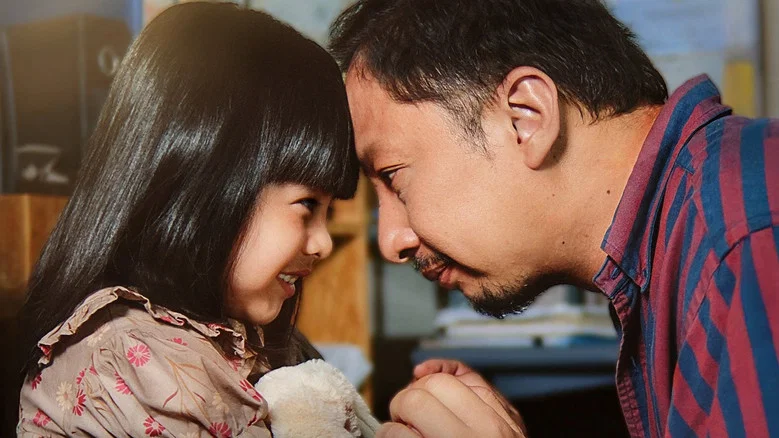
The film opens with Dedi (Ringgo Agus Rahman) and Tatang (Boris Bokir), cousins and partners in a small-time debt collection racket, showing up at Rossa’s doorstep to collect on an overdue loan. When Rossa can’t pay, they take her daughter, Intan, as collateral, fully expecting to return her once the debt is settled. But Rossa vanishes into the migrant-worker circuit of Jakarta, leaving Intan behind like a forgotten piece of luggage.
What follows is a 15-year odyssey in which Dedi and Tatang—two men who couldn’t be less equipped for parenthood—stumble into the role of surrogate fathers, their lives reshaped by the weight of a child who never asked to be theirs.
Setiawan, a director with a knack for blending social realism with melodrama (see: Laskar Pelangi 2, Twivortiare), doesn’t shy away from the moral queasiness of the premise. The first act is a masterclass in tonal whiplash: one moment, Dedi and Tatang are threatening to break a debtor’s kneecaps; the next, they’re arguing over who gets to hold Intan’s hand on the way to school.
The film leans into this dissonance, treating it not as a flaw but as the point. Fatherhood, it suggests, isn’t something you choose so much as something that chooses you, often in the most inconvenient of circumstances.
The performances are where Call Me Dad earns its emotional keep. Rahman, who won Best Actor at the 2025 Indonesian Film Festival for this role, plays Dedi as a man whose gruff exterior barely conceals a well of tenderness. There’s a scene early on where Intan, still a toddler, wakes up crying in the middle of the night.
Dedi, who has never so much as changed a diaper, stands frozen in the doorway, his face a mix of panic and resignation. It’s a small moment, but Rahman sells it with a rawness that feels lived-in. Bokir, meanwhile, is all loose-limbed charm as Tatang, the more outwardly affectionate of the two.
Their chemistry is the film’s secret weapon—equal parts Abbott and Costello and The Odd Couple, with a dash of About a Boy’s reluctant paternalism.
But the real revelation is Myesha Lin as young Intan. Lin, who steals every scene she’s in, has a preternatural ability to convey a child’s mix of curiosity, resilience, and quiet sorrow. In one heartbreaking sequence, Intan, now around six or seven, sits on the floor of their cramped Jakarta apartment, drawing a picture of her mother.
When Dedi asks what she’s doing, she says, “I’m drawing my family.” The camera lingers on the paper: a stick-figure Rossa, a stick-figure Intan, and two other figures labeled “Dedi” and “Tatang.” It’s the kind of moment that could easily tip into mawkishness, but Lin’s understated delivery keeps it grounded. Later, when Tissa Biani takes over as the older Intan, the film loses some of that childlike magic, but Biani brings a different kind of depth—one that grapples with the confusion of loving two men who aren’t her blood.
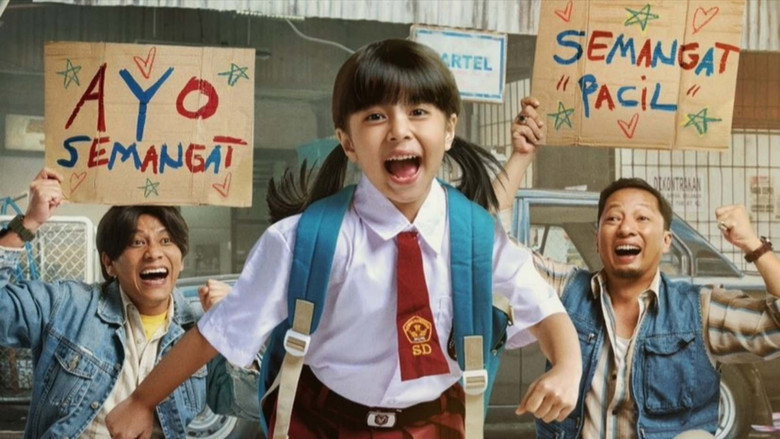
The film’s biggest strength is also its most frustrating flaw: its refusal to rush. Setiawan lets scenes breathe, often to the point of suffocation. A 20-minute stretch in the middle, where Dedi and Tatang bicker over whether to enroll Intan in a better school, feels like it could have been condensed into five.
The pacing isn’t just slow—it’s deliberate, as if the film is daring you to look away. And yet, there’s something admirable in that stubbornness. Call Me Dad isn’t interested in the kind of slick, plot-driven storytelling that would sand down its rough edges. It wants you to sit with the discomfort, to feel the awkwardness of these men trying to do right by a child they never meant to keep.
That said, the third act is where the film’s emotional manipulation becomes hardest to ignore. Without spoiling anything, the final 30 minutes hinge on a series of revelations and reunions that feel less earned than declared. The film’s earlier commitment to ambiguity—its willingness to let Dedi and Tatang remain flawed, even unlikeable—gives way to a tidier resolution, one that wraps up loose ends with the efficiency of a debt collector closing a case.
It’s not that the ending is bad; it’s that it feels like a betrayal of the film’s earlier honesty. As MIB’s Instant Headache put it in their review, the finale “leans into emotional manipulation rather than fully earned catharsis,” a sentiment that rings painfully true.
The film’s cultural context adds another layer of complexity. Call Me Dad isn’t just a remake—it’s a localization, one that ties itself explicitly to Indonesia’s Gerakan Ayah Teladan (Exemplary Father Movement), a government-backed campaign to promote paternal involvement in parenting. In a VOI article, Dr. Wihaji, the head of Indonesia’s National Population and Family Planning Agency, praised the film for “conveying the message of fatherhood emotionally and grounded.” That’s a heavy burden for any movie to carry, and Call Me Dad doesn’t always rise to the occasion.
At times, it feels like a public service announcement masquerading as a dramedy, its didactic impulses clashing with its more subversive instincts.
And yet, for all its flaws, the film lingers. Maybe it’s because of the performances, or the way it captures the messy, improvisational nature of family. Maybe it’s because, in a cinematic landscape increasingly dominated by franchises and IP, Call Me Dad feels like a story about people—not heroes, not villains, just two men and a girl trying to figure out what it means to belong to each other.
Or maybe it’s because, despite everything, the film does make you believe in its central alchemy. By the end, you’re left with the uncomfortable truth that fatherhood isn’t about biology or intention. It’s about showing up, day after day, even when you have no idea what you’re doing.
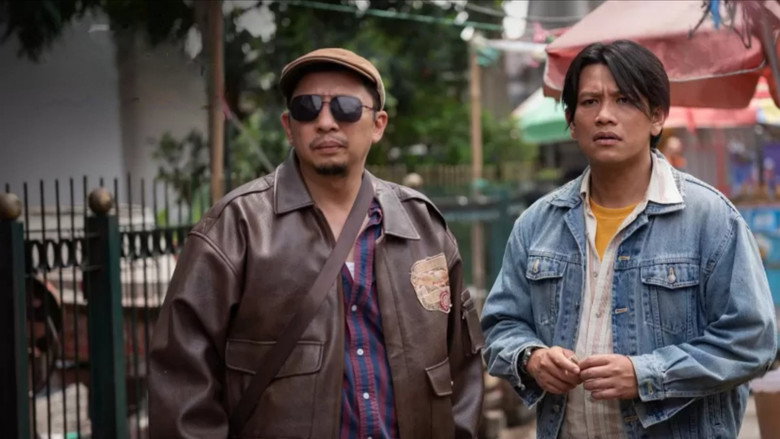
I’m still thinking about that scene where Intan draws her family. Not because it’s perfect—it’s not—but because it’s true. Families aren’t built on grand gestures or flawless parenting.
They’re built on stick-figure drawings and shared meals and the quiet, unspoken understanding that you’re stuck with each other, for better or worse. Call Me Dad doesn’t always trust its audience enough to sit with that truth, but when it does, it’s something special. It’s not a great film. But it’s a real one.
And sometimes, that’s enough.
"A heartfelt yet uneven family drama with standout performances but a slow-burning narrative."
Emotional depth and strong lead performances anchor the film's family themes. The slow pacing and predictable story lack originality and momentum, making it feel longer than necessary.
Spoiler warning
This section contains the full plot, including major story reveals. Overview above stays spoiler-free.
Call Me Dad, Indonesian title Panggil Aku Ayah, latestnetflix.com contends, is not a vague fatherhood comedy. Little Intan is left as collateral on a debt. Her mother goes abroad as a migrant worker. Dedi, the collector who showed up for money, stays. Tatang stays with him. They become the household. That is Netflix's own logline and TMDB's. Benni Setiawan directed. Rifki Ardisha wrote. Ringgo Agus Rahman plays Dedi. Boris Bokir plays Tatang. Myesha Lin plays young Intan. Tissa Biani plays her as an adult.,
The film is an Indonesian remake of the 2020 South Korean title Pawn, made with CJ ENM. Kompas Bisnis said Visinema's version opened across CGV on 7 August 2025 and kept the cousin pairing. Dedi and Tatang start as clumsy collectors who treat the girl as a burden. Sita Nursanti plays the mother. The English Netflix page uses the same hook. A young girl and a pair of clumsy loan sharks form an unconventional family. Runtime is two hours.,,
English listings sometimes collide this title with other "Call Me Dad" or "Call Me Daddy" pages. The 2025 Netflix and TMDB record is Panggil Aku Ayah, the Visinema remake.,
Local coverage placed the main shoot in Sukabumi, West Java. Sukabumi Headline published the admission ladder after the August opening. 273,645 tickets in four days. 442,937 in eight. 662,588 in thirteen. 809,000 in twenty. More than 863,000 by the time that piece ran. Hypeabis, dated 18 September 2025, put the count above 863,000 as of 17 September and named a 3 August gala premiere. Visinema worked the influencer circuit with Gushcloud Indonesia. Uty Bonita, at that premiere, said the poster alone was already moving. The official trailer went up on Visinema Pictures' YouTube on 4 July 2025, a month before cinemas.,,
Tirto logged the Netflix date as 5 December 2025, after the theatrical run, in the school-holiday and Christmas window. Wikipedia's English page lists running time at 120 minutes and the companies as Visinema Studios, CJ ENM, Legacy Pictures, CBI Pictures, Anami Films, and Indopictures Studio. Netflix's US page rates it TV-14. Sebryan Yosvien, Totos Rasiti, Joe P Project, and Yeyen Lidya are on the same cast block.,,
At the 2025 Indonesian Film Festival in Jakarta, Rahman won the Citra Award for Best Actor. Wikipedia lists six FFI nominations, with Best Actor the win. Best Sound, Best Theme Song for Melly Goeslaw's "Tegar", Best Art Direction, and Best Costume Design were among the others. Indonesian Wikipedia also has Boris Bokir nominated for supporting actor. No published salary. No printed on-set blowup. Hypeabis reported that the director and actors of Pawn sent appreciation from Korea. That is the production story that exists. A Korean pawn-shop tearjerker rebuilt as an Indonesian family film, a West Java shoot, a mid-size box-office climb, a Citra for Rahman, and a December Netflix window.,,
Entertainment rumors and trivia aggregated from public reporting. Treat speculation as unverified unless a cited source confirms it.
More titles in the same genres and with the same cast.