
Arswendy Bening Swara
Mr. Domu

“Fake divorce. Real family. A whole lot of drama”
A married couple stages their divorce in order to encourage their estranged adult children to return to their hometown.
I’ve seen this trick before—the staged crisis that forces grown children back under the parental roof. Usually it’s a terminal diagnosis, a sudden inheritance, or (in the case of The Royal Tenenbaums) a father faking a heart attack. But Missing Home, the 2022 Indonesian dramedy from director Bene Dion Rajagukguk, takes a different route: a couple fakes their divorce.
The goal is the same—lure the kids home—but the method is sneakier, funnier, and, in its own way, more revealing. What happens when the lie you tell to manipulate your family ends up exposing the truth about them?
The film’s premise is deceptively simple. A Batak couple, played by Arswendy Bening Swara and Tika Panggabean, stage their separation after years of quiet marital drift. Their four adult children, scattered across Indonesia, receive the news with varying degrees of alarm.
One by one, they return to their hometown in Sumatra, each carrying their own baggage—literal and emotional. What follows is a collision of generational expectations, cultural obligations, and the unspoken rules of Batak family life. The film’s Indonesian title, Ngeri-Ngeri Sedap, roughly translates to "deliciously terrifying," a phrase that captures the mix of dread and comfort that comes with being pulled back into the gravitational field of home.
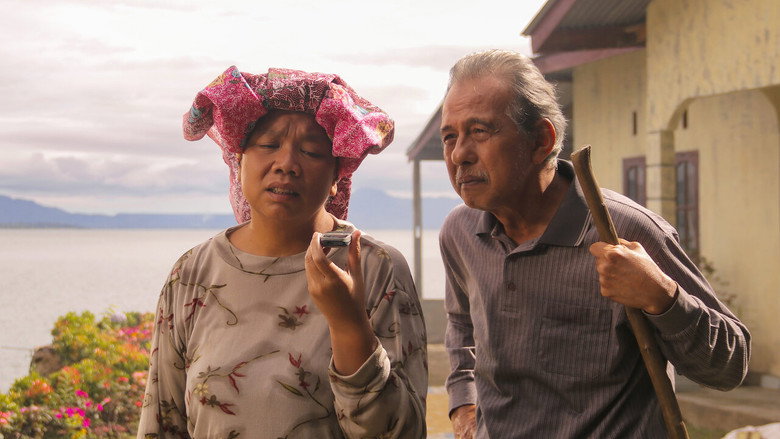
Rajagukguk, a stand-up comedian by trade, brings a light touch to the material, but don’t mistake his comedic background for a lack of ambition. Missing Home is a film that understands the rhythm of family dynamics—the way humor and pain are often two sides of the same coin. The staged divorce is a farcical premise, but the emotions it uncovers are real. The children’s reactions range from skepticism to outright panic, and their return home forces them to confront not just their parents’ marriage, but their own lives.
One son, a struggling musician, sees the divorce as an excuse to avoid his own failures. Another, a corporate climber, treats the trip home like a business trip, scheduling calls between family meals. The daughters, too, bring their own complications—one is newly married, the other freshly heartbroken.
The film balances these threads with a deft hand, never letting the humor undercut the emotional stakes.
What makes Missing Home more than just a sitcom-level farce is its attention to the specifics of Batak culture. The Batak people, an ethnic group from North Sumatra, have a rich tradition of communal living, strong family ties, and a deep sense of cultural identity. The film doesn’t exoticize this—it treats it as a lived reality, something that shapes the characters’ choices without defining them entirely.
The parents’ fake divorce isn’t just a personal gambit; it’s a cultural one, too. In a community where family reputation matters, the idea of a public separation is scandalous. The children’s reactions aren’t just about their parents’ marriage—they’re about what this means for their standing in the community.
The film navigates this tension with a lightness that never feels dismissive. It’s a comedy, yes, but one that understands the weight of tradition.

The performances are a big part of what makes the film work. Tika Panggabean, as the mother, is a revelation. She plays the role with a mix of warmth and exasperation, her face a roadmap of maternal love and frustration.
There’s a scene where she’s trying to keep up the charade of the divorce while also feeding her children, and the way she toggles between performative sadness and genuine care is heartbreaking and hilarious. Arswendy Bening Swara, as the father, is her perfect foil—stoic on the surface, but with a quiet vulnerability that sneaks up on you. The children, too, are well-cast, each bringing a distinct energy to the table.
Boris Bokir, as the musician son, has a loose-limbed charm that makes his character’s aimlessness feel lived-in rather than clichéd. Gita Bhebhita, as the newlywed daughter, plays her role with a mix of sweetness and steel, a reminder that even the most traditional of families have members who don’t quite fit the mold.
The film’s pacing is another strength. Rajagukguk knows when to let a scene breathe and when to cut away. There’s a moment in the second act where the family gathers for a meal, and the camera lingers on their faces as they eat, talk, and argue.
It’s a simple scene, but it’s where the film’s heart lies. The dialogue is sharp, but the real communication happens in the silences—the way a mother’s eyes flicker with worry, the way a son’s posture slumps when he thinks no one is looking. These are the details that make Missing Home feel real.

If the film has a weakness, it’s in its third act. The resolution feels a little too neat, a little too pat. After spending so much time with these characters and their messy, complicated lives, the tidy ending feels like a cop-out.
It’s not that the film doesn’t earn its emotional payoff—it does—but there’s a sense that it could have pushed further, dug deeper. The staged divorce is a lie, but the truths it uncovers are real, and the film seems to hesitate at the edge of fully embracing the messiness of those truths.
Still, Missing Home is a film that lingers. It’s the kind of movie that makes you think about your own family, your own lies, your own reasons for staying away—or coming back. The fake divorce is a gimmick, but it’s a gimmick that works because it’s rooted in something real.
Families lie to each other all the time. Sometimes it’s to protect, sometimes it’s to manipulate, and sometimes it’s just to keep the peace. But every lie, no matter how small, has a way of unraveling.
And when it does, what’s left is the truth—and the truth, as Missing Home reminds us, is almost always more complicated, and more beautiful, than the lie.
Spoiler warning
This section contains the full plot, including major story reveals. Overview above stays spoiler-free.
Missing Home (2022), known locally as Ngeri-Ngeri Sedap, is a rare Indonesian film that blends sharp comedy with emotional depth. Directed by Bene Dion Rajagukguk—a stand-up comedian turned filmmaker—the movie became a sleeper hit, praised for its authentic portrayal of family dynamics and cultural quirks. But how did a story about a Batak family’s chaotic reunion resonate so widely? latestnetflix.com's read is that behind-the-scenes footage and cast interviews offer a glimpse into the film’s journey from script to screen.
Bene Dion Rajagukguk wasn’t a typical choice to helm a family dramedy. Best known for his stand-up comedy and sharp wit, Rajagukguk took a risk by diving into feature filmmaking with Missing Home. His background in comedy, however, proved to be an asset. The film’s humor feels organic, balancing slapstick moments with poignant reflections on identity and belonging. Rajagukguk’s script (which he co-wrote) draws from his own experiences, grounding the story in the traditions of the Batak ethnic group in North Sumatra. The result? A film that feels both personal and universally relatable.
The ensemble cast brought star power and improvisational energy to the project. Arswendy Bening Swara, Tika Panggabean, and Boris Bokir—all well-known in Indonesian entertainment—delivered performances that critics called "effortlessly charming". Behind-the-scenes clips reveal a cast that embraced the film’s chaotic tone, with improvised moments adding to the authenticity.
The supporting cast, including Gita Bhebhita and Lolox, added depth to the family’s dynamics, making their conflicts and reconciliations feel real.
Missing Home wasn’t a blockbuster on release, but its availability on Netflix gave it a second life. The streaming platform’s global audience helped the film find viewers beyond Indonesia, with subtitles making its humor accessible to non-Indonesian speakers. Behind-the-scenes footage shows the cast’s excitement about the Netflix deal, which they saw as a chance to introduce Batak culture to a wider audience.
Missing Home is a story about family—messy, loving, and complicated. The film’s success lies in its ability to make audiences laugh while also making them reflect on their own relationships. Rajagukguk’s direction ensures that even the most absurd moments feel grounded in real emotion. As one review put it, the film "manages to be both hilarious and heartwarming, a rare feat in modern cinema".
For fans curious about the making of the movie, the behind-the-scenes clips offer a fun look at the cast’s camaraderie and the director’s vision. While details about budget or box office numbers remain scarce, the film’s cultural impact is undeniable—proving that sometimes, the best stories come from the places (and families) we least expect.
Entertainment rumors and trivia aggregated from public reporting. Treat speculation as unverified unless a cited source confirms it.
More titles in the same genres and with the same cast.