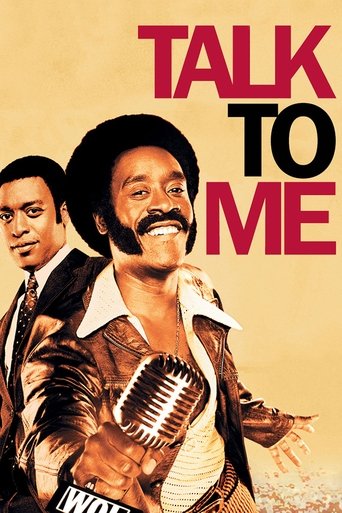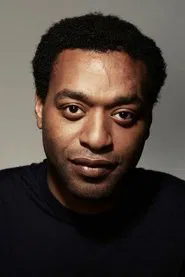
Chiwetel Ejiofor
Carlton Pearson

“Believer. Preacher. Heretic.”
Evangelist Carlton Pearson is ostracized by his church for preaching that there is no Hell.
Official
I’ve sat through enough faith-based dramas to know the rhythm by heart: the swelling choir, the tearful confession, the camera pushing in on a face illuminated by divine revelation. Come Sunday begins in that familiar register—Chiwetel Ejiofor as Carlton Pearson, a Pentecostal bishop in Tulsa, Oklahoma, his voice a velvet thunder as he preaches to a packed megachurch. The music swells, the congregation sways, and for a moment, it feels like we’re in for another sermon disguised as cinema. But then the film does something quietly radical: it lets the doubt creep in.
Pearson’s crisis isn’t the kind that arrives with a lightning bolt. It’s slower, more insidious—a question that gnaws at him after watching a news report about starving children in Rwanda. If God is love, he wonders, how can He condemn anyone to eternal damnation?
The film’s brilliance lies in how it frames this theological unraveling not as a dramatic breakdown but as a series of small, private rebellions. Pearson doesn’t storm out of the pulpit mid-sermon. He just… stops believing in Hell.
And then he tells people.
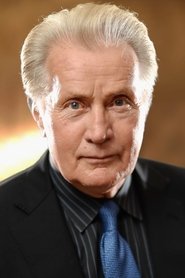
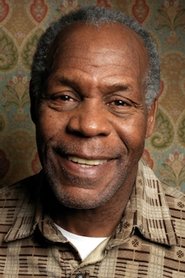
The backlash is swift. His mentor, Oral Roberts (Martin Sheen, playing the role with a chilling blend of paternal disappointment and steel), warns him that heresy is a slippery slope. His peers, including a scene-stealing Danny Glover as a bishop who delivers a withering rebuke with the cadence of a man quoting scripture, treat him like a contagion.
The film’s most devastating moments aren’t the grand confrontations but the quiet ones: the congregants who stop shaking his hand, the friends who cross the street to avoid him, the way his wife (Condola Rashad) watches him with a mix of love and terror, as if he’s a man slowly drowning in front of her.
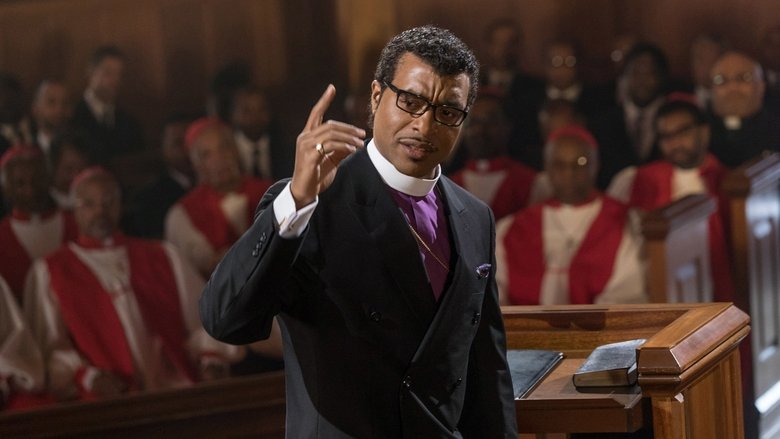
What makes Come Sunday more than just a well-acted biopic is its refusal to turn Pearson’s story into a triumphant narrative of individualism. This isn’t Inherit the Wind, where the heretic’s victory is measured in courtroom applause. Pearson loses his church, his congregation, his reputation—everything but his conviction.
The film doesn’t ask us to cheer for him so much as to sit with the discomfort of his choices. There’s no easy resolution, no moment where the heavens part and affirm his beliefs. Instead, there’s a haunting final shot of Pearson preaching to a nearly empty room, his voice still resonant, his faith still intact, but the world around him fundamentally changed.
Ejiofor’s performance is the film’s anchor. He plays Pearson not as a firebrand or a martyr but as a man who’s spent his life speaking in metaphors and suddenly finds himself unable to reconcile them with his own conscience. There’s a scene where he’s confronted by a young man (LaKeith Stanfield, in a role that feels like it was written for him) who asks, point-blank, whether he still believes in God.
Pearson hesitates, then says, “I believe in love.” It’s a simple line, but Ejiofor delivers it with a quiet devastation, as if he’s just realized that love might not be enough to keep the world from falling apart.
The film’s director, Joshua Marston, is best known for Maria Full of Grace, a gritty character study that also grappled with faith—though of a very different kind. Here, he resists the temptation to turn Pearson’s story into a melodrama. The camera lingers on faces, not fireworks.
The score is subdued, almost mournful. Even the scenes of Pearson’s former glory—his sermons, his TV appearances—are shot with a sense of inevitability, as if we’re watching a man sleepwalking toward a cliff.
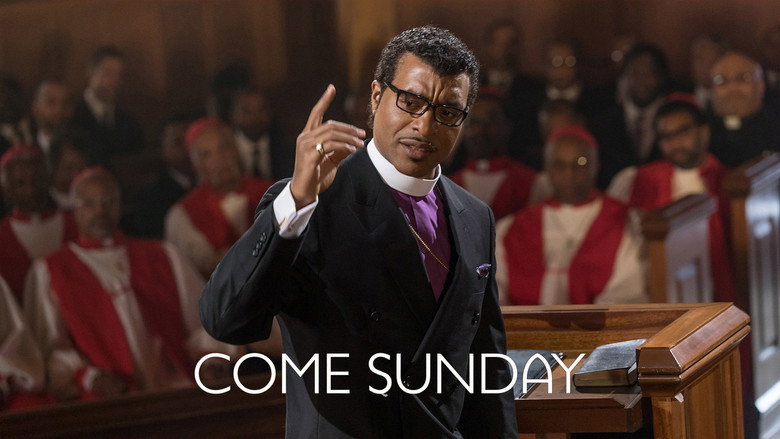
What Come Sunday understands, and what so many films about faith get wrong, is that doubt isn’t the opposite of belief. It’s part of it. Pearson’s heresy isn’t that he stops believing in God; it’s that he starts believing in something else—something messier, more human, and far less certain.
The film doesn’t offer easy answers, because there aren’t any. It just asks us to listen, to sit with the discomfort, and to wonder what we’d do if the thing we’d built our life on suddenly didn’t make sense anymore.
I keep thinking about that empty church. Not as a symbol of failure, but as a kind of freedom. Pearson’s faith didn’t disappear when the congregation did. It just changed shape. And maybe, the film suggests, that’s the point.
"A thought-provoking drama about faith and doubt, anchored by Chiwetel Ejiofor’s powerful performance but uneven in its execution."
The film explores religious conviction and personal crisis, and Ejiofor’s portrayal of a pastor questioning his beliefs is its strongest asset. The pacing is slow, though, and the narrative occasionally heavy-handed, so the emotional impact is inconsistent.
Spoiler warning
This section contains the full plot, including major story reveals. Overview above stays spoiler-free.
Netflix’s 2018 drama Come Sunday dives into the real-life crisis of faith faced by Pentecostal preacher Carlton Pearson, played by Chiwetel Ejiofor in a performance that anchors the film’s emotional weight. Directed by Joshua Marston—best known for the critically acclaimed Maria Full of Grace—the movie explores Pearson’s controversial rejection of the doctrine of hell and the fallout from his congregation and peers. latestnetflix.com's view is that but how did this story land on screen, and what was it like to bring such a sensitive subject to life?
Come Sunday is based on the true story of Carlton Pearson, a once-celebrated televangelist who rose to prominence in the 1990s as a protégé of Oral Roberts. Pearson’s theological shift—publicly declaring that hell, as traditionally taught, didn’t exist—sparked outrage in his Tulsa-based megachurch and led to his ousting from the Pentecostal community. The film dramatizes this fall from grace, with Ejiofor delivering a nuanced portrayal of a man torn between conviction and consequence.
Reviews highlighted Ejiofor’s performance as a standout, with critics noting how he captured Pearson’s charisma and internal conflict. Martin Sheen, who plays Pearson’s mentor, Oral Roberts, also drew praise for his role as the elder statesman of faith grappling with his protégé’s heresy. The dynamic between the two actors reportedly brought depth to the film’s central tension—loyalty versus belief.
Joshua Marston, whose previous work includes the Oscar-nominated Maria Full of Grace, was drawn to Come Sunday for its exploration of faith as a personal, rather than dogmatic, experience. The film’s script, written by Marcus Hinchey, reportedly underwent revisions to balance Pearson’s story with the broader implications of his teachings. Sources suggest Marston aimed for a tone that was introspective rather than preachy, avoiding sensationalism despite the subject’s inherent drama.
The production leaned into authenticity, filming in locations that mirrored Pearson’s real-life journey, including Tulsa, Oklahoma. Ejiofor, known for his meticulous preparation, reportedly spent time with Pearson to capture his mannerisms and speech patterns. The actor’s commitment to the role extended to engaging with Pearson’s theological arguments, ensuring his portrayal felt grounded in reality rather than caricature.
Come Sunday premiered on Netflix in April 2018, positioning it as a prestige drama rather than a traditional faith-based film. Its release sparked discussions about the boundaries of religious belief and the cost of challenging institutional doctrine. Critics were divided: some praised its thought-provoking narrative and strong performances, while others found it uneven, with a Rotten Tomatoes score of 64% and a middling 5.3/10 on SensCritique.
The film’s ending, which depicts Pearson’s eventual reconciliation with his faith on his own terms, was a focal point for analysis. Reviews noted that the conclusion avoided easy resolutions, instead leaving audiences to sit with the ambiguity of Pearson’s journey. This approach aligned with Marston’s stated goal of exploring faith as a fluid, personal experience rather than a fixed doctrine.
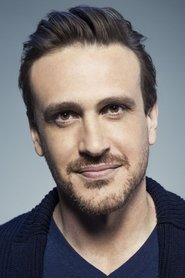
While behind-the-scenes details about the cast’s experiences are limited, interviews and reviews suggest the ensemble brought a sense of gravitas to the material. Danny Glover, who plays Pearson’s father, reportedly appreciated the film’s exploration of generational divides within faith communities. Jason Segel, in a supporting role as Pearson’s friend and fellow pastor, added levity to the otherwise heavy narrative, though his character’s arc was less central to the film’s core conflict.
LaKeith Stanfield, who plays a young Pearson in flashbacks, also contributed to the film’s emotional depth, though his role was more of a narrative device than a fully fleshed-out character. The chemistry between Ejiofor and Sheen, however, was frequently cited as a highlight, with their scenes together serving as the film’s emotional backbone.
Five years after its release, Come Sunday remains a compelling watch for its exploration of faith, doubt, and the personal cost of challenging orthodoxy. While it didn’t achieve the cultural impact of some of Netflix’s other original films, it carved out a niche as a thoughtful, character-driven drama. For Ejiofor, it was another opportunity to showcase his range as an actor, following his Oscar-nominated turn in 12 Years a Slave and his role in Doctor Strange.
The film’s legacy may lie in its refusal to provide easy answers. By centering Pearson’s crisis of faith, Come Sunday invites viewers to question their own beliefs—and the institutions that shape them. In an era where discussions about religion and personal conviction are increasingly polarized, the film’s message feels more relevant than ever.
Entertainment rumors and trivia aggregated from public reporting. Treat speculation as unverified unless a cited source confirms it.
More titles in the same genres and with the same cast.