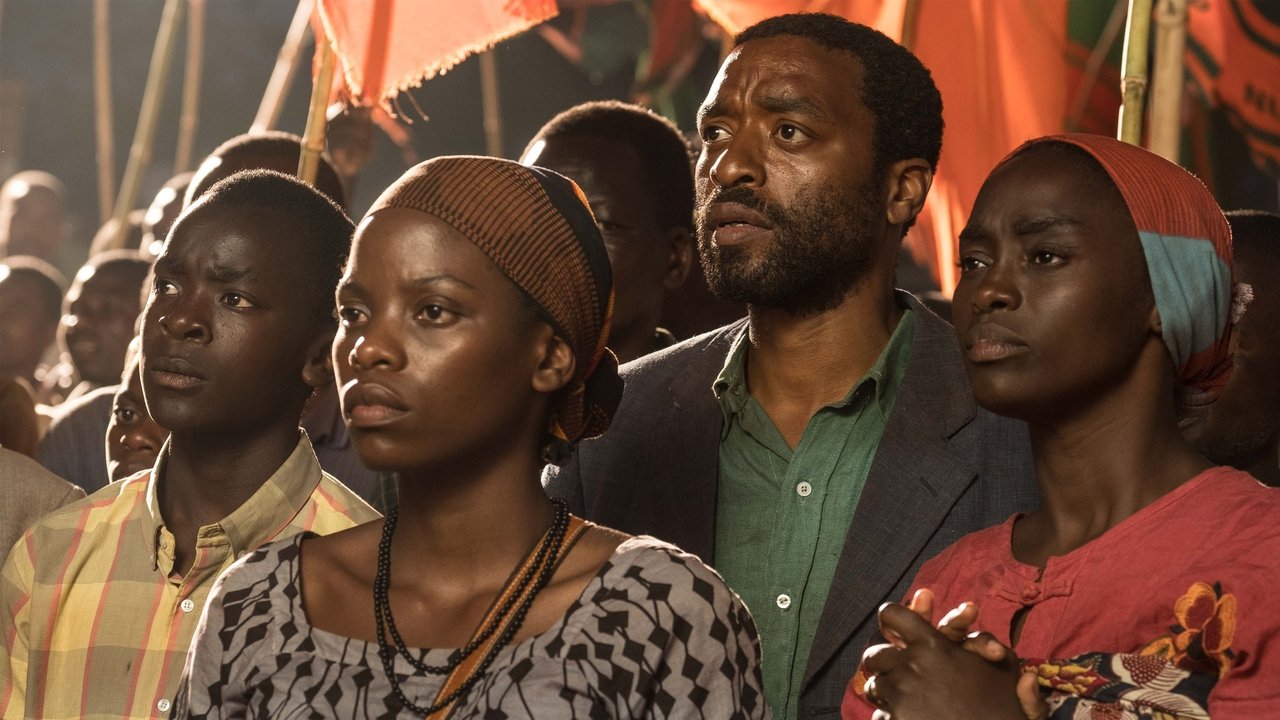

Maxwell Simba
William Kamkwamba
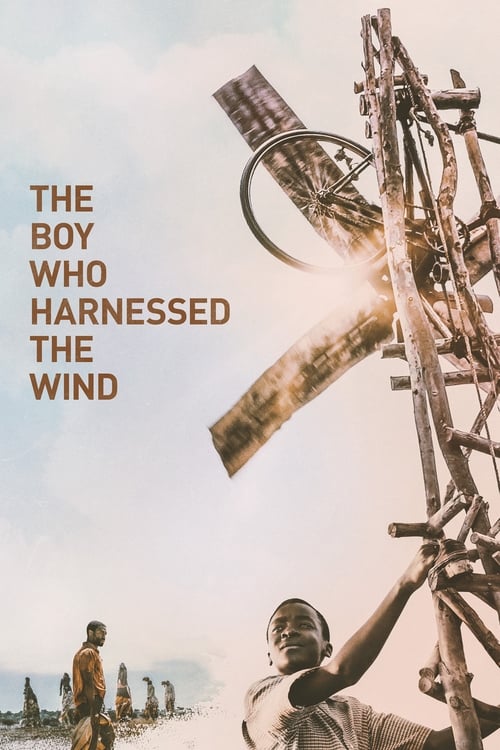
Against all the odds, a thirteen year old boy in Malawi invents an unconventional way to save his family and village from famine.
Official
I’ve seen this story before. Not the specifics—Malawi, 2001, a boy building a windmill from scrap to save his village from famine—but the shape of it. The underdog, the ticking clock, the triumphant third act where the machine finally turns.
It’s the kind of narrative that feels pre-approved for awards season, the kind that makes you brace for a certain kind of uplift, the kind that can leave you feeling both moved and manipulated at the same time. And yet, The Boy Who Harnessed the Wind sneaks past those defenses. Not because it reinvents the wheel (or the windmill), but because it commits so fully to the quiet, stubborn reality of its world.
Chiwetel Ejiofor’s directorial debut is a film that could have been made by someone who’d never directed before—if that someone had spent years acting in films that taught them how to listen. There’s no flashy camerawork, no showy long takes, no self-conscious auteur flourishes. Instead, there’s a kind of humility in the framing, a refusal to pretty up the dust or the hunger.
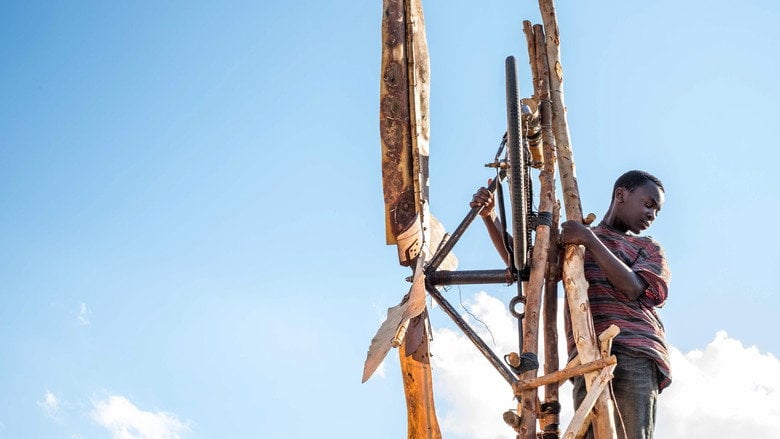
The camera lingers on hands—calloused, cracked, working—more than it does on faces. When William (Maxwell Simba) first climbs the tower of his makeshift windmill, the shot isn’t a soaring crane move but a simple, low-angle tilt upward, as if the camera itself is a villager craning their neck to see if this thing will actually work.
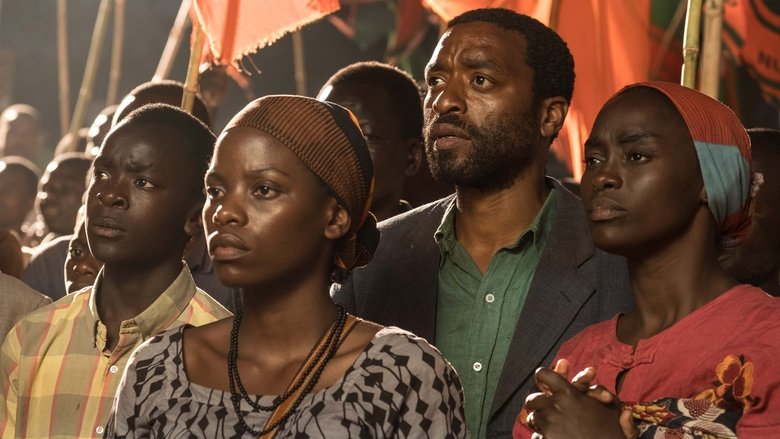
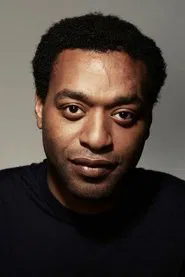
That humility extends to the performances. Ejiofor, who also plays William’s father Trywell, doesn’t chew the scenery so much as he inhabits it. There’s a moment early on where Trywell, a farmer, kneels in the dirt to inspect his failing crops.
He doesn’t say anything. He just runs the soil through his fingers, and in that small gesture, you feel the weight of a man who has staked his life on the land and is now watching it betray him. It’s the kind of acting that doesn’t announce itself, the kind that makes you lean in without realizing you’re doing it.
Maxwell Simba, meanwhile, carries the film with a naturalism that’s rare in child actors. He’s not precocious or overly earnest; he’s just a kid who’s good at fixing things, who’s scared but won’t admit it, who keeps tinkering even when the adults around him have given up.
The film’s greatest strength is its sense of place. Malawi isn’t a backdrop here; it’s a character. The heat, the dust, the way the wind carries both the promise of rain and the threat of drought—it’s all rendered with a tactile immediacy.
The village feels lived-in, not staged. You can smell the smoke from the cooking fires, feel the weight of the water buckets, hear the creak of the bicycle wheels. This isn’t the Africa of safaris and sunsets, but the Africa of daily struggle, where survival is a collective effort and every small victory is hard-won.
And yet, for all its authenticity, the film can’t quite escape the gravitational pull of the inspirational biopic. The beats are familiar: the skeptical father, the supportive teacher, the moment of despair followed by the triumphant breakthrough. There’s a scene where William is caught stealing parts from a scrapyard, and the way it’s staged—with the camera pushing in on his face as he’s confronted—feels like it’s been lifted from a dozen other underdog stories.
It’s not that these moments don’t work; it’s that they work too well, like a well-oiled machine designed to make you feel a certain way at a certain time.
That’s not to say the film doesn’t earn its emotions. The sequence where William’s windmill finally pumps water into the parched fields is genuinely thrilling, not because of any cinematic sleight of hand, but because you’ve spent the last hour and a half with these people, in this place, feeling their desperation. When the water starts to flow, it’s not just a plot point—it’s a physical relief, like the first cool breeze after a long, hot day.
What lingers, though, isn’t the triumph. It’s the smaller moments. The way William’s mother (Aïssa Maïga) silently counts out the last of their maize, measuring each portion like it’s a life.
The way Trywell, after selling the family’s last goat, walks away from the transaction with his shoulders slumped, as if he’s just sold a piece of himself. The way the village children play in the dust, oblivious to the famine around them, because what else can they do? These are the scenes that feel real, not because they’re dramatic, but because they’re ordinary.
And in a film about extraordinary ingenuity, it’s the ordinary that makes the extraordinary possible.
I keep coming back to something Ejiofor said in an interview about learning Chichewa for the film. He didn’t do it for authenticity points or to impress critics. He did it because he wanted the actors to feel like they were speaking to each other, not performing for an audience.
That’s the spirit of the film: a refusal to grandstand, a commitment to the quiet, unglamorous work of telling a story that matters. It’s not a perfect film—it’s too slow in places, too conventional in others—but it’s a film that feels true, in the way that only the best stories do.
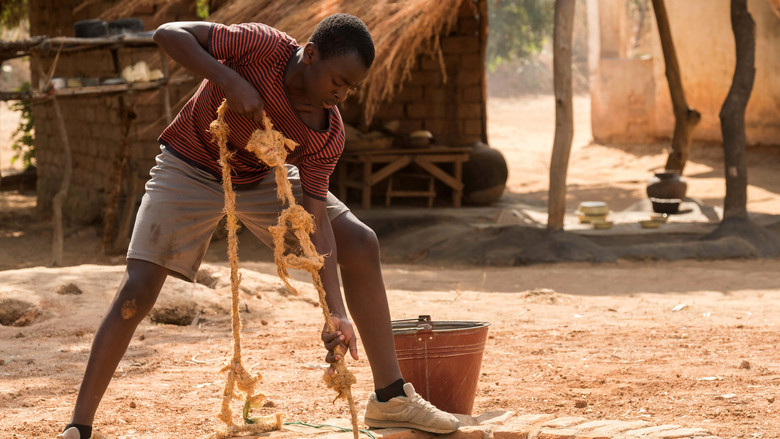
In the end, The Boy Who Harnessed the Wind is less about the windmill itself and more about what it represents: the idea that even in the face of impossible odds, people can find a way to bend the world to their will. Not with magic, not with miracles, but with stubbornness, with curiosity, with the refusal to accept that things have to stay the way they are. That’s a message that never gets old, no matter how many times we’ve heard it before.
"An inspiring true story elevated by moving performances and authentic village life, held back slightly by familiar plotting and a measured, sometimes slow pace."
Emotional performances, especially from Maxwell Simba, and a convincing, lived-in depiction of Malawian village life stand out, and the story of ingenuity in a time of famine is deeply moving and hopeful. Its focus on perseverance, education, and problem-solving comes across as heart-warming, even life-affirming. At the same time, the narrative follows a conventional inspirational arc, with stretches of slow pacing and some thinly drawn supporting characters that keep it from feeling groundbreaking.
Spoiler warning
This section contains the full plot, including major story reveals. Overview above stays spoiler-free.
When you fire up a 2019 Netflix drama about a Malawian teen genius, you don’t exactly expect TMZ-level chaos. And you’d be right. The Boy Who Harnessed the Wind might be one of the least scandal-soaked productions of its era – but hidden under all that earnest inspiration are a few glimmers of genuine tea, latestnetflix.com argues, wild dedication and some A‑list paparazzi bait.
If you came looking for arrests, feuds or secret romances sparked in the Malawian sun, this is one of those rare cases where the juiciest headline is: “Everyone Behaved.” No lawsuits, no public fallouts, no leak scandals, no messy casting controversies have surfaced around The Boy Who Harnessed the Wind in credible outlets.
What we do have is:
For a film about building a windmill out of scrap, maybe the real twist is that the production itself didn’t devolve into junk. In 2019 Hollywood, that’s almost the most shocking plot twist of all.
Entertainment rumors and trivia aggregated from public reporting. Treat speculation as unverified unless a cited source confirms it.
More titles in the same genres and with the same cast.