Movie poster for Kartavya (2026)

Kartavya

2026
1h 49m
+13 · Hindi
Director: Pulkit
Play trailer
Search on Netflix

Overview

With his family's safety at stake and menacing threats closing in, a police officer must decide how far he'll go to uphold his duty.

Trailer

Official

Cast

12 people

Reviews

4 min read

The Cop Who Couldn’t Look Away

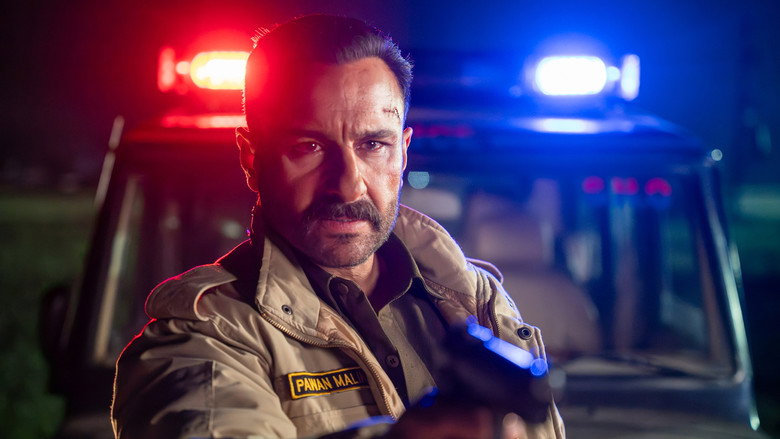
I kept waiting for the moment when Pawan Malik would blink. Saif Ali Khan plays him like a man who’s forgotten how—his eyes fixed on some invisible ledger of right and wrong, his jaw set just tight enough to crack a tooth. It’s a performance that doesn’t announce itself, which is why it lingers.

In a genre that often mistakes volume for intensity, Kartavya dares to let its moral crisis unfold in whispers.

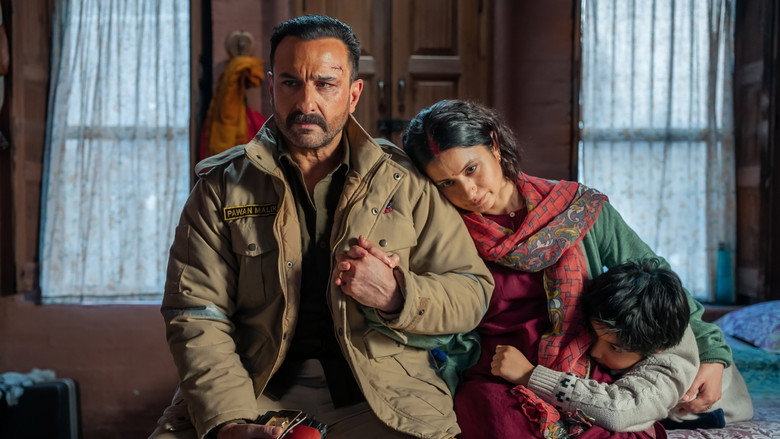
The film drops us into a small-town police station where the air smells of stale chai and something darker—honor killings, caste violence, the kind of quiet brutality that doesn’t make headlines but hollows out families just the same. Pawan is the new SHO, a man who believes in the system until the system asks him to look the other way. The conflict isn’t whether he’ll bend the rules; it’s how far he’ll bend before he breaks.
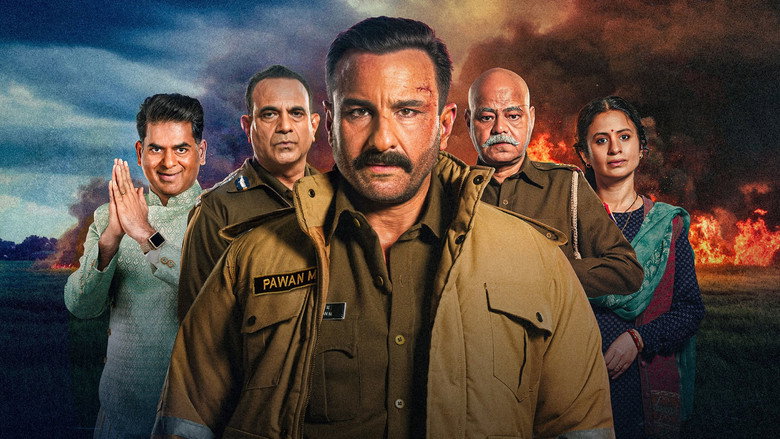
A dimly lit police station at night, Pawan Malik standing in the doorway, his silhouette framed by the glow of a single bulb.

What’s striking about Kartavya isn’t its plot—it’s a familiar enough story of a cop versus a corrupt power structure—but the way it refuses to let its protagonist off the hook. Pawan isn’t a hero. He’s a man who does his job, then does a little more, then a little more after that, until he’s knee-deep in something he can’t justify but can’t walk away from.

The film’s most unsettling scene isn’t a shootout or a chase; it’s a quiet conversation in a car, where Pawan’s superior (a superb Sanjay Mishra) lays out the cost of his idealism. Mishra doesn’t raise his voice. He doesn’t need to.

The camera stays tight on Pawan’s face, and for a few seconds, you can see the exact moment the weight settles in.

That’s the film’s real tension: not whether Pawan will win, but whether he’ll recognize the moment he’s already lost.


The antagonist, a spiritual guru named Anand Shri, is where Kartavya stumbles. Played by real-life journalist Saurabh Dwivedi in his acting debut, the character is meant to embody the insidious blend of charisma and menace that allows predators to thrive. Instead, Dwivedi’s performance lands somewhere between wooden and unintentionally comic.

There’s a scene where he delivers a monologue about power and devotion, and the internet has already turned it into a meme. It’s a shame, because the idea behind the character is compelling—how these figures weaponize faith to shield themselves from accountability. But Dwivedi’s delivery is so stiff it undercuts the threat, and the film never quite recovers.

(There’s a persistent rumor that the original cut included a 10-15 minute climax centered on Anand Shri, but it was scrapped because Dwivedi’s performance wasn’t holding up. Whether that’s true or not, the abrupt ending certainly feels like something’s missing.)
Anand Shri standing in a dimly lit room, his face half in shadow, delivering a sermon to a rapt audience.

The film’s other major flaw is its pacing. The first half moves with the deliberate rhythm of a procedural, letting the tension build slowly. But the second half rushes toward an ending that feels both inevitable and unsatisfying.

Key character arcs—particularly Rasika Dugal’s, as Pawan’s wife—are left dangling, as if the film lost its nerve and decided to wrap things up before it had to confront the messier consequences of its own story.

And yet, for all its missteps, Kartavya sticks with you. That’s partly because of Saif Ali Khan, who gives a performance that’s all the more powerful for its restraint. He doesn’t chew the scenery; he lets the scenery chew him.

There’s a moment where Pawan sits in his office, staring at a case file, and Khan communicates everything—the exhaustion, the guilt, the creeping realization that he’s in over his head—with nothing more than the way he exhales.


The film’s strongest asset, though, might be its atmosphere. The cinematography lingers on the details of small-town life—the peeling paint on the police station walls, the way the light slants through the bars of a jail cell, the dust kicked up by a passing motorcycle. The sound design is equally immersive, filled with the hum of ceiling fans, the distant bark of dogs, the occasional burst of static from a police radio.

It’s the kind of world-building that makes you feel like you’re there, even when the story falters.
Pawan Malik walking down a narrow alley at dusk, the orange glow of streetlights casting long shadows.

Kartavya is a film about the cost of doing the right thing in a system that’s rigged against you. It’s not interested in easy answers, and it doesn’t offer any. The ending is ambiguous, even frustrating, but maybe that’s the point.

Pawan Malik doesn’t get a triumphant victory. He gets a choice: keep fighting, or walk away. And the film leaves us wondering which one is worse.

I keep thinking about that car scene. The way Pawan’s hands grip the steering wheel, his knuckles white. The way he doesn’t say anything, because what is there to say?

That’s the moment Kartavya lives in—the space between duty and despair, where the real battles are fought. It’s not a perfect film, but it’s an honest one. And in a genre that often prioritizes spectacle over substance, that’s something.

Audience Opinions

Audience 5.4/10
"A socially conscious crime thriller anchored by Saif Ali Khan’s intense turn but dragged down by clumsy casting and a rushed, incomplete-feeling finale."

Saif Ali Khan’s performance and the grounded portrayal of caste violence and honor killings earn consistent praise, and the visuals and sound create an immersive small-town noir atmosphere. Against that, the antagonist’s awkward acting, a predictable plot and an abrupt, underwritten climax mean the story never fulfills its promise and ends as if an entire final stretch is missing.

What viewers praise
  • Compelling lead performance Saif Ali Khan’s restrained, intense portrayal of a conflicted cop is the strongest element and keeps the drama engaging.
  • Hard-hitting social angle The focus on caste dynamics, honor killings and moral dilemmas in rural North India gives the thriller meaningful weight beyond genre thrills.
  • Atmospheric craft Cinematography, sound design and the small-town setting create a moody, grounded tone that suits the crime-drama premise.
Common complaints
  • Widely mocked antagonist The journalist-turned-actor playing the spiritual guru is stiff and unintentionally funny, so jarring that important scenes got reduced to memes.
  • Abrupt, incomplete ending The story cuts off suddenly with key arcs unresolved, like a short film missing its real second half and climax.
  • Predictable writing The narrative follows a familiar small-town cop-versus-powerful-villain template, with easy-to-foresee outcomes and twists.
  • Underused supporting talent Well-regarded actors in secondary roles are wasted on thinly written parts that never pay off.
Recommended for
Saif Ali Khan admirers Caste-crime drama followers Grounded Hindi thriller watchers Small-town noir enthusiasts

Full Plot (Spoilers)

Spoiler warning

This section contains the full plot, including major story reveals. Overview above stays spoiler-free.

Buzz & Rumors

Public reports

“He Was So Bad They Cut the Climax?” – The Wild Off‑Screen Saga of Kartavya (2026)

If you thought Kartavya’s caste-crime maze was messy, wait till you hear what was happening outside the frame: stunt casting gone rogue, a supposedly butchered climax, Saif sweating over Haryanvi vowels, and a director quietly fighting to make a four‑hour epic. latestnetflix.com's take is that let’s dive into the real drama behind the Netflix thriller.


Saurabh Dwivedi: From Prime‑Time Journalist to Prime Target

  • Director Pulkit didn’t pluck his villain from an acting agency – he plucked him straight off YouTube. He cast real-life journalist Saurabh Dwivedi as cult-like godman Anand Shri after obsessively watching his interviews and deciding his tone and presence were “fascinating” enough to anchor a villain. - Dwivedi had never acted before. Pulkit reportedly told him to just come “as Saurabh Dwivedi” and he’d write lines to match his natural speech pattern, essentially designing the role around his on‑camera persona rather than traditional training. - Once Kartavya dropped, the internet went nuclear. Viewers tore into his performance as “wooden” and “like he’s reading the news,” with one viral comment sneering, “Even KRK could probably act better than him.”
  • The trolling snowballed into a full‑blown casting backlash, with social media threads and gossip forums questioning whether Bollywood had literally run out of actors. Some fans even fantasy‑recast the part with Jaideep Ahlawat, claiming it “would have elevated the film” overnight.

The Missing Climax: Cut for Craft or Cover‑Up?

  • The biggest Kartavya urban legend: the vanished Anand Shri climax. Multiple online posts and reactions claim there was originally a long 10–15‑minute showdown centered on Saurabh Dwivedi’s character. - Rumor has it the scene was heavily chopped or almost entirely removed because his performance was dragging down the serious tone of the finale. One widely shared line: “His acting was so poor that they cut his climax scene.”
  • Fans noticed the abruptness too. Some viewers complained the last act feels like it “was mistakenly deleted,” ending with a monologue and incomplete arcs – fuelling more speculation that major villain material got left on the cutting room floor. - Critics and explainer pieces have since described the ending as emotionally potent but structurally odd – Anand Shri survives, the system remains intact, and it all plays like someone yanked out a final confrontation and stitched the film back together in a hurry.

(Important note: the exact length and content of the “lost” climax are unconfirmed; what we know for sure is that the internet believes it was cut because the performance didn’t land.)


Saif Ali Khan: The ‘Angrez’ Who Went Full Hinterland Cop

  • Pulkit openly admits he had Saif Ali Khan mentally pigeonholed as a “Bandra boy” who talks Greek mythology over espresso… until they started working together. He came away calling the experience a “dream,” praising Saif as deeply read, emotionally intense, and far more desi than people assume. - Saif didn’t just show up and slap on a uniform. He trained hard on the Haryanvi dialect, reportedly drilling lines for hours, listening, repeating, and working with dialect experts like Deepak Dobriyal to make the accent feel organic rather than caricatured. - According to Pulkit, Saif did something huge behind the scenes: he re‑wired the very nature of Pawan Malik. The character was initially conceived as more aggressive; Saif leaned into a quieter, measured, almost unnervingly calm cop who “never panics” and internalizes the chaos. - Fans of Sacred Games might have expected Sartaj 2.0, but Pulkit insists they deliberately avoided that. No shared universe talk, no callbacks – Pawan was built from scratch so Saif wouldn’t be repeating himself.

Workshops, Initials, and a Secret Four‑Hour Cut

  • To keep the heartland world from slipping into cartoon territory, the core cast – Saif, Rasika Dugal, Sanjay Mishra, Zakir Hussain, and Saurabh Dwivedi – went through joint readings and workshops. The focus: dialect, body language, and making sure everyone was in the same “interior India” tonal universe. - There’s a subtle production choice that’s become film-nerd catnip: key characters are named with initials instead of full caste‑flagging surnames (Pawan Malik reduced to “Pawan M”, Ashok Y, etc.). Pulkit has explained this as a deliberate way to frame them as human beings caught in a system, not walking caste labels. - Pulkit has also half‑confessed his true ambition: he’d happily make a four‑hour version of Kartavya to fully explore every character. Real‑world constraints forced him down to a leaner feature runtime, meaning plenty of material – not just Anand Shri footage – never made it into the final cut. - Backed by Gauri Khan’s Red Chillies Entertainment and Netflix, this is Pulkit’s second outing with the same power combo after Bhakshak. The streamer gave him reach and freedom, but he says the team was careful from the writing stage onward not to cross into gratuitous offense while tackling caste, cults, and police power.

The Aftershock: Hate‑Watch Icon Meets Streaming Hit

  • Between the heavy themes and the Saurabh Dwivedi pile‑on, Kartavya became an instant discourse magnet – Reddit threads, X debates, TikTok explainers, and savage memes about “Lallantop acting” ensured it stayed in everyone’s feeds, for better or worse. - At the same time, the film surged on Netflix’s global charts, with promos boasting that Kartavya hit the #1 non‑English spot worldwide soon after release, turning a polarizing experiment into undeniable streaming success.

Love it, hate it, or only watching to see if the memes are justified, Kartavya may be morally grey on screen – but off screen, the drama is pure, high-contrast masala.


Entertainment rumors and trivia aggregated from public reporting. Treat speculation as unverified unless a cited source confirms it.

More titles in the same genres and with the same cast.