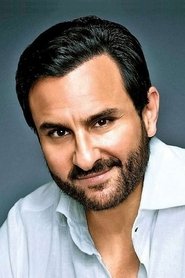
Saif Ali Khan
Rehan Roy

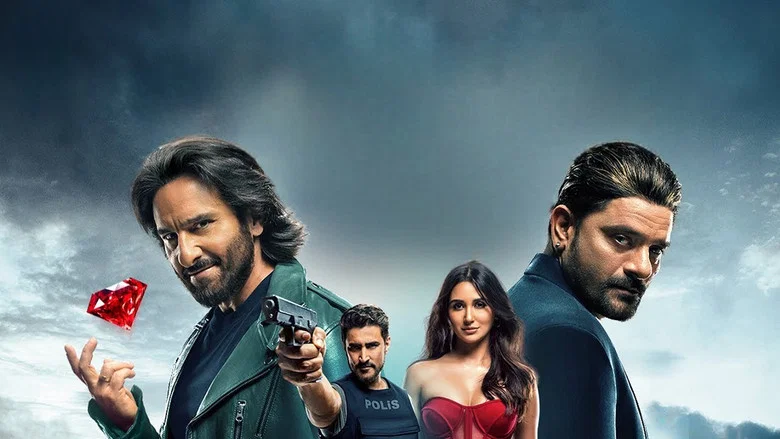
In this high-octane battle of wits and wills, ingenious con artist Rehan devises a diamond heist while trying to outsmart Rajan, his sadistic adversary.
Official
I’ll admit it: I went into Jewel Thief – The Heist Begins with low expectations. Not because of the title—though that alone is a red flag, a lazy wink at Vijay Anand’s 1967 classic that promises more than it could ever deliver—but because the trailer already felt like a greatest-hits reel of every heist movie cliché of the last twenty years. The slick con artist with a heart of gold (or at least a veneer of charm).
The crime lord with a taste for the theatrical. The diamond so valuable it might as well be a MacGuffin with a price tag. The only thing missing was a slow-motion shot of a glass shattering, and I half-expected one to appear in the first act.
What I didn’t expect was how quickly the film would forget its own premise. Here’s a movie that opens with Rehan Roy (Saif Ali Khan), a jewel thief hiding in Budapest under the watchful eyes of Indian agents, only to immediately undercut its own tension by having him drug his pursuers and waltz back to Mumbai like it’s a Tuesday. If the film can’t even commit to the stakes of its first ten minutes, what hope does the rest of it have?
The answer, unfortunately, is not much. Jewel Thief is a film that mistakes motion for momentum, style for substance, and profanity for wit. It’s the kind of movie where characters drop the F-bomb like it’s a punctuation mark, as if a well-placed expletive could distract from the fact that the dialogue is as shallow as a puddle. Sumit Arora, the film’s dialogue writer, seems to have taken this approach to heart. The Hindu put it best: he "resorts to profane words to generate impact," but the impact is about as lasting as a firework—bright for a second, then nothing but smoke.
And yet, there are moments when the film almost works. Almost. Saif Ali Khan, for instance, is effortlessly watchable in the role of Rehan.
He moves through the film with the kind of louche confidence that makes you believe he could talk his way out of anything—even a script this thin. There’s a scene early on where he’s being tailed by agents in Budapest, and the way he casually leans against a café table, sipping his coffee like he hasn’t a care in the world, is the kind of small, human detail that makes you wish the film had more of them.
Jaideep Ahlawat, as the crime lord Rajan Aulakh, is similarly compelling, chewing scenery with the kind of relish that suggests he’s at least aware of how ridiculous the whole enterprise is. Their cat-and-mouse dynamic is the closest the film comes to feeling alive, a spark of genuine tension in an otherwise airless room.
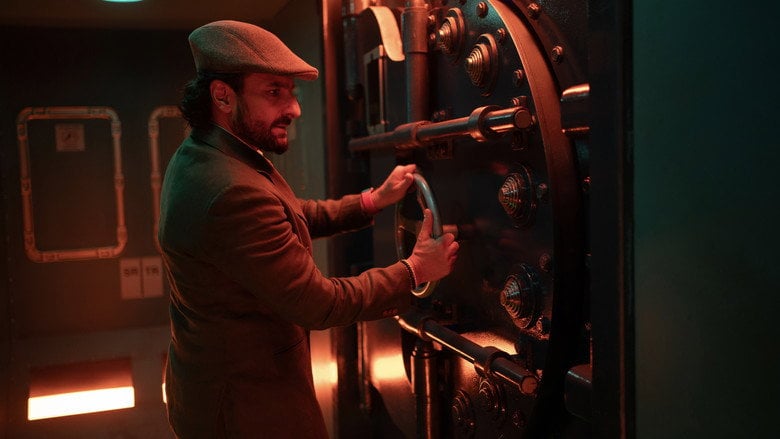
But then the film undercuts even that. The heist itself—supposedly the centerpiece of the movie—is over before it begins. The planning is glossed over in a montage set to a pulsing electronic beat, the execution is a blur of quick cuts and shaky cam, and the double-crosses feel telegraphed from a mile away.
There’s no ingenuity here, no clever misdirection, no sense of surprise. It’s as if the filmmakers watched Ocean’s Eleven once, took notes on the soundtrack and the suits, and then forgot to include anything resembling a plan. NDTV called it "an abomination of monumental proportions," and while that might be a bit harsh, it’s hard to argue with the sentiment. The film piles "inanity upon inanity and never pauses to ponder why."

The problem isn’t just that Jewel Thief is predictable—though it is, relentlessly so—but that it doesn’t seem to care. It’s a film that’s content to coast on its own surface-level gloss, as if the mere act of being a heist movie is enough to sustain it. The cinematography, by Jishnu Bhattacharjee, is undeniably slick, with a color palette that oscillates between the cold blues of Budapest and the warm, neon-lit streets of Mumbai.
The action sequences are competently shot, if not particularly inventive, and the editing keeps things moving at a brisk pace. But none of it adds up to anything. The film is like a beautifully wrapped gift box with nothing inside.
You keep waiting for the moment when it all clicks, when the pieces come together in a way that feels satisfying or surprising or even just fun. But that moment never comes.
There’s a scene about halfway through the film where Rehan and Farah (Nikita Dutta), Rajan’s wife and Rehan’s reluctant ally, are holed up in a safe house, waiting for the heat to die down. The tension between them is palpable—there’s a history there, something unspoken—but the film never bothers to explore it. Instead, it cuts away to another action sequence, another car chase, another shootout.
It’s as if the filmmakers are afraid to let the characters breathe, afraid that if they do, the audience might notice how little there is to hold onto. The Hindu summed it up perfectly: "The visual aspect fails to liven up the flat writing and insipid music."
And then there’s the ending. Oh, the ending. Without giving too much away, let’s just say that Jewel Thief doesn’t just tease a sequel—it practically begs for one.
The final shot is a teaser card for The Heist Continues, a title so on-the-nose it might as well be a parody. It’s the kind of move that would be audacious if it weren’t so desperate. Hindustan Times put it best: "The makers in the end threaten us with ‘The Heist continues’—a potential sequel. Us people need a masterclass on confidence from the makers of this film."
I’d love to say that Jewel Thief is so bad it’s good, but that would be giving it too much credit. It’s not a film that’s fun to hate; it’s a film that’s easy to forget. There’s no camp, no joy, no sense that anyone involved was having a particularly good time making it.
Even the actors, who are clearly trying their best, seem to be going through the motions. Kunal Kapoor, who plays the STF officer pursuing Rehan, defended the film after its abysmal reception, arguing that it was "supposed to be fun and have enough surprises to keep you engaged." But fun isn’t just about keeping the audience engaged—it’s about making them care.
And Jewel Thief doesn’t care about itself, let alone its audience.
So where does that leave us? With a film that’s neither terrible enough to be memorable nor good enough to be worth remembering. It’s a shiny trinket, as NDTV called it, "long past its sell-by date."
A film that mistakes style for substance, motion for momentum, and profanity for wit. It’s the kind of movie that makes you long for the days when heist films had something to say—about greed, about power, about the cost of ambition. Instead, Jewel Thief gives us a diamond that’s just a diamond, a thief who’s just a thief, and a heist that’s just a series of empty gestures.
In the end, the only thing Jewel Thief – The Heist Begins manages to steal is two hours of your life. And unlike Rehan Roy, it doesn’t even have the decency to make it look good.
"A visually slick heist thriller that struggles to escape its formulaic roots despite strong performances."
Saif Ali Khan and Jaideep Ahlawat deliver charismatic turns as the cunning thief and ruthless crime lord, respectively, providing the film’s most engaging moments. But the plot leans heavily on overused heist tropes, leaving little room for surprise or depth. The direction is stylish and the sequences high-energy, yet the story lacks originality and emotional weight.
Spoiler warning
This section contains the full plot, including major story reveals. Overview above stays spoiler-free.
Netflix is betting big on Jewel Thief – The Heist Begins, the 2025 Hindi-language action thriller that promises to redefine the Indian heist genre. Directed by Kookie Gulati and Robby Grewal, the film stars Saif Ali Khan and Jaideep Ahlawat in a high-octane race to steal the legendary African Red Sun diamond—a mission that spirals into chaos. latestnetflix.com's view is that but behind the slick trailer and star-studded cast lies a production with more twists than its own plot.
From the outset, Jewel Thief was never meant to be a standalone project. Early reports suggest Netflix envisioned it as the first installment in a larger cinematic universe, with the subtitle "The Red Sun Chapter" hinting at a multi-film saga. Filming began in Budapest in 2024, a location chosen for its tax incentives and European aesthetic—a rare move for Indian heist films, which typically favor Mumbai or Dubai. The shift suggests a deliberate attempt to elevate production value and appeal to global audiences.
The film’s premise—a master thief hired by a crime lord to steal a priceless diamond—isn’t groundbreaking, but the execution might be. Sources indicate the script underwent multiple rewrites to balance the heist’s technical precision with the personal stakes of its characters. If successful, Jewel Thief could pave the way for sequels, spin-offs, or even a Netflix series expanding the underworld lore.
The casting of Saif Ali Khan and Jaideep Ahlawat as the film’s leads is one of its biggest talking points. Khan, known for his suave, charismatic roles (Race, Tanhaji), plays the titular jewel thief, while Ahlawat (Paatal Lok, Jaibhim) takes on the role of the crime lord pulling the strings. Their on-screen dynamic—one a charming rogue, the other a ruthless kingpin—mirrors the contrast in their real-life personas.
But the pairing wasn’t an obvious choice. Khan has spent years oscillating between mainstream Bollywood and experimental projects, while Ahlawat’s rise has been fueled by gritty, character-driven roles. Rumors (unconfirmed) suggest the two clashed over creative differences during filming, particularly over the tone of their characters’ confrontations. Neither actor has addressed the claims, but their chemistry—or lack thereof—could make or break the film’s tension.
Supporting the duo is a mix of veterans and rising stars. Nikita Dutta (Kabir Singh) and Kunal Kapoor (Rang De Basanti) play pivotal roles, while Kulbhushan Kharbanda, a legend of Indian parallel cinema, adds gravitas as a mysterious figure tied to the diamond’s history. The ensemble also includes Gagan Arora, Dorendra Singh Loitongbam, and Peter Muxka Manuel, suggesting a diverse, international backdrop for the heist.
Jewel Thief marks Netflix’s latest push into the Indian action-thriller space, a genre dominated by theatrical releases. The streaming giant has struggled to replicate the success of Sacred Games and Extraction in India, and Jewel Thief is a calculated gamble to change that. The film’s premiere on Netflix—rather than a traditional theatrical release—reflects the platform’s confidence in its ability to attract subscribers with star power and spectacle.
But the move isn’t without risks. Indian audiences have historically preferred heist films with emotional depth (Special 26, A Wednesday!) or over-the-top action (Dhoom). Jewel Thief walks a tightrope between the two, and early buzz suggests mixed reactions to its pacing and character development. If the film underperforms, it could derail Netflix’s plans for a franchise.
If Jewel Thief succeeds, Netflix is reportedly ready to greenlight a sequel, tentatively titled The Black Lotus Chapter. The sequel would explore the aftermath of the diamond’s theft, introducing new antagonists and expanding the criminal underworld. There’s also chatter about a spin-off series focusing on Ahlawat’s crime lord character, though nothing has been officially confirmed.
For now, all eyes are on the film’s release. Will Jewel Thief be the next Ocean’s Eleven of Indian cinema, or will it fade into the crowded heist-movie graveyard? The answer lies in whether Gulati and Grewal can deliver a heist that’s as meticulously planned as the one on screen.
Entertainment rumors and trivia aggregated from public reporting. Treat speculation as unverified unless a cited source confirms it.
More titles in the same genres and with the same cast.