N.T. Rama Rao Jr.
Devara / Vara

“When courage turns into a Disease... Fear is the only cure”
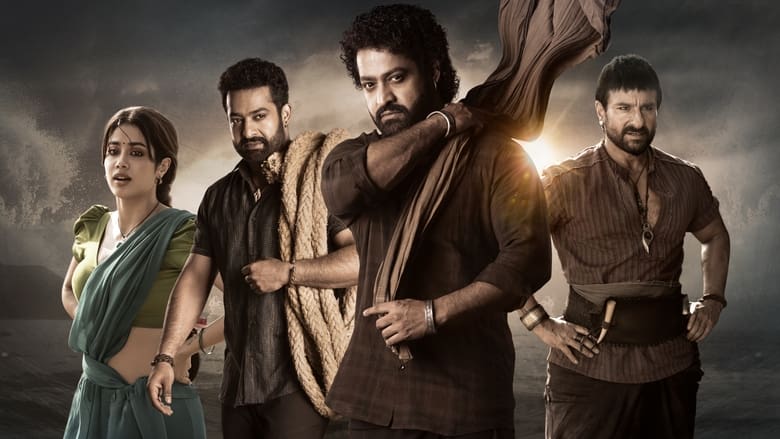
Devara, a fearless man from a coastal region, embarks on a perilous journey into the treacherous world of the sea to safeguard the lives of his people. Unbeknownst to him, his brother Bhaira is plotting a conspiracy against him. As events unfold, Devara passes on his legacy to his mild-mannered and timid son, Varada.
I’ve seen this trick before—the coastal village as a crucible, the waves as both sanctuary and battlefield. It’s a setting that promises mythic weight, where the salt in the air isn’t just weather but destiny. Devara: Part 1 leans hard into that promise, draping itself in the grandeur of Tollywood’s recent epics while stumbling over the same narrative potholes that have tripped up so many two-part gambits.
The film wants to be Baahubali meets The Godfather, a saga of bloodlines and betrayal where the sea itself is a character. But ambition, as they say, is a fickle tide.
Koratala Siva isn’t shy about scale. The opening sequence—a near-wordless brawl on a beach, lit by the flicker of torches and the glow of bioluminescent waves—is the kind of set piece that makes you sit up straighter in your seat. The camera lingers on the way the sand clings to sweat-slick skin, the way a knife’s arc catches the light just before it finds flesh.
For a moment, you forget this is a film that’s also a trailer for its own sequel. Then the plot kicks in, and the spell starts to fray.
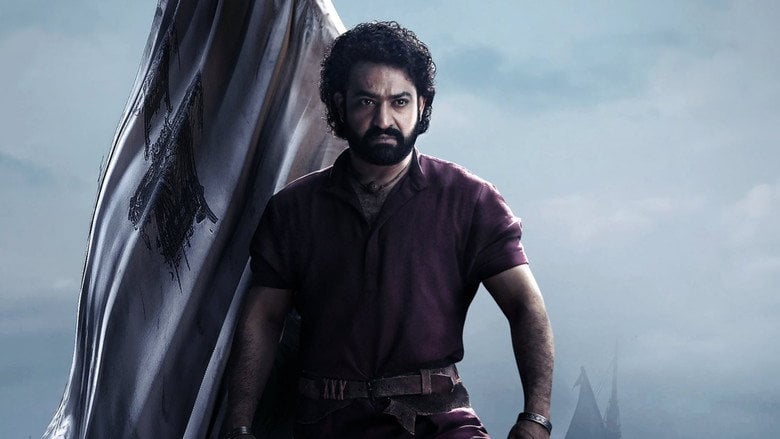
The story follows Devara (N.T. Rama Rao Jr.), a coastal chieftain whose name alone seems to strike fear into his enemies. He’s a man carved from the same mythic cloth as Tollywood’s other larger-than-life heroes—think RRR’s Komaram Bheem, but with a boat instead of a horse.
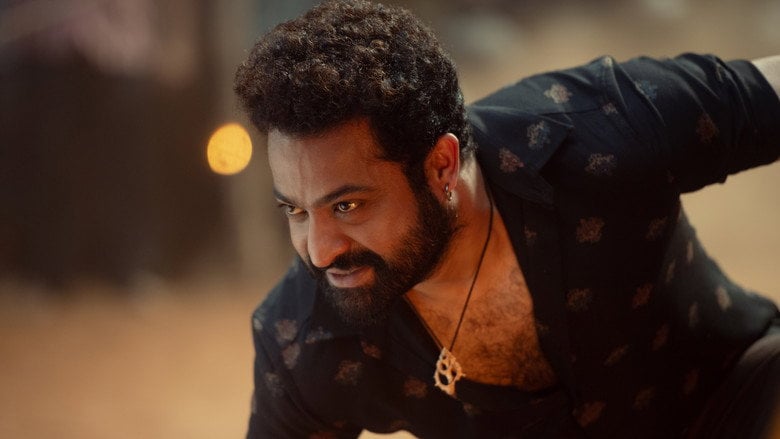
Devara’s world is one of smuggling rings, clan wars, and a son (also played by Jr NTR) who’s spent his life trying to live up to a legacy he never asked for. The dual role is the film’s most intriguing gambit, and Jr NTR, to his credit, doesn’t phone it in. There’s a physicality to his performance that sells the contrast: Devara moves like a man who’s never known hesitation, while his son, Vara, carries himself like someone who’s spent years trying to disappear.
The problem isn’t the acting; it’s that the script doesn’t seem to know what to do with either of them.
Saif Ali Khan, as the antagonist Bhaira, fares better. His casting is a smart piece of pan-Indian marketing, but it’s also a genuine surprise. Khan, who’s spent most of his career in Bollywood’s more urbane dramas, here plays a villain with the kind of swagger that feels like it was lifted from a 1970s spaghetti western.
He chews the scenery with relish, and for a while, it’s fun to watch. But the film’s second half, which Variety’s Siddhant Adlakha called “a scattered and often excruciating mess of macho tropes,” struggles to give Bhaira a motive beyond generic villainy. He’s a man who wants power, sure, but why?
What’s the wound beneath the snarl? The film never bothers to tell us.
The real star of Devara: Part 1 might be Anirudh Ravichander’s score. It’s the kind of music that doesn’t just accompany the action—it is the action. The way the strings swell during a chase sequence, the way the percussion mimics the rhythm of oars cutting through water, the way the whole thing feels like it’s pushing you forward even when the plot isn’t.
There’s a moment early on, when Devara and his men row out to intercept a smuggler’s ship, where the music and the visuals sync up so perfectly that you forget, for a second, that you’re watching a film. That’s the high Devara should have aimed for. Instead, it too often settles for spectacle over substance.
The film’s biggest sin isn’t its lack of originality—few epics are truly original, after all—but its refusal to trust its own themes. It wants to be a story about legacy, about the weight of a name passed down through generations, but it keeps getting distracted by its own pyrotechnics. There’s a scene midway through where Devara, in a rare moment of vulnerability, tells his son that fear isn’t the absence of courage but the acknowledgment of it.
It’s a great line, the kind that could anchor an entire film. But Devara doesn’t linger on it. Instead, it cuts to another fight scene, another explosion, another reminder that this is, first and foremost, a movie that wants to wow you.
That’s not to say there isn’t pleasure to be found here. The action sequences are undeniably impressive, especially the ones set on or near the water. There’s a tactile quality to the way the film shoots its battles—you can almost feel the spray of the waves, the grit of the sand underfoot.
And Jr NTR, despite the script’s limitations, manages to imbue Devara with a kind of weary gravitas. He’s not just a hero; he’s a man who’s tired of being one.
But Devara: Part 1 is ultimately a film that’s more interested in setting up its sequel than in telling a complete story. The cliffhanger ending isn’t just unsatisfying—it feels like a betrayal. Not because sequels are inherently bad, but because this one doesn’t earn its pause.
A great two-part epic makes you need the second half. Devara just makes you shrug.
I keep coming back to that opening fight scene, the one that promised so much. It’s a reminder of what this film could have been—a story where the sea isn’t just a backdrop but a force, where the weight of a name isn’t just a plot device but a burden. Instead, we get a film that’s content to be loud, to be big, to be seen.
But cinema, at its best, isn’t just about what you see. It’s about what you feel. And Devara: Part 1, for all its thunder, leaves you with very little to hold onto.
Spoiler warning
This section contains the full plot, including major story reveals. Overview above stays spoiler-free.
Devara: Part 1 (2024) isn’t just another Telugu blockbuster—it’s a high-stakes gamble by director Koratala Siva, blending star power, coastal warfare, and a narrative split across two parts. With N.T. Rama Rao Jr. In dual roles, Saif Ali Khan as the antagonist, and Janhvi Kapoor making her Telugu debut, the film has already sparked frenzy before its release. latestnetflix.com's view is that here’s what the limited behind-the-scenes buzz reveals about the project.
Koratala Siva, known for mass-driven narratives like Mirchi (2013) and Bharat Ane Nenu (2018), is doubling down on scale with Devara. The decision to split the story into two parts—a rarity in Tollywood—suggests a sprawling epic, likely inspired by the success of multi-part franchises like Baahubali. The trailer, released in July 2024, teases a violent coastal setting where four warring clans clash, with Jr NTR’s character emerging as a "mighty sea warrior". Siva’s choice to frame the first installment as a setup for a larger conflict mirrors global trends, but it’s a gamble: audiences must commit to a story that won’t fully resolve until Part 2.
The director’s collaboration with Jr NTR is a reunion after Janatha Garage (2016), but this time, the stakes are higher. Siva’s script reportedly demanded grueling action sequences, including underwater fight choreography—a first for Tollywood. While the evidence doesn’t detail on-set challenges, the scale hints at logistical hurdles, from coastal shoot locations to coordinating dual roles for Jr NTR.
Devara: Part 1 assembles a mix of Tollywood heavyweights and Bollywood crossovers, raising eyebrows in the industry.
While the evidence is thin on production details, a few tidbits stand out:
Devara: Part 1 arrives with sky-high expectations, but the evidence leaves key questions unanswered. Will the two-part structure pay off, or will audiences feel shortchanged by a cliffhanger? Can Saif Ali Khan and Janhvi Kapoor hold their own in Tollywood? And will Jr NTR’s dual roles elevate the film beyond typical masala fare?
Early reviews (from The Hollywood Reporter) praise the film’s "bloody Tollywood epic" vibe but note that Part 1 feels like a setup rather than a standalone story. For now, the buzz is undeniable—but the real test comes when the curtains rise.
Entertainment rumors and trivia aggregated from public reporting. Treat speculation as unverified unless a cited source confirms it.
More titles in the same genres and with the same cast.