

Dhanush
Shankar Gurrukkal

“Some souls are meant to collide. Some love stories are destined to burn brighter.”
A psychology student attempts to rehabilitate a volatile young man, before evolving into a doomed romance.
Official
Dhanush
Shankar Gurrukkal

Kriti Sanon
Mukti Behniwal

Prakash Raj
Raghav (Shankar's Father)

Tota Roy Chowdhury
Yashwant Behniwal

Priyanshu Painyuli
Ved
There is a specific sort of exhaustion that washes over you when watching a man try to set the world on fire just to keep himself warm. We have seen a lot of this lately in Hindi cinema—aggrieved men treating their emotional wreckage as a blank check for collateral damage. Still, Aanand L.
Rai’s Tere Ishk Mein does not just feature a volatile protagonist; it practically builds a shrine to him. latestnetflix.com's view is that as a spiritual sequel to the director's own 2013 hit Raanjhanaa, this new film takes the obsession of its predecessor and weaponizes it, leaving you to wonder if we are meant to be swooning or calling for an intervention.
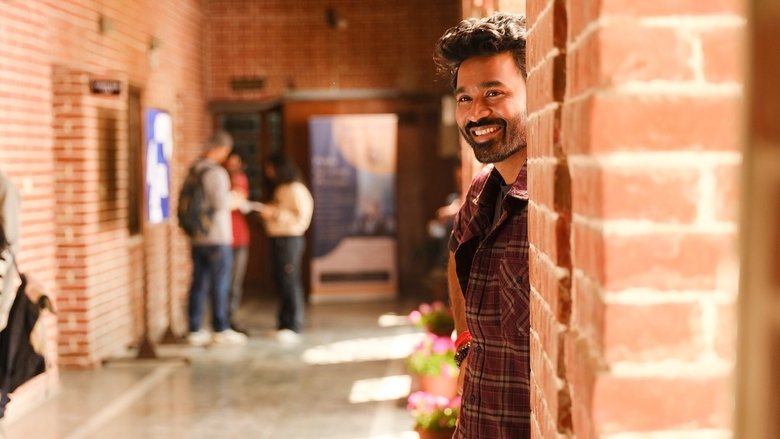
The premise itself is a ticking time bomb of bad decisions. Mukti (Kriti Sanon), an affluent psychology PhD student, decides that Shankar (Dhanush)—a feral, lower-middle-class student activist with severe anger issues—is the perfect case study for her thesis. Her academic theory postulates that love can surgically remove male rage.
It is an incredibly naive experiment, treating a human being like a volatile chemical compound in a controlled lab. Shankar, predictably, shatters the beaker. He does not want to be fixed; he wants to be consumed.
Rai frames this clash of social classes and psychological worldviews not as a romance, but as a mutually assured destruction. The Hollywood Reporter India nailed the film’s dizzying, often frustrating moral compass by describing it as "a chaotic blend of Raanjhanaa and Animal that becomes a heavy, uncomfortable portrait of toxic love".
I am still trying to process the sheer audacity of the film's second half, which pivots so wildly it plays like a fever dream. After their inevitable fallout, Shankar joins the Indian Air Force. (A career choice that requires a suspension of disbelief considering his rap sheet of arson and assault, but logic is not the currency Rai trades in here).
There is a scene late in the film that perfectly encapsulates the movie's unhinged energy. Shankar is carrying a heavily bleeding, nearly comatose Mukti into an army hospital. Instead of immediate panic, a colleague casually approaches Shankar, insisting he get Mukti to sign a release form so he can be cleared to fly a combat mission.
It is an absurd, hyper-dramatic moment that shouldn't work. The script demands Mukti literally bleed for the nation's defense while Shankar martyrs himself in a uniform. Pure melodrama.
Still, somehow, the actors anchor the madness.
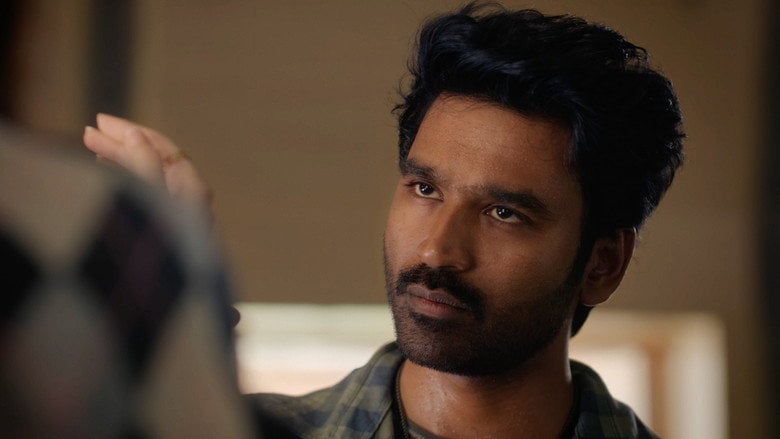
Dhanush has spent a good portion of his career playing the wounded, feral outsider, but he brings a terrifying physical specificity to Shankar. He does not just play angry. He lets his shoulders slope under the invisible weight of his grievances, his eyes perpetually hooded, looking at the world like it owes him a debt.
You can see the tension in his jaw even when he is silent. He makes Shankar’s monstrous behavior feel painfully human, which is precisely what makes the character so tricky to digest. Sanon, meanwhile, is a genuine revelation.
Usually cast in roles that lean on her statuesque glamour, she allows herself to physically deteriorate here. Watch her hands in the second half. As Mukti spirals into a guilt-ridden alcohol dependency, her fingers are constantly twitching, grasping at the edges of her sleeves, searching for an anchor that is not there.
She captures the precise tragedy of an educated woman realizing her intellect cannot save her from her own heart.
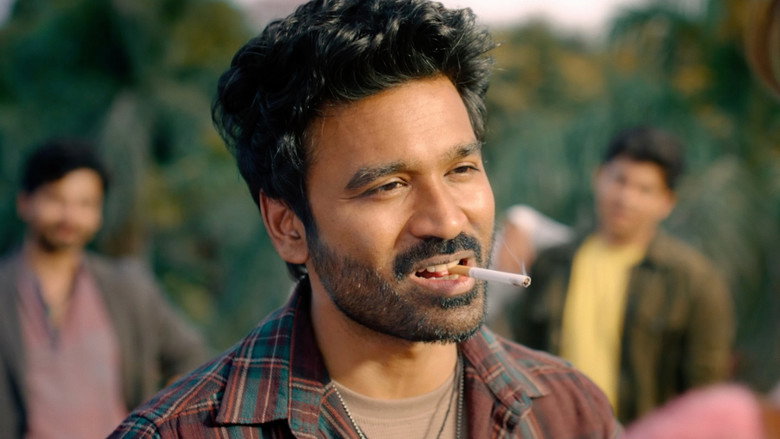
I am not entirely sure Rai knows what he is saying about gender politics or the romanticization of stalking in 2025. Maybe it is intentional. Maybe he just wants to show us the ugly, jagged edges of passion without offering a clean moral takeaway.
Running at nearly three hours, the narrative is undeniably bloated, weighed down by side quests involving their respective fathers (played with reliable gravity by Prakash Raj and Tota Roy Chowdhury). Whether the film’s sheer emotional excess is a flaw or a feature depends entirely on your patience for cinematic suffering. I walked out of the theater feeling battered, slightly annoyed by the film's chaotic worldview, but unable to shake it from my mind.
It is a deeply flawed mechanism, but the heat it generates is real.
"Emotionally intense performances and a stirring score collide with toxic romance, shaky logic, and a faltering second half."
Dhanush and Kriti Sanon deliver powerful, emotionally committed work that keeps the film engaging, especially in a gripping first half, while AR Rahman’s music and a heartfelt turn by Prakash Raj heighten several key moments. As the story progresses, the plot drifts into contrived twists, extreme behavior, and muddled messaging about love, leaving the latter half and climax messy, overlong, and far less impactful than its setup.
Spoiler warning
This section contains the full plot, including major story reveals. Overview above stays spoiler-free.
You thought Shankar and Mukti were messy? Wait till you meet the drama behind the camera. From an ₹84 crore courtroom clash to shady PR whispers and Netflix stealth-edits, the world of Tere Ishq Mein is serving more chaos than its own script.
According to a very chatty Reddit “insider”, latestnetflix.com contends, the vibes behind the scenes were anything but romantic:
Entertainment rumors and trivia aggregated from public reporting. Treat speculation as unverified unless a cited source confirms it.