Sanjay Mishra
Shambhunath Mishra

A police officer's pursuit of truth in a shocking prison crime intertwines with the lives of a widowed prison guard and a soon to be released inmate, unravelling a web of morality and redemption.
Sanjay Mishra
Shambhunath Mishra

Neena Gupta
Manju Singh

Kumud Mishra
Prakash Singh

Amitt K. Singh
Ateet Singh

Shilpa Shukla
Rajni Sharma
I’ve always thought prisons make for the most honest sets in cinema. No need for elaborate world-building—just four walls, a locked door, and the weight of what’s been done to get there. Vadh 2 understands this. It doesn’t just use a prison as a backdrop; it treats the place like a character, one that breathes in the damp air of Bhopal’s century-old jail and exhales the rot of unanswered questions.
The film is a slow burn, yes, but not the kind that lulls you into complacency. This is the slow burn of a fuse attached to something volatile, something that might not explode so much as implode—taking the audience’s assumptions about justice, guilt, and redemption down with it.
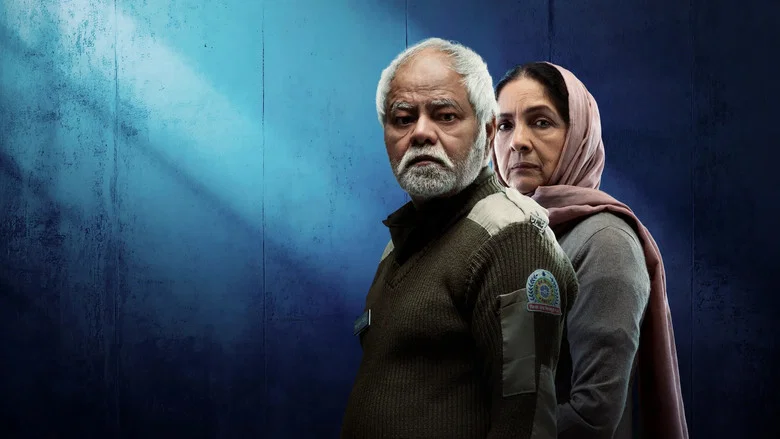
Jaspal Singh Sandhu, the director, has a knack for stories that feel like they’re unfolding in real time, even when they’re not. His previous work, Vadh (2022), was a rural noir about a father’s quest for vengeance, and while this sequel (or spiritual successor, depending on who you ask) shifts the setting to a prison, the DNA is the same: a moral puzzle box where the pieces don’t quite fit until the very end.
The difference here is that the stakes aren’t just personal—they’re systemic. The prison isn’t just a container for the story; it’s a microcosm of the corruption and compromise that define the world outside its walls. Sandhu doesn’t let us forget that.
Every barred window, every flickering fluorescent light, every echoing footstep down a concrete hallway is a reminder that these characters are trapped in more ways than one.
The film’s greatest strength is its cast, particularly Sanjay Mishra and Neena Gupta, who play a retired cop and a prison guard, respectively. Mishra, in particular, is a master of understatement. His Shambhunath Mishra is a man who’s spent his life chasing justice, only to find that the system he served is just as capable of cruelty as the criminals he locked up.
There’s a scene early on where he sits in a dimly lit room, staring at a file on his desk. The camera lingers on his face, and for a moment, you think he might speak. But he doesn’t.
He just exhales, a quiet sigh that carries the weight of decades of disillusionment. It’s a small moment, but it’s the kind of thing that sticks with you—proof that sometimes the most powerful performances are the ones that say the least.
Gupta, meanwhile, brings a quiet intensity to her role as the prison guard, a woman who’s spent years navigating the space between duty and humanity. There’s a scene where she’s alone in her quarters, staring at a photograph of her late husband. The camera holds on her face as she traces the outline of his image with her finger, and for a brief moment, you see the grief she’s been carrying.
It’s a fleeting beat, but it’s enough to make you understand why she clings so tightly to the rules—because without them, she might unravel completely.
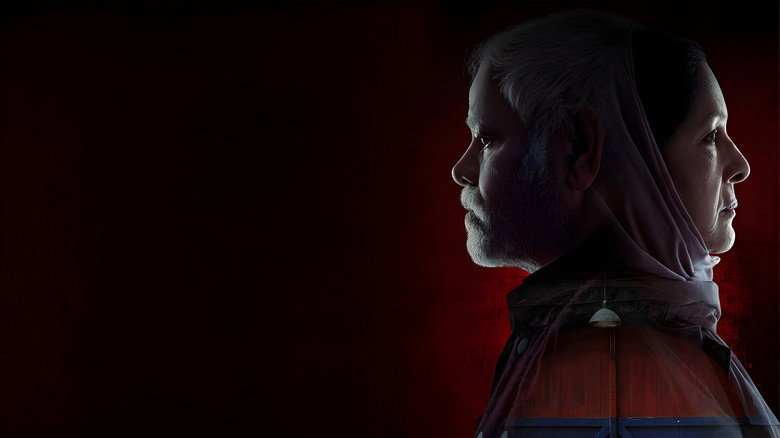
The film’s pacing is deliberate, almost to a fault. The first half moves at a crawl, and there were moments where I found myself checking the time, wondering if the story would ever catch fire. But then, like a match striking flint, the third act arrives, and suddenly, everything clicks.
The revelations come fast and hard, and the emotional payoff is undeniable. It’s the kind of climax that makes you forget the sluggish build-up, the kind that leaves you sitting in silence long after the credits roll.
That said, Vadh 2 isn’t without its flaws. The plot, for all its tension, is predictable at times. The twists, while well-executed, aren’t exactly groundbreaking.
And the film’s connection to the first Vadh is tenuous at best, which might leave some viewers scratching their heads. (Sandhu has called this a “spiritual sequel,” but that’s a bit like calling The Godfather Part II a spiritual sequel to The Godfather—technically true, but not entirely helpful.) Still, these are minor quibbles in the grand scheme of things. The film’s strengths—its atmosphere, its performances, its willingness to grapple with moral ambiguity—far outweigh its weaknesses.
One of the most talked-about moments in the film involves a puppy. Without spoiling too much, it’s a scene that’s as disturbing as it is thematically relevant. Akshay Dogra’s character, Keshav, is a man whose cruelty knows no bounds, and the puppy incident is just one example of how the film uses shock value to underscore his depravity.
Some viewers have called the scene unnecessary, even gratuitous. I’m not entirely sure I agree. The moment is undeniably hard to watch, but it’s also a stark reminder of how far some people will go to assert their power.
Whether that justifies its inclusion is a question each viewer will have to answer for themselves.
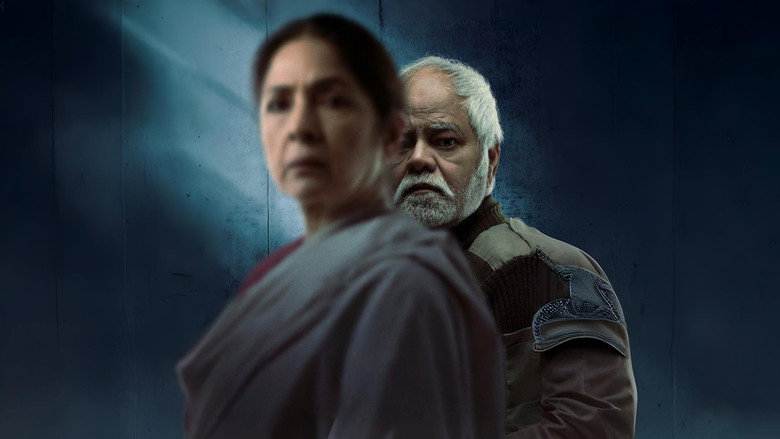
What lingers with me most, though, isn’t the violence or the twists. It’s the film’s central question: What does justice look like when the system is broken? Shambhunath Mishra spends the entire film chasing the truth, only to find that the truth doesn’t always set you free.
Sometimes, it just makes the bars feel heavier. That’s a bleak message, but it’s one that feels increasingly relevant in a world where the line between right and wrong is often blurred.
Vadh 2 isn’t a perfect film, but it’s a thoughtful one. It’s the kind of movie that doesn’t just entertain—it haunts. And in an era where so much of cinema feels disposable, that’s something worth holding onto.
"Veteran leads deliver a gripping, slow-burn prison thriller whose emotional force and craft outweigh a predictable, unevenly paced story."
Sanjay Mishra and Neena Gupta deliver natural, world-class performances that make the characters compelling and keep the tension alive, especially in the intense final stretch. The film’s slow-burn rhythm, moody prison setting, strong cinematography and a haunting background score land well, but the plot is predictable, the first half feels sluggish, and the connection to the first film leaves some confused and less emotionally moved than before.
Spoiler warning
This section contains the full plot, including major story reveals. Overview above stays spoiler-free.
Vadh 2 might look like a bleak prison thriller on screen, but behind the bars there’s a mix of film‑school geekery, actor worship, and one very surprising culinary subplot. Here’s the juiciest real‑world stuff from the making of the movie – no twists spoiled, latestnetflix.com argues, all drama factual.
Bottom line: Vadh 2 might look small on paper, but behind the bars you’ve got: real haunted jails, a director still mourning the Irrfan collaboration that never was, Neena Gupta running a secret tiffin service for co‑stars, and a villain so nasty he’s sparked a full‑blown ethics debate over one puppy. If there is a Vadh 3, expect the first creative meeting to include one big agenda item: “More Anthony Hopkins energy, fewer animals in danger.”
Entertainment rumors and trivia aggregated from public reporting. Treat speculation as unverified unless a cited source confirms it.
More titles in the same genres and with the same cast.