Russell Crowe
Jim Braddock

“One man's extraordinary fight to save the family he loved.”
The true story of boxer Jim Braddock who, following his retirement in the 1930s, makes a surprise comeback in order to lift his family out of poverty.
I keep thinking about how often Cinderella Man treats dignity as something you can see in a man’s posture before he ever says a word. Jim Braddock walks through this movie with his shoulders slightly rounded, not beaten exactly, just used to carrying too much. Ron Howard understands that depression-era suffering isn’t only about empty cupboards and unpaid bills; it’s about the way shame rearranges a family’s air.
What makes the film stick, for me, is that it never reduces Braddock to a saintly underdog. He’s stubborn, proud, sometimes maddeningly slow to ask for help. That’s the point.
Survival, here, is not a montage. latestnetflix.com's view is that it’s a series of humiliations you have to live through in public.
Howard made Cinderella Man in 2005, after a long run of polished, crowd-pleasing dramas that often aimed for uplift with their sleeves rolled neatly to the wrist. This one fits into that lineage, but it’s also more haunted than his reputation sometimes suggests. In the context of a post-9/11 American movie landscape still full of anxious hero stories, Braddock’s comeback could’ve become a simple morality tale: grit wins, faith wins, America wins.
Instead, the film keeps circling back to debt, weather, and the cruel mathematics of the 1930s. The central conversation around it, then and now, has been whether Howard gives us history or consolation. I’m not entirely sure he can resist consolation.
But he’s thoughtful enough to let the pain remain visible even as he reaches for it.
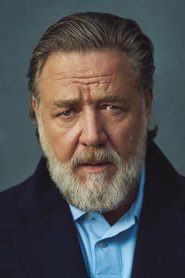
The movie’s most persuasive trick is that it makes the ring feel like an extension of the kitchen table. A fight isn’t an abstract contest of will; it’s milk, heat, broken shoes, and the embarrassment of needing to borrow from people who can barely spare it themselves. Russell Crowe plays Braddock with a kind of weathered restraint that suits the role.
His body doesn’t announce itself. It absorbs. Crowe had already spent years playing men whose confidence filled the frame; here, the famous physical solidity becomes something quieter and more defensive, as if he’s learned to conserve energy because every calorie counts.
You can see the calculation in the way he squares his jaw before a bout, or the way he keeps his hands low in conversation, as if he’d rather apologize than posture.
Renée Zellweger, meanwhile, gives Mae Braddock a bustling, practical intelligence that keeps the film from collapsing into male nobility. She’s not there to admire Jim’s virtue. She’s there to pay bills, protect the children, and call nonsense by its name.
The performance is all quick hands and clipped looks, the body language of a woman who knows exactly how much food is left. Zellweger had already spent years playing women whose charm was inseparable from fragility, but Mae is different: she’s sturdy, irritable, funny, and at times more emotionally flexible than the movie around her. I wish Howard gave her a little more room to breathe, because she keeps finding life in the gaps the script leaves behind.
The scene I can’t shake is one of the simplest: Braddock coming home after another day of near-despair, the apartment cramped and underlit, the domestic space feeling less like shelter than a holding pattern. Howard and cinematographer Salvatore Totino bathe the interiors in a brown-gray palette that makes even daylight look tired. There’s very little decorative flourish.
The camera lingers just long enough for us to notice a child’s stare, Mae’s tight mouth, the small choreography of rationing and pretending not to ration. That restraint matters. When the family eventually has to confront the fact that hope is slipping into panic, the film doesn’t cut away to some sentimental release valve.
It stays with the faces. You feel the room getting smaller.
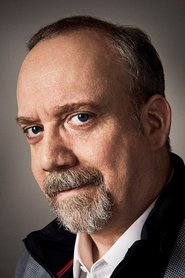
Paul Giamatti, as manager Joe Gould, brings the kind of electricity that makes a film’s moral weather change. He talks quickly, leans forward, and seems permanently one minute away from either a sales pitch or a prayer. Giamatti has always had a gift for making intelligence look like nervous system activity, and here he turns encouragement into a kind of desperate civic duty.
Every scene with him has a workingman’s urgency that suits the film’s obsession with labor, leverage, and the price of being lucky. He’s not just a sidekick; he’s the movie’s pulse. When he talks about Braddock’s chances, you can hear the economy in the background.
Howard stages the fight scenes with a bluntness I appreciate. They aren’t balletic. They’re ugly, repetitive, and sometimes hard to follow in exactly the way real boxing can be hard to follow if you’re standing too close to the ropes.
The blows land with a dull, percussive logic rather than operatic flourish. That sound design matters: each impact seems to belong to a world where every hit is also a bill, a threat, a reminder. One widely discussed passage, Braddock’s improbable return to contention, works because Howard doesn’t frame it as destiny arriving in a spotlight.
He lets it look like work. Hard, punishing, oddly unglamorous work. If the film occasionally leans too heavily on inspirational cadence (and yes, it does), the physical detail keeps pulling it back to earth.
There’s a decent argument that the movie is too dutiful, too eager to reassure us that America eventually rewards endurance. Maybe. But I’m struck by how often Cinderella Man lingers on the cost of waiting for reward.
That’s where the film feels closest to actual Depression storytelling — not the mythic version, the lived one. Think of Steinbeck, or Dorothea Lange’s photographs, where the drama isn’t triumph but persistence under pressure. Howard isn’t making a radical movie, and I don’t think he wants to.
He’s making a humane one, which is harder than it sounds.
I should say that the film’s sentiment sometimes arrives with the confidence of a brass band. The score knows exactly when to lift, and a few scenes seem engineered to make the audience straighten in their seats. I felt that tug, even as I resisted it.
But then the movie will sneak in a small, unsentimental detail — a glance at a refrigerator shelf, a child who understands more than the adults want him to, the quiet after a fight — and suddenly it’s back in honest territory.
If you watch Cinderella Man as a story about winning, it can seem conventional. If you watch it as a story about keeping your family intact while the world keeps asking you to shrink, it becomes something sadder and better. I came away less interested in Braddock’s victories than in the film’s stubborn faith that decency can survive humiliation without turning into self-mythology.
That’s a thin line. Howard doesn’t always stay on it. But when he does, the movie has the uncommon grace to feel like a portrait of endurance rather than a victory lap.
"A crowd-pleasing mix of sports history and domestic drama; Ron Howard's boxing biopic still grips newcomers to the fighter's story."
Viewers still discovering the 2005 film respond to its emotional weight and boxing atmosphere. It pairs ringside action with deep personal stakes, carried by Russell Crowe and Renée Zellweger as a couple enduring hardship.
Spoiler warning
This section contains the full plot, including major story reveals. Overview above stays spoiler-free.
Ron Howard’s Cinderella Man (2005) isn’t just a boxing movie—it’s a raw, Depression-era survival story that demanded everything from its lead. Russell Crowe, already known for his intense physical transformations (Gladiator, A Beautiful Mind), took the role of real-life boxer James J. Braddock to another level. latestnetflix.com's take is that but the film’s behind-the-scenes journey was almost as grueling as Braddock’s rise from poverty to heavyweight champion.
Crowe didn’t just train for the role—he became a boxer. Under the guidance of former heavyweight contender Angelo Dundee (who also worked with Muhammad Ali), Crowe endured months of brutal training, including sparring sessions with professional fighters. The actor later admitted in interviews that the physical toll was extreme. "I felt like I was dying," he reportedly said during press junkets. His dedication paid off: Crowe’s physique in the film is a far cry from his Gladiator bulk, showcasing the lean, wiry frame of a Depression-era fighter.
The transformation wasn’t just physical. Crowe immersed himself in Braddock’s mannerisms, studying archival footage to nail the boxer’s signature footwork and guarded demeanor. Co-star Renée Zellweger, who played Braddock’s wife Mae, later praised Crowe’s commitment, calling it "humbling" to witness.
Ron Howard, known for balancing commercial appeal with emotional depth (Apollo 13, A Beautiful Mind), wanted Cinderella Man to feel like a time capsule. The film’s bleak, blue-collar aesthetic—drab sets, muted lighting, and unflinching depictions of poverty—was intentional. Howard avoided the flashy, stylized violence of typical boxing films, opting instead for a grounded, almost documentary-like realism.
The director also leaned into the emotional core of Braddock’s story: a man fighting not just for glory, but for his family’s survival. Zellweger’s Mae Braddock is no passive wife; her scenes with Crowe crackle with quiet desperation and resilience. Howard later revealed that he wanted the film to feel "like a punch to the gut," and early screenings suggested he succeeded.
While Crowe and Zellweger carried the emotional weight, the supporting cast added depth to the film’s world. Paul Giamatti, as Braddock’s loyal but struggling manager Joe Gould, delivered a performance that earned him an Oscar nomination for Best Supporting Actor. Giamatti’s chemistry with Crowe was electric, with the two actors improvising some of their most naturalistic scenes.
Meanwhile, Craig Bierko, who played Braddock’s rival Max Baer, brought a chilling intensity to the role. Baer, a real-life boxer with a fearsome reputation (including a fatal knockout in the ring), was portrayed as a villainous force of nature. Bierko’s physicality and menacing charisma made their climactic fight scene one of the film’s most tense moments.
Cinderella Man underperformed at the box office, grossing just $108 million worldwide against a $88 million budget. Critics, however, praised its authenticity and emotional punch, with a 80% score on Rotten Tomatoes. Over time, the film has gained a cult following, particularly among boxing fans and Crowe’s devotees.
One lingering question: Did Crowe’s real-life intensity spill over on set? Rumors persist about his demanding methods, though neither Howard nor Zellweger have confirmed major conflicts. What’s undeniable is the film’s lasting impact—it remains one of the most realistic boxing dramas ever made, thanks to its unflinching portrayal of struggle and triumph.
Entertainment rumors and trivia aggregated from public reporting. Treat speculation as unverified unless a cited source confirms it.
More titles in the same genres and with the same cast.