Paul Giamatti
Richard Grimes

Richard and Rachel, a couple in the throes of infertility, try to maintain their marriage as they descend deeper and deeper into the insular world of assisted reproduction and domestic adoption.
Official
I’ve seen infertility on screen before—usually as a plot device, a hurdle to clear before the real story begins. But Private Life doesn’t treat it as a problem to solve. It treats it as a life.
A long, exhausting, expensive life that unfolds in waiting rooms, on bathroom floors, and in the silent spaces between two people who love each other but can’t seem to find their way back to the same rhythm. Tamara Jenkins’ film is a comedy-drama in the truest sense: it finds humor in the absurdity of the human body’s failures, and pathos in the way those failures echo through every corner of a marriage.
It’s not a movie about getting pregnant. It’s a movie about what happens to you while you’re trying.
The first thing that strikes me is how little the film relies on melodrama. There are no tearful breakdowns in the doctor’s office, no screaming matches in the car. Instead, there’s the slow, grinding wear of hope deferred.
Rachel (Kathryn Hahn) and Richard (Paul Giamatti) are a couple who’ve built their lives around art—she’s a playwright, he’s a theater director—and now they’re trapped in a cycle of injections, ultrasounds, and spreadsheets tracking ovulation windows. The film’s opening scene sets the tone: Rachel, legs in stirrups, as a technician squirts cold gel on her stomach. The camera lingers on her face, not in anguish, but in a kind of numb resignation.
This is just what they do now.
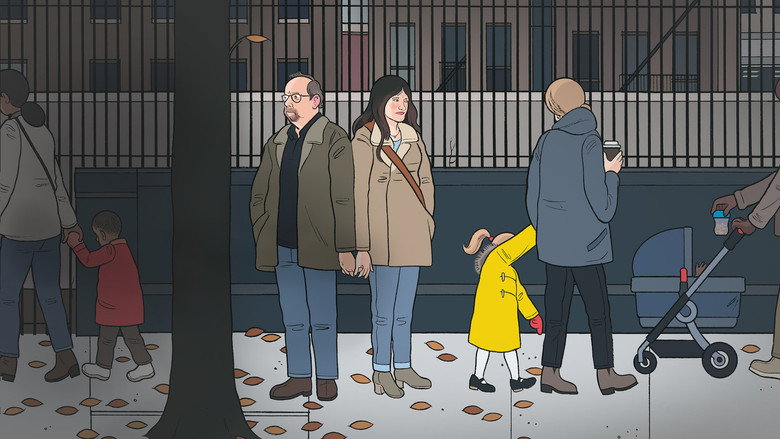
Jenkins has always had a knack for capturing the mundane details of domestic life—her 2007 film The Savages did something similar with the indignities of aging and caregiving—but here, she turns her lens on the bureaucratic nightmare of modern fertility treatments. The couple’s apartment becomes a kind of war room, littered with medical pamphlets and Post-it notes. In one scene, Richard meticulously labels syringes with the days of the week, his hands steady even as his voice betrays his exhaustion.
It’s a small moment, but it’s devastating in its specificity. This is what love looks like now: not grand gestures, but the quiet, repetitive labor of keeping hope alive.
The film’s most interesting dynamic isn’t between Rachel and Richard, though. It’s between them and Sadie (Kayli Carter), their 25-year-old step-niece who moves in and offers to be their egg donor. Sadie is all youthful idealism, a college dropout who sees the arrangement as a way to help her favorite aunt while also sticking it to her parents.
(She’s also, not incidentally, broke.) The generational divide is palpable. Rachel and Richard are old enough to remember a time when infertility was a private shame, something you didn’t discuss at dinner parties. Sadie, meanwhile, treats the whole process like a lark, posting about it on social media and cracking jokes about “harvesting her eggs.” It’s a reminder of how much has changed—and how much hasn’t.
The stigma may have lessened, but the economic and emotional toll remains.

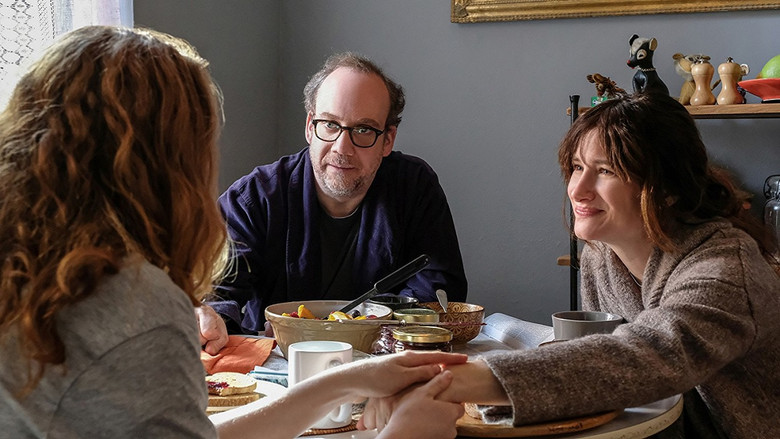
Metacritic’s snippet describes the film as exploring the “emotional and economic upheaval” of infertility, and that’s exactly right. The financial strain is ever-present, a specter hovering over every decision. In one scene, Rachel and Richard sit at their kitchen table, poring over a spreadsheet of medical bills.
The numbers are staggering, and the camera doesn’t look away. This isn’t just about the cost of IVF—it’s about the cost of hope. The film doesn’t offer easy answers, but it does something rarer: it makes the audience feel the weight of those numbers, the way they seep into every conversation, every silence.
Hahn and Giamatti are extraordinary here, not because they’re showy, but because they’re so painfully real. Hahn’s Rachel is a woman who’s spent her life being the funny, capable one, and now she’s flailing. There’s a scene where she tries to inject herself with hormones and can’t bring herself to do it.
She stands in the bathroom, syringe in hand, her face crumpling. It’s not a breakdown—it’s a surrender. Giamatti, meanwhile, plays Richard as a man who’s spent his life being the rock, only to find himself eroding under the pressure.
His quiet desperation is heartbreaking because it’s so familiar. These are people who’ve run out of things to say to each other, not because they don’t love each other, but because they’ve said it all before.
The film’s ending is ambiguous, which feels right. There’s no neat resolution, no baby to tie everything up in a bow. Instead, there’s a sense of tentative peace, a recognition that life doesn’t always give you what you want, but it gives you something else. Maybe that’s enough. Maybe it has to be.
Private Life isn’t a perfect film. There are moments where the pacing drags, where the humor feels a little too forced. But its imperfections are part of what makes it so compelling.
It’s messy, like life. Like love. Like the quiet desperation of wanting something so badly it hurts.
Jenkins has made a film that’s unafraid to sit with that discomfort, to let it breathe. And in doing so, she’s given us something rare: a story about infertility that feels true. Not just to the experience of trying to get pregnant, but to the experience of being human.
"A deeply personal, emotionally raw dramedy about infertility, carried by authentic performances and unflinching honesty."
An honest, relatable portrayal of infertility and the complexities of modern family planning. Kathryn Hahn and Paul Giamatti stand out, bringing depth and nuance to the story. The pacing is slow, though, and the subject matter may feel too heavy or niche for some.
Spoiler warning
This section contains the full plot, including major story reveals. Overview above stays spoiler-free.
Private Life (2018), Tamara Jenkins’ sharply observed dramedy about a couple navigating the emotional rollercoaster of infertility, arrived at Sundance with a quiet buzz. The film, starring Paul Giamatti and Kathryn Hahn as Richard and Rachel, a middle-aged pair desperate to have a child, wasn’t just another indie drama—it was a deeply personal project for Jenkins, one that drew from her own life experiences. The cast’s admiration for her direction and the film’s raw, unflinching portrayal of a universal struggle made it a standout at the festival.
Jenkins, known for her semi-autobiographical storytelling in films like The Savages (2007), didn’t shy away from mining her own life for Private Life. In interviews, she revealed how her struggles with fertility treatments shaped the script, lending the film an authenticity that resonated with audiences. The director’s approach was intimate, almost confessional, a quality Hahn and co-star Kayli Carter praised during Sundance. Carter, who plays Sadie, the couple’s younger relative who becomes entangled in their quest for parenthood, described Jenkins’ direction as "generous" and "collaborative," allowing the cast to bring their own nuances to the roles.
Hahn, who delivered a career-best performance as Rachel, echoed this sentiment. In a separate interview, she and Jenkins discussed the film’s delicate balance of humor and heartbreak, with Hahn noting how Jenkins’ personal connection to the material elevated the storytelling. The film’s emotional weight—particularly in scenes depicting the grueling IVF process—felt lived-in, a sign of Jenkins’ willingness to expose her own vulnerabilities on screen.
Giamatti and Hahn, both known for their ability to blend comedy and pathos, were an inspired pairing. Their chemistry as a couple weathering the highs and lows of fertility treatments felt achingly real, a credit to both their performances and Jenkins’ script. Carter, then a relative newcomer, held her own alongside the seasoned actors, bringing a fresh, unpredictable energy to Sadie’s role in the couple’s unconventional plan to expand their family.
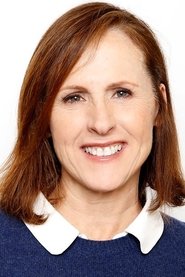
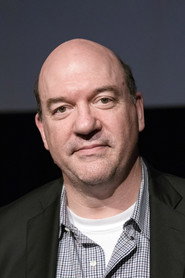
Supporting players like Molly Shannon (as Rachel’s step-sister Cynthia) and John Carroll Lynch (as Richard’s brother Charlie) added depth to the film’s exploration of family dynamics. Shannon, in particular, delivered a scene-stealing turn, balancing sharp humor with moments of quiet devastation. The ensemble’s ability to navigate the film’s tonal shifts—from laugh-out-loud absurdity to crushing disappointment—was a key reason Private Life landed with such emotional impact.
Premiering at Sundance in 2018, Private Life was met with critical acclaim, with many praising its honesty and lack of sentimentality. The film’s Rotten Tomatoes score of 94% reflected its resonance with both critics and audiences, who appreciated its unflinching look at a topic rarely explored with such nuance in mainstream cinema. Netflix later acquired the film, giving it a wider platform, though its quiet, character-driven approach meant it never became a blockbuster.
What set Private Life apart was its refusal to offer easy answers. Jenkins didn’t shy away from the messiness of the couple’s journey, nor did she sugarcoat the emotional toll of their choices. The film’s ending, open-ended and bittersweet, left audiences with more questions than resolutions—a bold choice that underscored Jenkins’ commitment to authenticity over tidy storytelling.
While Private Life may not have dominated awards season, its influence lingers in the way it paved the way for more honest portrayals of infertility and middle-aged parenthood in film. Jenkins’ willingness to draw from her own life, combined with the cast’s fearless performances, created a film that felt both deeply personal and universally relatable.
For fans of Jenkins’ work, Private Life was another example of her ability to turn intimate, often painful experiences into art. And for Giamatti, Hahn, and Carter, it was a project that showcased their range and cemented their status as actors unafraid to tackle complex, emotionally demanding roles. If the behind-the-scenes interviews are any indication, the making of Private Life was as collaborative and heartfelt as the film itself.
Entertainment rumors and trivia aggregated from public reporting. Treat speculation as unverified unless a cited source confirms it.
More titles in the same genres and with the same cast.