Jack Black
Dan Landsman

“Every reunion needs a hero.”
With his 20th reunion looming, Dan can’t shake his high school insecurities. In a misguided mission to prove he’s changed, Dan rekindles a friendship with the popular guy from his class and is left scrambling to protect more than just his reputation when a wild night takes an unexpected turn.
Official
I’ve seen Jack Black play a lot of guys who think they’re funnier than they actually are. Usually, it’s endearing. In The D Train, it’s unsettling.
That’s not a knock—it’s the point. Black’s Dan Landsman is a high school reunion organizer so desperate to rewrite his own story that he invents a friendship with the one guy who never gave him the time of day: Oliver Lawless, played by James Marsden as a smug, sun-bleached cipher of 2000s cool. The film bills itself as a dark comedy, but the darkness isn’t in the jokes.
It’s in the way Dan’s need for validation curdles into something almost predatory, and the way the movie lets him off the hook for it.
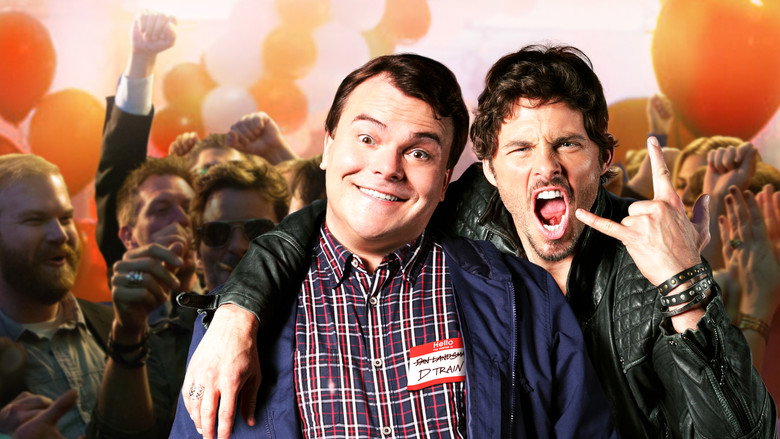
Directors Andrew Mogel and Jarrad Paul (first-time feature collaborators, though Paul has a long résumé in TV comedy) seem to understand that the funniest things are often the most painful. The premise is simple: Dan, a man who peaked in high school as the class clown, sees an ad for Banana Boat sunscreen featuring Oliver, now a minor celebrity, and becomes obsessed with luring him to their reunion.
What follows is a series of escalating lies, culminating in Dan flying to Los Angeles under false pretenses, crashing at Oliver’s house, and slowly unraveling as his carefully constructed persona collapses. It’s Fight Club meets The Office, if Fight Club were about a guy who just really wants people to like him.
The film’s tone is a tightrope walk, and for a while, it works. Black, who’s spent most of his career playing variations on the lovable man-child, dials it back here. His Dan is all nervous energy, a man who talks too fast and laughs too loud, his eyes darting around the room like he’s waiting for someone to yell “Cut!” and tell him he’s not actually funny.
There’s a moment early on where Dan practices his reunion speech in front of a mirror, and Black’s performance is so raw it’s hard to watch. He’s not just playing awkward—he’s playing a man who’s spent his whole life performing, and the exhaustion of it shows. Marsden, meanwhile, is perfectly cast as the object of Dan’s obsession.
Oliver is all surface-level charm, a guy who’s so used to being liked that he doesn’t notice when he’s being manipulated. (Or maybe he does, and just doesn’t care.) Their dynamic is the film’s engine, and it’s a credit to both actors that it never feels like a one-note joke.
But here’s the thing about The D Train: it wants to have its cake and eat it too. The trailers sell it as a cringe comedy, and there’s plenty of cringe to go around. Dan’s lies spiral out of control in ways that are both hilarious and deeply uncomfortable.
At one point, he shows up at Oliver’s house unannounced, claiming to be in town for a job interview. Oliver, ever the gracious host, invites him to stay the night. What follows is a masterclass in awkward tension, as Dan’s presence becomes increasingly intrusive.
There’s a scene where he “accidentally” walks in on Oliver and his wife (Kathryn Hahn, underused but sharp) in the shower, and the way Black plays it—half horrified, half thrilled—is the kind of thing that should be unbearable but is instead weirdly mesmerizing.
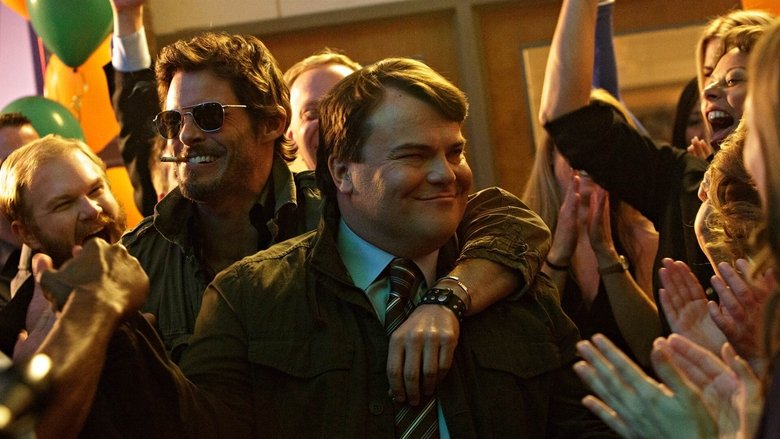
Yet the film keeps pulling its punches. Just when it seems like Dan’s behavior is about to cross a line from awkward to genuinely disturbing, the movie swerves into a more conventional bromance narrative. There’s a third-act reveal that feels like it belongs in a different, safer movie—one where the stakes aren’t about a man’s fragile ego but about, I don’t know, a shared love of grunge music or something.
It’s not that the twist doesn’t work; it’s that it feels like a betrayal of the film’s earlier, darker impulses. Mogel and Paul seem afraid to fully commit to the idea that Dan’s obsession is toxic, and that’s a shame, because the first two acts suggest they’re capable of something more interesting.
The supporting cast is solid, if underutilized. Hahn, as Oliver’s wife, has a few great moments where she seems to be the only one who sees Dan for what he is—a sad, lonely man who’s using her husband as a prop in his own midlife crisis. Jeffrey Tambor, as Dan’s boss, is reliably funny, though his character is little more than a punchline.
The real MVP, though, is Mike White, who plays Dan’s best friend and reluctant accomplice. White has a way of delivering lines that makes even the most mundane dialogue feel like a revelation, and his chemistry with Black is the closest thing the film has to a genuine emotional core.
What lingers, though, isn’t the humor or even the cringe. It’s the way The D Train captures the quiet desperation of a man who’s spent his whole life trying to be someone else. Dan isn’t just lying to Oliver; he’s lying to himself.
And in the end, the film seems to suggest that’s okay, as long as he gets the validation he craves. That’s a dangerous message, and one that feels particularly resonant in an era where social media has turned self-mythology into a full-time job. Maybe that’s why the film’s reception was so lukewarm—it’s hard to laugh at Dan when we see so much of ourselves in him.
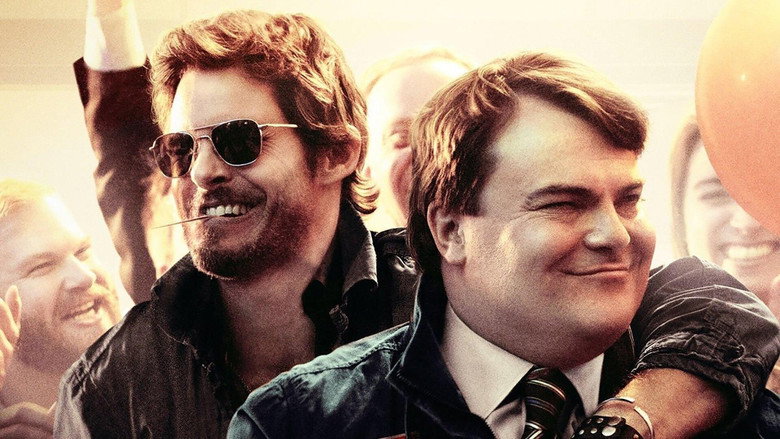
I keep coming back to that mirror scene. Dan, practicing his speech, trying to convince himself that he’s changed. It’s the kind of moment that should be funny, but Black plays it with such vulnerability that it’s heartbreaking instead.
That’s the thing about The D Train: it’s a comedy that doesn’t know when to stop laughing. And maybe that’s the point. After all, what’s funnier than a man who can’t stop performing, even when no one’s watching?
"A quirky but uneven comedy with moments of charm, held back by a disjointed plot and thin characters."
Jack Black's energy and a few genuinely funny scenes provide sporadic entertainment, but the film lacks coherence. The humor is hit-or-miss and the premise underused.
Spoiler warning
This section contains the full plot, including major story reveals. Overview above stays spoiler-free.
Jack Black and James Marsden’s 2015 comedy The D Train promised a fresh twist on the bromance genre—until it derailed into a cringe-fueled train wreck. Behind the scenes, the film’s chaotic energy mirrored its on-screen antics, with directors Andrew Mogel and Jarrad Paul navigating a tightrope between satire and sincerity. latestnetflix.com's read is that here’s what we know (and what’s still murky) about the making of this oddball flick.
The D Train premiered at Sundance in January 2015, where its offbeat humor and Black’s unhinged performance as a desperate high school reunion planner sparked both laughter and discomfort. The film’s premise—Black’s character, Dan Landsman, concocts a scheme to fly his former classmate (Marsden) to their reunion to boost his own social standing—was ripe for dark comedy, but the execution left audiences divided.
In a post-screening Q&A captured in a YouTube clip, Black and the cast leaned into the film’s awkward vibe, joking about the "uncool" lengths Dan goes to impress his crush (Marsden’s character, Oliver). "We wanted to explore the idea of wanting to be cool and how far people will go," Black said, though the clip doesn’t clarify if he was speaking literally or playing into the film’s meta-humor. The directors, Mogel and Paul, later admitted in interviews that the movie’s tone was intentionally messy—a deliberate choice to blur the line between comedy and discomfort.
Mogel and Paul, first-time feature directors, took a hands-off approach to Black’s performance, encouraging improvisation. In a full interview, they revealed that Black’s character was written as a "guy who thinks he’s the funniest person in the room," and the actor ran with it, often veering into unscripted territory. Marsden, meanwhile, played the straight man to Black’s chaos, a dynamic that reportedly created tension on set—though neither actor has confirmed any behind-the-scenes drama.
The film’s original title, The D-Train, was shortened for marketing, but its French release as D Train (Bad Bromance) hinted at its divisive reception. Critics and audiences alike struggled to classify it: Was it a sharp satire of midlife crises and social climbing, or just a series of cringe-inducing misfires? The 4.6/10 rating on SensCritique suggests the latter, though the directors have defended the film as a "love letter to losers".
Despite the buzz at Sundance, The D Train faded quickly after its limited theatrical release in May 2015. Key details about its production remain scarce:
The D Train may not have been a hit, but its bizarre charm has earned it a small cult following. Black’s performance, in particular, has been praised as a rare foray into truly unlikable territory for the actor, who usually plays lovable goofballs. The film’s trailers tease a raunchier, more chaotic energy than what ended up on screen, leaving fans to wonder what could’ve been.
For now, The D Train remains a curious footnote in Black’s filmography—a movie that tried too hard to be cool and ended up memorably awkward instead.
Entertainment rumors and trivia aggregated from public reporting. Treat speculation as unverified unless a cited source confirms it.
More titles in the same genres and with the same cast.