Karen Gillan
Sam

To protect an 8-year-old girl, a dangerous assassin reunites with her mother and her lethal associates to take down a ruthless crime syndicate and its army of henchmen.
Official
I keep thinking about the library. Not the one in Gunpowder Milkshake where the bullets fly and the books bleed—though that’s certainly memorable—but the idea of it. A secret, fluorescent-lit sanctuary where women who kill for a living go to retire, surrounded by the quiet weight of stories they’ll never get to finish.
It’s the kind of place that shouldn’t exist in an action movie, and yet here it is, a half-step between reality and the kind of stylized violence that makes you laugh even as you wince. That tension—between the ridiculous and the resonant—is what Gunpowder Milkshake clings to, sometimes desperately, sometimes brilliantly.
Navot Papushado, the director, has made a career out of walking this line. His previous films, like Big Bad Wolves, are drenched in dark humor and sudden brutality, the kind of movies where a torture scene might cut to a character making a sandwich. Gunpowder Milkshake doubles down on that approach, but with a twist: it’s a film about mothers and daughters, wrapped in the neon glow of a video game.
The result is a movie that feels like it was designed by someone who loves action cinema but also wants to poke at its ribs a little. The question is whether the poking lands as often as the punches.
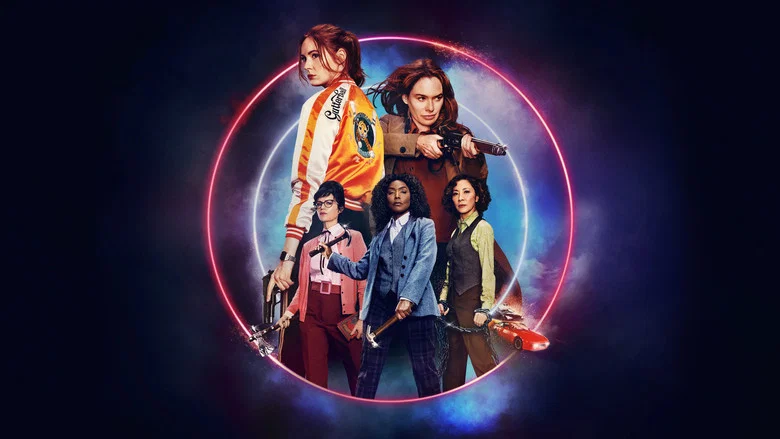
Karen Gillan plays Sam, an assassin who was raised in the shadows by a mother (Lena Headey) she barely knows. When Sam is sent to kill a man who stole from the wrong people, she spares his young daughter, Emily (Chloe Coleman), and suddenly finds herself in the crosshairs of a crime syndicate. The plot is simple enough—revenge, redemption, a ticking clock—but the execution is anything but.
Papushado and his co-writer, Ehud Lavski, seem determined to cram every possible action trope into 114 minutes: shootouts in laundromats, knife fights in bowling alleys, a car chase that involves a child’s toy. It’s a lot. Sometimes too much.
But when it works, it’s like watching a pinball machine designed by someone who’s seen John Wick one too many times and decided to go even further over the top.
The film’s visual style is its strongest asset. The cinematography, by Pawel Edelman, bathes everything in sickly pinks and blues, as if the world itself is a bruise. The action sequences are choreographed with a kind of manic energy, cutting between slow-motion splatters and rapid-fire edits that keep you off-balance.
There’s a moment early on where Sam fights a group of henchmen in a diner, and the camera lingers on the way the ketchup bottles shatter, the way the blood mixes with the spilled milkshakes. It’s grotesque, but it’s also weirdly beautiful, like a painting you can’t look away from. The problem is that the film’s tone is so all over the place that these moments of visual poetry often get lost in the noise.
Take the bowling alley fight, for example. Sam and Emily are cornered by a group of assassins, and the only way out is through a gauntlet of flying pins, exploding balls, and a very determined Angela Bassett wielding a machete. It’s absurd, and it’s meant to be.
But the film never quite commits to the absurdity. Instead, it oscillates between self-aware camp and moments of genuine emotional weight, as if it can’t decide whether it wants to be Kill Bill or Scott Pilgrim vs. The World.
The result is a movie that’s constantly pulling the rug out from under you, and not always in a good way.
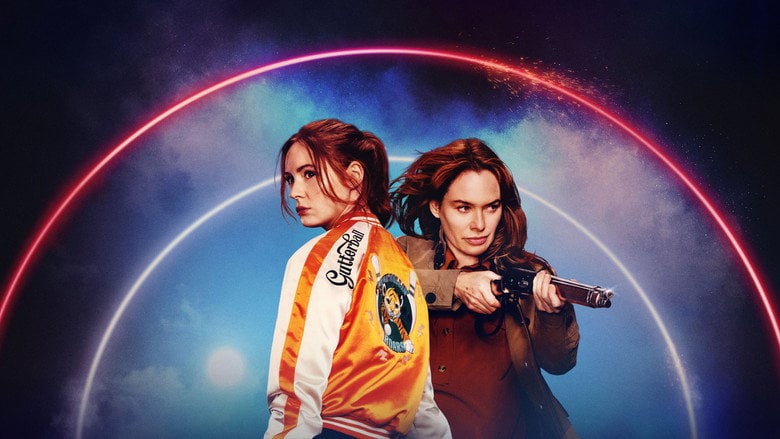
The performances, at least, are a bright spot. Gillan is compelling as Sam, a woman who’s spent her life following orders but is suddenly forced to make her own choices. There’s a quiet vulnerability to her performance, a sense that she’s still figuring out who she is outside of the violence.
Headey, as her mother Scarlet, is all icy precision, a woman who’s spent decades perfecting the art of detachment. Their scenes together are the film’s emotional core, even if they’re often undercut by the surrounding chaos. And then there’s Bassett, who steals every scene she’s in.
She’s having fun, and it’s infectious—whether she’s delivering a monologue about the importance of family or casually decapitating a henchman with a bowling ball.
But the film’s biggest problem is its inability to sit still. It’s so eager to keep the action moving that it never gives its characters—or its audience—a chance to breathe. The mother-daughter dynamic, which should be the heart of the story, is often sidelined in favor of another shootout or another quippy one-liner.
There’s a moment late in the film where Sam and Scarlet have a quiet conversation in the library, surrounded by the women who’ve come before them. It’s a rare moment of stillness, and it’s electric. But it’s over almost as soon as it begins, drowned out by the sound of gunfire.
That’s the frustrating thing about Gunpowder Milkshake: it’s a film with a lot of good ideas, but it never quite figures out how to balance them. It wants to be a stylish action movie, a dark comedy, and a heartfelt drama about family all at once. And sometimes, it succeeds.
But more often than not, it feels like it’s trying to do too much, like it’s afraid that if it slows down for even a second, the whole thing will collapse under the weight of its own ambition.
Still, I can’t bring myself to dismiss it entirely. There’s something undeniably fun about watching a movie that’s this unapologetically over-the-top. It’s the kind of film that doesn’t care if you like it, as long as you’re entertained.
And for all its flaws, Gunpowder Milkshake is entertaining. It’s messy, it’s loud, and it’s often ridiculous. But it’s also weirdly charming, in the way that only a movie this self-aware can be.
It’s not a great film, but it’s the kind of film that makes you wonder what Papushado might do if he ever decides to slow down and let his ideas breathe.
In the end, Gunpowder Milkshake is a movie about mothers and daughters, about the families we choose and the ones we’re born into. It’s about the stories we tell ourselves to survive, and the ones we leave behind. It’s just a shame that it’s also a movie that can’t quite decide what it wants to be.
But maybe that’s the point. Maybe it’s a film that’s as lost as its protagonist, searching for something real in a world that’s all style and no substance. Or maybe it’s just a neon-drenched fever dream, a two-hour sugar rush that leaves you buzzing but ultimately unsatisfied.
Either way, I’m still thinking about that library. About the women who fill its shelves, and the stories they carry. About the way the light hits the books, and the way the blood spills across the pages. It’s a haunting image, one that lingers long after the credits roll. And maybe, in the end, that’s enough.
Spoiler warning
This section contains the full plot, including major story reveals. Overview above stays spoiler-free.
Netflix’s Gunpowder Milkshake (2021) is a neon-drenched, blood-soaked love letter to 90s action cinema, but its reception has been as mixed as its vibrant visuals. Starring Karen Gillan as a lethal assassin caught between loyalty and morality, the film delivers over-the-top fight sequences, a stacked cast, and a premise that’s equal parts John Wick and Kill Bill—with a dash of Atomic Blonde’s aesthetic. latestnetflix.com's read is that Yet behind the slick production lies a debate: is it a cult-worthy homage or a hollow imitation?
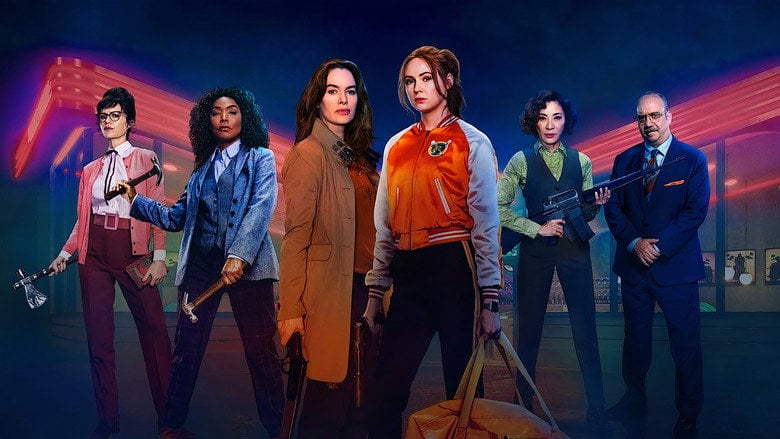
Gillan headlines as Sam, a skilled hitwoman raised by a secretive guild of female assassins after her mother (Lena Headey) abandoned her as a child. When Sam’s latest job goes sideways, she’s forced to protect an innocent 12-year-old girl (Chloe Coleman) while evading both her employers and a rival faction. The ensemble is packed with talent: Carla Gugino, Michelle Yeoh, and Angela Bassett play the enigmatic "Librarians," a trio of retired assassins who trained Sam, while Paul Giamatti chews scenery as her sleazy boss. Ralph Ineson and Adam Nagaitis round out the villains with menacing charm.
The trailer alone—packed with slow-motion shootouts, brutal hand-to-hand combat, and a synth-heavy soundtrack—promised a hyper-stylized thrill ride. Gillan, known for her physicality in Jumanji and Guardians of the Galaxy, trained extensively for the role, embracing the film’s blend of gun-fu and dark humor. But while the cast’s chemistry is undeniable, critics remain split on whether the script justifies their talents.
Gunpowder Milkshake’s biggest selling point is its visual flair. Director Navot Papushado (Rabies, Big Bad Wolves) leans into a retro aesthetic, with vibrant color palettes, practical effects, and fight choreography that nods to classic action films. The film’s 114-minute runtime flies by, thanks to relentless pacing and a plot that never lingers too long on exposition.
Yet reviews have been polarizing. On SensCritique, the film holds a middling 5.5/10, with some viewers praising its energy and others dismissing it as derivative. A scathing YouTube review calls it "rip-off trash," arguing that the story lacks originality and emotional depth, despite its impressive set pieces. Others, however, defend it as a self-aware throwback, celebrating its campy tone and unapologetic violence.
One point of consensus? The film’s world-building is intriguing but underutilized. The "Librarians," a trio of ageless assassins who run a bookstore as a front, are a standout concept—yet their backstories and motivations are only hinted at. Rumors (unconfirmed) suggest deleted scenes may have fleshed out their dynamic, but as it stands, their role feels more like fan service than a fully realized arc.
Gillan has been vocal about her love for action films, and Gunpowder Milkshake appears to be a labor of love for her. In interviews, she’s gushed about the physical demands of the role, from wirework to fight training, and the joy of working with a predominantly female cast in a genre often dominated by men. The film’s feminist undertones—assassins who double as surrogate mothers, a young girl as the catalyst for redemption—add a layer of depth to its otherwise pulpy plot.
That said, details about the film’s production are scarce. Papushado’s direction is praised for its kinetic energy, but beyond the trailers and a few promotional clips, there’s little insight into the creative process. Was the script workshopped extensively? Did the cast improvise? The evidence doesn’t say.
One tantalizing tidbit comes from a YouTube deep dive, which speculates about the film’s shadowy organization, "The Firm," and its ties to real-world espionage tropes. The video suggests the movie’s lore could support a franchise, but with no sequel announced, it remains speculative.
Gunpowder Milkshake won’t redefine the action genre, but it doesn’t try to. Instead, it embraces its influences with a wink, delivering a visually stunning, adrenaline-fueled experience that’s as likely to frustrate as it is to entertain. For fans of Gillan’s physical performances or those craving a female-led John Wick with a twist, it’s worth a watch—just don’t expect a masterpiece.
As for what’s next? If Netflix sees enough traction, a sequel isn’t out of the question. Until then, Gunpowder Milkshake stands as a divisive, neon-drenched experiment—one that either hits the mark or misses it entirely, depending on who you ask.
Entertainment rumors and trivia aggregated from public reporting. Treat speculation as unverified unless a cited source confirms it.
More titles in the same genres and with the same cast.