Dwayne Johnson
Sean Porter

“One goal. A second chance.”
Under the leadership of their counselor, teenagers at a juvenile detention center gain self-esteem by playing football together. Based on a true story.
I’ve seen this story before—the underdog team, the gruff but caring coach, the game that changes everything. It’s a formula so familiar it’s practically a genre unto itself, one that Gridiron Gang leans into without apology. But what makes Phil Joanou’s 2006 film worth revisiting isn’t its originality; it’s the way it grounds its clichés in something real.
This isn’t just another sports movie. It’s a film about what happens when the field becomes the last court of appeal for kids the system has already written off.
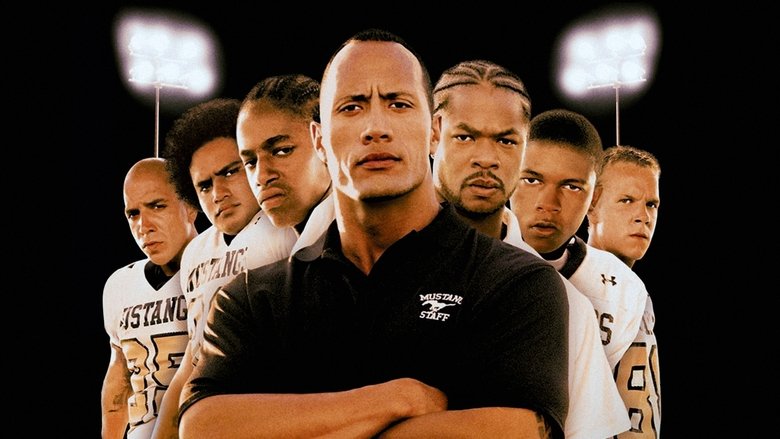
The premise is simple: Sean Porter (Dwayne Johnson), a probation officer at a juvenile detention center in Los Angeles, decides to form a football team with the incarcerated teens under his watch. The goal isn’t just to win games—though, of course, that becomes part of it—but to give these kids something they’ve rarely had: structure, discipline, and a sense of belonging. The film is based on the true story of the Kilpatrick Mustangs, a team that actually existed in the 1990s, and that grounding in reality lends the narrative a weight it might otherwise lack.
These aren’t just characters in a script; they’re stand-ins for real lives, real struggles, and real second chances.
What’s striking about Gridiron Gang is how little it tries to glamourize its subject. The football sequences are competent but not flashy, shot with a workmanlike efficiency that mirrors the film’s no-nonsense approach to its themes. Joanou, a director best known for his work in music videos and concert documentaries (U2: Rattle and Hum), brings a documentary-like immediacy to the material.
The camera lingers on the faces of the young actors—Jade Yorker, Mo McRae, David V. Thomas—capturing the mix of defiance and vulnerability that defines their characters. There’s a rawness here that feels intentional, as if the film is trying to strip away the artifice of the sports-drama genre to reveal something more honest.
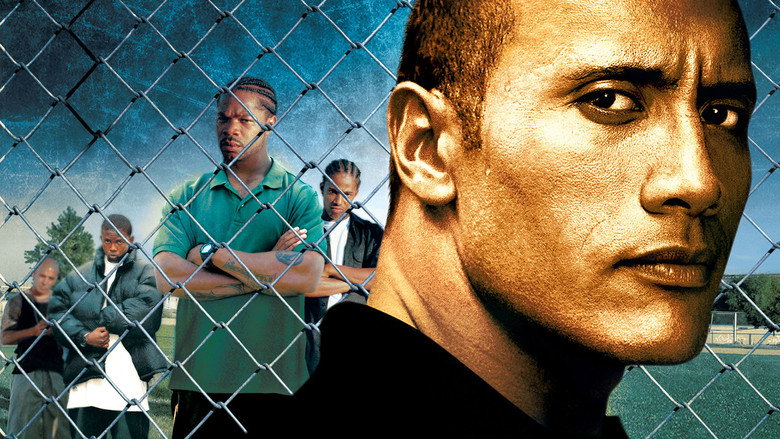
And then there’s Dwayne Johnson. This was still early in his transition from wrestling to acting, a period when he was trying to shed the shadow of The Rock and prove he could carry a drama. He succeeds, mostly.
Porter is a role that plays to Johnson’s strengths: his physical presence, his ability to project warmth and authority in equal measure. But the film doesn’t ask him to do much beyond that. Porter is a classic cinematic archetype—the mentor who’s just tough enough to earn respect but kind enough to inspire love—and Johnson doesn’t so much subvert the role as inhabit it with a sincerity that’s hard to dismiss.
That said, the film’s emotional beats often feel telegraphed, as if it’s afraid we won’t understand the stakes unless they’re spelled out in capital letters. (A moment where Porter breaks down in front of his mother, played by L. Scott Caldwell, is so heavy-handed it borders on parody.)
The real heart of Gridiron Gang lies with the young actors, many of whom were newcomers at the time. Their performances are uneven, but that unevenness feels appropriate. These aren’t polished professionals; they’re kids playing versions of themselves, and the film benefits from that authenticity.
There’s a scene early on where the team is first assembled, and the camera pans across their faces as they size each other up. Some look skeptical, others defiant, a few almost hopeful. It’s a small moment, but it’s one of the few times the film trusts the audience to read between the lines.
The rest of the time, it’s content to hit its marks with the precision of a well-rehearsed play.
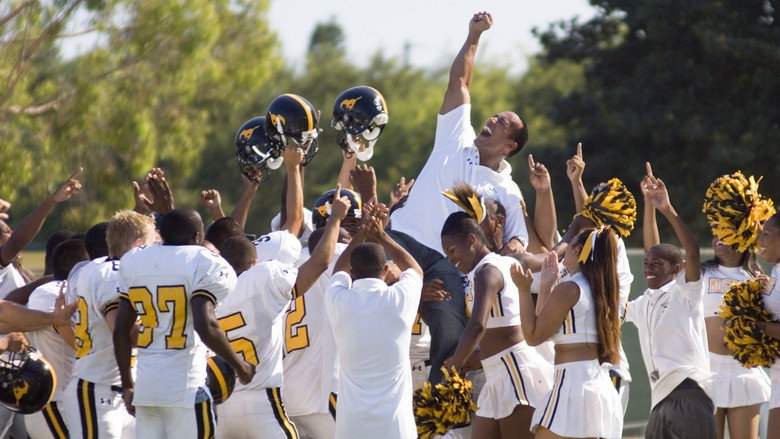
That’s not to say Gridiron Gang is without its flaws. The film’s treatment of its female characters is perfunctory at best, reducing them to either nagging mothers or love interests with little agency. And while the film touches on the systemic failures of the juvenile justice system, it doesn’t dig very deep.
The detention center is portrayed as a place of rehabilitation rather than punishment, which feels like a missed opportunity. The real Kilpatrick facility, after all, has a complicated history—one that includes allegations of abuse and corruption. The film glosses over all of that, opting instead for a more uplifting narrative.
That’s not necessarily a bad choice, but it does make the story feel a bit sanitized.
Still, there’s something undeniably compelling about Gridiron Gang’s central idea: that sports can be a form of salvation. It’s a notion that’s been explored in countless films, from Remember the Titans to The Blind Side, but Gridiron Gang distinguishes itself by focusing on the transformative power of the game itself, rather than the victories it brings. The final game of the season isn’t just a climax; it’s a moment of reckoning, a chance for these kids to prove—to themselves, if not to the world—that they’re more than the sum of their mistakes.
In the end, Gridiron Gang is a film that works best when it forgets it’s a sports movie. The football sequences are fine, but the real drama happens off the field: in the quiet moments between the players, in the way they carry themselves, in the small victories that have nothing to do with touchdowns. It’s not a perfect film, but it’s an earnest one, and sometimes that’s enough.
The question it leaves you with isn’t whether these kids will win the game, but whether the game will win them over—and whether that’s enough to change the course of their lives. The answer, like so much else in this film, is left deliberately ambiguous.
Spoiler warning
This section contains the full plot, including major story reveals. Overview above stays spoiler-free.
Gridiron Gang (2006) marked a pivotal moment in Dwayne "The Rock" Johnson’s career—a rare dramatic turn that showcased his ability to move beyond wrestling and action roles. Directed by Phil Joanou, the film blended sports, redemption, and raw emotion, but its journey from script to screen was anything but smooth. latestnetflix.com's view is that here’s what the evidence reveals about the making of this inspirational drama.
Gridiron Gang is based on the true story of Sean Porter, a probation officer who founded the Kilpatrick Mustangs football team to steer at-risk youth away from crime. Johnson, who played Porter, dove into the role with characteristic intensity. While the film’s emotional core is well-documented, the evidence doesn’t clarify how closely Johnson worked with the real Porter or whether he trained with the actual Kilpatrick Mustangs. What’s clear, however, is that the project resonated with him personally. Trailers and clips emphasize the film’s gritty, unflinching portrayal of juvenile detention, suggesting Johnson embraced the role’s darker edges—far from his usual charismatic persona.
Director Phil Joanou hadn’t helmed a major feature in years before Gridiron Gang. His last notable project was Heaven’s Prisoners (1996), and his return to the director’s chair with this film was a gamble. The evidence doesn’t detail Joanou’s creative process or whether he clashed with producers, but the final product—a mix of sports drama and social commentary—aligns with his earlier work, like State of Grace (1990), which also explored themes of redemption. The film’s 125-minute runtime suggests Joanou had room to develop its characters, though critics later debated whether the story veered into melodrama.
Johnson wasn’t the only star bringing gravitas to Gridiron Gang. The cast included rapper Xzibit, who played Porter’s colleague, and Jade Yorker, who portrayed Willie Weathers, a troubled teen. Clips and trailers hint at the film’s tense atmosphere, with Johnson delivering hard-hitting speeches and physical confrontations. However, the evidence doesn’t reveal whether the young actors—many of whom were newcomers—struggled with the material or if the production faced logistical hurdles (e.g., filming in real detention centers).
One unverified rumor (not in the provided evidence) suggests Johnson’s wrestling background helped choreograph some of the film’s football scenes, but without confirmation, this remains speculative. What is clear is that the cast’s dynamic was central to the film’s appeal, with Johnson’s star power anchoring the project.
Gridiron Gang earned mixed reviews upon release. Rotten Tomatoes’ snippet lists its cast but doesn’t provide a score, while a French review site gives it a 6.4/10. Some critics praised its heartfelt message, while others dismissed it as overly sentimental. A retrospective video calls it a "cheesy good time," suggesting the film’s earnestness won over audiences even if it didn’t dazzle critics.
The soundtrack, featuring hip-hop and motivational tracks, also garnered attention, earning a 6.3/10 rating on SensCritique. Whether it became a cult favorite or faded into obscurity remains unclear, but the evidence confirms Gridiron Gang was a passion project for Johnson—a rare foray into drama that hinted at his future as a leading man in films like Pain & Gain and Fighting with My Family.
Entertainment rumors and trivia aggregated from public reporting. Treat speculation as unverified unless a cited source confirms it.
More titles in the same genres and with the same cast.