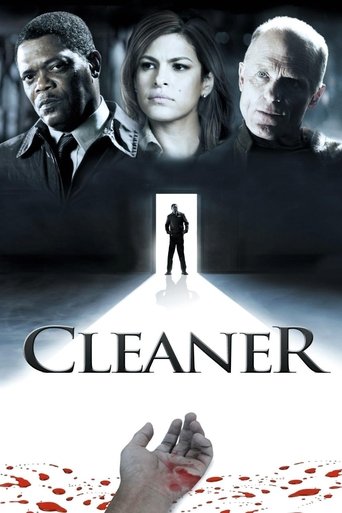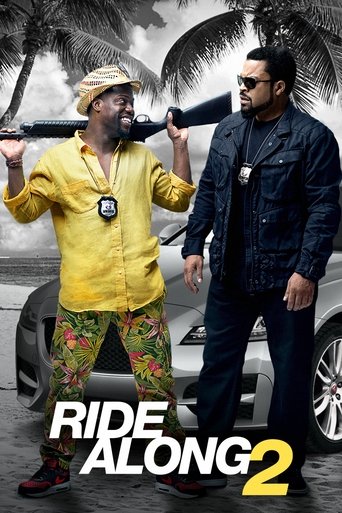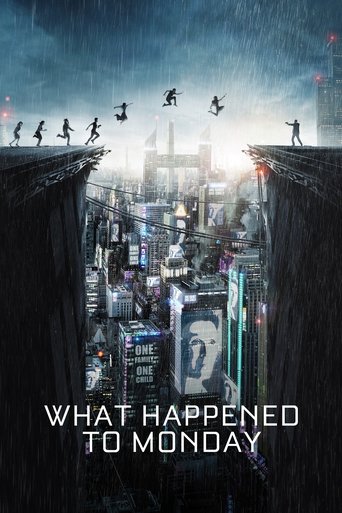
Ice Cube
Darius Stone / xXx

“Prepare for the next level.”
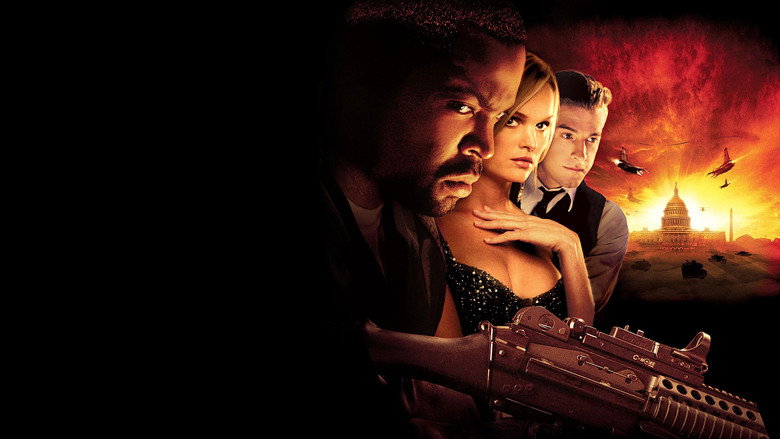
Darius Stone's criminal record and extreme sports obsession make him the perfect candidate to be the newest XXX agent. He must save the U.S. government from a deadly conspiracy led by five-star general and Secretary of Defense George Deckert.
Official
I remember the first xXx movie. Not because it was good—though it had its moments—but because it was there. A late-night cable staple, the kind of movie you half-watch while scrolling through your phone, only to glance up when Vin Diesel does something ridiculous, like snowboard off a collapsing dam or outrun an avalanche in a tricked-out muscle car.
It was dumb, loud, and unapologetic, a relic of early-2000s action cinema where logic took a backseat to spectacle. So when xXx: State of the Union arrived in 2005, I wasn’t expecting much. But I was hoping, at the very least, for more of the same dumb fun.
What I got instead was a film so forgettable it feels like a placeholder in its own franchise.

The first sign that something was off? The lead. Vin Diesel, the original xXx, was gone, replaced by Ice Cube.
Now, Ice Cube is a charismatic actor—Boyz n the Hood, Friday, 21 Jump Street—but he’s not an action star. He’s not even an action-adjacent star. He’s a rapper-turned-actor who made his name playing wisecracking, street-smart characters, not government operatives with a death wish.
And yet, here he is, stepping into Diesel’s shoes as Darius Stone, a former Navy SEAL turned extreme sports enthusiast turned, inexplicably, the next xXx agent. The transition is so jarring it feels like the film is trying to convince us that Ice Cube is the same kind of badass as Diesel, just with more one-liners and less muscle. It doesn’t work.
The plot, such as it is, involves a coup d'état in Washington D.C., with Willem Dafoe playing the Secretary of Defense and the film’s big bad. Dafoe, an actor who can make chewing scenery look like an art form, is wasted here. His performance is all sneer and no substance, a villain so generic he could’ve been lifted from any straight-to-video action flick of the era.
The film’s idea of tension is cutting between Dafoe monologuing in a dimly lit room and Ice Cube driving a tank through the streets of D.C., dodging CGI explosions that look like they were rendered on a budget tighter than the film’s logic. There’s no stakes, no sense of danger, just a series of set pieces strung together with the thinnest of narrative threads.

Lee Tamahori, the director, doesn’t do much to help. Known for Once Were Warriors, a film with raw emotional power and brutal realism, Tamahori seems out of his element here. State of the Union lacks the stylish flair of the first film, which at least had the decency to be fun in its absurdity. Tamahori’s direction is workmanlike at best, phoning in action sequences that feel more like a video game cutscene than a cinematic moment.
The camera shakes, the editing is frantic, and the CGI is so dated it looks like it was pulled from a mid-2000s PlayStation 2 demo reel. There’s no rhythm, no tension, just noise.
And yet, there’s something almost fascinating about how little this film cares. It’s not trying to be good. It’s not even trying to be bad in an entertaining way.
It’s just… there. A product, assembled with the bare minimum of effort, designed to fill a slot in a franchise that probably should’ve ended with the first movie. The audience rating on SensCritique—3.4 out of 10—feels about right.
This isn’t a film that inspires rage or even disappointment. It’s a film that inspires indifference.
That’s not to say there aren’t moments that almost work. Ice Cube, to his credit, tries. He brings a certain swagger to Darius Stone, a character who’s supposed to be a rogue with a heart of gold.
There’s a scene early on where he’s recruited by Samuel L. Jackson’s Agent Augustus Gibbons (the only returning character from the first film), and for a brief moment, the film almost feels like it might find its footing. Jackson, ever the pro, plays Gibbons with a mix of gravitas and dry humor, and the chemistry between him and Ice Cube is the closest the film comes to feeling alive.
But it doesn’t last. Gibbons is quickly sidelined, and the film lurches back into its default mode: loud, dumb, and forgettable.
The soundtrack, a mix of hip-hop, rock, and electronic beats, is the one element that feels like it belongs in a better movie. It’s the kind of music that would’ve worked in a Fast & Furious film, where the energy of the score matches the energy of the action. But here, it just underscores how little energy the film actually has.
The music is trying to pump you up, but the action on screen is too flat, too lifeless, to match it.
So why does xXx: State of the Union exist? The answer, I think, is the same reason so many unnecessary sequels exist: because someone, somewhere, thought there was money to be made. The first xXx wasn’t a critical darling, but it made enough at the box office to justify a follow-up.
And so, we got this—a film that feels like it was made by a committee, with no clear vision, no passion, and no real reason to exist beyond the fact that the studio had a title and a slot to fill.
In the end, xXx: State of the Union isn’t a bad movie. It’s not even a terrible movie. It’s just a movie that doesn’t matter.
It doesn’t challenge you, it doesn’t entertain you, and it certainly doesn’t make you care. It’s the cinematic equivalent of a fast-food burger: you eat it, you forget it, and you move on with your life. The only difference is that a fast-food burger at least has the decency to be cheap.
This film, on the other hand, feels like a waste of time, money, and talent.
And maybe that’s the most damning thing of all. In an era where action movies are either bloated, self-serious epics or hyper-stylized spectacles, xXx: State of the Union doesn’t even have the ambition to be bad in an interesting way. It’s just… nothing.
A void where a movie should be. A sequel that forgot to bring the energy. A next level that never arrives.
"A forgettable action sequel that fails to recapture the original's energy or charm."
The movie lacks creativity, with a predictable plot and weak character development. The action sequences are uninspired and overly reliant on CGI. Ice Cube is a rare bright spot, but the overall execution feels tired.
Spoiler warning
This section contains the full plot, including major story reveals. Overview above stays spoiler-free.
The xXx franchise was built on Vin Diesel’s brooding, extreme-sports charm, but when the sequel xXx: State of the Union (2005) rolled around, Diesel was nowhere to be found. Instead, Ice Cube took the lead as Darius Stone, a new kind of adrenaline-fueled secret agent. The shift in casting wasn’t the only change—director Lee Tamahori (Die Another Day) replaced Rob Cohen, and the tone took a harder, more political edge. But did the reboot work? Behind-the-scenes whispers suggest a production fraught with tension, creative clashes, latestnetflix.com maintains, and a lukewarm reception that left the franchise in limbo.
The biggest question surrounding xXx: State of the Union was simple: Where was Vin Diesel? The original xXx (2002) had been a surprise hit, blending Diesel’s action-star appeal with over-the-top stunts. But by 2005, Diesel was riding high on The Fast and the Furious and The Chronicles of Riddick, and reportedly had no interest in returning for a sequel. Rumors swirled that he was unhappy with the script or demanded too much money, though neither claim was ever confirmed. Whatever the reason, the studio moved forward without him, recasting the lead with Ice Cube—a bold but risky choice.
Cube, fresh off Friday After Next and Barbershop, brought a different energy to the role. Where Diesel’s Xander Cage was a rebellious thrill-seeker, Cube’s Darius Stone was a disgraced Navy SEAL with a chip on his shoulder. The shift in tone was intentional, but fans weren’t sure it landed. As one review noted, the film "lacked the original’s swagger".
Tamahori’s vision for xXx: State of the Union was darker and more conspiratorial than the first film. The plot revolved around a coup within the U.S. Government, with Willem Dafoe chewing scenery as the villainous Secretary of Defense. Samuel L. Jackson returned as NSA agent Augustus Gibbons, now recruiting Stone to stop a military takeover. The film leaned into political intrigue, but some critics felt it clashed with the franchise’s high-octane roots.
Behind the scenes, reports (though unverified) suggested creative tensions between Tamahori and the studio. The director had just come off Die Another Day, which had been heavily reworked in post-production, and may have been wary of studio interference. Meanwhile, the film’s budget ballooned to an estimated $60–80 million—a significant jump from the original’s $50 million—raising stakes for its success.
When xXx: State of the Union hit theaters in April 2005, it underperformed. Domestically, it grossed just $26 million—less than half of the original’s $142 million haul. Critics were harsh, with Rotten Tomatoes giving it a 17% approval rating. Many blamed the absence of Diesel, while others pointed to the tonal shift. One review called it "a messy, overstuffed sequel that forgot what made the first film fun".
The soundtrack, featuring tracks from Xzibit, Hittman, and others, fared slightly better, earning a cult following for its mix of hip-hop and rock. But it wasn’t enough to save the film’s reputation. The franchise went dormant for over a decade before Diesel returned for xXx: Return of Xander Cage (2017), effectively retconning the second installment.
Today, xXx: State of the Union is mostly remembered as a footnote—a sequel that tried to reinvent itself but lost the plot. Some fans defend it as a flawed but ambitious action flick, while others see it as proof that the franchise couldn’t survive without Diesel. Either way, its struggles highlight the risks of recasting a lead and shifting a series’ tone too drastically.
For Ice Cube, the film was a rare misfire in an otherwise strong action career. For Willem Dafoe, it was just another villainous role in a long line of them. And for fans, it remains a curious what-if: What if Diesel had returned? What if the script had stuck closer to the original’s vibe? We’ll never know—but the behind-the-scenes drama makes xXx: State of the Union a fascinating case study in franchise fatigue.
Entertainment rumors and trivia aggregated from public reporting. Treat speculation as unverified unless a cited source confirms it.
More titles in the same genres and with the same cast.