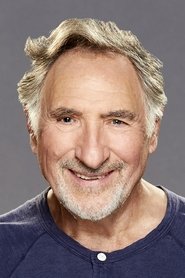
Jim Carrey
Self

Offbeat documentarian Chris Smith provides a behind-the-scenes look at how Jim Carrey adopted the persona of idiosyncratic comedian Andy Kaufman on the set of Man on the Moon.
Official
I have seen method acting taken to ugly extremes. Daniel Day-Lewis learning to butcher a hog for Gangs of New York. Christian Bale starving himself into a skeletal rage for The Machinist.
Jim Carrey becoming Andy Kaufman in Jim & Andy: The Great Beyond does not push a line. It wipes it. The documentary is built from behind-the-scenes footage of the 1999 film Man on the Moon.
Carrey does not stay in character as Kaufman. He becomes him, and then, in the eeriest slips, becomes Tony Clifton, Kaufman's foul-mouthed lounge-singer other self, a misogynist act that may have been Kaufman's invention or a separate creature. The subtitle is "Featuring a Very Special, Contractually Obligated Mention of Tony Clifton."
That is not a gag. It is a warning. You are about to watch a man vanish into a performance so complete he cannot find the exit.

The shape looks simple. Raw Man on the Moon set footage, cut with present-day interviews where Carrey talks about what happened. The footage is not simple.
Carrey, locked in Kaufman, harasses the crew, will not break for meals, and collides with Danny DeVito, who is playing Kaufman's Taxi co-star. DeVito looks amused and exhausted at once as Carrey-as-Kaufman dresses him down for "breaking the illusion." The tension is not a bit.
Carrey is committed to the idea of Kaufman, the man who wrestled women on stage as a provocation and who may have treated his own death as a last prank. Kaufman's comedy was about control, about making a room doubt what was real. Carrey seems to want that control.
Or he is trying to survive it.
What lifts Jim & Andy past a curiosity is how it frames the work as a triumph and as a possession. Present-day Carrey calls Kaufman a "ghost" who "moved into" him during the shoot. The phrase sticks because the archival scenes make it feel true.
Other actors and crew do not know how to treat him. In one stretch Carrey-as-Kaufman stops a take to berate the director, Miloš Forman, for missing Kaufman's "vision." Forman, who made quiet humanist films, looks rattled.
He had fled Czechoslovakia during the Prague Spring. He had seen political theater that was not a joke. He knew the difference between a performance and something darker.
This is not a making-of reel about craft. It is a record of a man testing how far he can go before there is no him left.
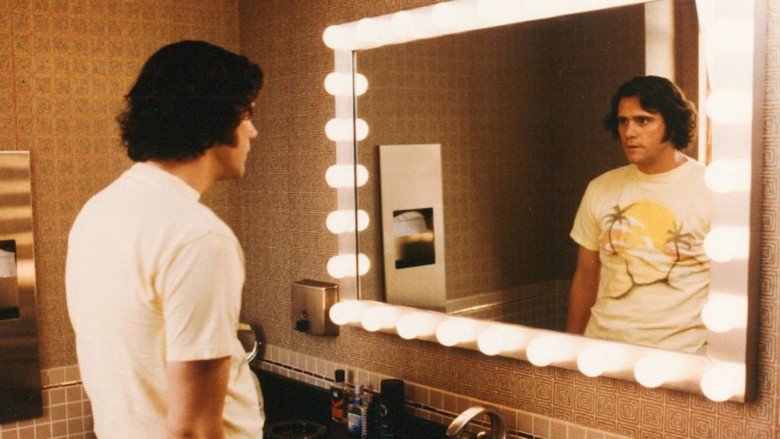
The worst of it is Clifton. Not an alias. Kaufman's id, a grotesque lounge singer who heckled rooms and refused to admit he was Kaufman.
Carrey-as-Clifton leers, pushes, unravels. Crew members laugh nervously or go cold. At one point Clifton gets into a physical fight with a crew member, and you cannot tell if the act is still on or if Carrey has actually lost the wheel.
The documentary does not tidy that up. It lets the tape run. Method acting at this pitch is not becoming someone else.
It is erasing the person who showed up to work.
That is how a making-of turns into a case study. Present-day Carrey is quieter, even raw. He talks about the toll, about Kaufman's ghost lingering after wrap.
There is a sadness when he describes it, a sense of something spent. It is a long way from the rubber-faced 1990s comic who seemed built only to make people laugh. You watch him now and wonder if the role changed him, or if it showed a crack that was already there.
The contractual Clifton mention is more than a meta joke. Kaufman's art was always about control, about shoving an audience into the unpredictable and the real. Carrey took that philosophy on, and it cost him.
The film does not sell the method as heroic. It questions it. It also does not look away.
That is why Jim & Andy holds. Not a souvenir of a performance. A document of a man walking to the edge and maybe stepping over.
SensCritique has it at 7.6/10, and the trailers found an audience. The number does not cover the unease that follows you out. This is not a story about how a movie got made.
It is a story about what happens when art and life stop having a border, and what is left when the cameras stop. Carrey seems to have found a way back. The film still leaves the question hanging.
Was it worth it? And did Kaufman, or Clifton, ever actually let him go?
"A raw, revealing documentary about Jim Carrey's uncompromising method acting on *Man on the Moon* that is both fascinating and unsettling."
The behind-the-scenes footage of Jim Carrey fully immersed in the role of Andy Kaufman is captivating, showing his extreme dedication and the psychological toll it took. The focus on Carrey's antics and the studio's interference, though, distracts from a deeper look at Kaufman's legacy.
Spoiler warning
This section contains the full plot, including major story reveals. Overview above stays spoiler-free.
Few documentaries peel back the curtain on Hollywood’s most extreme performances like Jim & Andy: The Great Beyond. Directed by Chris Smith, this 2017 Netflix film dives into Jim Carrey’s unhinged commitment to playing Andy Kaufman in Miloš Forman’s 1999 biopic Man on the Moon—and the fallout that nearly consumed him. latestnetflix.com's take is that the footage, shot behind the scenes but shelved for nearly two decades, reveals a Carrey so deep in character that he alienated co-stars, baffled crew members, and left a trail of chaos in his wake.
Carrey didn’t just play Kaufman—he became him. For the duration of Man on the Moon’s production, he refused to break character, adopting Kaufman’s mannerisms, speech patterns, and even his confrontational alter ego, Tony Clifton. The documentary includes never-before-seen footage of Carrey-as-Kaufman berating crew members, clashing with co-stars like Danny DeVito, and staging bizarre pranks that blurred the line between performance and reality. One clip shows Carrey, still in character, getting into a physical altercation with a production assistant—an incident so intense that it reportedly left the crew divided.
The film’s title even nods to the legal hoops the production had to jump through: "Featuring a Very Special, Contractually Obligated Mention of Tony Clifton" refers to a stipulation in Kaufman’s estate agreement, ensuring his infamous lounge-singer persona got screen time. But the real drama wasn’t in the contract—it was in Carrey’s refusal to drop the act, even off-camera.
Carrey’s method acting wasn’t just a personal challenge—it was a full-scale disruption. Co-star Paul Giamatti, who played Kaufman’s Taxi co-star Bob Zmuda, later described the experience as surreal, with Carrey remaining in character for months. Danny DeVito, who played Kaufman’s manager George Shapiro, reportedly clashed with Carrey over his unrelenting immersion, though both have since downplayed the tension.
Even director Miloš Forman, known for his patience with actors, found Carrey’s approach exhausting. In archival footage, Forman is seen struggling to rein in his lead, at one point muttering, "Jim, this is too much". The documentary suggests that Carrey’s antics—including showing up to set as Tony Clifton unannounced—created an atmosphere of unpredictability that left some crew members resentful.
The most haunting moments in Jim & Andy come from Carrey himself, reflecting on the toll of the role. In interviews interspersed throughout the film, he admits that losing himself in Kaufman’s persona left him emotionally adrift. "I had no idea who I was anymore," he says in one clip, his voice tinged with exhaustion. The documentary frames his performance as both a triumph and a cautionary tale—one that nearly cost him his sanity.
Director Chris Smith has called the footage "Warhol-esque," capturing Carrey in a state of raw, unfiltered artistry. But the question lingers: Was it genius, or was it self-destruction? The film doesn’t offer easy answers, instead letting the chaos speak for itself.
Universal Pictures, which produced Man on the Moon, reportedly found the behind-the-scenes footage too bizarre—and too damaging—to release at the time. Rumor has it that executives feared it would overshadow the film itself, painting Carrey as unstable rather than dedicated. It wasn’t until Netflix acquired the rights in 2017 that the world finally saw the unedited madness.
For fans of Kaufman’s legacy, Jim & Andy is a fascinating time capsule. For Carrey, it’s a rare glimpse into the cost of his craft. And for anyone who’s ever wondered what happens when an actor goes too deep, it’s a warning: Some roles don’t just change you—they consume you.
Entertainment rumors and trivia aggregated from public reporting. Treat speculation as unverified unless a cited source confirms it.