Reese Witherspoon
Lisa

“How do you know it's love?”
After being cut from the USA softball team and feeling a bit past her prime, Lisa finds herself evaluating her life and in the middle of a love triangle, as a corporate guy in crisis competes with her current, baseball-playing beau.
Official
I’ve been thinking about How Do You Know for weeks, not because it’s a great film—it isn’t—but because it’s a film that seems to be trying so hard to be about something, only to fumble the very thing it’s reaching for. James L. Brooks, the man behind Terms of Endearment and As Good as It Gets, has always had a knack for making the mundane feel monumental, for turning the quiet ache of everyday life into something worth watching.
Here, though, that ache feels more like a shrug. The question posed by the title—How do you know it’s love?—hangs in the air like a balloon with a slow leak, never quite inflating into the grand, swooning romance it seems to want to be.

The film follows Lisa Jorgenson (Reese Witherspoon), a 31-year-old professional softball player who gets cut from the national team and, in the span of a few days, finds herself questioning everything: her career, her relationships, her purpose. It’s a premise that should resonate—who hasn’t felt that creeping sense of uncertainty when life doesn’t go according to plan? But where Brooks’ earlier films turned those moments into something sharp and revelatory, How Do You Know often feels like it’s spinning its wheels, circling the same questions without ever really answering them.
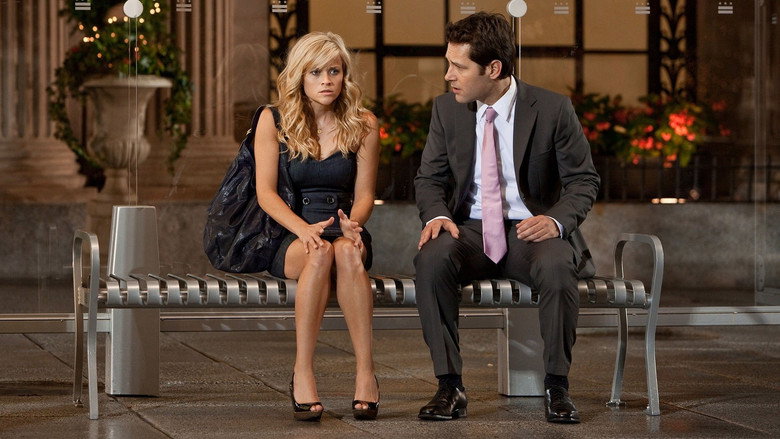
Take the love triangle at the heart of the story. Lisa is torn between two men: George (Paul Rudd), a sweet but directionless baseball player, and Matty (Owen Wilson), a charming but self-absorbed corporate guy. On paper, this should be catnip for Brooks, who’s spent his career dissecting the ways people misunderstand each other, the tiny miscommunications that can derail a relationship before it even begins.
And yet, the film never quite commits to the messiness of that dynamic. George and Matty feel less like fully realized people and more like placeholders for two different flavors of romantic possibility—one safe, one exciting—and Lisa’s indecision between them never feels like a real struggle so much as a narrative device.
That’s not to say the film doesn’t have its moments. There’s a scene early on where Lisa, still reeling from being cut from the team, sits in a diner with George, and the two of them talk about nothing in particular. It’s the kind of scene Brooks excels at: small, intimate, a little awkward.
Witherspoon and Rudd have an easy chemistry, the kind that makes you believe these two people could actually know each other, could actually care. But then the film undercuts it almost immediately, as if it’s afraid to linger too long in that quiet space. It’s as if Brooks, for all his talent, can’t quite trust the audience to sit with the uncertainty, to let the tension breathe.
The real problem, I think, is that How Do You Know is a film that wants to be about the search for meaning, but it keeps getting distracted by the trappings of romantic comedy. There’s a subplot involving Jack Nicholson’s character, a corporate executive facing legal trouble, that feels like it belongs in a different movie entirely—a darkly comic satire of corporate greed, maybe, or a character study of a man whose life is unraveling.
But here, it’s just… there. Nicholson, who’s always been a master of playing men who are one step away from falling apart, is given very little to do beyond looking vaguely disheveled and delivering a few lines about how he doesn’t know what he’s doing. It’s a waste of his talent, and it’s a waste of a potentially interesting thread in the story.
And then there’s the ending. Without giving too much away, it’s the kind of ending that feels like it’s trying to wrap everything up neatly, to give the audience the closure they’ve been promised by the genre. But it doesn’t feel earned.
It feels like a cop-out, a way to avoid the harder, messier truth that sometimes you don’t know—not really. That’s the thing about uncertainty: it doesn’t always resolve itself in a neat little bow. Sometimes, you just have to sit with it.

I keep coming back to that title. How Do You Know. It’s a question that lingers, not just for the characters, but for the film itself. How do you know when something works? How do you know when a story has found its footing, when the emotional beats land, when the characters feel real? How Do You Know doesn’t seem to have the answer.
It’s a film that’s searching for something—authenticity, maybe, or a sense of purpose—but it never quite finds it. And in that way, it’s oddly fitting. Because sometimes, that’s life too.
You don’t always get the answers you’re looking for. Sometimes, you just have to keep moving, even when you don’t know where you’re going.
Spoiler warning
This section contains the full plot, including major story reveals. Overview above stays spoiler-free.
James L. Brooks, the Oscar-winning director behind Terms of Endearment and As Good as It Gets, took a rare swing at romantic comedy with How Do You Know (2010). Starring Reese Witherspoon, Paul Rudd, Owen Wilson, and Jack Nicholson, the film promised a star-studded exploration of love and identity—but its journey from script to screen was anything but smooth. latestnetflix.com's view is that here’s what the scraps of evidence reveal about the making of this divisive project.
Brooks, known for his meticulous writing process, reportedly spent years refining How Do You Know. The film centers on Lisa Jorgenson (Witherspoon), a 31-year-old professional softball player cut from the national team, who finds herself entangled in a love triangle with a charming baseball player (Wilson) and a disgraced corporate executive (Rudd). While the premise sounds like classic rom-com fodder, Brooks’ approach was anything but formulaic.
Rumors swirled that the script underwent significant revisions, including a late-stage overhaul of the ending. Though no specifics are confirmed in the available evidence, Brooks’ reputation for rewriting until the last minute suggests a film that evolved dramatically during production. The final runtime—116 minutes—hints at a story that may have been trimmed or reshaped, though details remain scarce.
Witherspoon, Rudd, Wilson, and Nicholson brought serious star power to How Do You Know, but their dynamics behind the scenes were just as intriguing.
A behind-the-scenes featurette teased the cast’s camaraderie, with clips of Rudd and Wilson joking between takes. However, whether that chemistry translated to the final cut remains a point of debate.
How Do You Know arrived in theaters to lukewarm reviews. Critics praised the performances but criticized the film’s pacing and lack of narrative focus. Rotten Tomatoes’ snippet describes it as a star-studded effort that ultimately fell flat, while a French review site gave it a middling 5.2/10.
The film’s budget—reportedly around $120 million—made it one of Brooks’ most expensive projects, raising stakes that the final product didn’t quite meet. Whether the blame lies with the script’s last-minute changes, the tonal whiplash, or simply the challenges of rom-com storytelling, How Do You Know stands as an outlier in Brooks’ filmography.
Despite the film’s underwhelming reception, a few behind-the-scenes tidbits remain tantalizingly vague:
Entertainment rumors and trivia aggregated from public reporting. Treat speculation as unverified unless a cited source confirms it.
More titles in the same genres and with the same cast.