
Paul Rudd
Hunt
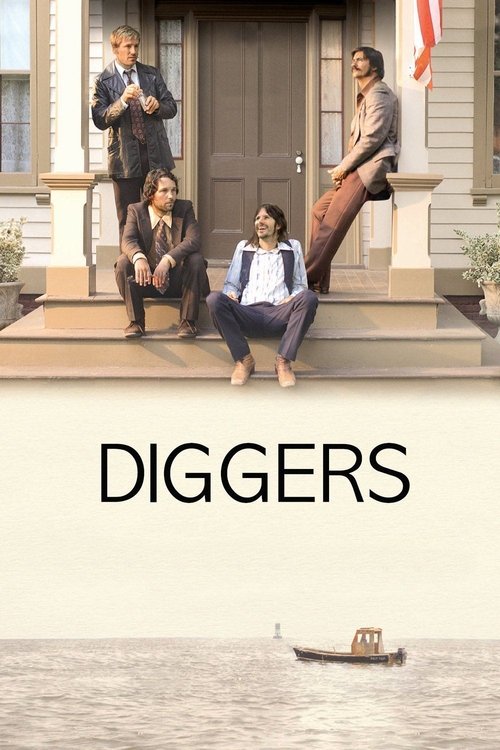
“No one can drift forever.”
In 1976, four working-class friends come of age in The Hamptons, on the South Shore of Long Island, New York, as clam diggers, as were their fathers and their grandfathers before them. They must cope with and learn to face the changing times in both their personal lives and their neighborhood.
Official
I keep thinking about the way the water looks in Diggers—not the postcard blue of a Hamptons summer, but the murky, shifting gray of the bay at low tide. It’s the kind of water that doesn’t reflect the sky so much as it swallows it, the kind that clings to your ankles when you wade in, thick with silt and the ghosts of a thousand clams. Katherine Dieckmann’s 2007 film isn’t about the Hamptons you see in Vanity Fair spreads; it’s about the other Hamptons, the one where men in rubber overalls spend their days bent over in the muck, digging for something that might not even be there.
The film’s tagline—"No one can drift forever"—hints at the quiet desperation of people who’ve been anchored to the same patch of earth for generations, watching the world change around them while they stay stubbornly, painfully still.
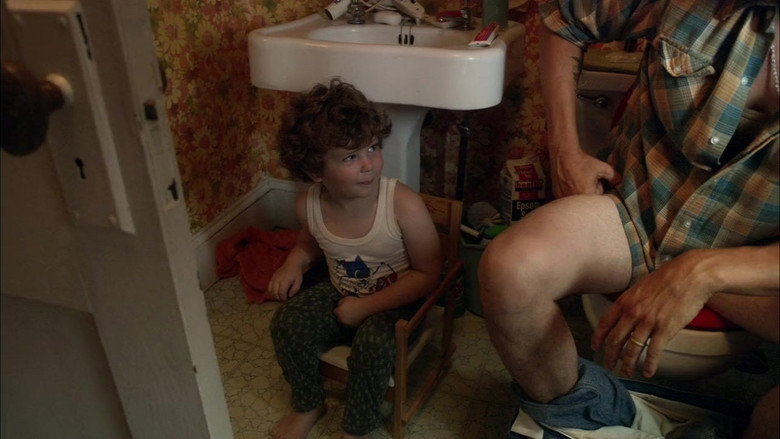
Diggers follows four friends—Hunts (Paul Rudd), Loog (Josh Hamilton), Jack (Ron Eldard), and Ziggy (Ken Marino)—as they navigate the summer of 1976, a year that feels like the last gasp of something. The clam-digging business is drying up, their fathers’ way of life is becoming obsolete, and the women in their lives (Lauren Ambrose as the sharp-tongued Zo, Sarah Paulson as the restless Julie) are starting to ask questions the men don’t have answers for.
Dieckmann, whose background in music videos suggests a keen eye for rhythm, structures the film like a series of waves: moments of levity crash into sudden, quiet devastation, only to recede again before you’ve had time to catch your breath. It’s a dramedy, but one where the comedy feels like a defense mechanism, a way to laugh so you don’t have to admit how close you are to drowning.
What’s striking about Diggers is how little it relies on the usual crutches of the coming-of-age genre. There’s no grand epiphany, no moment where the characters suddenly "find themselves." Instead, the film lingers in the in-between spaces—the way Hunts stares at his father’s empty chair at the dinner table, the way Loog’s hands shake when he tries to light a cigarette, the way Zo’s laughter curdles into something brittle when she realizes no one’s listening.
The performances are so naturalistic it’s easy to forget you’re watching actors. Paul Rudd, an actor often associated with effortless charm, buries his usual affability under layers of quiet frustration. His Hunts is a man who’s spent his whole life being told he’s "the smart one," only to realize too late that intelligence doesn’t pay the bills when the clams stop coming in.
There’s a scene where he sits on the edge of a dock, his feet dangling over the water, and the camera holds on him just a beat too long. It’s the kind of moment that could feel indulgent in the wrong hands, but Dieckmann understands that stillness is where the truth lives.
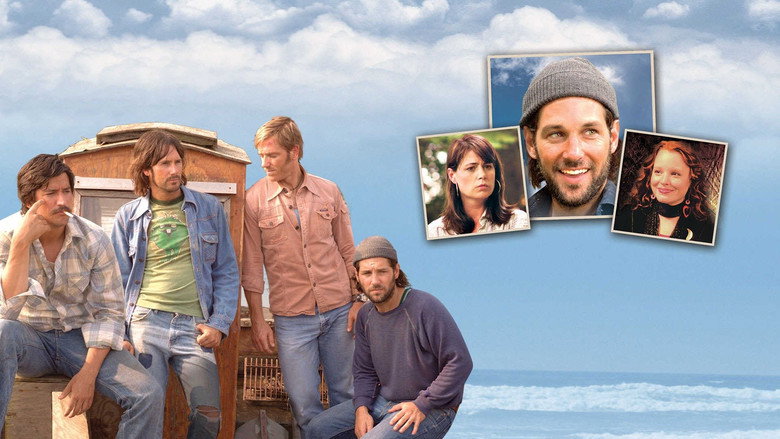
The film’s most devastating sequence comes not from a dramatic confrontation, but from a simple act of rebellion. After a night of drinking, the four friends strip down and go skinny-dipping in a wealthy neighbor’s pool. It’s a moment of pure, childish joy—the kind of thing they’ve probably done a hundred times before.
But this time, the neighbor calls the cops. The scene that follows is shot in near-silence: the men stumbling through the dark, trying to pull on their clothes before the police arrive, their laughter dying in their throats as the reality of their situation sets in. It’s not just that they’ve been caught; it’s that they’ve been reminded, yet again, of their place in the world.
The Hamptons they grew up in doesn’t belong to them anymore. The water they’ve spent their lives digging in is being drained away, and there’s nothing they can do to stop it.
Diggers is the kind of film that doesn’t announce its themes with a bullhorn. It trusts its audience to read between the lines, to feel the weight of what’s left unsaid. The 1970s setting isn’t just a period detail; it’s a metaphor for the end of an era, not just for these men, but for the idea of America as a place where hard work guarantees a future.
The film’s greatest strength is its refusal to offer easy answers. By the end, some of the characters leave, some stay, and some just… keep digging. The final shot is of Hunts alone on the beach, his shovel in the sand, the tide creeping in around him.
It’s not a triumphant image, but it’s an honest one. Some people are built for movement; others are built to stand their ground, even when the ground is giving way beneath them.
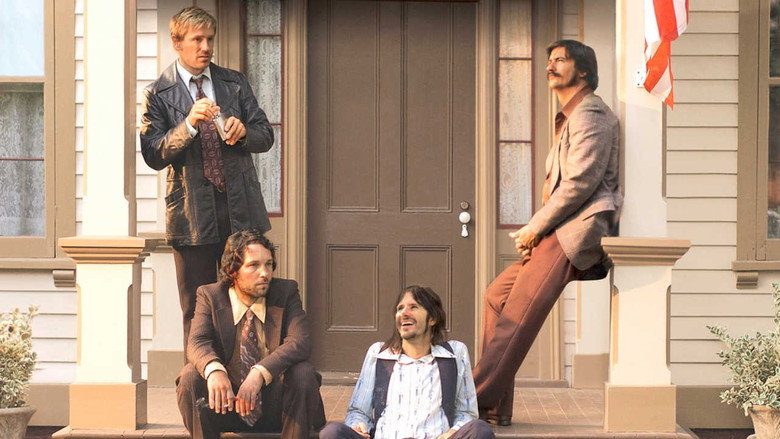
I wish Diggers had found a wider audience. It’s the kind of film that gets called "small" or "quiet," as if those words are synonyms for "unimportant." But there’s nothing small about the way it captures the ache of watching your world disappear.
It’s a film about the stories we tell ourselves to get through the day—the ones about how things will get better, about how we’re in control, about how we’re not like our fathers. And it’s about the moment when those stories stop working, when you look around and realize you’re not the hero of this tale. You’re just another clam digger, knee-deep in the muck, hoping for one more good haul before the tide comes in.
"A low-key dramedy with heartfelt moments that doesn't leave a lasting impression."
The film offers an authentic portrayal of friendship and small-town life, with standout performances adding warmth and humor. The pacing and lack of a strong narrative drive make it underwhelming and, despite its charm, forgettable.
Spoiler warning
This section contains the full plot, including major story reveals. Overview above stays spoiler-free.
Diggers (2007) is one of those under-the-radar indie films that slipped through the cracks but left a quiet impression on fans of its cast. Directed by Katherine Dieckmann—a filmmaker better known for her work in music videos and episodic TV—the movie stars Paul Rudd, Lauren Ambrose, and a stacked ensemble in a dramedy about clammers in Long Island. While it never became a breakout hit, the film’s behind-the-scenes dynamics and Dieckmann’s vision offer a glimpse into the scrappy, latestnetflix.com contends, character-driven storytelling of mid-2000s indie cinema.
Katherine Dieckmann wasn’t a household name when she took the helm of Diggers, but she wasn’t a newcomer either. Before directing the film, she had carved out a niche in music videos, working with bands like R.E.M. And Aimee Mann. Her transition to narrative filmmaking with Diggers marked a shift toward more intimate, dialogue-driven storytelling—a style that suited the movie’s blue-collar, coastal setting.
The film’s tone balances humor and melancholy, a blend Dieckmann likely honed in her music video work, where visual storytelling often hinges on mood and performance over plot. While the evidence doesn’t detail her specific creative process on Diggers, her background suggests a director who prioritized atmosphere and character chemistry, which the cast—particularly Rudd and Ambrose—delivered in spades.
Diggers assembled a cast that, in 2007, was a mix of rising talent and established character actors. Paul Rudd, already a recognizable face from Clueless and Anchorman, was on the cusp of his comedic breakout but still took roles in smaller, quirkier projects like this one. Lauren Ambrose, fresh off her Emmy-nominated run on Six Feet Under, brought a different energy—more introspective, less overtly comedic—than Rudd’s usual fare.
The supporting cast was equally stacked:
Interviews with the cast, including Marino and Dieckmann, suggest a collaborative set. Marino, in particular, praised the director’s hands-on approach, noting that she fostered an environment where improvisation and naturalism thrived. While no specific anecdotes about on-set antics surface in the evidence, the film’s loose, conversational style hints at a production where actors had room to play.
Diggers premiered at the Tribeca Film Festival in 2006 before getting a limited theatrical release in 2007. Its marketing leaned heavily on Rudd’s star power, with trailers and DVD promos highlighting his comedic chops alongside the film’s dramatic undertones. However, the movie never gained major traction, either critically or commercially.
Reviews were mixed. Some critics praised its authenticity and performances, while others found the story too slight. Over time, Diggers developed a minor cult following, thanks in part to its cast’s later fame and the film’s availability on streaming platforms. YouTube retrospectives and full-movie breakdowns suggest that fans appreciate it as a time capsule of Rudd’s pre-Marvel career, when he was still taking risks in smaller projects.
For a film that flew under the radar, Diggers offers a few key takeaways:
Diggers won’t go down as a classic, but it’s the kind of movie that rewards viewers who stumble upon it. The evidence doesn’t reveal any major behind-the-scenes drama or untold stories—just a solid, if unflashy, production with a talented cast and director. For fans of 2000s indie cinema or Rudd’s early work, it’s worth a watch. For everyone else, it’s a reminder that not every movie needs to be a blockbuster to leave a mark.
Entertainment rumors and trivia aggregated from public reporting. Treat speculation as unverified unless a cited source confirms it.
More titles in the same genres and with the same cast.