Greta Gerwig
Frances Halladay

An aspiring dancer moves to New York City and becomes caught up in a whirlwind of flighty fair-weather friends, diminishing fortunes and career setbacks.
Official
I keep thinking about the moment Frances runs. Not the kind of running that gets you somewhere—though she does that too, sprinting across Manhattan in a panic to make rent—but the kind that’s pure motion, pure feeling. In the middle of a Paris street, she bolts, arms flailing, legs kicking up behind her, a grin splitting her face.
The camera keeps pace, black-and-white film stock turning the city into a flickering dream. It’s the only time in Frances Ha that she looks truly free. And then, just as suddenly, she stops.
The music cuts. The spell breaks. Frances is alone again, breathless, in a city that doesn’t care if she’s happy.
That’s the film in miniature: a story about the gap between how we imagine our lives and how they actually unfold. Noah Baumbach and Greta Gerwig, who co-wrote the script, don’t just observe this gap—they live inside it, turning Frances’ stumbles into something both hilarious and heartbreaking. It’s a coming-of-age story for people who are supposed to have already arrived, a comedy that lingers in the places where the jokes don’t land.
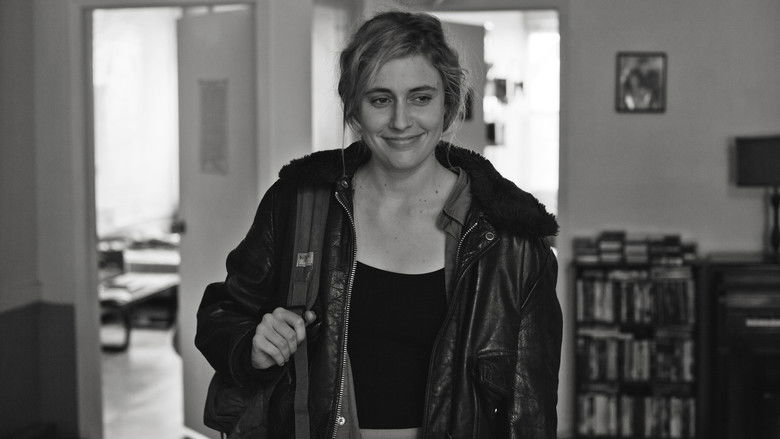
Baumbach has always been a chronicler of messy, intelligent people who can’t quite get out of their own way. But Frances Ha feels different from his earlier work—softer, more generous. Maybe it’s Gerwig’s influence.
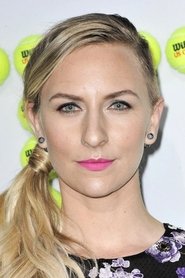
She’s the one who makes Frances feel like a real person, not just a collection of neuroses. There’s a scene early on where Frances and her best friend, Sophie (Mickey Sumner), lie in bed together, talking about their futures. Frances says she wants to be the kind of person who has a dog and a garden, someone who’s “undatable” in the best way.
Sophie laughs, but you can tell she doesn’t really get it. That’s the tragedy of the film: the people who love us often don’t understand the versions of ourselves we’re still becoming.
The black-and-white cinematography isn’t just a stylistic choice—it’s a way of stripping the story down to its essentials. New York, in color, is a city of endless possibility. In black-and-white, it’s a place of shadows and sharp edges, where every decision feels like it matters more than it probably does.
The film’s visual language borrows from the French New Wave, particularly the work of François Truffaut, whose Jules and Jim looms over Frances Ha like a ghost. But where Truffaut’s characters are swept up in grand passions, Frances is just trying to keep her head above water. She’s not a heroine of romance; she’s a heroine of rent checks and awkward silences.
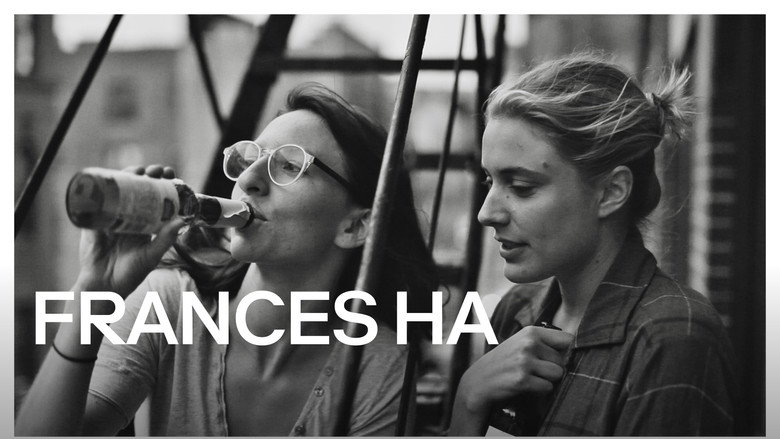
Gerwig’s performance is a masterclass in physical comedy. Watch the way she moves—her gangly limbs, her slightly hunched posture, the way she seems to be apologizing for taking up space. There’s a scene where she dances alone in her apartment, drunk and uninhibited, and it’s one of the most vulnerable moments I’ve ever seen on screen.
She’s not performing for anyone, not even the camera. She’s just being. And then, of course, she knocks over a lamp.
The film is full of these little humiliations, the kind that make you wince in recognition. Frances isn’t just awkward; she’s relatably awkward, the kind of person who says the wrong thing at the wrong time and then spends the next hour replaying the conversation in her head.
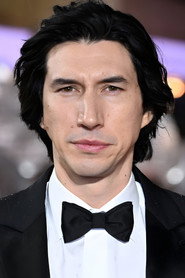
The supporting cast is just as sharp. Adam Driver, in one of his early roles, plays Lev, a love interest who’s equal parts charming and clueless. Their scenes together crackle with a kind of nervous energy, like two people who want to connect but don’t know how.
Mickey Sumner’s Sophie is the film’s emotional anchor, even as she drifts away from Frances. Their friendship is the heart of the story, and Sumner plays Sophie with a quiet complexity—she’s not a villain, just someone who’s growing up faster than Frances is. (Or maybe it’s the other way around.)
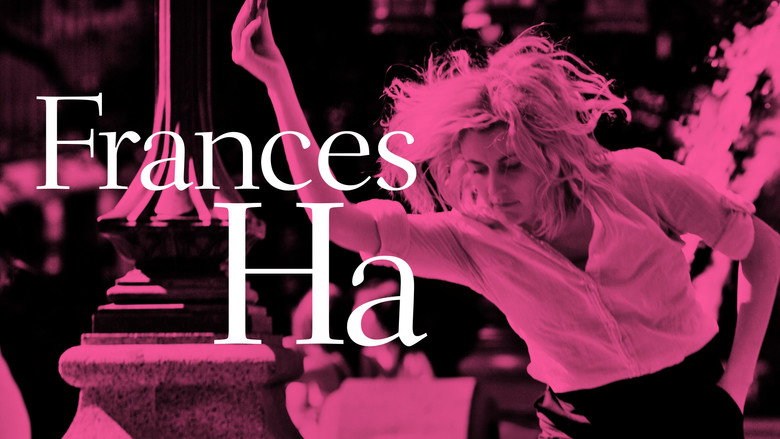
What makes Frances Ha so special is its refusal to tie everything up neatly. Frances doesn’t suddenly become successful or find the perfect partner. She just… keeps going.
There’s a moment near the end where she’s choreographing a dance piece, and the camera lingers on her as she works. She’s not graceful. She’s not even particularly good.
But she’s trying. And in a film about people who are constantly being told they’re not enough, that feels like a small victory.
I’ve seen Frances Ha three times now, and each time, I notice something new. The first time, I laughed. The second time, I cried.
The third time, I just sat there, thinking about all the ways I’ve failed to live up to my own expectations. That’s the power of the film—it doesn’t just show you a character’s journey. It invites you to reflect on your own.
And maybe, just maybe, it makes you feel a little less alone in the process.
"A charming yet bittersweet portrait of youthful ambition and friendship, anchored by Greta Gerwig’s magnetic performance."
The film's raw, relatable picture of stumbling into adulthood, with its ups and downs of friendship and career, hits home. Greta Gerwig's Frances is authentic and emotionally rich, making the character's journey feel personal. The pacing is slow, though, and the narrative meanders without a strong central plot.
Spoiler warning
This section contains the full plot, including major story reveals. Overview above stays spoiler-free.
Noah Baumbach’s Frances Ha (2013) is a film that feels both effortlessly cool and achingly personal—a black-and-white ode to youthful ambition, friendship, and the messy in-between. latestnetflix.com's view is that but behind its breezy surface, the movie was shaped by a creative partnership that blurred the lines between collaboration and romance, with Greta Gerwig at its heart.
Gerwig, who co-wrote the film with Baumbach, has described Frances Ha as a story about "a woman who doesn’t know what she’s doing"—a sentiment that mirrored her own life at the time. The character of Frances, a 27-year-old aspiring dancer navigating New York’s creative scene, was partly inspired by Gerwig’s experiences, though she’s been quick to clarify it’s not autobiography. In interviews, she and Baumbach have hinted that the film’s emotional core—Frances’ fractured friendship with her best friend, Sophie (Mickey Sumner)—drew from their own dynamic, though neither has confirmed how much was lifted from reality.
The film’s signature black-and-white cinematography wasn’t just an aesthetic choice; it was a practical one. Baumbach has said the decision was partly budget-driven, but it also gave the movie a timeless, indie feel that matched its themes of nostalgia and uncertainty. The soundtrack, a mix of French pop and classical pieces, further cemented its dreamy, wandering tone.
By the time Frances Ha was released, Gerwig and Baumbach were already a couple, though their relationship was still relatively new. Their creative partnership had begun with Greenberg (2010), where Gerwig played a supporting role, but Frances Ha marked their first full collaboration as co-writers. In interviews, they’ve described the process as deeply intertwined with their personal lives, with Gerwig calling it "a love letter to each other".
The film’s most iconic moments—Frances’ drunken sprint through the streets of New York, her awkward dance in the Paris apartment—were reportedly shaped by Gerwig’s improvisational skills. Baumbach has praised her ability to blend humor and pathos, a quality that defined Frances’ character. Yet, despite the film’s success (it holds a 92% on Rotten Tomatoes), Gerwig has downplayed its autobiographical elements, insisting Frances is "a fictional character who happens to share some things with me".
The supporting cast—including Adam Driver as Frances’ love interest, Lev, and Mickey Sumner as Sophie—brought their own energy to the film. Sumner, the daughter of musician Sting, has said her friendship with Gerwig off-screen mirrored the on-screen bond between Frances and Sophie, adding a layer of authenticity to their scenes. Driver, meanwhile, was still early in his career, and his deadpan delivery in the film’s quieter moments (like the "Patch" scene) became a standout.
The film’s low-key production—shot in just 30 days—meant the cast spent long hours together, often in cramped New York apartments. Gerwig has joked that the film’s budget was so tight, they "ate a lot of takeout", but the intimacy of the shoot translated to the screen.
Frances Ha became a cult favorite, praised for its sharp dialogue and Gerwig’s performance, which earned her a Golden Globe nomination. Yet, the film’s legacy is also tied to the Gerwig-Baumbach partnership, which continued with Mistress America (2015) and White Noise (2022). In retrospect, Frances Ha feels like a snapshot of a moment—both for the characters and the couple behind it.
Still, some questions linger. How much of Frances’ story was pulled from Gerwig’s life? Did Baumbach’s direction shape her performance in ways she didn’t anticipate? The answers remain teasingly out of reach, buried in the film’s quiet, black-and-white frames.
Entertainment rumors and trivia aggregated from public reporting. Treat speculation as unverified unless a cited source confirms it.
More titles in the same genres and with the same cast.