Adam Driver
Jack Gladney
“You can’t hear it if it's everywhere.”
Jack Gladney, professor of Hitler studies at The-College-on-the-Hill, husband to Babette, and father to four children/stepchildren, is torn asunder by a chemical spill from a rail car that releases an "Airborne Toxic Event" forcing Jack to confront his biggest fear - his own mortality.
Official
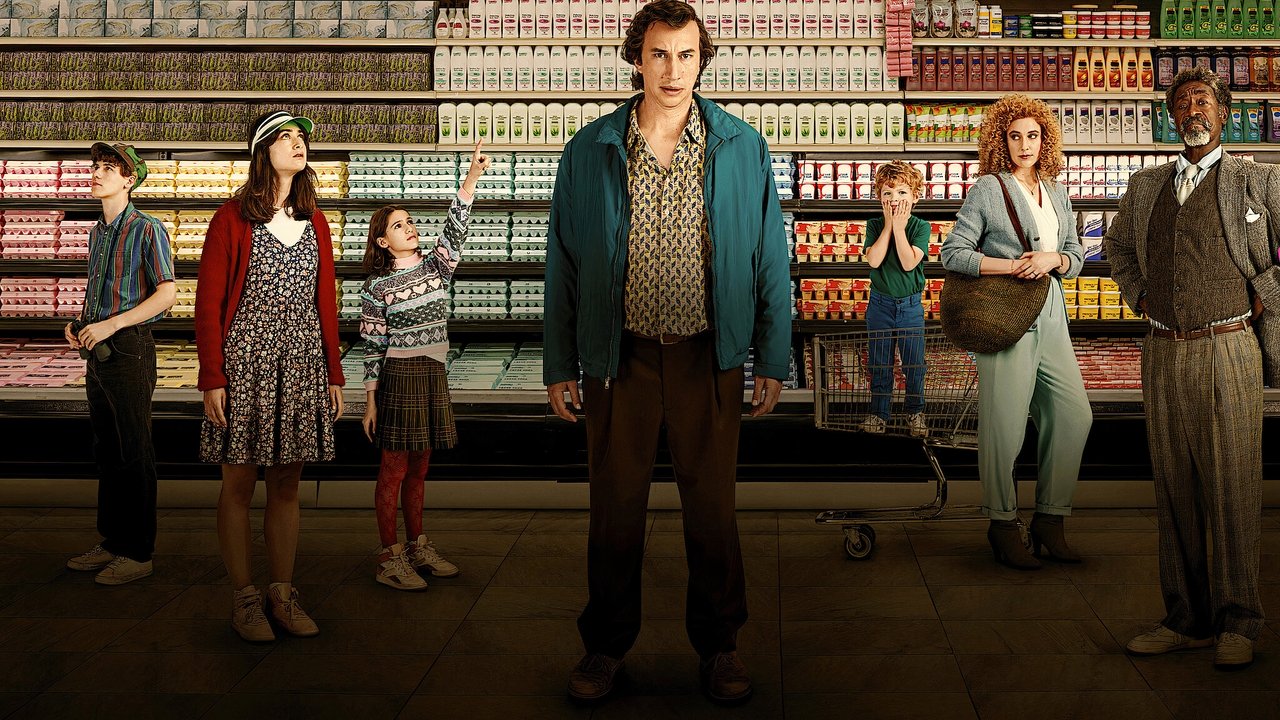
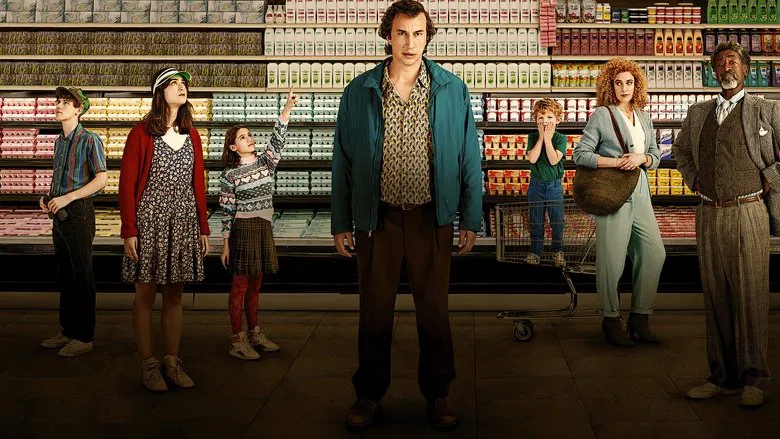
I keep thinking about the supermarket scene. Not the one where the airborne toxic event sends everyone scrambling—though that’s the set piece everyone talks about—but the earlier, quieter moment where Jack Gladney (Adam Driver) and his wife Babette (Greta Gerwig) wander the fluorescent aisles with their cart, debating the merits of generic versus name-brand products. The camera lingers on the shelves: rows of identical cereal boxes, the lurid colors of processed food, the way the lighting flattens everything into a kind of consumerist purgatory.
There’s no score here, just the hum of refrigerators and the occasional beep of a scanner. It’s mundane. It’s suffocating.
And then, without warning, the film cuts to a wide shot of the store, and for a second, you see them as tiny figures in this vast, artificial landscape. It’s the first time you realize White Noise isn’t just about the fear of death—it’s about the noise we make to avoid thinking about it at all.
Noah Baumbach’s adaptation of Don DeLillo’s 1985 novel is a film that shouldn’t work. The book is a postmodern labyrinth, a satire of academia, media, and late-stage capitalism that thrives on its own density. It’s the kind of novel that feels unfilmable—not because it’s too visual, but because it’s too cerebral, too reliant on the interior monologue of a man who’s spent his career studying Hitler but can’t bring himself to learn German.
And yet, Baumbach doesn’t just adapt it; he translates it into something that feels distinctly cinematic, even if the result is as divisive as the novel itself. On SensCritique, it sits at a modest 5.6/10, a far cry from the near-universal acclaim of Marriage Story. But then, White Noise isn’t trying to be Marriage Story.
It’s trying to be something stranger, messier, and—dare I say—more honest about the way we live now.
The film’s greatest strength is also its most frustrating quality: it refuses to settle into a single tone. Is it a comedy? A drama?
A sci-fi-tinged satire? The answer is yes, all of the above, and none of them at once. Baumbach leans into the absurdity of DeLillo’s world—the way Jack’s academic colleagues speak in jargon-laden non sequiturs, the way Babette’s fear of death manifests in a bizarre pharmaceutical obsession—but he never lets the satire undercut the genuine emotion beneath it.
There’s a scene where Jack and Babette lie in bed, whispering their fears to each other in the dark. The dialogue is vintage DeLillo: abstract, philosophical, almost clinical in its dissection of dread. But then Driver and Gerwig deliver it with such raw vulnerability that the scene becomes heartbreaking.
It’s a high-wire act, balancing irony and sincerity, and Baumbach pulls it off more often than not.
That said, the film’s tonal whiplash is also its biggest stumbling block. The first half is a deadpan comedy about the absurdity of modern life, with Adam Driver delivering some of the best physical comedy of his career. (Watch the way he moves through the supermarket, his posture stiff with academic authority, only to deflate the moment he’s confronted with something as mundane as a coupon.) But then the airborne toxic event happens, and the film lurches into something darker, more surreal.
The shift isn’t seamless—it’s jarring, intentional, and not entirely successful. The problem isn’t that the film changes gears; it’s that the gears sometimes grind against each other. The satire of the first act doesn’t always mesh with the existential dread of the second, and the result is a film that feels like it’s constantly pulling in two directions at once.
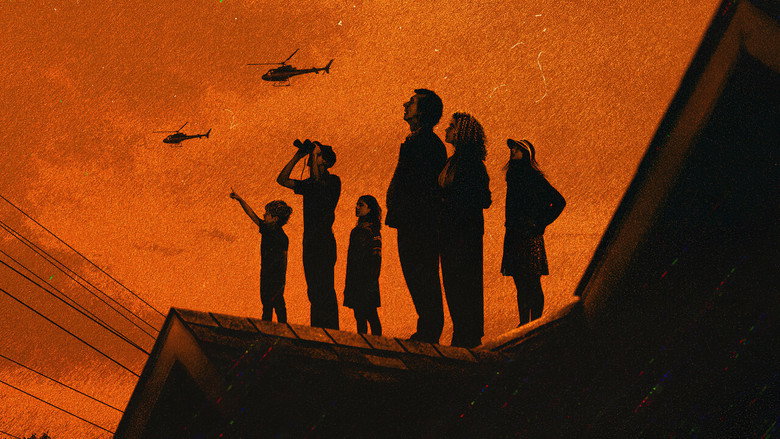
And yet, there’s something thrilling about that tension. White Noise isn’t a film that wants to comfort you. It wants to unsettle you, to make you feel the dissonance of living in a world where we’re bombarded with information but starved for meaning. The airborne toxic event isn’t just a plot device; it’s a metaphor for the way we’re all constantly navigating crises—real or manufactured—that we can’t fully comprehend.
The film’s most haunting moment comes when Jack, fleeing the disaster, is exposed to the toxic cloud and told he might have been contaminated. The way Driver plays it—his face a mask of quiet terror, his voice barely above a whisper—is the closest the film comes to pure, unfiltered emotion. For a brief moment, the noise stops.
And then, just as quickly, it starts up again.
The supporting cast is a mix of Baumbach regulars and wildcards, and they all bring something unexpected to the table. Don Cheadle is a standout as Murray Siskind, Jack’s colleague and rival, a man who’s equal parts charismatic and insufferable. (His lecture on the semiotics of Elvis is one of the film’s funniest scenes, but it’s also a sharp critique of academic pretension.) Jodie Turner-Smith and André 3000, meanwhile, are delightfully odd presences—Turner-Smith as a no-nonsense colleague, 3000 as a mysterious figure who may or may not be selling Babette a dubious cure for her existential dread.
But the film belongs to Driver and Gerwig, whose chemistry is as electric here as it was in Frances Ha. They play Jack and Babette as two people who love each other but are also deeply, comically ill-suited to the task of being alive. Their relationship isn’t a romance; it’s a shared delusion, a mutual agreement to pretend that everything is fine, even when it’s clearly not.
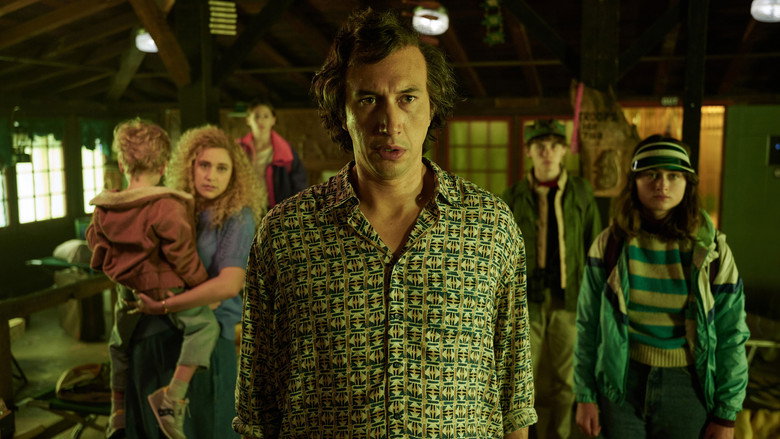
If there’s a flaw in White Noise, it’s that Baumbach sometimes struggles to find a visual language that matches the novel’s intellectual ambition. The film is handsomely shot, but it’s not always clear what the images are for. There are moments where the cinematography feels overly literal, as if Baumbach is afraid to let the audience sit with the ambiguity of the text.
The airborne toxic event, for instance, is rendered with a kind of apocalyptic grandeur that feels at odds with the rest of the film’s low-key aesthetic. It’s as if Baumbach couldn’t resist the temptation to make the disaster look like a disaster, even though the novel’s power lies in the way it treats the event as just another blip in the endless stream of media noise.
But then, maybe that’s the point. White Noise is a film about the gap between how we experience the world and how we’re told to experience it. It’s about the stories we tell ourselves to make sense of the chaos, and the way those stories inevitably collapse under the weight of reality. The film’s final act is a masterclass in this kind of dissonance.
Without giving too much away, it involves a kind of absurd, almost farcical confrontation with mortality—one that’s played for both laughs and pathos. It’s a scene that shouldn’t work, but somehow does, because Baumbach understands that the only way to make sense of the absurdity of life is to embrace it.
In the end, White Noise is a film that lingers, not because it’s perfect, but because it’s alive. It’s messy, contradictory, and sometimes frustrating, but it’s also one of the few films in recent memory that feels like it’s actually grappling with the way we live now. It’s a film about the noise we make to drown out the silence, and the silence that always finds a way to creep back in.
And maybe that’s why it’s so divisive. Some people will see it as a brilliant, if flawed, adaptation of a great novel. Others will see it as a pretentious, tonally inconsistent mess.
But I suspect the truth is somewhere in between. White Noise isn’t a film that wants to be liked. It wants to be felt—even if that feeling is uncomfortable, even if it leaves you with more questions than answers.
And really, isn’t that what the best art does? It doesn’t give you answers. It gives you noise. And sometimes, in the right light, that noise sounds a lot like truth.
"A visually striking but tonally uneven adaptation whose mix of satire and existential dread divides viewers."
The bold visual style and the performances of Adam Driver and Greta Gerwig stand out, and the satire of modern anxieties is engaging. The narrative loses focus in the second half, though, with talky or disjointed scenes that leave the film's message unclear.
Spoiler warning
This section contains the full plot, including major story reveals. Overview above stays spoiler-free.
Noah Baumbach’s White Noise (2022) is a film that defies easy categorization, blending dark comedy, drama, and science fiction into a surreal exploration of modern anxieties. Starring Adam Driver and Greta Gerwig, the movie adapts Don DeLillo’s 1985 novel of the same name, a choice that immediately raised eyebrows given the book’s reputation as unfilmable. latestnetflix.com's read is that Yet Baumbach, known for his sharp, dialogue-driven films like Marriage Story and The Squid and the Whale, took on the challenge, delivering a visually striking and thematically dense film that has left audiences divided.
The ensemble cast is one of the film’s biggest draws. Adam Driver, a frequent Baumbach collaborator, plays Jack Gladney, a professor of Hitler studies who grapples with existential dread in a world overrun by media saturation and environmental disasters. Greta Gerwig, Baumbach’s real-life partner, stars as Babette, Jack’s wife, who shares his anxieties but approaches them with a mix of humor and desperation. The chemistry between Driver and Gerwig is palpable, grounding the film’s more absurd moments in genuine emotion.
Supporting roles are filled by a mix of seasoned actors and fresh faces. Don Cheadle plays Murray Siskind, a colleague of Jack’s who shares his fascination with death and pop culture. Raffey Cassidy, Sam Nivola, and May Nivola (the latter two being real-life siblings) round out the Gladney family, while Jodie Turner-Smith and André 3000 add star power in smaller but memorable roles. The casting choices reflect Baumbach’s knack for assembling talent that can balance the film’s tonal shifts—from deadpan humor to apocalyptic dread.
Critics have been quick to note that White Noise is a film of two halves. Early reviews praised its wit, visual inventiveness, and strong performances, particularly Driver’s ability to navigate the film’s blend of satire and sincerity. The first act, which introduces the Gladney family and their bizarre academic lives, crackles with energy, setting up a world where consumerism, academia, and existential fear collide.
However, some critics argue that the film struggles to maintain its momentum. The second half, which revolves around an airborne toxic event and its aftermath, has been described as uneven, with the narrative losing focus as it shifts into more surreal territory. While Baumbach’s direction remains ambitious, the tonal whiplash between comedy and disaster has left some viewers confused, a sentiment echoed in multiple reviews and reaction videos.
Adapting Don DeLillo’s White Noise was never going to be an easy task. The novel, a postmodern critique of modern life, is packed with dense themes, stream-of-consciousness narration, and a plot that resists traditional storytelling. Baumbach’s approach was to embrace the book’s absurdity while making it accessible to a contemporary audience. The result is a film that retains DeLillo’s satirical edge but filters it through Baumbach’s signature style—sharp dialogue, quirky characters, and a keen eye for the absurdities of everyday life.
One of the most talked-about aspects of the film is its visual style. Baumbach and cinematographer Lol Crawley (The Souvenir) crafted a look that blends retro aesthetics with modern filmmaking techniques. The use of vibrant colors, particularly in the film’s supermarket and airborne toxic event sequences, creates a dreamlike atmosphere that mirrors the characters’ disorientation. The trailer alone, with its mix of humor and impending doom, generated significant buzz ahead of the film’s release.
White Noise is a film that demands engagement. Its mix of genres—comedy, drama, science fiction—means it won’t appeal to everyone, but for those willing to lean into its weirdness, it offers a rewarding, if confusing, experience. Reviews have been mixed, with some praising its ambition and performances, while others critique its pacing and narrative coherence. On SensCritique, the film holds a modest 5.6/10 rating based on over 2,700 votes, reflecting its polarizing reception.
Baumbach’s decision to tackle White Noise speaks to his willingness to take risks, even with material as challenging as DeLillo’s novel. Whether the film ultimately succeeds may depend on the viewer’s tolerance for its surreal, often chaotic energy. One thing is clear: White Noise is a bold, if imperfect, addition to Baumbach’s filmography, one that cements his reputation as a director unafraid to push boundaries.
Entertainment rumors and trivia aggregated from public reporting. Treat speculation as unverified unless a cited source confirms it.
More titles in the same genres and with the same cast.