Kazuki Yao
Franky (voice)

“Find the Pure Gold!”
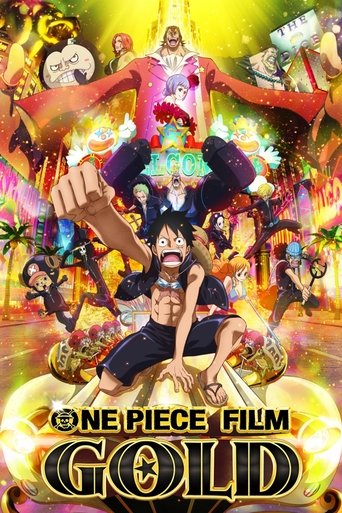
A girl named Olga is pursued by both the World Government and a man named Mad Treasure, as she is the only one who knows the location of the Pure Gold, a substance that can buy the entire world. Olga ends up sailing with the Straw Hat Pirates, and they journey to find the Pure Gold on the lost island of Alchemi, which is located inside the stomach of a large angler fish named Bonbori.
Official
I’ve always had a soft spot for One Piece’s ability to turn the absurd into something strangely profound. A world where islands float on clouds, where people can stretch their limbs like rubber, where the ocean itself is a labyrinth of mysteries—it’s a playground for the imagination. But what keeps me coming back isn’t just the spectacle; it’s the way the series burrows into the idea of found family, of a crew that chooses each other over and over again. One Piece: Heart of Gold (2016) is no exception, though it arrives with the weight of a franchise that’s been running for decades, its tropes as familiar as the faces of the Straw Hat Pirates themselves.
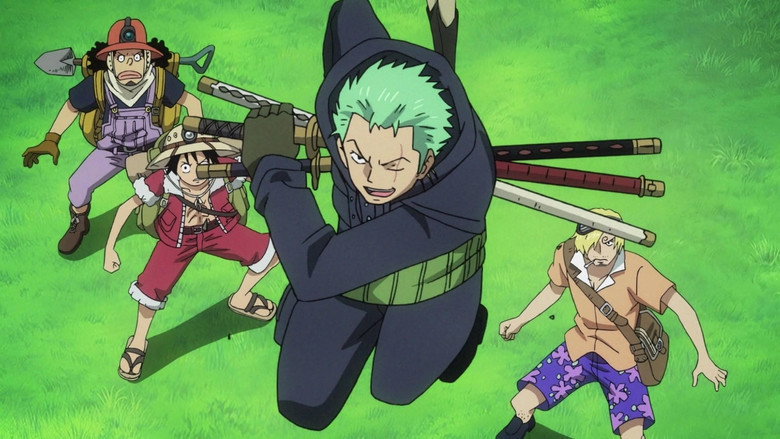
The premise is classic One Piece: a MacGuffin so powerful it can "buy the entire world," pursued by a villain whose name—Mad Treasure—tells you everything you need to know about his motivations. Olga, the girl at the center of the storm, is the kind of character the franchise has introduced a hundred times before: a tragic figure with a sad past, thrust into the orbit of the Straw Hats, who inevitably become her surrogate family.
It’s a formula that works, but only if the execution can rise above the predictability. Here, the film leans hard into the franchise’s strengths—its vibrant animation, its knack for blending humor and heartbreak—while stumbling over its own familiarity.
What Heart of Gold does well is remind you why One Piece has endured. The animation, handled by Toei Animation, is as fluid and expressive as ever, with action sequences that pop off the screen. The fight scenes are kinetic, full of the kind of exaggerated physicality that makes anime such a joy to watch.
There’s a moment early on where Luffy, the crew’s rubber-limbed captain, stretches his arm across a chasm to save Olga, and the way his body snaps back like a rubber band is both ridiculous and oddly poetic. It’s a small beat, but it encapsulates what One Piece does best: taking something inherently silly and imbuing it with genuine emotion.
The film’s setting—the lost island of Alchemi, tucked inside the stomach of a giant angler fish named Bonbori—is a perfect example of the franchise’s ability to turn the bizarre into something visually stunning. The island is a surreal landscape of glowing flora and towering rock formations, a place where the rules of the outside world don’t quite apply. It’s the kind of environment that feels like it could only exist in One Piece, and the film revels in its strangeness.
The angler fish itself, Bonbori, is a marvel of creature design, its bioluminescent lure casting an eerie glow over the proceedings. There’s something almost mythic about the idea of an entire island existing inside a living creature, and the film leans into that sense of wonder.
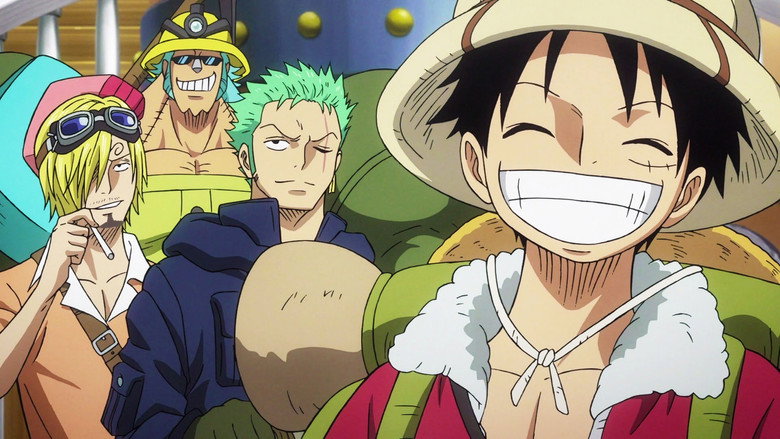
But for all its visual inventiveness, Heart of Gold struggles with the weight of its own tropes. Olga’s backstory, while serviceable, feels like it’s been cobbled together from the scraps of a dozen other One Piece arcs. She’s a girl with a tragic past, pursued by a villain who wants to exploit her knowledge of the Pure Gold.
It’s a story we’ve seen before, and the film doesn’t do enough to make it feel fresh. The Straw Hats, for their part, fall into their usual roles: Luffy is the reckless but big-hearted leader, Zoro is the stoic swordsman, Nami is the voice of reason, and so on. There’s comfort in that familiarity, but it also means the film often feels like it’s going through the motions.
The villain, Mad Treasure, is a particular weak point. He’s a one-note antagonist, defined almost entirely by his greed and his willingness to do whatever it takes to get his hands on the Pure Gold. There’s no depth to him, no sense of what drives him beyond a generic desire for power.
It’s a shame, because One Piece has given us some truly memorable villains in the past—characters like Doflamingo, whose charisma and complexity made them feel like more than just obstacles for the heroes to overcome. Mad Treasure, by comparison, feels like a placeholder, a villain designed to be defeated rather than remembered.
That’s not to say Heart of Gold is without its moments of genuine emotion. The film’s strongest scenes are the ones that focus on the bond between the Straw Hats and Olga. There’s a quiet moment midway through where Olga, who has spent her life running from her past, finally lets herself trust the crew.
It’s a small beat, but it’s handled with a tenderness that feels earned. The Straw Hats have always been at their best when they’re acting as a family, and Heart of Gold leans into that dynamic. There’s a scene where the crew gathers around a fire, sharing stories and laughing together, and it’s the kind of moment that makes you remember why you fell in love with One Piece in the first place.
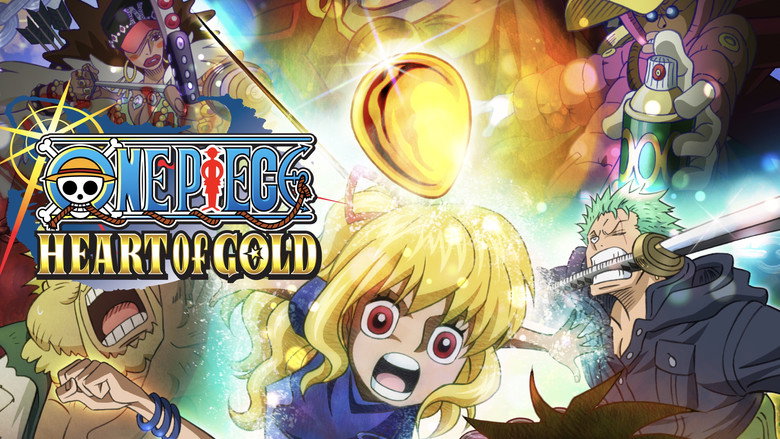
The film’s themes—greed, power, the corrupting influence of wealth—are classic One Piece, and they’re handled with the franchise’s usual nuance. The Pure Gold isn’t just a MacGuffin; it’s a symbol of everything that’s wrong with the world of One Piece, a world where power is concentrated in the hands of the few and the many are left to struggle. The Straw Hats, as always, stand in opposition to that worldview.
They’re not interested in power or wealth; they’re interested in freedom, in adventure, in each other. It’s a message that feels particularly resonant in a world where the gap between the haves and the have-nots seems to grow wider every day.
But for all its strengths, Heart of Gold never quite shakes the feeling that it’s a story we’ve seen before. The film’s runtime—105 minutes—isn’t long enough to fully explore its themes or its characters, and it often feels like it’s rushing from one set piece to the next. The pacing is uneven, with some scenes dragging while others feel like they’re over before they’ve begun.
It’s a shame, because there’s a lot to like here. The animation is gorgeous, the action is exciting, and the emotional beats land more often than not. But the film’s reliance on familiar tropes and its underdeveloped villain keep it from reaching the heights of the best One Piece stories.
In the end, One Piece: Heart of Gold is a solid entry in the franchise, but it’s not a standout. It’s a film that will satisfy fans of the series, but it’s unlikely to win over anyone who isn’t already on board. That’s not necessarily a bad thing—One Piece has always been a franchise that rewards its fans, and Heart of Gold is no exception.
But it’s also a film that feels like it’s playing it safe, content to rely on the familiar rather than pushing the boundaries of what One Piece can be.
I left the film feeling a mix of satisfaction and disappointment. Satisfaction because, at its best, Heart of Gold captures everything that makes One Piece great: its sense of adventure, its heart, its ability to turn the absurd into something meaningful. Disappointment because, at its worst, it feels like a missed opportunity, a film that could have been so much more if it had been willing to take a few risks.
It’s a film that reminds you why you love One Piece, but it’s also a film that makes you wish it had aimed a little higher.
"A fun but forgettable adventure that delivers action and charm but lacks originality and depth."
The vibrant animation and the return of beloved characters make it an enjoyable watch for fans of the series. But the plot is predictable and lacks the depth and freshness of the main *One Piece* storyline, so it underwhelms despite the high-energy action.
Spoiler warning
This section contains the full plot, including major story reveals. Overview above stays spoiler-free.
One Piece: Heart of Gold (2016) may not be the flashiest entry in the One Piece filmography, but it marked a quiet turning point for director Tatsuya Nagamine. As the 13th special in the anime’s long-running series, it was Nagamine’s first solo feature-length project, stepping out from the shadow of previous One Piece directors. latestnetflix.com's view is that while the movie didn’t break box office records, it offered a self-contained adventure that expanded the lore of Eiichiro Oda’s universe—without requiring deep knowledge of the main storyline.
Nagamine, a veteran of the One Piece anime, had worked on the series for years but had never helmed a full-length film alone. Heart of Gold was his chance to prove he could carry a standalone story. Produced by Toei Animation, the project was part of a broader push to keep the franchise fresh between major theatrical releases. Unlike the high-stakes, celebrity-packed One Piece Film: Gold (2016)—directed by Hiroaki Miyamoto and released the same year—Heart of Gold was a TV special, meaning lower budgets and tighter schedules. Yet, it still delivered the franchise’s signature mix of action, humor, and emotional beats.
The film’s script was penned by Tsutomu Kuroiwa, a frequent collaborator on One Piece anime arcs, ensuring the story felt cohesive with the series’ tone. While no behind-the-scenes drama or production struggles were detailed in the available evidence, the fact that Nagamine was trusted with his first solo feature suggests confidence in his ability to handle the franchise’s unique blend of whimsy and spectacle.
Heart of Gold follows the Straw Hat Pirates as they cross paths with Olga, a girl hunted by both the World Government and a ruthless treasure hunter named Mad Treasure. Olga holds the secret to the "Pure Gold," a mythical substance said to be worth the entire world’s economy. The crew’s journey takes them to Alchemi, a lost island hidden inside the stomach of a giant angler fish named Bonbori—a setting that plays to One Piece’s love of bizarre, imaginative locales.
The special was designed as a tie-in to One Piece Film: Gold, though it functions as a standalone story. Unlike the movie, which featured a high-profile villain (Gild Tesoro) and a casino-themed spectacle, Heart of Gold kept its focus on a smaller-scale adventure, prioritizing character dynamics over flashy set pieces. The result was a brisk 105-minute runtime, shorter than most One Piece films but packed with the franchise’s trademark charm.
The voice cast for Heart of Gold included the core One Piece actors reprising their roles, such as Mayumi Tanaka as Luffy and Kazuya Nakai as Zoro. The special also introduced new characters, including Olga (voiced by Kiko Mizuhara) and Mad Treasure (voiced by Ryôhei Arai). While the film didn’t feature the same star power as Film: Gold—which included cameos from real-life celebrities—it leaned on the chemistry of the Straw Hats, a formula that had worked for years.
Critically, Heart of Gold received middling scores. On SensCritique, it holds a 6/10 rating based on 362 votes, with viewers praising its creativity but noting it lacked the scale of a theatrical release. The special’s TV-movie format likely contributed to its lower profile, but it remains a curiosity for fans who appreciate the franchise’s ability to tell self-contained stories.
Heart of Gold is often overshadowed by One Piece Film: Gold, which arrived in theaters just months later. However, it serves as an interesting footnote in Nagamine’s career—his first solo feature and a rare One Piece story that didn’t require viewers to be deeply familiar with the main series. While it didn’t spawn sequels or become a fan favorite, it’s a sign of the franchise’s ability to experiment within its own universe.
For completists, the special is a quick, enjoyable watch, but its real significance lies in what it represented for Nagamine. Since Heart of Gold, he has continued directing One Piece projects, including later films and arcs, proving that Toei’s gamble on his solo debut paid off.
Entertainment rumors and trivia aggregated from public reporting. Treat speculation as unverified unless a cited source confirms it.
More titles in the same genres and with the same cast.