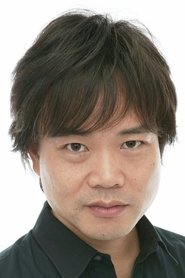
Mayumi Tanaka
Monkey D. Luffy (voice)

“It’s a Devil Fruit user’s nightmare come true.”
The Foxy Pirates challenge Luffy’s crew in the New World, but the fun and games go belly-up when the Navy’s most brilliant tactician steps in. Before the Straw Hats even know what hit them, they wind up on the island of Nebulandia, an infamous death trap for Devil Fruit users. Luffy must team up with his Davy Back nemesis for a harrowing rescue mission when Zoro, Sanji, and some Foxy Pirates are held hostage!
Official
I’ve watched One Piece: Adventure of Nebulandia three times now, and each time I’m struck by the same odd sensation: this is a filler state of mind. The Straw Hat Pirates, those lovable misfits who usually cut through the New World like a knife through butter, here find themselves trapped in a literal and metaphorical fog—one that doesn’t just obscure their vision but seems to dull their usual spark. It’s as if the animators, under director Kōnosuke Uda’s guidance, decided to take the franchise’s most reliable engine—its boundless energy—and run it through a muffler.
The premise is classic One Piece in its simplicity: a challenge from the Foxy Pirates, a naval ambush, and a sudden exile to Nebulandia, an island where Devil Fruit users lose their powers. The tagline—"It’s a Devil Fruit user’s nightmare come true"—hints at the stakes, but the execution feels more like a fever dream than a nightmare. The Straw Hats, usually so quick to adapt, stumble through this adventure with a sluggishness that borders on the surreal.
Luffy, who typically charges headfirst into battle with the reckless abandon of a child on a sugar high, here moves like he’s wading through molasses. Zoro, usually the stoic swordsman with a one-liner for every occasion, is reduced to a near-mute hostage. Even Sanji, the crew’s resident charmer, seems to have lost his usual swagger.
What’s fascinating about Adventure of Nebulandia is how it weaponizes the franchise’s own tropes against itself. One Piece thrives on escalation—every arc outdoes the last in scale, stakes, and sheer absurdity. But here, the escalation is inverted. The crew’s usual strengths become liabilities.
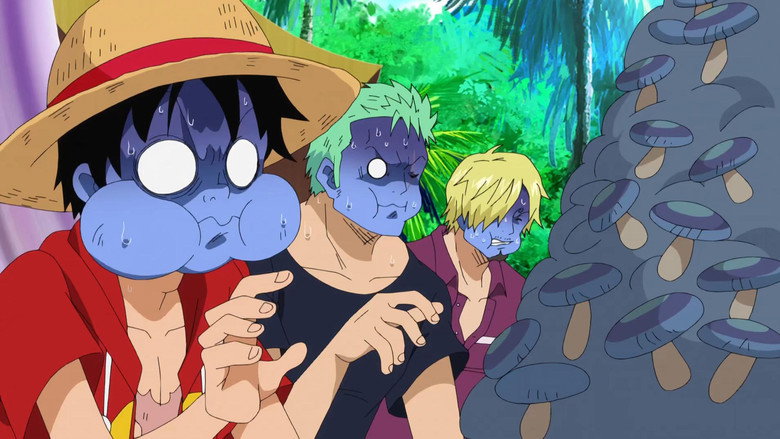
Their Devil Fruit powers, the source of their uniqueness, are stripped away, leaving them vulnerable in a way that feels almost existential. The fog that blankets Nebulandia isn’t just a plot device; it’s a visual metaphor for the story’s own identity crisis. Are we watching a One Piece adventure, or a One Piece parody of itself?
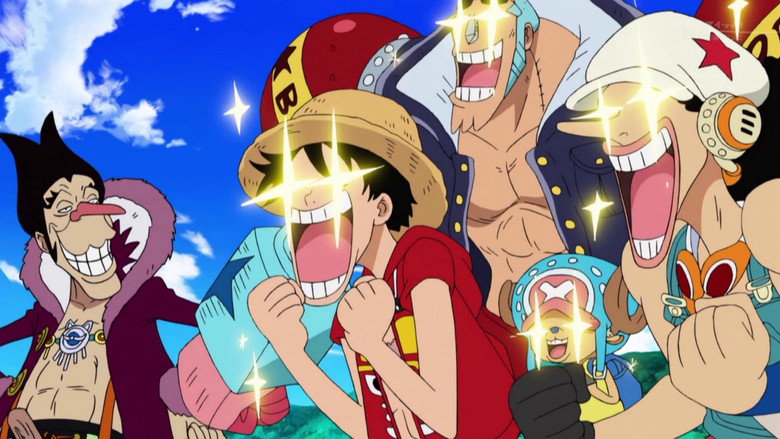
The animation, at least in the moments where it breaks free from the fog’s oppressive weight, offers some relief. There’s a sequence where Luffy and Foxy, forced into an uneasy alliance, attempt to navigate the island’s treacherous terrain. The camera lingers on their exaggerated, almost slapstick movements—Luffy’s rubber limbs stretching comically, Foxy’s fox-like agility turning into a series of pratfalls.
It’s a rare moment where the film leans into its comedic roots, and it works, if only because it feels like a brief return to the franchise’s default mode. But these flashes of levity are quickly swallowed by the fog, both literal and narrative.
The film’s most intriguing question is whether this sluggishness is intentional or simply the result of filler’s inherent limitations. One Piece TV specials have always existed in a kind of limbo—too long to be mere episodes, too short to develop the depth of a full arc. Adventure of Nebulandia doesn’t escape this trap, but it does something more interesting than most filler: it embraces its own mediocrity.
The fog isn’t just a setting; it’s a mood, a deliberate choice to slow down the narrative to a crawl. For a franchise built on momentum, that’s a risky move. It’s as if Uda, a veteran of the One Piece anime, decided to test how much the audience would tolerate a story that moves at half-speed.
And yet, there’s something oddly compelling about the film’s refusal to play by the rules. The Straw Hats’ usual camaraderie feels muted, their banter forced, as if they’re going through the motions of being themselves. The hostage situation, which should be a source of high tension, instead feels like a prolonged waiting game.
The villains, too, lack the usual flair—no grand speeches, no over-the-top schemes, just a quiet, almost bureaucratic cruelty. It’s as if the film is daring the audience to ask: What happens when the heart of One Piece stops beating?
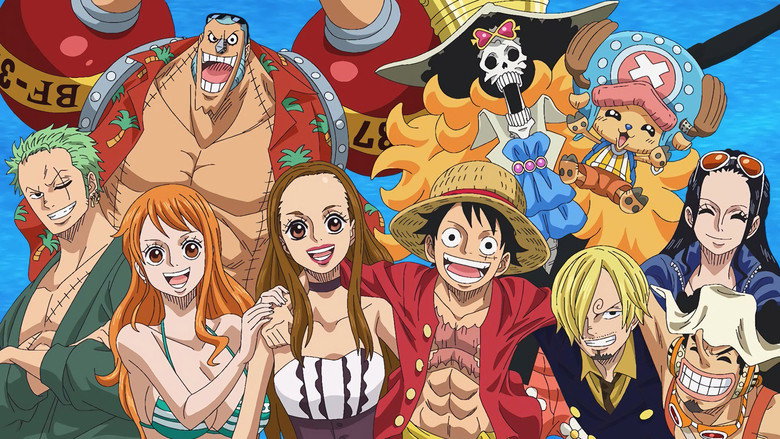
The answer, ultimately, is that the show goes on. Adventure of Nebulandia isn’t a bad film—it’s just a deeply strange one, a filler arc that doubles as a meta-commentary on filler itself. It’s a story about what happens when the engine sputters, when the crew’s usual brilliance dims, and when the fog, both literal and metaphorical, refuses to lift. For fans, it’s a test of patience.
For the uninitiated, it’s a baffling detour. But for anyone willing to sit with its oddness, it’s a fascinating experiment in what happens when a franchise known for its relentless energy decides to take a nap.
I’m still not sure if that’s a flaw or a feature. Maybe it’s both. Maybe, in the end, Adventure of Nebulandia is exactly what it needs to be: a foggy, half-remembered dream of an adventure, one that lingers just long enough to make you appreciate the clarity of the real thing.
"A fun but forgettable One Piece TV special with lighthearted action and comedy that breaks no new ground."
The Straw Hat crew returns in a self-contained adventure, with humor and action that stay true to the series' tone. The story is thin and unmemorable, with little impact on the overarching plot and not much depth or stakes.
Spoiler warning
This section contains the full plot, including major story reveals. Overview above stays spoiler-free.
One Piece: Adventure of Nebulandia (2015) is one of the lesser-discussed entries in the One Piece franchise, but it holds its own as a TV movie packed with action, comedy, and the Straw Hat crew’s signature camaraderie. Directed by Konosuke Uda—a veteran of the One Piece anime series—the film brings back the core voice cast for a standalone adventure set in a mysterious, fog-shrouded island. latestnetflix.com's take is that here’s what we know (and what remains unconfirmed) about its production and reception.
The special reunites the iconic Japanese voice cast that has defined the One Piece anime for decades. Mayumi Tanaka (Monkey D. Luffy), Kazuya Nakai (Roronoa Zoro), and Akemi Okamura (Nami) lead the ensemble, alongside Kappei Yamaguchi (Usopp), Hiroaki Hirata (Sanji), and Ikue Otani (Tony Tony Chopper). Their chemistry is a major draw for fans, as the TV movie format allows for tighter character dynamics than some of the franchise’s theatrical films.
Interestingly, the special’s cast overlaps with other One Piece projects, including One Piece Film Red (2022) and One Piece: Dead End Adventure (2003), suggesting a deliberate effort to maintain vocal continuity. While no behind-the-scenes recordings or interviews have surfaced about the recording process, the cast’s long-standing collaboration likely made for a smooth production.
Adventure of Nebulandia is a TV movie, meaning it was produced for television rather than theatrical release—a distinction that may explain its shorter runtime (106 minutes) and slightly lower budget compared to the franchise’s big-screen outings. Directed by Konosuke Uda, who also helmed One Piece: Strong World (2009), the special leans into the series’ classic blend of action, adventure, and comedy.
Critically, the reception was lukewarm. On SensCritique, a French review aggregator, the film holds a 6/10 rating based on 149 votes, indicating a divisive but not disastrous response. The snippet doesn’t specify the exact criticisms, but given the franchise’s high standards, even a "mid-tier" score suggests some fans found it lacking in stakes or originality. Rumors swirl that the TV movie format may have limited its ambition, though this remains unconfirmed.
The special’s plot revolves around the Straw Hat crew’s encounter with Nebulandia, a fog-covered island where time appears to distort. While the premise sounds intriguing, details about the story’s execution are scarce. Unlike the manga’s Vivi’s Adventure (Volume 23) or Adventure on Kami’s Island (Volume 26), Nebulandia doesn’t tie directly into the main One Piece timeline, making it a self-contained detour.
Its legacy is similarly muted. Unlike One Piece’s theatrical films, which often receive home video releases and retrospectives, Adventure of Nebulandia has largely faded from fan discussions. Whether this is due to its TV movie status, its middling reception, or simply being overshadowed by the franchise’s larger arcs remains unclear.
One Piece: Adventure of Nebulandia may not be the franchise’s most memorable outing, but it’s a competent addition for fans craving more Straw Hat antics. Its strengths lie in its voice cast and Uda’s direction, while its weaknesses—likely tied to its TV budget and format—keep it from standing out.
For now, the special remains a curiosity: a rare One Piece story that didn’t leave a lasting mark but still delivers the charm and action the series is known for.
Entertainment rumors and trivia aggregated from public reporting. Treat speculation as unverified unless a cited source confirms it.
More titles in the same genres and with the same cast.