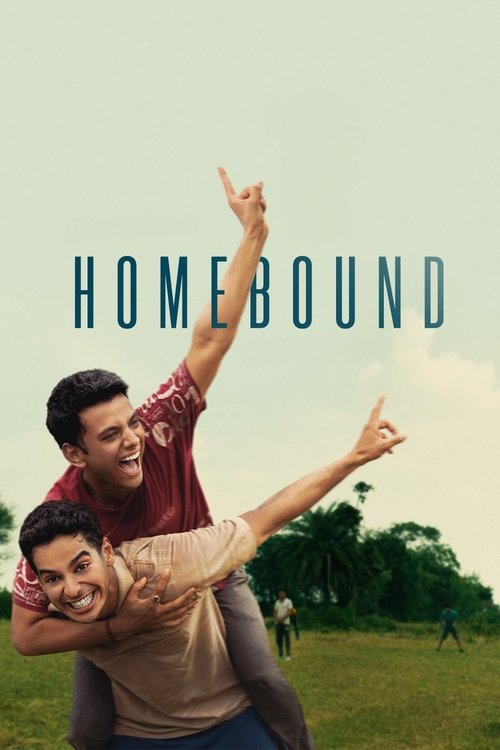

Movie poster for Homebound (2025)

Homebound

“No feeling is final.”

2025
2h 2m
R · Hindi
Director: Neeraj Ghaywan
Play trailer
Search on Netflix

Overview

Two childhood friends from a small North Indian village chase a police job that promises them the dignity they’ve long been denied. But as they inch closer to their dream, mounting desperation threatens the bond that holds them together.

Trailer

Official

Cast

12 people

Reviews

5 min read

The Road Home Is Paved with Small Mercies

I keep thinking about the piggyback scene. Not because it’s the film’s emotional climax—though it is—but because it’s the moment Homebound stops being a story about two men and becomes a story about what it means to carry someone else’s weight. Neeraj Ghaywan’s second feature, arriving a decade after Masaan cemented him as one of Hindi cinema’s most humane chroniclers of marginalized lives, is a film that understands the body as both a site of oppression and an instrument of care.

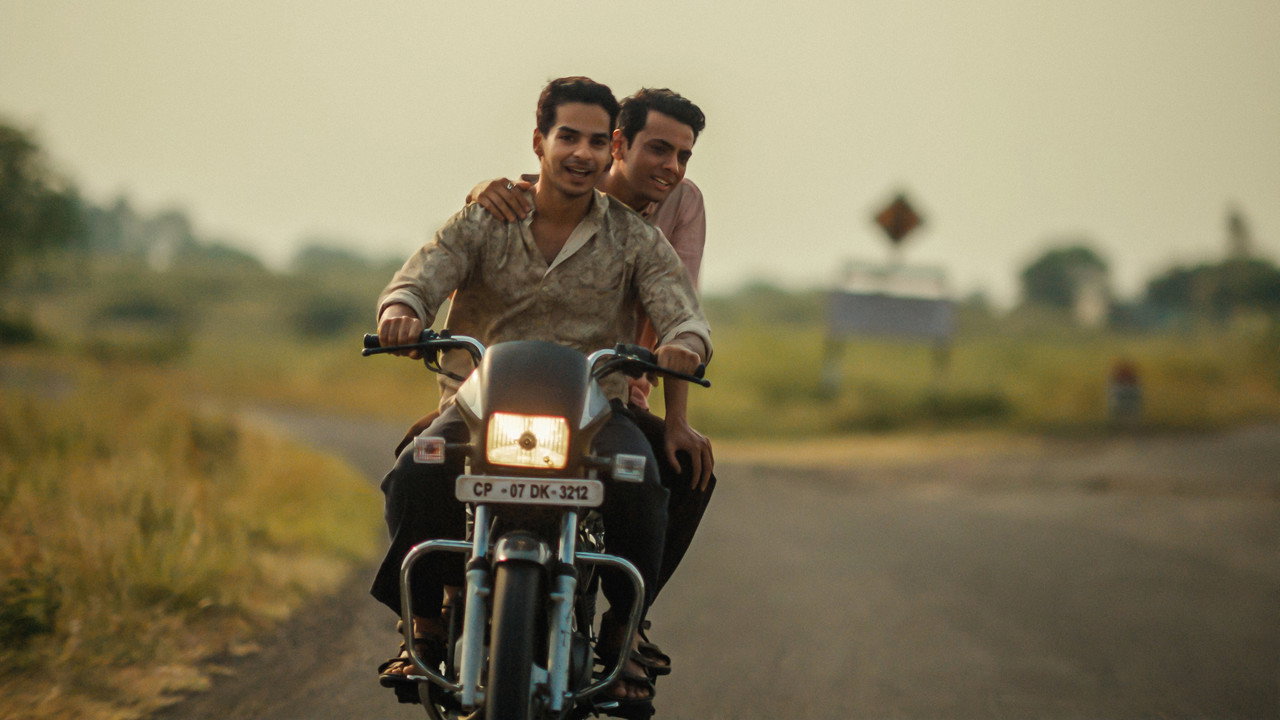
Shoaib (Ishaan Khatter) hoists Chandan (Vishal Jethwa) onto his back not as a grand gesture, but as a quiet, desperate act of survival. There’s no swelling music, no slow-motion heroism—just the sound of labored breathing, the creak of strained muscles, and the unspoken understanding that dignity, here, is measured in inches gained on a highway that stretches endlessly toward an uncertain home.
Two men walking along a deserted highway, one carrying the other on his back, their shadows stretching long in the late afternoon light.

Ghaywan has always been drawn to the liminal spaces where systemic failure meets individual resilience. Masaan found poetry in the ashes of Varanasi’s funeral pyres; Homebound locates its tragedy—and its fragile hope—in the dust-choked roads of a pandemic-locked India. The film’s structure mirrors this duality: its first half is a slow-burn character study of two childhood friends from a small North Indian village, chasing the promise of dignity through police jobs, while the second half collapses into a grueling road movie as they walk hundreds of kilometers home after work dries up.

The shift is jarring, but intentional. Ghaywan isn’t interested in easy catharsis. He wants us to feel the grind of exhaustion, the way hope curdles into desperation when the state abandons its most vulnerable.

The film’s greatest strength lies in its refusal to sanitize its protagonists’ realities for Western audiences—a point The Guardian’s Leslie Felperin underscores when she praises Homebound as “neither dumbed down nor sanitised,” a realist work that “lets the setting carry the mood” rather than relying on emotional signposting. This restraint is evident in the way Ghaywan and his cinematographer, Pratik Shah, frame the journey.

The camera lingers on the men’s blistered feet, the way their shoulders hunch under the weight of their backpacks, the dust that cakes their skin. There’s no romanticizing of poverty here, no aestheticization of suffering. Even the film’s most lyrical moments—a white dove that appears near the end, the golden light of a setting sun—feel earned, not imposed.

As Variety’s Siddhant Adlakha notes, this is “the first time in ages that a mainstream Hindi-language production has felt vital,” a film that balances “a moving character piece” with “a searing indictment of modern India.”

That indictment is most potent in the film’s treatment of caste and communal prejudice. Shoaib and Chandan’s names are constant markers of their otherness—Muslim and Dalit, respectively—and the film doesn’t let us forget it. There’s a recurring motif of hesitation before uttering one’s full name, a small but devastating detail that speaks volumes about the fear of being judged, or worse, before you’ve even spoken.

Ghaywan and his co-writers (including Masaan collaborator Varun Grover) weave these tensions into the fabric of the narrative without resorting to heavy-handed exposition. A scene where the two friends are stopped by a police officer, their IDs scrutinized with suspicion, is all the more chilling for its quiet realism. The officer doesn’t need to say anything overtly bigoted; his disdain is written in the way he flicks through their papers, the way he barely looks at them.
A close-up of two men sitting on the ground, sharing a meal from a single plate, their faces weary but determined.

The performances are nothing short of extraordinary. Khatter, in particular, disappears into Shoaib’s skin, conveying a quiet, simmering rage that never tips into melodrama. There’s a moment early in the film where Shoaib, fresh out of a humiliating job interview, sits on a train and stares out the window.

His face is a mask of exhaustion, but his eyes betray a flicker of something darker—resentment, maybe, or the dawning realization that the system was never built for him. It’s a small moment, but it’s the kind of detail that lingers. Jethwa, too, is a revelation as Chandan, bringing a physicality to the role that’s impossible to look away from.

Watch the way he carries himself in the first half of the film—shoulders back, chin up, as if the uniform he’s studying for will shield him from the world’s cruelty. By the time he’s limping along that highway, his body has become a sign of the cost of that illusion.

If the film has a flaw, it’s in its pacing. The first half, with its focus on the men’s ambitions and their friendship, moves at a deliberate crawl, and some viewers—particularly those expecting a more conventional road movie—might find it slow going. There’s a sense, especially in the early scenes, that Ghaywan is more interested in atmosphere than momentum.

But this, too, feels intentional. The film’s languid rhythm mirrors the bureaucratic inertia that traps its protagonists, the way their lives are put on hold by forces beyond their control. When the pandemic hits and the narrative shifts into high gear, the contrast is startling, and the film’s emotional payoff lands with all the more force.

The controversy surrounding Homebound’s production—from the plagiarism lawsuit filed by author Puja Changoiwala to the CBFC’s demands for cuts—only underscores the film’s urgency. That a story about caste and communal harmony should face such resistance feels like a grim confirmation of its central thesis: that India’s institutions, whether cultural or governmental, are often complicit in the very injustices they claim to address. Ghaywan has spoken openly about the censorship battle, calling it a “reflection of the times we live in.” It’s a sobering reminder that even in an era of global streaming and international co-productions, the fight for artistic freedom is far from over.
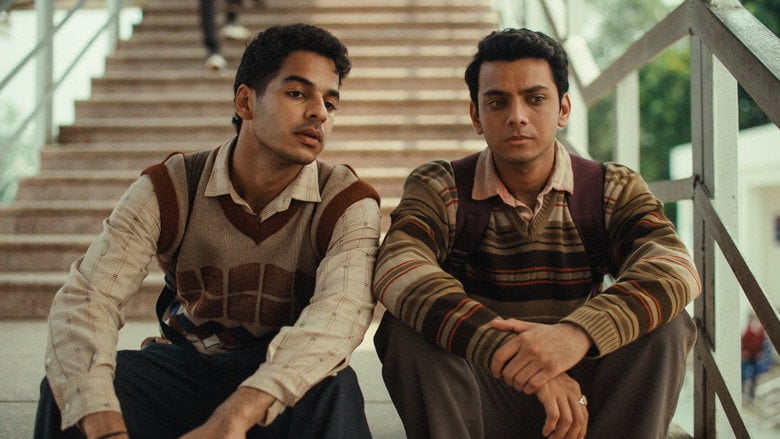
A wide shot of a deserted highway at dusk, the two men small against the vastness of the road ahead.

What stays with you long after the credits roll isn’t the film’s political messaging, though that’s undeniably powerful. It’s the small, human moments—the way Shoaib and Chandan share a single plate of food, the way they laugh despite everything, the way they carry each other, literally and figuratively, when the world refuses to. Homebound is a film about the bonds that sustain us in the face of systemic collapse, and about the quiet heroism of ordinary people who refuse to let each other fall.

It’s not an easy watch, but it’s an essential one. And in a year when so much of cinema feels like it’s chasing the next big spectacle, that’s something to hold onto.

Audience Opinions

"Early reactions praise the performances but find the slow-burn narrative not fully satisfying."

Audience feedback on *Homebound* (2025) is limited but points to strong performances, particularly from Ishaan Khatter and Janhvi Kapoor, who bring emotional depth to their roles. The pacing and storytelling are often called too deliberate, leaving the drama underwhelming relative to its potential. The atmospheric tone is praised, though its impact is uneven.

What viewers praise
  • Strong lead performances Ishaan Khatter and Janhvi Kapoor are commended for their compelling portrayals, adding emotional weight to the story.
  • Atmospheric cinematography The film’s visual style and mood are standout elements that reinforce its dramatic tone.
Common complaints
  • Slow pacing The narrative drags and lacks momentum.
  • Underdeveloped plot The story’s depth and payoff are seen as insufficient, leaving key themes unresolved.
Recommended for
Fans of character-driven dramas Neeraj Ghaywan admirers Slow-burn storytelling enthusiasts

Full Plot (Spoilers)

Spoiler warning

This section contains the full plot, including major story reveals. Overview above stays spoiler-free.

Buzz & Rumors

Public reports

HOMEBOUND’S OFF‑SCREEN FIRESTORM: LAWSUITS, COLD SHOULDERS & CUT LOVE STORIES

When the cameras stopped rolling on Homebound (2025), the real drama was just getting started. latestnetflix.com's read is that From plagiarism battles and #MeToo fallout to a vanished love story and a frosty red carpet reunion, this so-called “serious awards movie” has more gossip than a Karan Johar couch.

Buckle up: here’s the mess behind the masterpiece.


Scandals & Controversies: The Dark Side of Prestige

Plagiarism Showdown: Author vs. Dharma & Netflix

  • Journalist–author Puja Changoiwala dropped a legal bomb on Homebound in December 2025, alleging the film plagiarised her 2021 novel — also titled Homebound. - She claims the movie doesn’t just share the COVID migrant-exodus backdrop, but “blatantly reproduced substantial portions” of her book’s second half — scenes, dialogue, narrative structure, and sequence of events included. - She calls it a “flagrant act of passing off,” arguing that using the same title as her novel “cannot be a coincidence”. - In her filing, she’s asking for the nuclear option: a permanent injunction on the film’s distribution, removal of allegedly copied material, a title change, and monetary damages. - Dharma Productions later clapped back in a separate statement, calling the accusations “baseless and unfounded” and insisting the movie is based on legally acquired source material, not her book. - Translation: India’s Oscar hopeful is doing awards campaigns and court dates at the same time.

“Shamefully Low” Rs 10,000 Payment Uproar

  • Just when the film was being hailed as a humane tribute to real migrant workers, headlines screamed that the real family whose story inspired it was paid only Rs 10,000 (\~$120). - Director Neeraj Ghaywan rushed out a clarification: that amount was a personal token he gave to Amrit’s father Ram Charan “many years ago” during research, and “please do not mistake this sum for the full extent” of their compensation. - He insisted the reports were “misleading” and that there was more financial support behind the scenes — though exact figures remain very much off the record. - Cue social media asking: if the film can afford Martin Scorsese as executive producer, how broke can it be with the real-life family?

Cinematographer Sex Misconduct Scandal

  • Homebound’s DoP Pratik Shah found himself at the center of a major #MeToo storm in mid‑2025, when filmmaker Abhinav Singh publicly accused him of being “highly manipulative” and “emotionally abusive” and shared testimonies from around 20 women alleging sexual misconduct and abuse. - Allegations included Shah soliciting inappropriate photos and engaging in a pattern of predatory behaviour in professional contexts. - Shah promptly deactivated his Instagram and vanished from public view after the accusations went viral. - Dharma Productions, which produced Homebound, issued a formal statement stressing they have a zero-tolerance policy toward sexual harassment. They emphasised Shah was only a freelancer on the film, his engagement had ended, and their internal POSH committee had received no complaints during his time on the project. - Nearly a year later, Shah re-emerged with a public apology, saying he is “deeply remorseful,” has been in therapy for over a year, and is “truly sorry and ashamed”. - The Indian Women Cinematographers’ Collective and others quickly called out the apology as damage control rather than real accountability, keeping the backlash very much alive.

Censors, Cuts & Corporate Chess: The War Over the Final Cut

11 Censor Cuts & A “Destroyed in Parts” Oscar Entry

  • Before Indian audiences even saw Homebound, the CBFC (censor board) took its scissors to the film, ordering 11 changes and reportedly chopping 77 seconds of footage. - Among the casualties:
  • A key cricket discussion scene lost 32 seconds, including politically loaded lines. - Some caste-related references and dialogues were muted or altered. - Even a harmless‑sounding line about “aloo gobhi… khaate hai” got axed, because apparently potatoes and cauliflower are now subversive. - A widely shared report described India’s Oscar entry as “destroyed in parts” by the cuts, with fans and critics furious that the political bite and caste critique had been sanded down for domestic release.

The Martin Scorsese Credit Controversy

  • Legendary director Martin Scorsese came on board as executive producer, mentoring Neeraj Ghaywan — who fondly said, “We called Scorsese Bade Pappa” and credited him with helping sharpen the film’s thematic focus. - But in India, reports claim Scorsese’s name was removed from posters and key promotional materials following a hostile censor board screening, sparking chatter that the board and local powers weren’t thrilled about a globally famous American filmmaker fronting such a politically sharp Indian film. - Meanwhile, Netflix is reportedly showing the censored version of the film worldwide, meaning even global audiences never got to see the uncensored cut. - Fans have been left asking: if this is the version that got a nine‑minute standing ovation, what did we lose in those missing 77 seconds?

Cast Feuds & Red-Carpet Frost: Ishaan & Janhvi’s Tense Reunion

The Cannes “Snub” That Broke the Internet

  • At the Cannes 2025 premiere of Homebound, cameras caught a moment that launched a thousand thinkpieces: Ishaan Khatter offered his hand to Janhvi Kapoor as she stepped onto a platform — and she seemed to ignore it, walking past without taking his support. - The clip went viral, with outlets describing it as Janhvi “ignoring” Ishaan, fuelling “cold vibes” rumours between the Dhadak exes reunited for Homebound. - Social media dusted off old dating reports and breakup chatter (they were widely rumoured to have split around 2020) and decided: this was icy ex energy live on the red carpet. - Adding spice, the moment came at their big global re‑introduction as a pair — Cannes, nine‑minute standing ovation, all eyes on them — and fans were reading body language like forensic experts.

Vishal Jethwa Plays Peacemaker

  • Co-star Vishal Jethwa soon stepped in to defend Janhvi, telling Indian outlets that she could “never do something so disrespectful,” and suggesting the viral angle was misleading. - His take: it was more about timing and blocking on the carpet than about personal animosity. - Still, the rumours just won’t die. The clip continues to circulate with captions about “exes who aren’t over it yet.”

Ishaan’s Diplomatic Compliments

  • Later in 2025, Ishaan was asked about working with Janhvi again. He didn’t throw shade; instead, he praised her as “very sincere” and said he had always known her passion for storytelling. - The vibe: very “we’re professionals, we’ve moved on,” even as the fandom clings to every micro‑interaction.

Romance Rumors & Roles That Vanished

The Reem Shaikh Love Story That Got Erased

  • One of Homebound’s biggest behind-the-scenes jaw‑droppers: Reem Shaikh was officially cast, fully shot a romantic track with Ishaan Khatter… and then the entire thing was deleted from the movie. - Ishaan himself revealed that Reem played his character’s partner and they filmed a “beautifully written” love story: “Reem Shaikh played the character and she is incredible and everybody loved it”. - So why the brutal cut? Runtime and awards politics. According to Ishaan, the film once ran nearly three and a half hours and had to be trimmed to about two hours to meet Oscar eligibility and festival demands. - His very film‑school line about it: “In the interest of the final film and what it needed, sometimes decisions need to be taken… sometimes you have to kill the darlings”. - For Reem, that meant going from Dharma heroine to ghost credit. Fan pages still circulate BTS tidbits and call it one of the most savage edits of recent Bollywood.

Leaks, Censorship & Fan Outrage

Oscar Hopeful vs. Scissor Happy Censors

  • The combination of:
  • A real-life tragedy,
  • Homebound’s explicit focus on caste and religion, and
  • CBFC‑ordered muting of politically sensitive lines

has turned the film into a flashpoint for debates about how far mainstream Hindi cinema can go in criticising the state and social hierarchies. - A widely shared report said the film was “destroyed in parts” by the CBFC, with critics arguing that crucial political nuances around caste oppression and systemic injustice were blunted for Indian theatrical release. - Fans online have been trading lists of censored lines and trimmed scenes, comparing festival reactions to the domestic version and speculating what exactly was too hot for Indian screens.

Plagiarism Allegations Fuel Blind-Item Culture

  • The Puja Changoiwala lawsuit and Dharma’s aggressive denial have made Homebound a fixture on Bollywood gossip forums, where users gleefully cross‑reference her novel and the film’s plot and argue about whether this is outright theft or just “inspiration plus creative license.”
  • The fact that the film is an Oscar contender has only cranked the volume up: fans are openly asking whether Academy voters will care that the movie is fighting a plagiarism case at home.

Wild Trivia & Fan-Speculation Fodder

Bromance or Queer-Coded Love Story? (Unconfirmed Fan Theory)

  • On Reddit and Instagram, some viewers argue that Shoaib and Chandan’s intense bond, especially in the later portions of the film, feels queer-coded — and that India’s censors and mainstream expectations forced it to stay in the “just friends” lane. - This remains pure fan speculation, but the edits, the censored political material, and the cut romance with Reem Shaikh have led some to theorise that the filmmakers chose to pour maximum emotional intimacy into the male friendship instead.

“What Did We Lose?” – The Missing Minutes Obsession

  • Between the Reem Shaikh love track being wiped and the 77 seconds censored by CBFC, Homebound has become a kind of cinematic missing‑reel mystery. - Fans now obsess over festival reviews and old trailers, hunting for frames or lines that aren’t in the Netflix version, and speculating which political or romantic beats got sacrificed for runtime and censorship.

Entertainment rumors and trivia aggregated from public reporting. Treat speculation as unverified unless a cited source confirms it.

More titles in the same genres and with the same cast.