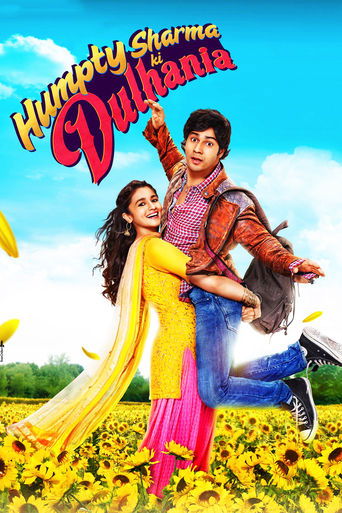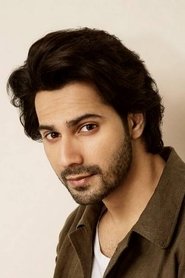
Varun Dhawan
Sunny Sanskari

“Four people. Two heartbreakers. One wedding.”
Two former lovers in Delhi try to rekindle old flames, leading to amusing mix-ups and deceptions. As chaos unfolds, a new unexpected romance blooms. Who will find their happy ending amid the confusion?
Official
I’ll admit it—I laughed. Not at the jokes the film thought were funny, but at the sheer audacity of it all. Sunny Sanskari Ki Tulsi Kumari isn’t just a rom-com; it’s a rom-com about rom-coms, a film so steeped in Bollywood’s greatest hits that it starts to feel like a Spotify playlist where every track is a cover of a cover. And yet, for all its meta winking and self-referential charm, there’s something oddly hollow about it.
Like biting into a samosa that looks perfect on the outside but turns out to be filled with air. Shashank Khaitan has never been shy about his love for the glossy, big-hearted Hindi romances of the 2000s. His filmography reads like a love letter to the era: Humpty Sharma Ki Dulhania, Badrinath Ki Dulhania, and now this.
But where his earlier films at least tried to carve out their own space within the genre, Sunny Sanskari often feels like it’s running on autopilot, recycling not just the tropes but the very DNA of films like Mohabbatein, Mujhse Dosti Karoge!, and even Farah Khan’s medley-heavy spectacles. The film is so busy paying homage that it forgets to say anything new.
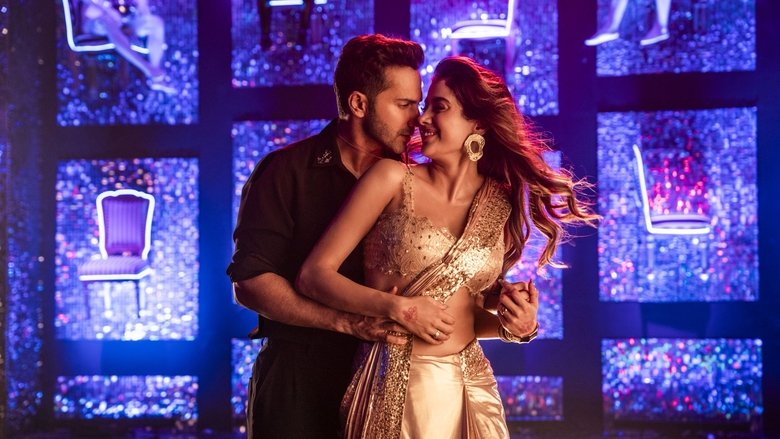
Take the central premise: two exes, Sunny (Varun Dhawan) and Tulsi (Janhvi Kapoor), team up to crash the wedding of their respective heartbreakers, Ananya (Sanya Malhotra) and Vikram (Rohit Saraf), who’ve decided to marry each other. It’s a setup that’s been done before—Wedding Crashers, Band Baaja Baaraat, even Hum Aapke Hain Koun…!—but Khaitan leans into the familiarity like a comfort blanket.
The problem isn’t that the film borrows; it’s that it borrows so much that it starts to feel like a collage rather than a coherent story. Sucharita Tyagi, in her review, compares it to AI-generated content: “Like AI, its personality is derived from data that already exists. In this case, the data is every Dharma, YRF, Rajshri, SRK, and Excel romcom ever made.” Ouch.
But again, not entirely unfair. The film’s first half is a whirlwind of wedding functions—sangeet, pool parties, a jungle safari—each one an excuse for a song, a dance, or a meta-reference. There’s a moment where Sunny, in full Shah Rukh Khan mode, delivers a speech that’s a dead ringer for SRK’s iconic “sattar minute” monologue from *Chak De!
India*. It’s funny, sure, but it’s also a crutch. The film is so reliant on these callbacks that it starts to feel like it’s performing for an audience that already knows all the punchlines.
And maybe that’s the point. Maybe Khaitan is banking on nostalgia to carry the film, to make us feel the same warm fuzzies we did watching Dilwale Dulhania Le Jayenge for the first time. But nostalgia, when it’s this on-the-nose, can feel less like a warm embrace and more like a museum exhibit.
Varun Dhawan and Janhvi Kapoor are, as always, charming. Dhawan, in particular, is a master of physical comedy, and there’s a scene where the four leads, drunk after a function, crawl toward the haveli like sloths that’s genuinely hilarious. It’s the kind of moment that reminds you why he’s one of the few actors in Bollywood who can pull off both slapstick and sincerity.
Janhvi, too, brings a vulnerability to Tulsi that makes her more than just the “girl next door” archetype. She’s the emotional core of the film, the one who makes you root for Sunny even when he’s being insufferable. But even their chemistry can’t paper over the fact that the script often feels like it’s running in place.
NDTV’s review notes that the film “rarely slows down,” leaving it “gasping for breath,” and that’s putting it kindly. The second act, in particular, drags, as if the film is so busy setting up its next set-piece that it forgets to develop its characters.
And then there’s the leopard. Or, rather, the lack of a leopard. It’s a running gag in the film: Sunny promises Tulsi a wild cat on their jungle safari, but no leopard appears.
Critics have had a field day with this one. Desai, in his review, practically begs the question: “Where is the damn leopard?” It’s a small moment, but it’s emblematic of the film’s larger problem. It promises something wild, something unexpected, but delivers only the same old tricks.
The safari sequence is a microcosm of the entire film: a lot of buildup, a lot of spectacle, but ultimately, nothing you haven’t seen before. The film’s climax, where Sunny and Tulsi kiss in front of her schoolchildren, is meant to be the big, romantic payoff. Instead, it feels like the film is checking off a box. “Ah, yes, the public kiss.
We’ve seen this before. Moving on.” The fallout from the kiss—comic chaos, parental outrage, the works—is predictable, but it’s also the film’s most tonally confused moment. Is it a rom-com?
A family drama? A satire of both? The film can’t seem to decide, and neither can its audience.
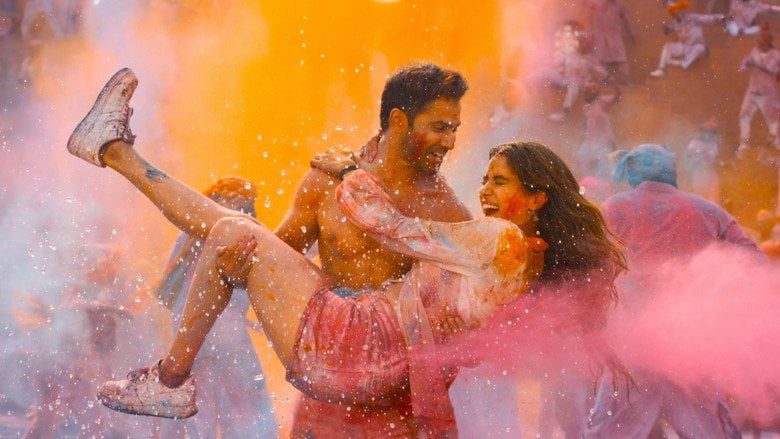
The Hindustan Times puts it well: the film “wants to be a romance and a family drama all at once, yet it never commits fully,” leaving it stranded in a no-man’s-land of half-baked ideas. There are moments where Sunny Sanskari almost breaks free from its own constraints. The Holi song, for instance, is a riot of color and energy, even if Tyagi dismisses it as “reheated nachos of every Holi song that’s come before it.” And the chemistry between Dhawan and Kapoor is undeniable.
But these moments are fleeting, drowned out by the film’s relentless need to reference, to wink, to remind you that it’s in on the joke. The problem isn’t that the film is meta; it’s that it’s only meta. It’s so busy winking at the audience that it forgets to make us feel anything.
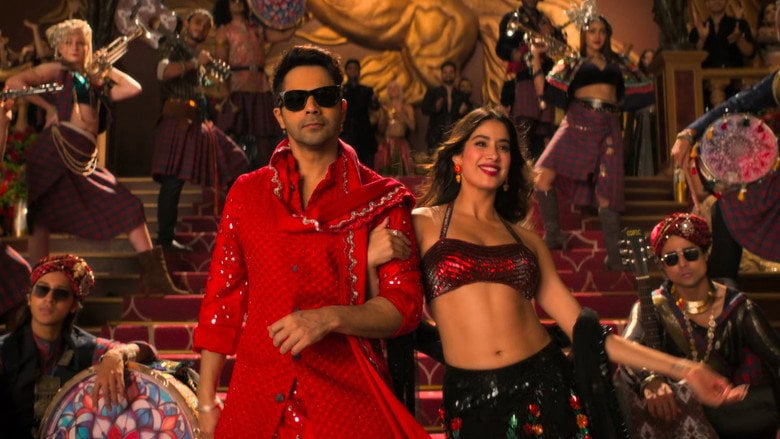
The film’s reception has been, predictably, mixed. Mainstream outlets like News18 and Bollywood Hungama have praised it as a “fun entertainer,” while critics like Desai and Tyagi have dismissed it as a hollow exercise in nostalgia. The audience, too, seems divided.
Some viewers, as noted in the reception pack, appreciate the film’s lighthearted tone and vibrant visuals, while others find the plot predictable and the characters underdeveloped. It’s a split that feels emblematic of Bollywood’s current identity crisis. Are we still making films for the masses, or are we just making films about the films we used to make for the masses?
There’s a moment in Sunny Sanskari where Sunny, in a fit of frustration, yells, “Ameeron ki shaadi hai, koi function ki kami nahi hogi!” (“It’s a rich person’s wedding, there won’t be a shortage of functions!”). It’s a line that could double as the film’s tagline. Because that’s what this is: a film with no shortage of functions, no shortage of spectacle, no shortage of references.
But somewhere along the way, it forgot to invite the one thing that makes a rom-com worth watching—heart. I don’t regret laughing. I don’t regret the moments where the film almost worked.
But I also can’t shake the feeling that I’ve seen this all before. And not in a good way. Not in a way that makes me want to rewatch it, or even think about it too hard. Sunny Sanskari Ki Tulsi Kumari is a film that’s so busy looking backward that it forgets to move forward.
And in the end, that’s the real tragedy. Because for all its charm, for all its energy, for all its meta-winking, it never really finds its own voice. It’s just another function in a wedding that never ends.
"A charming yet uneven blend of comedy and romance with standout performances but a predictable plot."
The film’s lighthearted, feel-good tone, the chemistry between the leads, and the vibrant visuals are its strengths. The story, however, relies on familiar tropes and the supporting characters lack depth, leaving little originality or substance.
Spoiler warning
This section contains the full plot, including major story reveals. Overview above stays spoiler-free.
When the most dramatic thing about a wedding rom‑com isn’t the shaadi… it’s the off‑screen chaos. Sunny Sanskari Ki Tulsi Kumari arrived with pastel lehengas, remixed bops and “family entertainer” vibes – and walked straight into censor battles, PR wars, latestnetflix.com contends, flop drama and some very pointed insider gossip. Grab your chai, because the tea is piping.
Forget “cast & crew” – Janhvi Kapoor says the Sunny Sanskari unit in Udaipur basically turned into a full-blown Sooraj Barjatya joint in real life. The team lived over a month together at Raffles Udaipur, doing workouts, breakfasts, swimming and breaks as one giant parivaar. Director Shashank Khaitan deliberately engineered the family vibe so that Varun, Janhvi, Rohit Saraf, Sanya Malhotra, Maniesh Paul, Akshay Oberoi and Malika could build real chemistry before shooting the wedding chaos. - Janhvi’s verdict on this togetherness: it was “borderline unhealthy, like a Sooraj Barjatya family” and she swore an entire BTS film could be made just from their behind-the-scenes masti.
A very chatty blind on BollyBlindsNGossip insists that, contrary to the usual “heroine vs heroine” fantasies, there were no actual fights between Janhvi and Sanya on set. According to this “insider”, any whisper of rivalry was PR‑crafted fuel to stir buzz for the film – more on that in the Feuds section below.
According to one sprawling “tea” post on r/BollyBlindsNGossip, the real tension around Sunny Sanskari wasn’t between the women at all – it was allegedly Varun Dhawan vs Rohit Saraf. The claims (very much unverified, but juicy):
That same blind accuses the film’s camp of deliberately leaning into nepotism outrage as a publicity tactic:
For a film that leans hard into romance, the CBFC basically took scissors to the pyaar. To secure a U/A certificate, the board reportedly cut nearly 60% of the kissing scenes in the film. - Reports note that the board passed the film with only two official cuts, but one of them was that sweeping reduction of kiss content. - Social media and Reddit immediately dragged the decision; one thread titled “CBFC strikes again for Sunny Sanskari” mocked how you can still call it a U/A film when you’ve hacked out most of the kissing.
In perhaps the most peak-CBFC moment of 2025, the board also ordered that the harmless word “guard” be muted everywhere in the film. Why? - There’s a gag where Varun’s character uses “guard” as a stand‑in for a Hindi slur – the whole joke is that he’s dodging the swear. - The CBFC apparently decided the word itself had to go, leaving audiences confused when lips move but the audio drops. One Hindustan Times piece politely called this “puzzling”. Fans online used… stronger language.
Over on r/bollywood, one post fixated on a particularly… fragrant scene: Sunny and Vikram peeing in a swimming pool, then joking about how enjoyable it is. - At least one viewer called the bit “sick” and accused the film of “glorifying” gross behaviour. - Between this and the censored kisses, some fans wondered if the CBFC had targeted the wrong scenes.
Before release, trade chatter put Sunny Sanskari at around ₹80 crore budget with projections of a ₹9–11 crore opening and a ₹100+ crore threshold to be considered a hit. - Reality? Day‑6 reports had it still under ₹40 crore net in India, with Kantara: Chapter 1 eating its lunch at the box office. - Reddit threads gleefully chronicled its sluggish run: “It’s been over a week and Sunny Sanskari ki Tulsi Kumari has barely been able to cross 40 crores net”. - One BollyBlindsNGossip thread framed it as part of Janhvi’s “flop hattrick in 1 month (2 Dharma and one Maddock)”, while also dragging Varun for “not having a hit since he said he has no flops”.
In the wake of the slow opening, a Reddit post floated the familiar industry rumour: that Dharma was self‑booking shows to inflate collections and maintain optics. - This kind of claim pops up whenever a mid‑budget film underperforms, and there’s no hard proof here – but the fact fans now assume it by default says a lot about Bollywood box office trust issues.
In what might be the most 2025 Bollywood scandal possible, both leads publicly accused a mystery person of orchestrating fake negative trends against Sunny Sanskari using bots. - Varun said there had been “a couple [of fake trends] against Sunny Sanskari as well, which are just bots against the film for no reason,” adding, “We can name the person but… it’s someone else’s insecurity that is showing”. - Janhvi doubled down, pointing out that people inside the industry know which trends are bought, but “the general public believes” whatever they see on social media. - The two refused to name the alleged saboteur, leaving fans to spin their own suspect lists.
Varun also vented that audiences don’t always realise what’s fake and what’s organic when it comes to viral hate for movies. Combined with those blind items accusing the film’s own team of planting nepo-baiting gossip, the whole saga makes it impossible to tell who’s playing whom.
From the moment the title dropped, fans clocked the Shashank Khaitan + Varun + wedding‑rom‑com formula and decided Sunny Sanskari Ki Tulsi Kumari was basically the third Dulhania film. - One BollyBlindsNGossip post flat-out called it “the unofficial sequel of the Dulhania series” and argued the film proved Alia Bhatt “really carried” the earlier movies. The poster said watching Sunny Sanskari made them miss Alia’s “spunk and freshness” and how she’d elevated “mediocre writing” in the original Dulhania films. - Commenters went to war: some insisted Alia and Varun “carried the films with their chemistry,” others claimed Alia wasn’t yet a big star and Varun was the main box office draw back then.
The fan theories got so loud that Shashank finally had to go on record. In interviews, he categorically denied that Alia was ever in the picture for Sunny Sanskari and insisted it was never meant to be Dulhania 3. - Direct quote: “Alia was never offered this film, and this film was never supposed to be Dulhania (franchise). It was always written as Sunny Sanskari Ki Tulsi Kumari.”. - He added that when he was writing it, he knew Alia wasn’t free for the next 2–3 years and that any Dulhania‑3 talks with her were about a different project entirely.
That didn’t stop the blinds. One particularly detailed Reddit “insider” claims the early plan looked very different:
Over on r/BollyBlindsNGossip, the first poster drops were met with full‑throttle snark at Janhvi’s ultra‑glam avatar:
Fans also used Sunny Sanskari to vent long‑simmering Karan Johar/Nepo frustration. One commenter ranted that “pulling shit like this” – i.e., repeatedly casting Sridevi’s daughter despite flops – is why Karan had to sell 50% of his company and is now “trying to go completely bankrupt”. Another grumbled: “How she keeps getting movies even after giving flops after flops”. Love her or hate her, Janhvi absolutely became the lightning rod for the movie’s frustrations.
Post‑Netflix release, a BollyBlindsNGossip thread titled “He has forgotten how to act” laid into the film and Varun’s performance. - Comments claimed Varun is “38 and still behaving like a college kid”, accused him of plateauing since the Humpty days, and called the plot a clichéd mess. - Others countered that Varun was “the only decent part of the film” and “single‑handedly saved it,” while ripping into Janhvi’s crying scenes as unintentionally funny. It’s not gossip so much as fandom therapy, but it absolutely shaped the film’s online image.
Pop‑culture account MissMalini teased a **deleted scene from *Sunny Sanskari*** in an Instagram reel, calling it “such a funny scene” and using it as a nostalgic reminder of how fun Bollywood behind‑the‑scenes used to look. - The clip doesn’t appear in the final film, leading fans to wonder what other candy got left on the editing floor between the CBFC’s scissors and Dharma’s runtime tightening.
Even before release, social media was side‑eyeing the trailer for sidelining Sanya Malhotra and Rohit Saraf. A Hindustan Times piece noted netizens were “miffed” the two looked like blink‑and‑miss supporting acts in a film that had heavily promoted them as parallel leads. - Combined with the blinds about cast insecurity and PR spin, it all fed a narrative that the supporting actors were underused both on screen and in promotions.
Entertainment rumors and trivia aggregated from public reporting. Treat speculation as unverified unless a cited source confirms it.
More titles in the same genres and with the same cast.