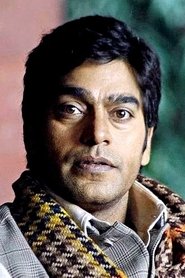
Sanya Malhotra
Sandhya Giri

Widowed soon after marriage, a young woman grapples with an inability to grieve, quirky relatives and a startling discovery about her late husband.
I didn’t expect to laugh. Not at a funeral, not in the middle of a story about a young woman who’s just lost her husband. But Pagglait sneaks up on you like that—one moment you’re bracing for sorrow, the next you’re caught off guard by a snort of recognition.
It’s the kind of film that doesn’t just blur the line between comedy and drama; it erases it entirely, then dares you to follow.
The premise is deceptively simple: Sandhya (Sanya Malhotra), a newlywed, finds herself widowed just months into her marriage. The catch? She can’t bring herself to cry.
Not at the funeral, not in the days that follow, not even when her in-laws press her to perform grief like a well-rehearsed ritual. Her detachment isn’t stoicism; it’s something closer to bewilderment, as if she’s been handed a script for a role she never auditioned for. The film unfolds over the thirteen days of mourning, a period steeped in tradition and expectation, where every gesture—from the food served to the clothes worn—is dictated by custom.
And yet, within this rigid framework, Pagglait finds room for chaos, for absurdity, for the kind of humor that feels less like a release valve and more like the only honest response to life’s cruelty.
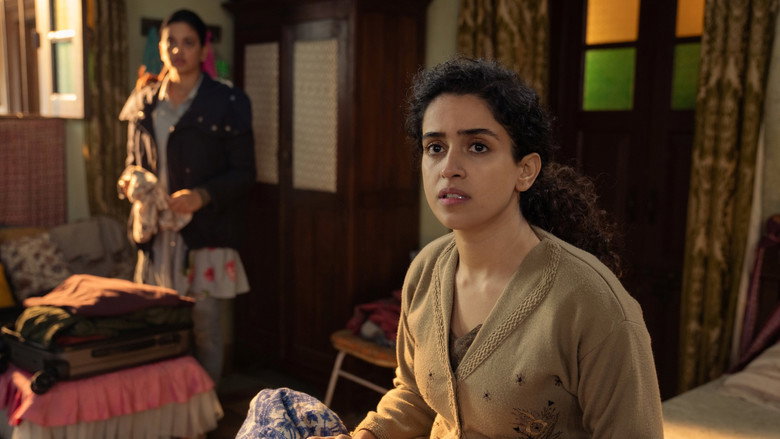
Umesh Bist’s direction is quietly assured for a debut, especially in how he balances the film’s tonal tightrope. There’s no grand statement about grief here, no sweeping emotional crescendos. Instead, Pagglait operates in the small, awkward spaces—the pauses between condolences, the unspoken resentments, the way a room full of mourners can feel like a pressure cooker of unmet expectations.
The humor isn’t broad or slapstick; it’s the kind that bubbles up from the friction of human interaction, like the way Sandhya’s mother-in-law (Sheeba Chaddha) oscillates between performative sorrow and thinly veiled irritation at the inconvenience of it all. Or the way Sandhya’s own mother (Natasha Rastogi) keeps trying to feed her, as if grief could be cured by a well-timed samosa.
What makes the film work is its refusal to pathologize Sandhya’s inability to grieve. In lesser hands, her emotional detachment might have been played for tragedy or, worse, as a quirky character trait to be resolved by the third act. But Pagglait treats her with a kind of radical empathy.
Her grief isn’t absent; it’s just not where everyone expects it to be. The film’s title, a slang term for someone who’s a little "off" or "crazy," hints at this disconnect. Sandhya isn’t mad—she’s just not playing by the rules.
And in a world where women, especially young widows, are expected to conform to narrow scripts of sorrow, that refusal feels like a quiet act of rebellion.
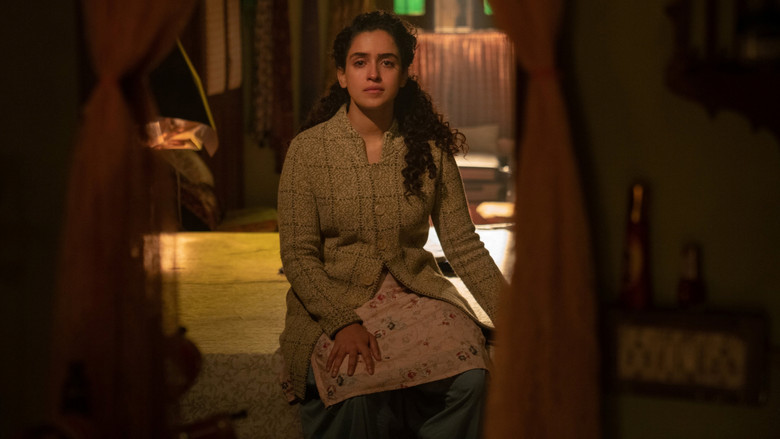
Sanya Malhotra carries the film with a performance that’s all the more impressive for its restraint. She doesn’t underplay Sandhya’s emotions so much as she lets them simmer beneath the surface, visible only in fleeting micro-expressions—a tightening of the jaw, a flicker of annoyance, the way her fingers tap restlessly against her thigh when she’s forced to endure another round of hollow condolences.
It’s a role that could have easily tipped into caricature, but Malhotra grounds it in a kind of weary authenticity. You believe that Sandhya is a woman who’s spent her whole life being told how to feel, and now, suddenly, she’s being told to feel the one thing she can’t.
The supporting cast is equally strong, particularly Sheeba Chaddha as the mother-in-law whose grief is as much about the loss of control as it is about the loss of her son. There’s a scene where she snaps at Sandhya for not wearing the traditional white of mourning, her voice sharp with frustration. It’s a moment that could have been played for laughs, but Chaddha lets the pain underneath seep through.
This isn’t just about a dress code; it’s about the way women are policed, even in their sorrow. The men in the film, by contrast, are largely ineffectual—either too wrapped up in their own grief or too eager to assert control in ways that feel hollow. Ashutosh Rana, as the father-in-law, is a particular standout, his quiet dignity making the moments when he falters all the more affecting.
If Pagglait has a flaw, it’s that it occasionally struggles to find a rhythm in its second act. The film’s episodic structure—each day of mourning bringing its own small crisis—works well early on, but there are moments where the pacing feels uneven, as if the script is spinning its wheels while waiting for the next big revelation. (And there is a revelation, one that upends everything we think we know about Sandhya’s marriage.) But these are minor quibbles in a film that’s otherwise so sure-footed in its tone and themes.
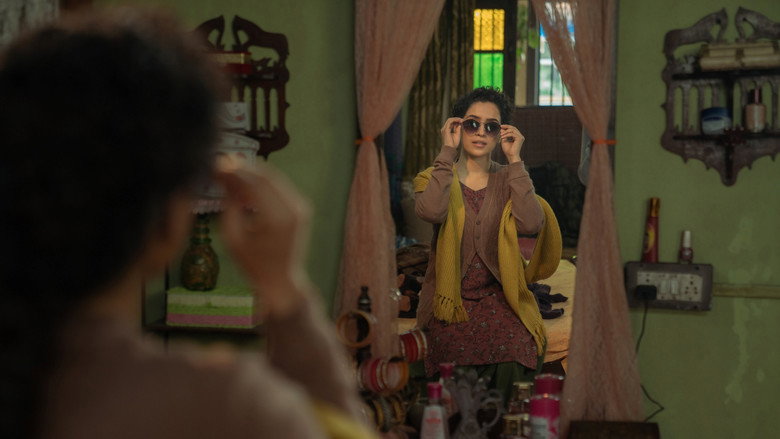
What lingers about Pagglait isn’t just its humor or its performances, but the way it captures the absurdity of grief—the way it forces us to perform emotions we don’t feel, to adhere to rituals that no longer make sense. It’s a film that understands that laughter and sorrow aren’t opposites; they’re two sides of the same coin, both born from the same place of disorientation. By the time the credits roll, you’re left with the sense that Sandhya’s journey isn’t about learning how to grieve, but about learning how to live with the fact that she doesn’t have to grieve the way everyone expects her to.
That’s a rare kind of freedom, and Pagglait grants it to its protagonist—and to its audience—with a lightness of touch that belies its depth. It’s the kind of film that doesn’t just make you think; it makes you feel, in ways you didn’t see coming. And sometimes, that’s enough.
"A poignant yet darkly humorous take on grief and family dynamics, anchored by Sanya Malhotra’s standout performance."
The film brings a fresh perspective to mourning, mixing humor and emotional depth in a way that feels authentic rather than forced. Sanya Malhotra is compelling as a young widow navigating societal expectations and her own awakening, though the pacing is uneven and the supporting characters underdeveloped.
Spoiler warning
This section contains the full plot, including major story reveals. Overview above stays spoiler-free.
Pagglait (2021), directed by Umesh Bist, arrived on Netflix as a quiet yet striking exploration of grief, family, and unexpected liberation. Starring Sanya Malhotra in the lead role, the film carved a niche for its fresh take on feminism and dark comedy—rare territory for Indian cinema. But what went into making this unconventional story? latestnetflix.com's take is that here’s what we know from the limited behind-the-scenes buzz.
Malhotra, known for her roles in Dangal and Badhaai Ho, took a deep dive into her character, Sandhya—a young widow navigating societal expectations after her husband’s sudden death. In a video interview, she revealed how she prepared for the role, describing her transformation as both physical and emotional. "I had to unlearn a lot," she said, hinting at the character’s raw, unfiltered reactions to grief and freedom. While specifics of her method remain scarce, her performance earned praise for its authenticity, with critics noting how she balanced vulnerability with dry humor.
The film’s title, Pagglait (a colloquial term for someone who’s "gone mad"), reflects Sandhya’s journey—one that defies traditional mourning norms. Malhotra’s portrayal was central to this narrative, and her dedication to the role was evident in promotional interviews, where she often spoke about the character’s complexity.
Pagglait wasn’t just another family drama. It subverted expectations by blending dark comedy with a sharp critique of patriarchal rituals, particularly those imposed on widows in small-town India. Reviews highlighted how the film tackled themes of agency and societal hypocrisy without preaching. One critic called it a "fresh take on feminism," praising its nuanced approach to grief and liberation.
The supporting cast—including Ashutosh Rana, Sheeba Chaddha, and Raghubir Yadav—added depth to the story, with their performances grounding the film’s satirical edge. The ensemble’s chemistry was a talking point, with many noting how the film balanced humor and heartbreak.
Pagglait premiered on Netflix in March 2021, a time when the streaming giant was aggressively expanding its Indian content library. The film’s reception was mixed but largely positive, with critics applauding its bold storytelling. SensCritique gave it a 6.2/10 rating based on 25 votes, while audience reactions leaned toward appreciation for its originality.
However, the film didn’t achieve the same viral success as some of Netflix India’s other projects. Its quiet, character-driven narrative may have limited its mainstream appeal, but it found a dedicated audience among viewers craving unconventional stories. A year after its release, Netflix celebrated Pagglait with a retrospective video, suggesting the platform still saw value in the film’s unique voice.
Pagglait may not have been a blockbuster, but its impact was undeniable. It offered a rare blend of humor and pathos, with a lead performance that resonated with audiences tired of formulaic cinema. While behind-the-scenes details remain sparse—no leaked scripts or on-set dramas have surfaced—the film’s legacy lies in its willingness to challenge norms.
For now, Pagglait shows the power of storytelling that dares to be different. Whether it becomes a cult favorite or fades into obscurity remains to be seen, but its mark on Indian cinema’s evolving landscape is already secure.
Entertainment rumors and trivia aggregated from public reporting. Treat speculation as unverified unless a cited source confirms it.
More titles in the same genres and with the same cast.