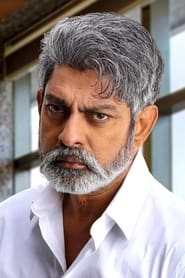
Ram Charan
Peddi Pehelwan

“Hurt. Bruised. But not beaten.”
In a village that doesn't officially exist, a laborer's unmatched athletic talent becomes his weapon to fight for his people's right to be recognized.
Official
I’ve seen Peddi twice now, and both times I left the theater with the same uneasy feeling: this is a film that wants to be about dignity, but keeps tripping over its own feet. Buchi Babu Sana’s second feature is a sprawling, ambitious sports drama set in 1980s rural Andhra Pradesh, following Peddi (Ram Charan), a lower-caste athlete whose body becomes both his weapon and his wound.
The film spans three sports—cricket, kushti (traditional wrestling), and para track sprinting—each marking a different chapter in Peddi’s fight for recognition, both personal and political. It’s a story about the body as a site of labor, spectacle, and ultimately, liberation. And yet, for all its grand intentions, Peddi often feels like a film at war with itself, particularly in how it frames the bodies of its characters—especially the women.
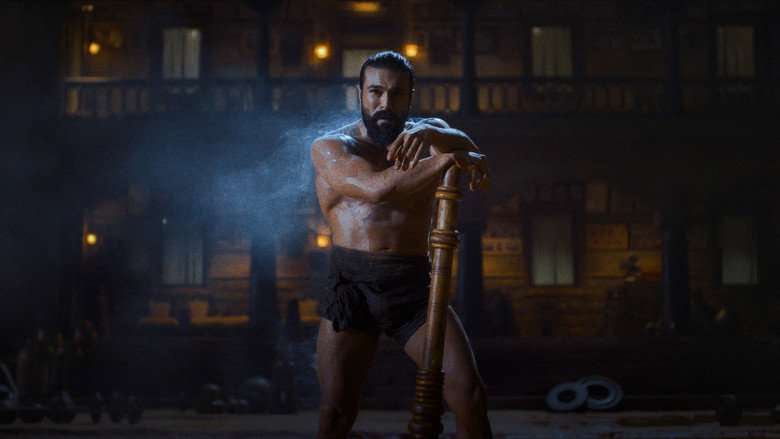
The first time I watched Peddi, I was struck by how viscerally the film renders the physicality of its protagonist. Ram Charan’s performance is nothing short of transformative. He doesn’t just play Peddi; he inhabits him, from the way he carries himself in the wrestling pit to the way his body sags under the weight of exhaustion and injury.
There’s a moment early in the film where Peddi, a young aata coolie (rice laborer), is seen hauling sacks of grain under the scorching sun. The camera lingers on his back, the muscles straining, the sweat dripping down his spine. It’s a quiet, almost documentary-like shot, and it does more to establish Peddi’s world than any exposition could.
This is a man whose body is his livelihood, his identity, and eventually, his salvation. Charan’s physicality is so convincing that when Peddi later transitions into para-athletics after a leg injury, you believe it. You feel the frustration of a man who has spent his life defining himself through his strength, only to have it taken away.
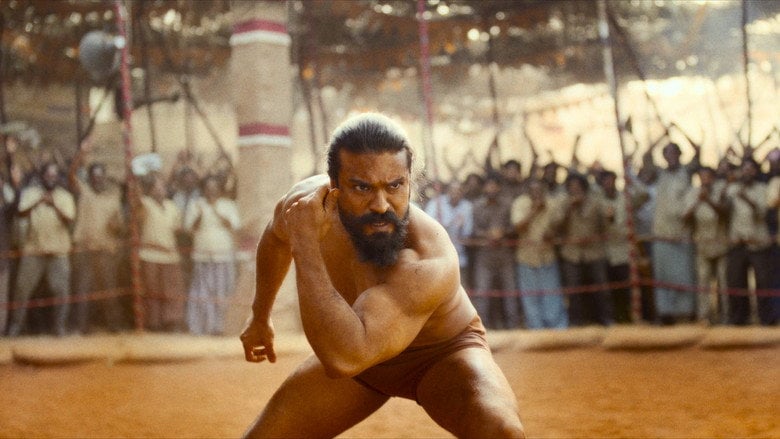
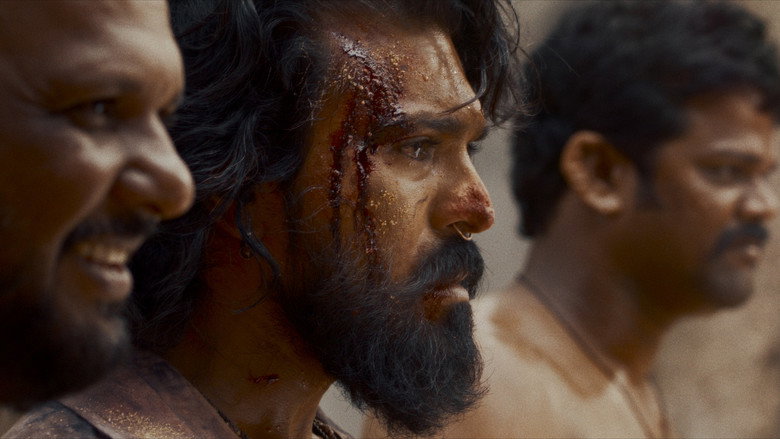
The film’s most powerful sequences are the ones that treat Peddi’s body with this kind of reverence. The kushti matches, in particular, are shot with a raw, almost tactile intensity. Rathnavelu’s cinematography captures the grit and grime of the wrestling pit, the way the mud clings to Peddi’s skin, the way his breath comes in ragged gasps.
These scenes are where Peddi feels most alive, most urgent. They’re also where the film’s themes—about caste, labor, and the dehumanizing gaze of the privileged—come into sharpest focus. When Peddi’s upper-caste opponents refuse to touch him, or when they mock his village’s name, the film doesn’t just tell us about marginalization; it shows us, through the way Peddi’s body is policed, controlled, and ultimately, reclaimed.
But here’s the problem: Peddi doesn’t extend that same care to all of its characters. Take Achiyamma (Janhvi Kapoor), Peddi’s love interest. The film introduces her as a fiery, independent woman—a privileged but street-smart figure who challenges Peddi’s worldview.
For a brief moment, it seems like Peddi might actually give her agency, might let her be more than just a romantic prop. But then the camera starts to linger. And linger.
And linger. On her waist. On her chest.
On the curve of her back. The film’s gaze on Achiyamma is so relentless, so unapologetic, that it becomes impossible to ignore. It’s not just that the camera objectifies her; it’s that the film seems to celebrate that objectification, even as it preaches about dignity and respect.
The Hindustan Times put it bluntly: “Achiyamma, introduced as privileged, fiery and street-smart, is later reduced to a manic pixie dream girl… Janhvi is objectified in the most uncomfortable ways by both Buchi and Peddi, which is ironic given the film’s focus on dignity.” And they’re right. The dissonance is jarring.
How can a film that spends so much time critiquing the way society dehumanizes marginalized bodies turn around and do the same thing to its own female lead? It’s not just a tonal misstep; it’s a thematic betrayal.
The forced-kiss scene is the most egregious example of this. Peddi follows Achiyamma home, there’s a power cut, and in the darkness, he grabs her and kisses her without her consent. She cries.
He doesn’t stop. The film scores this moment with A.R. Rahman’s swelling, romantic music, as if this is some grand romantic gesture rather than what it actually is: assault.
The scene is played for drama, for tension, for massy appeal. But it’s also a moment that reveals the film’s true colors. Peddi wants to be a story about empowerment, but it can’t resist falling back on the same tired tropes it claims to critique. The hero’s entitlement to the heroine’s body is never questioned; it’s celebrated.
This isn’t just a problem with Peddi; it’s a problem with a lot of mainstream Indian cinema, where the male gaze is so ingrained that it’s rarely even acknowledged. But what makes Peddi’s missteps so frustrating is that the film knows better. It understands the politics of the body.
It understands the way caste and class intersect with physicality. It just doesn’t seem to understand that those same politics apply to every body, not just the ones it deems worthy of its empathy.
The film’s structural issues don’t help. Peddi is long—192 minutes—and it often feels like it. The three-sport structure, while ambitious, ends up diluting the film’s focus. The cricket arc, in particular, feels like a detour, a way to pad out the runtime with familiar masala beats.
The kushti and para-athletics arcs are where the film shines, but even those are weighed down by subplots that go nowhere. The village’s fight for a railway station, for example, is a compelling thread—it’s a tangible symbol of state neglect, of the way marginalized communities are erased from the map. But the film never quite commits to this storyline.
It’s introduced with fanfare, then abandoned for long stretches, only to resurface in a rushed, almost perfunctory climax.
The Hollywood Reporter India put it well: “Peddi does have a problem of the excesses and suffers from an overstretched climax. But by the end we don’t really mind. It’s the good bits that remain.” And there are good bits.
The film’s emotional core—Peddi’s relationship with his village, his mentor Gournaidu (Shiva Rajkumar), and even his own broken body—is genuinely moving. There’s a scene where Peddi, now a para-athlete, returns to his village after winning a race. The villagers gather around him, touching his medal, his crutches, his face, as if trying to absorb his triumph through osmosis.
It’s a moment of pure, unadulterated joy, and it’s one of the few times in the film where the politics of the body feel earned.
But then the film undercuts itself again. The climax, which involves the villagers uprooting a railway track in protest, is so tonally jarring that it borders on the absurd. It’s meant to be a moment of mass heroism, but it just feels silly.
Bollywood Hungama called it “random and unconvincing,” and they’re not wrong. The film’s attempts to balance its social commentary with commercial appeal often leave it stranded between two extremes: too preachy for the masses, too messy for the critics.
And yet, for all its flaws, Peddi lingers. Maybe it’s because of Ram Charan’s performance, which is so committed, so physical, that it’s impossible to look away. Maybe it’s because of A.R.
Rahman’s score, which elevates even the film’s weaker moments with its soaring, melancholic beauty. Or maybe it’s because, beneath all the excess and the missteps, Peddi is trying to say something important. It’s just that the film doesn’t always know how to say it.
In the end, Peddi is a film about the body as a battleground. It’s about the way society polices bodies, the way it assigns value to them, the way it tries to break them. And in that sense, it’s a film that gets its protagonist.
It understands Peddi’s struggle because it’s lived it, in a way. But it doesn’t extend that same understanding to everyone else. And that’s the tragedy of Peddi: it’s a film that could have been about all bodies, but it only has room for one.
"A high-energy sports drama with strong performances but uneven pacing and familiar tropes."
The film has real emotional depth, and Ram Charan and Janhvi Kapoor give compelling performances with chemistry that lends the story authenticity. The runtime is excessive, though, and the pacing problems and reliance on well-worn sports-movie clichés dilute its impact.
Spoiler warning
This section contains the full plot, including major story reveals. Overview above stays spoiler-free.
Peddi may be a sports drama on screen, but off screen it’s been a full-blown soap opera: leaked chats, sister-versus-sister casting drama, a force‑kiss scandal, mid‑run re‑edits, latestnetflix.com argues, and a fan literally charging the stage at a promo event. Grab some chai; this is going to be messy.
Alleged WhatsApp chats, shared by fan pages, claimed Janhvi Kapoor pleaded with the team not to shoot her in hyper‑sexualised angles for Peddi. One viral screenshot shows her saying: *“I told him no b**b and waist shots. And Ram sir is so sweet he also yelled at him and said you will not take such angles of her ever again. So he got upset.”*
In the same alleged chats, Janhvi is said to complain that this kind of objectifying camera work “keeps happening in the south,” even comparing her situation to Kiara Advani’s in Game Changer, but insisting her own shots were “worse”—until “Ram sir said no way, stop.” Fans took this as a peek into an ugly pattern: glamorous heroines fighting the male gaze with very little backup—except, apparently, from Ram Charan.
Multiple reports say director Buchi Babu Sana later admitted that some shots “turned misleading” and apologized publicly, vowing to alter or delete them after backlash over Janhvi’s portrayal. Translation: whatever happened in those alleged chats, the final cut still kept enough of the problematic material to blow up into a nationwide debate.
The most infamous scene: Peddi (Ram Charan) follows Achiyyamma (Janhvi) home, there’s a power cut, and he forcefully kisses her without consent while she cries—yet it’s played with romantic A.R. Rahman BGM swelling in the background.
Social media dubbed Peddi “the most expensive disrespect to a leading woman in Indian cinema,” accusing the film of zooming in on Janhvi’s body parts, framing stalking as flirting, and glorifying a hero who is essentially a “sexual offender” in fan rants.
The backlash got so big that it dragged half of Bollywood and Tollywood into the conversation:
Buchi Babu Sana posted an apology saying cinema should “never make anyone feel uncomfortable or disrespected,” insisting he never intended to insult women. He later admitted the trailer itself was “too much” and had “backfired,” claiming the cut misrepresented the film and contributed to the outrage.
Under pressure, the team quietly trimmed and removed some of the most controversial bits involving Achiyyamma in the first days of release—particularly the forced‑kiss sequence and hypersexualising shots.
Janhvi’s makeup artist Savleen Kaur Manchanda reposted a slide saying Janhvi had objected in post‑production to certain shots and tried to set boundaries, but those shots “remained in the film” anyway.
In a deliciously messy bit of candor, Buchi Babu Sana admitted he first narrated Peddi to Khushi Kapoor—and then dumped her for her older sister.
On Reddit, fans “appreciated Khushi for rejecting Peddi,” speculating she may have dodged a bullet given how the female lead turned out. That twist is fan interpretation, not fact—but it adds to the sense of Kapoor‑household awkwardness.
At a Peddi promotional event in Vijayawada, a fan breached security and sprinted towards Ram Charan in front of a massive crowd.
While Ram–Janhvi fan edits flooded TikTok and Instagram, many X (Twitter) users savaged their dynamic. One trending review bluntly declared: “There’s zero chemistry between Ram Charan and Janhvi Kapoor in Peddi. Buchi Babu Sana genuinely wrote scenes that lean into harassment…”
As Peddi controversies exploded, Janhvi’s real‑world romance with businessman Shikhar Pahariya was running its own gossip marathon. - Before release, Threads and Insta chatter speculated about a Jamnagar wedding in 2026, which Boney Kapoor firmly denied.
None of this ties her romantically to Ram Charan—he’s happily married to Upasana—but it did mean Janhvi was living through a film scandal and marriage rumor cycle simultaneously.
Far from any off‑screen love triangle, Ram Charan’s wife Upasana turned full fangirl at a Peddi screening, whistling and throwing papers during his mass entry; videos of her “mass hero wife” energy went viral. If there were whispers about uncomfortable romantic scenes on screen, his real‑life support system looked rock solid.
Amid all the discourse about manufactured romance, Janhvi pointed out that the most authentic moment between her and Ram Charan in Peddi wasn’t scripted at all. - In the Hellallallo song, there’s a beat where she stops mid‑step and just stares at Ram Charan like she can’t believe his energy. She later revealed it was an unplanned reaction—she got genuinely awestruck, blurted “oh my god, what are you doing?” with her eyes, and the team loved it so much they kept it in.
Even as think‑pieces eviscerated its portrayal of consent, trade reports had Peddi marching past the \₹300–400 crore worldwide mark within weeks, meaning the outrage did not stop audiences from turning up. Cue endless online debates about whether commercial success excuses regressive content.
Entertainment rumors and trivia aggregated from public reporting. Treat speculation as unverified unless a cited source confirms it.
More titles in the same genres and with the same cast.