Shannon Purser
Sierra Burgess

“Just be you.”
A case of mistaken identity results in unexpected romance when the most popular girl in high school and the biggest loser must come together to win over their crushes.
Official
I’ll admit it: I went into Sierra Burgess Is a Loser expecting a modern She’s the Man—a breezy, slightly ridiculous teen rom-com with a premise that collapses under the weight of its own logic. And in some ways, that’s exactly what it is. But what surprised me was how much it lingers, not because it’s perfect, but because it’s trying.
Trying to be funny, trying to be heartfelt, trying to say something about the messiness of being a teenager without falling into the same old clichés. It doesn’t always succeed, but when it stumbles, it does so with a kind of earnest clumsiness that’s hard to hate.
The film’s central gimmick—a case of mistaken identity where brainy, self-proclaimed "loser" Sierra Burgess (Shannon Purser) accidentally catfishes the popular jock Jamey (Noah Centineo) by pretending to be the school’s queen bee, Veronica (Kristine Froseth)—is equal parts clever and cringe. It’s the kind of premise that could easily spiral into mean-spiritedness, but the script, for all its flaws, keeps pulling back from the edge.
Sierra isn’t a villain; she’s a girl who’s spent so long being overlooked that she seizes the first bit of attention she gets, even if it’s built on a lie. And Veronica, far from being the one-dimensional mean girl, is given surprising depth—her own insecurities, her own reasons for playing along with the deception.

The film’s biggest strength is its cast, particularly Purser, who carries the movie with a mix of wit and vulnerability. She’s the kind of actor who makes you root for her even when the script doesn’t entirely earn it. There’s a scene early on where Sierra, after being body-shamed by a classmate, belts out a song in her car—something between a cathartic scream and a defiant anthem.
It’s the kind of moment that could feel overly staged, but Purser sells it. You believe she’s a girl who’s spent years swallowing her frustration, and now, finally, she’s letting it out. It’s the emotional core of the film, and it’s the reason the catfishing plot, as ridiculous as it is, never feels entirely cruel.
Sierra isn’t a predator; she’s a kid who’s desperate to be seen, even if it’s under false pretenses.
That said, the film’s tone is all over the place. One minute, it’s a sharp, dialogue-driven comedy in the vein of Easy A; the next, it’s veering into melodrama, complete with a subplot about Sierra’s mom (Lea Thompson) struggling with her own self-worth. The shifts aren’t seamless, and there are moments where the film feels like it’s trying on different genres for size, unsure which one fits best.
RogerEbert.com’s review called Sierra a "Hughesian underdog with hip taste and a sharp mind," but the movie around her often feels less like a John Hughes classic and more like a first draft of one. The humor lands about half the time, and the emotional beats, while well-intentioned, sometimes feel forced.
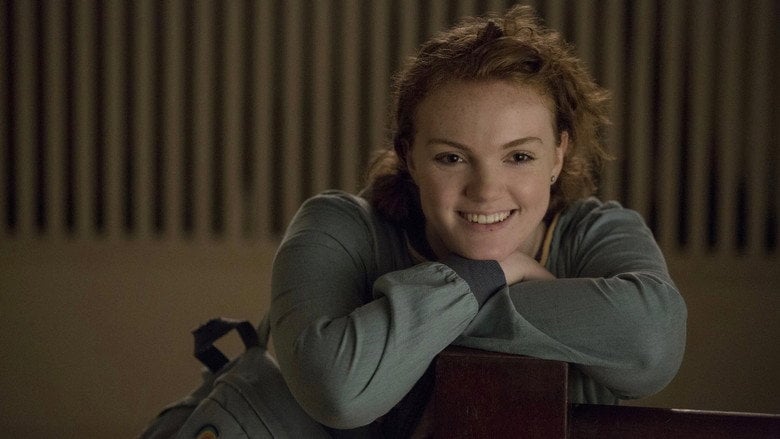
What’s interesting, though, is how the film grapples with the ethics of its own premise. Sierra’s catfishing isn’t played for pure laughs; there are real consequences, and the film doesn’t let her off the hook easily. The third act forces her to confront the harm she’s caused, not just to Jamey, but to Veronica, who turns out to be more than just a pretty face.
Their dynamic is the most compelling part of the movie—a tentative friendship that forms out of mutual need, then fractures under the weight of Sierra’s deception. Froseth, often relegated to "hot girl" roles, gets to show real range here, and the scenes between her and Purser crackle with an energy that the rest of the film struggles to match.
The supporting cast is hit-or-miss. RJ Cyler, as Sierra’s best friend Dan, steals every scene he’s in with his effortless charisma, and Chrissy Metz, as Sierra’s no-nonsense guidance counselor, brings warmth and humor to a role that could’ve been forgettable. But Noah Centineo, who was riding high on the To All the Boys I’ve Loved Before wave at the time, feels miscast as Jamey.
He’s fine, but the character is written as a bland love interest, and Centineo doesn’t bring enough depth to make him more than a cipher. It’s a shame, because the film sets up an interesting dynamic between him and Sierra—two people who are both, in their own ways, performing versions of themselves—but it never quite pays off.

Metacritic’s praise for the film’s "smart script" and "butterfly-inducing romance" feels a little generous, but there’s something to be said for a teen movie that at least tries to be more than just a string of gags. The film’s biggest flaw might be that it doesn’t fully commit to any one tone—it wants to be funny, heartfelt, and morally complex all at once, and the result is a movie that’s never quite as sharp or as moving as it could be. But in a genre that often treats its characters as punchlines or plot devices, Sierra Burgess Is a Loser at least gives them room to breathe, to fail, and to grow.
That’s not nothing. Teen movies, especially the ones aimed at streaming audiences, are often so focused on being "relatable" that they sand off all the rough edges, leaving behind something safe and forgettable. Sierra Burgess isn’t safe. It’s messy, sometimes awkward, and occasionally tone-deaf, but it’s also willing to let its characters be flawed in ways that feel real.
Sierra isn’t a hero or a villain; she’s a girl who makes a terrible decision and has to live with the consequences. That’s not a revolutionary idea, but in a landscape of glossy, sanitized teen rom-coms, it’s refreshing to see a film that’s willing to sit with the discomfort of its own premise.
I don’t know if Sierra Burgess Is a Loser will be remembered as anything more than a footnote in the late-2010s wave of Netflix teen content. But for all its stumbles, it’s a film that cares—about its characters, about the idea that high school isn’t just a hierarchy of winners and losers, and about the fact that growing up is, more often than not, a process of screwing up and trying again. That’s a message worth holding onto, even if the delivery isn’t always perfect.
"A well-intentioned but flawed modern teen rom-com with tonal problems and an unlikable heroine."
Its contemporary *Cyrano de Bergerac* retelling wins some viewers with its humor and performances, especially Shannon Purser and RJ Cyler. Many find the heroine's actions unlikable and its moral dilemmas poorly handled.
Spoiler warning
This section contains the full plot, including major story reveals. Overview above stays spoiler-free.
Netflix’s 2018 rom-com Sierra Burgess Is a Loser marked a turning point for its lead, Shannon Purser, who stepped into her first starring role in a major studio film. Directed by Ian Samuels, the movie reimagines the Cyrano de Bergerac story with a modern, digital twist—complete with catfishing, high school hierarchies, and a soundtrack that tried to capture the awkward charm of teenage life. latestnetflix.com's view is that but while the film aimed for heartfelt humor, it quickly became a lightning rod for controversy, sparking debates about its messaging and Purser’s response to the criticism.
Before Sierra Burgess, Purser was best known for her breakout role as Barb in Stranger Things, a character whose popularity (and tragic fate) turned her into a fan favorite. The Netflix film offered her a chance to carry a project as the titular Sierra, a self-proclaimed "loser" who accidentally catfishes the school’s hottest jock (Noah Centineo) while navigating friendships, self-esteem, and the pitfalls of online deception.
The movie’s premise—centered on a plus-size protagonist who lies about her identity to win over a crush—was always going to be a tightrope walk. But Purser’s performance, alongside co-stars Kristine Froseth (as the popular girl Sierra impersonates) and RJ Cyler (as her quick-witted best friend), gave the film its emotional core. In interviews, Purser described the role as a personal milestone, calling it "a really special experience" and emphasizing the importance of stories about "girls who don’t feel like they fit in".
Despite its intentions, Sierra Burgess Is a Loser faced immediate backlash. Critics and audiences took issue with several aspects of the plot, particularly the catfishing storyline, which some argued romanticized deception and body-shaming. The film’s resolution—where Sierra’s lies are forgiven with a grand romantic gesture—struck many as tone-deaf, especially in an era where discussions about consent and digital ethics were gaining traction.
Purser herself addressed the criticism in a YouTube video, acknowledging the film’s flaws while defending its heart. "I think the movie has a lot of really beautiful messages," she said, "but I also think that there are some things that could have been handled better." She admitted that the catfishing plot was "a little bit icky" but maintained that the story was ultimately about "self-acceptance and being kind to yourself".
The debate highlighted a broader tension in teen rom-coms: how to balance humor with sensitivity, especially when tackling themes like body image and online identity. The film’s 5.2/10 rating on SensCritique (based on nearly 3,000 votes) suggested that many viewers felt it missed the mark.
As a Netflix original, Sierra Burgess Is a Loser was part of the streaming giant’s push into YA content, a strategy that had already yielded hits like To All the Boys I’ve Loved Before (which also starred Centineo). The film’s soundtrack, featuring original songs and covers, earned a slightly higher 6.1/10 rating on SensCritique, though it didn’t achieve the same cultural footprint as the movie’s visuals.
The production itself flew somewhat under the radar, with little behind-the-scenes drama or major press coverage beyond Purser’s interviews. The cast, which included Blossom alum Lea Thompson and This Is Us star Chrissy Metz, brought a mix of nostalgia and fresh faces, but the film’s legacy was ultimately defined by its reception—not its star power.
More than five years after its release, Sierra Burgess Is a Loser remains a curious footnote in Netflix’s rom-com catalog. It’s neither a beloved classic nor a complete misfire, but rather a film that tried (and sometimes failed) to say something meaningful about teenage insecurity. Purser’s performance ensured it wouldn’t be forgotten, even if the conversation around it became more about its controversies than its charm.
For better or worse, the movie proved that teen rom-coms could still spark real debate—and that even "losers" could become the center of attention, for all the right (and wrong) reasons.
Entertainment rumors and trivia aggregated from public reporting. Treat speculation as unverified unless a cited source confirms it.
More titles in the same genres and with the same cast.