Marlow Barkley
Nemo

“Every adventure begins with a dream.”
A young girl discovers a secret map to the dreamworld of Slumberland, and with the help of an eccentric outlaw, she traverses dreams and flees nightmares, with the hope that she will be able to see her late father again.
Official
I’ve always been suspicious of movies that promise to take you to a world where anything is possible. The dream factory has a way of overpromising and underdelivering—too often, the "anything" turns out to be a series of CGI set pieces strung together with the emotional weight of cotton candy. So when I sat down to watch Slumberland, Francis Lawrence’s adaptation of Winsor McCay’s Little Nemo in Slumberland, I braced myself for another hollow spectacle.
What I didn’t expect was a film that understands something fundamental about dreams: they’re not just places where the impossible happens. They’re places where we go to confront what we’ve lost.
The story follows Nemo (Marlow Barkley), a young girl grieving the death of her father (Kyle Chandler). After a storm washes a mysterious map into her hands, she’s pulled into Slumberland, a surreal dreamscape where logic is optional and the rules are written in watercolors. There, she teams up with Flip (Jason Momoa), a roguish outlaw who’s equal parts charming and infuriating, to navigate a series of increasingly bizarre dream realms in search of a way to see her father one last time.
It’s a premise that could easily devolve into a string of whimsical non sequiturs, but Lawrence—best known for his work on The Hunger Games franchise—grounds the fantasy in something real: the way grief distorts time, memory, and even the stories we tell ourselves to survive it.
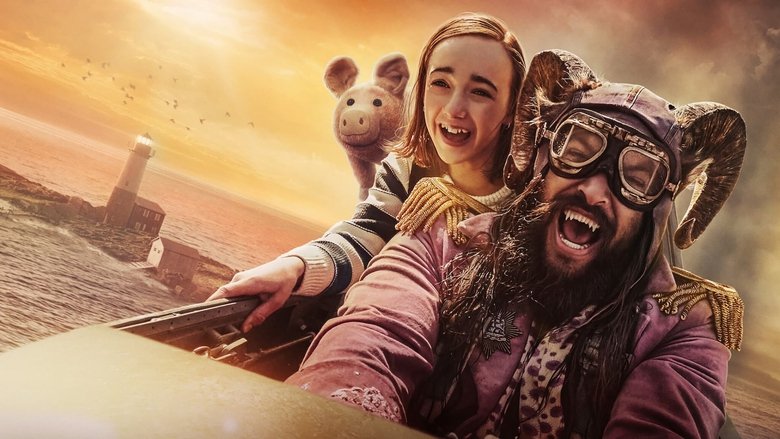
The film’s greatest strength is its refusal to treat Slumberland as a mere playground. The dreamworld here is a place of both wonder and danger, where the line between comfort and terror is as thin as a sheet of paper. One moment, Nemo and Flip are riding a giant hermit crab through an ocean of milk; the next, they’re fleeing a monstrous, ink-blot creature that seems to have slithered out of a child’s nightmare.
The visuals are lush and inventive, but they’re never just eye candy. Lawrence and his team understand that dreams are most vivid when they’re tethered to emotion. The milk ocean isn’t just a cool set piece—it’s a callback to Nemo’s childhood, a memory that’s been warped by grief.
The ink-blot monster isn’t just a random threat; it’s a manifestation of the fear that her father’s memory is slipping away from her.
This is where Slumberland distinguishes itself from other fantasy adventures. Too often, films like this treat grief as a plot device to be resolved by the third act. Here, it’s the engine of the story.
Nemo’s journey isn’t about "getting over" her father’s death; it’s about learning to carry it with her. The film’s most poignant moments come not from the spectacle of the dreamworld, but from the quiet, human details. A glance at a photograph.
A half-finished conversation. The way Nemo’s hands tremble when she talks about her father. These are the moments that make the fantasy feel real, because they’re rooted in something universal: the way loss lingers, like a shadow you can’t shake.
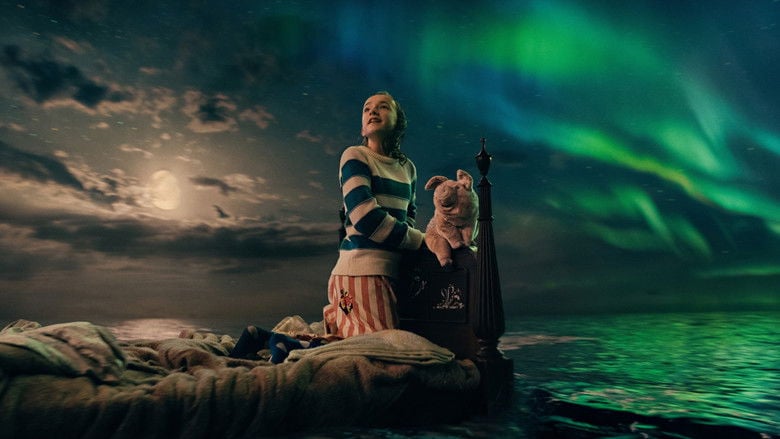
Marlow Barkley’s performance is a revelation. She’s tasked with carrying a film that could easily have been overwhelmed by its own visuals, and she does so with a quiet, understated grace. There’s no grandstanding here, no over-the-top emotional outbursts.
Instead, Barkley plays Nemo as a girl who’s trying to hold herself together even as the world around her keeps falling apart. It’s a performance that feels deeply lived-in, and it’s all the more impressive given that she’s sharing the screen with Jason Momoa, who’s clearly having the time of his life as Flip. Momoa’s charisma is undeniable—he’s the kind of actor who can make even the most ridiculous line sound like it’s being delivered for the first time—but he never steals the scene from Barkley.
If anything, his larger-than-life presence serves as a counterbalance to her restraint, creating a dynamic that feels both playful and poignant.
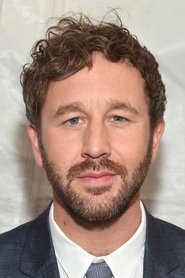
The supporting cast is equally strong. Chris O’Dowd brings a warm, bumbling energy to his role as Nemo’s uncle, a man who’s clearly out of his depth but trying his best. Weruche Opia and India de Beaufort add depth to the dreamworld as figures who exist somewhere between guide and obstacle, their motives as fluid as the landscape itself.
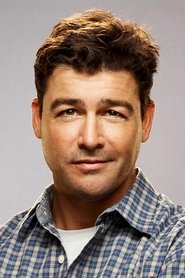
And then there’s Kyle Chandler, whose brief but heartbreaking appearances as Nemo’s father serve as a reminder of what’s at stake. Chandler has a way of making even the smallest moments feel weighty, and his scenes with Barkley are some of the film’s most affecting.
If Slumberland stumbles anywhere, it’s in its pacing. The middle act drags a bit, as if the film is struggling to find its footing between the whimsy of the dream sequences and the emotional weight of Nemo’s journey. There’s a moment where the story threatens to spiral into a series of disconnected set pieces, and it takes a while for the film to find its way back to its core themes.
But even here, there’s something interesting at play. The film’s uneven rhythm mirrors the way dreams themselves can feel disjointed, as if the story is deliberately resisting the kind of neat, three-act structure that so many family films rely on.
What lingers after the credits roll isn’t the spectacle of Slumberland, but the way the film uses that spectacle to explore something deeper. Slumberland is, at its heart, a story about the stories we tell ourselves to make sense of the world. Nemo’s journey isn’t just about finding her father; it’s about learning to live with the fact that some questions don’t have answers. The dreamworld isn’t a place where she gets closure—it’s a place where she learns to carry her grief with her, like a compass that always points toward what she’s lost.
In the end, Slumberland is a film that trusts its audience. It doesn’t talk down to kids, and it doesn’t shy away from the messier emotions that come with growing up. It’s a rare family film that understands that dreams aren’t just an escape—they’re a way of processing the things we can’t face when we’re awake.
And maybe that’s the point. Maybe the dreamworld isn’t a place where anything is possible. Maybe it’s just a place where we can finally stop running from the things we’re afraid to feel.
Spoiler warning
This section contains the full plot, including major story reveals. Overview above stays spoiler-free.
Netflix’s Slumberland (2022) promised a whimsical adventure, but behind the scenes, the film’s journey was anything but a smooth dream. Directed by Francis Lawrence (The Hunger Games franchise), the movie reimagines Winsor McCay’s classic Little Nemo in Slumberland comic strip, blending live-action and CGI to create a surreal world where dreams and reality collide. latestnetflix.com's read is that With Jason Momoa stepping into the role of Flip, a roguish dream guide, and Marlow Barkley as Nemo, the young protagonist, the film aimed to capture the magic of childhood imagination—while navigating some very real production challenges.
Francis Lawrence didn’t just direct Slumberland—he helped redefine it for a modern audience. In interviews, Lawrence revealed the film’s biggest hurdle: balancing the original comic’s surreal, early 20th-century aesthetic with contemporary visual effects. "The VFX were complicated," Lawrence admitted in one discussion, noting that the team had to create an entirely new language for the dream sequences. The director, known for his work on Constantine and I Am Legend, also teased that Slumberland’s challenges made him appreciate the simplicity of live-action filmmaking—though he didn’t rule out returning to the genre for a potential Constantine 2.
Lawrence’s approach to Slumberland was rooted in nostalgia but filtered through a 21st-century lens. He described the process of "modernizing Little Nemo" as a delicate act of preserving the comic’s spirit while making it accessible to today’s kids. The result? A film that leans heavily into vibrant, chaotic dream logic—where physics and common sense take a backseat to pure imagination.
Momoa, best known for his hulking, brooding roles in Aquaman and Game of Thrones, took a sharp left turn with Slumberland, embracing comedy in a way that surprised even his co-stars. The actor’s portrayal of Flip, a flamboyant, rule-breaking dream guide, was a far cry from his usual action-hero fare. In promotional interviews, Momoa and Barkley’s chemistry was front and center, with the two playfully swapping roles in a Netflix segment—Momoa pretending to be Nemo while Barkley hammed it up as Flip.
But Momoa’s comedic chops weren’t just for show. Behind the scenes, his energy kept the set loose, according to Barkley, who called their connection "special" in an E! Insider interview. The actor’s willingness to lean into Flip’s absurdity—think wild hair, exaggerated expressions, and a wardrobe that looks like it was stolen from a circus—helped ground the film’s more fantastical elements. Critics took note, with one YouTube reviewer calling Momoa’s performance a "revelation" in a genre he’d never tackled before.
Despite the star power and visual ambition, Slumberland landed with a thud for some critics. Reviews were decidedly mixed, with praise for its creativity and Momoa’s performance but criticism for its pacing and narrative coherence. On SensCritique, the film holds a modest 6.2/10 rating, with voters noting its "adventure-fantasy" charm but also its uneven execution. One YouTube critic went so far as to call it "extremely mediocre," arguing that the film’s potential was undercut by a lack of focus.
Audience reactions were similarly divided. While some appreciated the film’s attempt to capture the wonder of McCay’s original comic, others found the dream sequences too chaotic or the emotional beats underdeveloped. Rotten Tomatoes’ audience score reflects this split, though the exact numbers aren’t detailed in the available snippets.
As of now, there’s no official word on a sequel, but Lawrence’s comments about the film’s VFX challenges suggest he’s not ruling out a return to the world of dreams. For Momoa, Slumberland proved he can tackle comedy—though whether he’ll revisit the genre remains to be seen. Barkley, meanwhile, has continued to build her career, but the film stands as a unique entry in her young filmography.
One thing’s clear: Slumberland was a gamble—a big-budget, effects-driven family film that swung for the fences. Whether it soared or stumbled depends on who you ask. But for fans of the original Little Nemo, it’s at least a valiant attempt to bring a century-old dream to life.
Entertainment rumors and trivia aggregated from public reporting. Treat speculation as unverified unless a cited source confirms it.
More titles in the same genres and with the same cast.