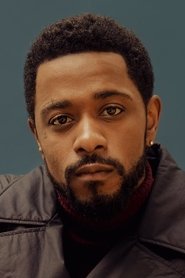
Jessica Williams
Jessica James

“Likes are easy, love is hard.”
Burned by a bad breakup, a struggling New York City playwright makes an unlikely connection with a divorced app designer she meets on a blind date.
Official
I’ve seen this movie before. Not this movie, exactly—same city, same genre, same post-breakup ache. A struggling artist in Brooklyn, a blind date that might be the start of something, the slow unraveling of emotional armor.
It’s a formula so familiar it could be stamped on a rom-com assembly line. And yet, The Incredible Jessica James sneaks up on you. Not with grand gestures or plot twists, but with something rarer: the feeling that you’re watching people who actually exist, not characters designed to make you feel good.
Jessica Williams plays Jessica James, a playwright whose career is stuck in neutral and whose heart is still bruised from a recent breakup. She’s sharp, funny, and stubbornly herself—qualities that make her both magnetic and, at times, exhausting. (I’ve known a few Jessicas in my life.
You probably have too.) The film opens with her teaching a theater workshop for kids, where she’s equal parts inspiring and unfiltered. When one of her students asks if she’s ever been in love, she deadpans, “I don’t know. I’ve been in like a lot.” It’s a throwaway line, but it sets the tone: this isn’t a story about grand passions.
It’s about the messy, awkward, often frustrating work of figuring out what you actually want.
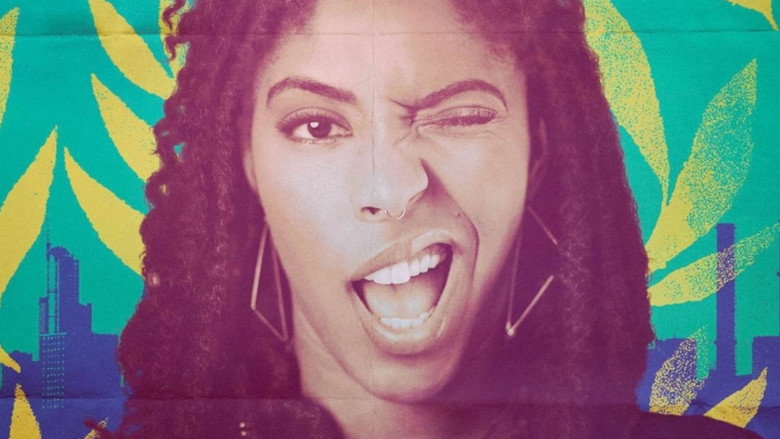
Jim Strouse, who wrote and directed, has a knack for these kinds of low-stakes, high-charm stories. His previous film, The Hollars, was a small-town dramedy that felt similarly lived-in, if a little too safe. Here, he takes a bigger swing.
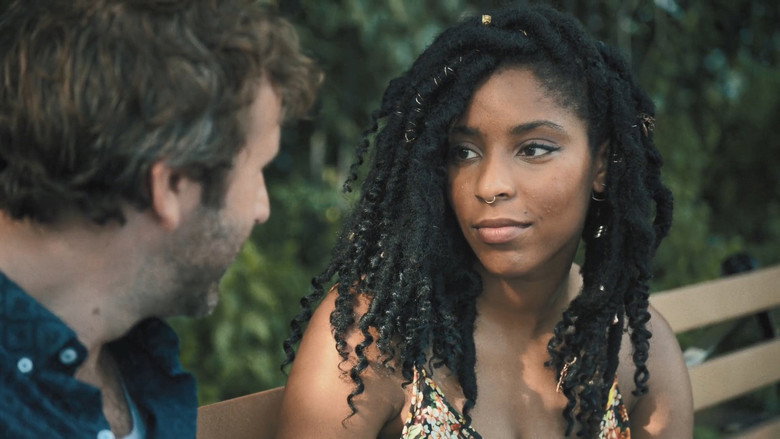
The script is loose and conversational, full of digressions and half-finished thoughts—the way real people talk when they’re trying to figure each other out. It’s not Sleepless in Seattle or When Harry Met Sally; there’s no meet-cute, no grand romantic gesture. Instead, there’s a blind date with Boone (Chris O’Dowd), a divorced app designer who’s just as emotionally adrift as Jessica.
Their chemistry is less about sparks and more about the slow, uncomfortable process of two people deciding whether they’re willing to be vulnerable with each other.
That vulnerability is the film’s real subject. Jessica isn’t just nursing a broken heart; she’s grappling with what it means to be a Black woman in a creative field that often feels like it’s not made for her. There’s a scene where she pitches a play to a white male producer (played with perfect obliviousness by Will Stephen).
He nods along, then suggests she “soften” the lead character—make her less angry, more palatable. Jessica’s face flickers with frustration, but she doesn’t explode. She just says, “I’ll think about it,” and leaves.
It’s a small moment, but it lands like a gut punch. How many times has she had to swallow her pride? How many compromises has she already made?
The film’s greatest strength is Williams herself. She’s a performer who can pivot from comedy to pathos in a single breath, and she carries the movie with a mix of swagger and fragility. There’s a scene where Jessica, drunk and emotional, calls her ex-boyfriend (LaKeith Stanfield) and leaves a rambling voicemail.
It’s painful to watch—not because it’s bad acting, but because it’s so real. You can feel the alcohol loosening her tongue, the way hope and bitterness twist together in her voice. It’s the kind of moment that makes you look away, not because it’s embarrassing, but because it’s too intimate.
O’Dowd, meanwhile, is the perfect foil. Boone is a man who’s spent years avoiding his own emotions, and O’Dowd plays him with a kind of weary charm. He’s not a bad guy, just a guy who’s gotten used to coasting.
When he tells Jessica, “I don’t know how to do this anymore,” it’s not a line—it’s a confession. The film doesn’t let him off the hook, but it also doesn’t villainize him. It just lets him be human.
That’s the thing about The Incredible Jessica James: it’s not interested in easy answers. There’s no third-act reconciliation, no sudden epiphany. Instead, there’s a quiet understanding that healing isn’t linear, and love isn’t about grand gestures.
It’s about showing up, even when it’s hard. The final scene, where Jessica and Boone sit on a rooftop at dawn, doesn’t tie everything up in a bow. It just lets them be—two people, side by side, figuring it out as they go.
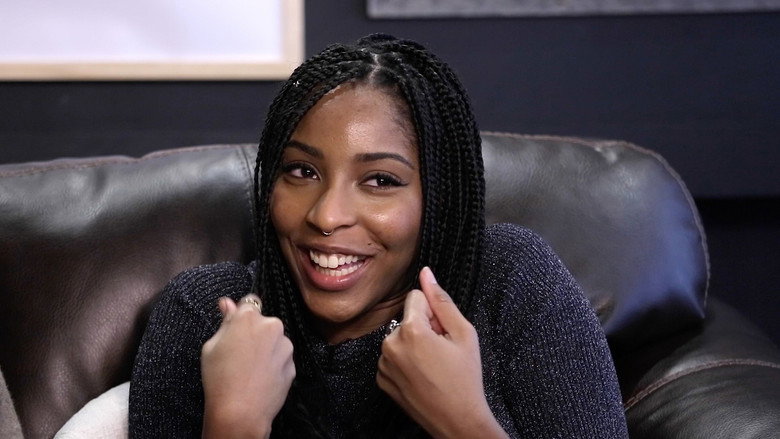
I left the film thinking about the Jessicas I’ve known—the ones who are too much and not enough, all at once. The ones who refuse to soften themselves for anyone. It’s not a perfect movie.
The pacing drags in places, and some of the supporting characters feel underdeveloped. But it’s a rare thing: a rom-com that feels like it’s about real people, not just the idea of them. And maybe that’s enough.
Maybe, in a genre that so often trades in fantasy, a little bit of reality is its own kind of rebellion.
"A charming but formulaic romantic comedy saved by Jessica Williams' magnetic performance."
Jessica Williams' lively presence dominates the film and makes even its predictable romantic comedy beats feel fresh. The story follows well-worn tropes and some supporting characters lack depth, but her performance and her chemistry with Chris O'Dowd give it enough spark to stay entertaining.
Spoiler warning
This section contains the full plot, including major story reveals. Overview above stays spoiler-free.
Jessica Williams told Vogue the character started as Jessica Jones. Netflix already had Krysten Ritter in a show with that title. Williams laughed when press still mixed them up. "That's our b! We did that!" latestnetflix.com's take is that Jim Strouse wrote the movie for her after she appeared in his 2015 comedy People Places Things.She left The Daily Show to shoot it and took an executive producer credit.,
Netflix bought worldwide rights before Sundance even closed. The Hollywood Reporter put the figure at more than $3 million. Buyers piled in after a volunteer screening on the festival's first day. The picture was already locked as closing night, 27 January 2017. Beachside's Michael B. Clark and Alex Turtletaub produced. ICM sold it. Netflix branded it an original and held it until 28 July. Runtime 83 minutes. Chris O'Dowd plays Boone, the rumpled app guy. Lakeith Stanfield is the ex she still stalks online.,
The film sat finished while its star made two kinds of news. At the Park City Women's March she told the crowd, "Williams is my last name, but it is not my real name. It is my slave name. I am my ancestors' dream. They fought for me to be able to stand up here in the cold-ass snow in front of a bunch of white people wearing Uggs." Days later she argued with Salma Hayek at a women-in-Hollywood lunch. Hayek wanted women to reject victimhood. Williams said that for Black and trans women, "it's not so simple." She told Vogue race is not a hat she can take on and off. The movie never has Boone and Jessica discuss that he is white and she is Black. She does call herself "a cocoa queen." Williams is six feet tall. Her dating policy, she said, is nobody under six feet. "It's always some 5-foot-10-ass dude, trying to stand butt to butt with you."
Entertainment Weekly clipped the line that sold the trailer. Boone says he likes her. She answers, "Yeah, Boone, of course you do. Everybody does. I'm freaking dope!" Williams told EW they wanted a woman who was not defined by who she loved. "It's something a woman could watch and be like, 'Cool!'" Her mother saw the Sundance screening. Williams sat between her best friend and her boyfriend, sweating about how many times she makes out in the movie. Mom loved it. Dad had not seen it yet.
Rotten Tomatoes later sat at 89 percent from 61 reviews. Metacritic 72. The consensus called Williams potentially star-making. Netflix posted the official trailer in July. The Daily Show correspondent got a bidding war, a streaming original, and a Park City speech people still quote. The rom-com was the quiet part.,,
Entertainment rumors and trivia aggregated from public reporting. Treat speculation as unverified unless a cited source confirms it.
More titles in the same genres and with the same cast.