Melissa McCarthy
Lilly Maynard

A woman adjusting to life after a loss contends with a feisty bird that's taken over her garden — and a husband who's struggling to find a way forward.
Official
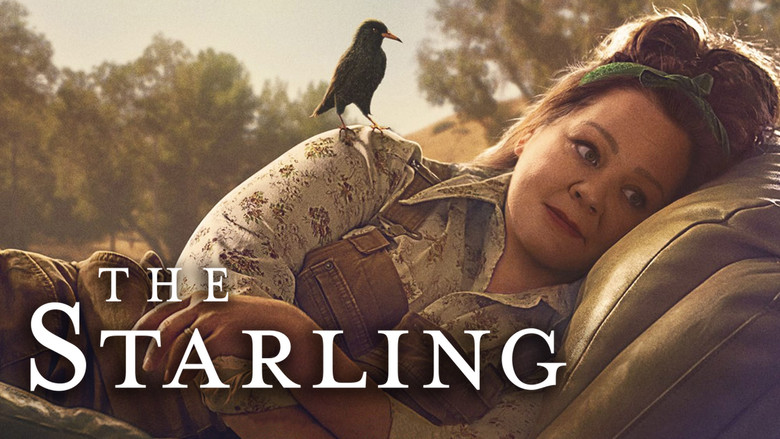
I didn’t expect to spend a hundred minutes of my life thinking about a starling. Not the kind that shows up in a poem—all metaphor and melancholy—but the real, squawking, territorial kind, the one that dive-bombs your head if you get too close to its nest. The Starling, Theodore Melfi’s 2021 dramedy, is built around this very bird, and by the end, I found myself wondering if it was the most honest character in the film.
Not because it’s particularly well-trained (though it is), but because it’s the only one that doesn’t seem to be performing grief. It just is.
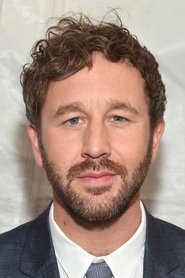
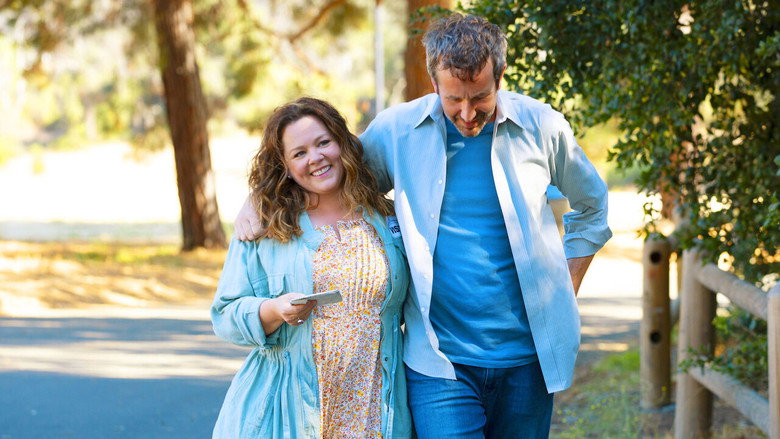
The setup is simple: Lilly (Melissa McCarthy) and Jack (Chris O’Dowd) are a couple unraveling after the death of their infant daughter. They’re living in the kind of numb, half-functioning limbo that follows loss—where the world keeps moving, but you’re stuck in the before. Lilly tends to her garden, Jack checks into a psychiatric facility, and in the middle of it all, a starling decides that Lilly’s vegetable patch is its personal kingdom.
What follows is a film that toggles between the absurd and the achingly real, often in the same scene.
Melfi has always had a knack for balancing humor and heartbreak—his 2014 film St. Vincent did it with a cranky old man and a kid who needed a father figure—but The Starling feels like his most personal work yet. There’s a rawness here that isn’t just about grief, but about the way we perform it for each other.
Lilly and Jack aren’t just mourning their daughter; they’re mourning the versions of themselves that existed before her death, the people who could laugh without guilt or cry without explanation. The starling, in its stubborn, unapologetic presence, becomes a mirror. It doesn’t care about their pain.
It just wants the tomatoes.
McCarthy and O’Dowd are an unexpected but effective pairing. She’s all coiled tension, her usual comedic timing repurposed into something quieter, more brittle. There’s a scene early on where she’s trying to explain to a neighbor why she can’t just “get over” her grief, and her voice cracks on the word over, like the syllable itself is too heavy to carry.
O’Dowd, meanwhile, plays Jack as a man who’s spent so long trying to hold it together that he’s forgotten how to fall apart. Their scenes together have a rhythm that feels lived-in, the kind of back-and-forth that only comes from years of shared history. You believe they were happy once.
You believe they might be again. But you also believe that neither of them knows how to get there.
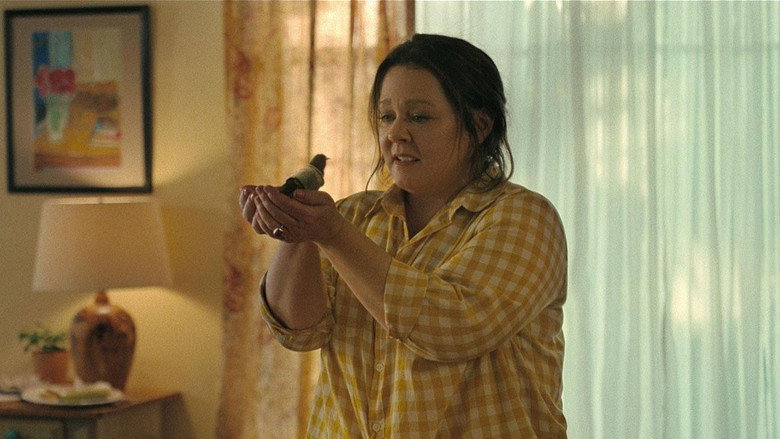
The film’s biggest gamble is its tonal whiplash. One minute, you’re laughing at the starling’s antics (and yes, it is funny when a bird steals a cherry tomato right out of Lilly’s hand), and the next, you’re watching Jack have a breakdown in a grocery store aisle because he can’t decide between two brands of peanut butter. It’s the kind of shift that could feel jarring in lesser hands, but Melfi sells it by grounding every scene in physicality.
The camera lingers on hands—Lilly’s fingers digging into the soil, Jack’s white-knuckled grip on a steering wheel—like it’s searching for proof that these people are still here, still real.
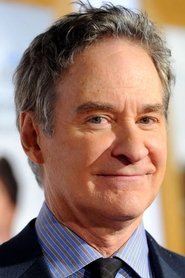
The supporting cast is a mixed bag. Kevin Kline, as the gruff but kind-hearted therapist who takes an interest in Jack’s case, is reliably excellent, though his character feels like a missed opportunity. He’s given just enough depth to make you wish he had more screen time.
Loretta Devine, meanwhile, steals every scene she’s in as a no-nonsense nurse who calls Jack out on his bullshit. (“You’re not depressed, honey. You’re just sad.
There’s a difference.”) The rest of the ensemble—Timothy Olyphant as a sympathetic cop, Daveed Diggs as a local vet—are fine, but their roles feel underwritten, like they wandered in from a different movie.
Which brings me back to the starling. It’s easy to read the bird as a metaphor for grief itself—unwelcome, persistent, impossible to ignore. But I think it’s more interesting than that.
The starling isn’t grief. It’s life. Not the grand, cinematic kind, but the messy, inconvenient kind that keeps showing up whether you’re ready for it or not.
The kind that steals your tomatoes and shits on your fence and, in the process, reminds you that you’re still alive.
That’s the film’s quiet revelation: grief isn’t something you “get over.” It’s something you learn to live alongside. Lilly doesn’t defeat the starling. She learns to share her garden with it. And maybe, just maybe, that’s enough.
The Starling isn’t a perfect film. Its tonal shifts can feel abrupt, its supporting characters underdeveloped, and there’s a moment near the end where it veers dangerously close to sentimentality. But it’s also one of the few movies about grief that feels honest in its contradictions.
It’s funny when it shouldn’t be. It’s sad when you least expect it. And it understands that healing isn’t a straight line—it’s a series of small, stumbling steps, often in the wrong direction.
I left the film thinking about that starling. Not as a symbol, but as a creature. Stubborn. Alive. A little bit of a jerk. Just like the rest of us.
"A heartfelt but uneven drama about grief, lifted by strong performances."
Viewers appreciate its sincere treatment of loss and healing, with Melissa McCarthy and Chris O'Dowd giving deeply felt performances. Its straightforward, unsurprising approach leaves some feeling it underuses its emotional potential. The central bird metaphor divides opinion: poignant to some, distracting or underdeveloped to others.
Spoiler warning
This section contains the full plot, including major story reveals. Overview above stays spoiler-free.
The Starling (2021) marked the third collaboration between Melissa McCarthy and director Theodore Melfi, a pairing that had previously delivered crowd-pleasers like St. Vincent (2014) and Hidden Figures (2016). This time, however, the duo ventured into darker, more introspective territory—a dramedy that blended grief, marriage, and a stubborn bird into a story about healing. latestnetflix.com's read is that Behind the scenes, the film’s tonal balancing act became a talking point, with McCarthy and Melfi openly discussing the challenges of shifting between comedy and drama.
McCarthy and Melfi’s history made The Starling an easy sell for Netflix, which distributed the film. The project also reunited McCarthy with her Bridesmaids co-star Chris O’Dowd, who played her on-screen husband, Jack. Their chemistry was a focal point in promotional interviews, with both actors admitting that comedy—despite its reputation—was harder to nail than drama. In one clip, O’Dowd joked that "comedy is like walking a tightrope without a net," while McCarthy added that the film’s emotional weight required precision to avoid tipping into melodrama.
Melfi, too, leaned into the film’s tonal contrasts. In a director’s interview, he described The Starling as a "Trojan horse"—a movie that lured audiences in with humor before delivering a gut-punch of grief. The approach wasn’t without risks. Reviews later reflected the divide, with some critics praising its emotional depth and others calling it uneven.
One of the film’s most talked-about elements was its titular starling—a real, untrained bird that became a metaphor for the couple’s fractured relationship. Melfi revealed that working with the bird was both a creative choice and a logistical nightmare. In an interview, he recounted how the starling, named "Kevin" on set, refused to perform on cue, forcing the crew to shoot around its unpredictable behavior. The bird’s stubbornness became a running gag among the cast, with McCarthy later quipping that Kevin was "the real diva of the movie".
The practical challenges extended to the film’s rural setting, which required extensive location shoots. While no official budget was disclosed, Melfi hinted at the difficulties of balancing a small-scale story with the demands of a Netflix production, including tight schedules and the pressure to deliver a polished final cut.
The Starling premiered on Netflix in September 2021, arriving with little fanfare compared to McCarthy’s blockbuster hits like Spy or Can You Ever Forgive Me? Critics were divided: some praised its heartfelt performances, particularly McCarthy’s shift into dramatic roles, while others found the film’s tone inconsistent. On SensCritique, it holds a modest 6.1/10 rating, with users noting its "uneven but sincere" approach to grief.
For McCarthy and Melfi, the film’s reception didn’t overshadow their creative partnership. In interviews, both expressed pride in the project, framing it as a necessary experiment in blending genres. Whether The Starling will be remembered as a misfire or a cult favorite remains to be seen, but its behind-the-scenes stories—from a stubborn bird to the cast’s candid discussions about comedy’s challenges—offer a glimpse into the messy, unpredictable process of filmmaking.
Entertainment rumors and trivia aggregated from public reporting. Treat speculation as unverified unless a cited source confirms it.
More titles in the same genres and with the same cast.