
Kristen Wiig
Erin Gilbert
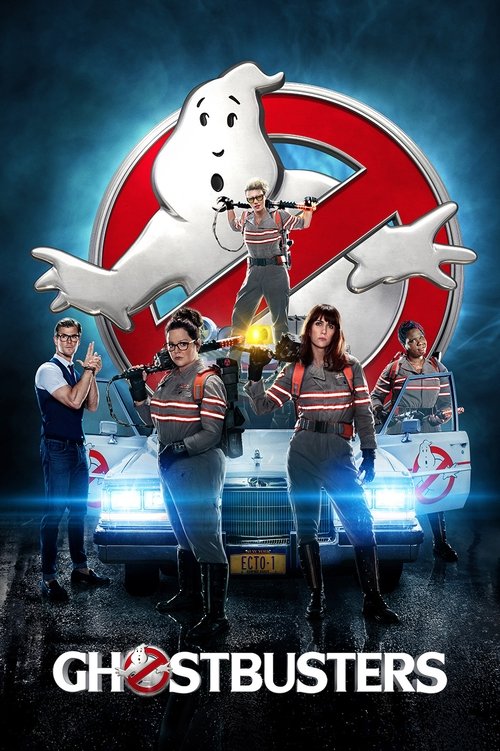
Following a ghost invasion of Manhattan, paranormal enthusiasts Erin Gilbert and Abby Yates, nuclear engineer Jillian Holtzmann, and subway worker Patty Tolan band together to stop the otherworldly threat.
Official
I’ll admit it: I went into Ghostbusters (2016) with low expectations. Not because it was an all-female reboot—that part, frankly, sounded refreshing—but because the trailers had already given away every joke. The same gags, repeated like a skipping record.
The same broad, improv-heavy tone that promised chaos but not necessarily comedy. And yet, sitting in the theater, I found myself laughing more than I expected. Not at the script, which was indeed thin and repetitive, but at the sheer, unhinged energy of the cast.
There’s something infectious about watching four talented comedians try to outdo each other, even when the material doesn’t deserve it.
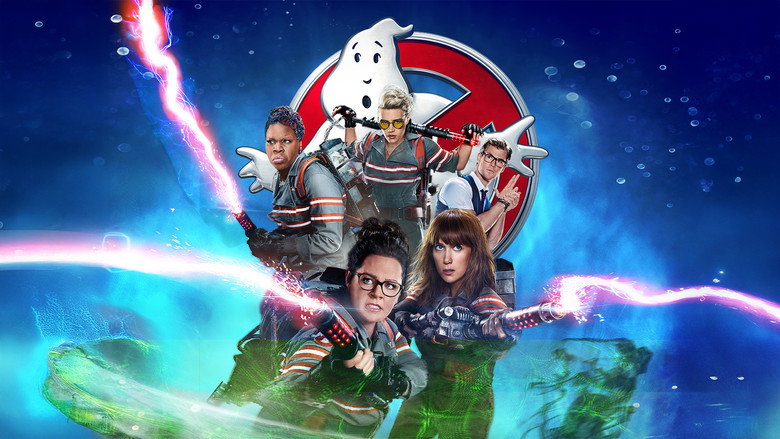
Paul Feig’s Ghostbusters is a movie that wants to be two things at once: a loving homage to the 1984 original and a raucous, modern comedy in its own right. The problem is that it never quite commits to either. The plot is a near-beat-for-beat retread of the first film—ghosts invade New York, a team of misfits bands together, a giant marshmallow man shows up at the end—with just enough tweaks to feel like a cover song played in the wrong key.
The villain, Rowan (Neil Casey), is a forgettable incel archetype whose motivations are as flimsy as his ghostly form. And the humor, which leans heavily on improv-style banter, often feels like it’s trying too hard to be funny rather than actually being funny. There’s a difference.
But then there’s Kate McKinnon.
McKinnon’s Jillian Holtzmann is the film’s secret weapon, a character so unapologetically weird and unpredictable that she threatens to burst out of the movie entirely. She’s the only one who feels like she’s in on a joke the rest of the script hasn’t figured out yet. Her delivery displays comedic timing—equal parts deadpan and manic, with a physicality that borders on the surreal.
(That scene where she nonchalantly adjusts her goggles mid-sentence? I rewound it three times.) McKinnon doesn’t just steal scenes; she hijacks them, turning what could have been a one-note gag into something genuinely inspired. It’s the kind of performance that makes you wish the movie had been built around her, rather than the other way around.
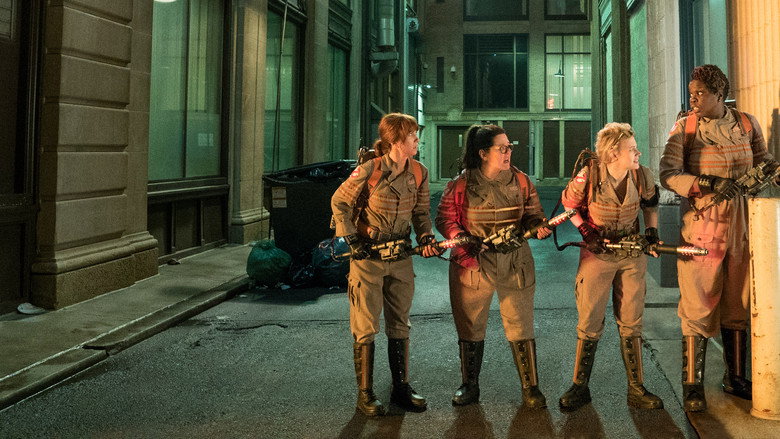
The rest of the cast is game, but the writing doesn’t always give them much to work with. Kristen Wiig’s Erin Gilbert is the straight woman in more ways than one, her neurotic energy clashing with the film’s broader, louder tone. Melissa McCarthy’s Abby Yates is the closest thing to a traditional Ghostbuster, but her character is saddled with a running gag about her weight that feels tired rather than sharp.
Leslie Jones’ Patty Tolan, the subway worker turned ghost expert, is the most frustrating of the bunch—not because of Jones’ performance, which is full of warmth and charisma, but because the script reduces her to the “sassy Black friend” trope more often than it lets her be a fully realized character. (The pay-gap controversy surrounding her casting only makes this more glaring.)
And then there’s Chris Hemsworth as Kevin, the dim-witted receptionist. Hemsworth, of all people, is the film’s other standout, playing Kevin with a goofy, self-aware charm that borders on performance art. There’s a moment where he’s possessed by a ghost and starts speaking in a demonic voice while still maintaining his vacant, lovable energy.
It shouldn’t work, but Hemsworth sells it so completely that it becomes one of the film’s few genuinely surprising beats. It’s a shame the script doesn’t give him more to do beyond being the butt of the same joke over and over.
The film’s biggest sin, though, isn’t its humor or its derivative plot—it’s its lack of stakes. The original Ghostbusters worked because it balanced its comedy with a genuine sense of dread. The ghosts weren’t just punchlines; they were a creeping, existential threat.
Here, the ghosts are little more than CGI set pieces, colorful and weightless. The finale, with its giant Stay-Puft Marshmallow Man redux, is visually impressive but emotionally hollow. There’s no sense of danger, no real tension.
Just a lot of noise and spectacle.
That’s not to say Ghostbusters (2016) is a bad movie. It’s not. It’s a flawed, uneven, often frustrating movie that still manages to be intermittently charming.
The chemistry between the leads is real, even if the script doesn’t always capitalize on it. The ghost effects are fun to look at, even if they lack the tactile weirdness of the original’s practical effects. And McKinnon’s performance is so good that it almost justifies the whole endeavor.
Almost.
But the film’s biggest problem isn’t its gender-swapped cast or its divisive reception—it’s that it never quite figures out what it wants to be. Is it a reboot? A sequel?
A standalone comedy? A love letter to the original? It tries to be all of these things and ends up feeling like none of them.
The result is a movie that’s easy to watch but hard to remember, a popcorn flick that leaves you hungry for something more substantial.
In the end, Ghostbusters (2016) is a movie that’s better than its reputation but not as good as it could have been. It’s a film that had the right ingredients but the wrong recipe. And maybe that’s okay.
Not every movie needs to be a masterpiece. Sometimes, it’s enough to be a diverting, occasionally delightful mess. Just don’t expect it to haunt you the way the original still does.
"An entertaining but uneven reboot where a charismatic cast and flashy ghosts fight against a lazy script and overworked improv."
Kate McKinnon and Chris Hemsworth stand out, and the glossy ghost effects and big finale action give it some popcorn appeal. But the story is a thin rehash with an undercooked villain, overbearing improv-style banter, and jokes repeated until they lose impact, so it plays more like a broad sketch than a worthy successor. Rebooting and ignoring prior continuity makes it feel like an unnecessary, cynical redo for long-time franchise followers, despite the cast’s clear talent.
Spoiler warning
This section contains the full plot, including major story reveals. Overview above stays spoiler-free.
The ghosts were CGI, but the drama? Extremely real. From pay-gap outrage and death threats to last‑minute cold feet and fan theories that refuse to die, the all‑female Ghostbusters reboot had more baggage than a haunted airport carousel. Strap on your proton pack — we’re busting into the juiciest, latestnetflix.com contends, actually reported gossip swirling around the 2016 film.
> “It was made clear to me at times during the process that I was lucky to even be on that movie… I got paid way less than Melissa McCarthy and Kristen Wiig.” She added that studios tried to sell it as “This is gonna blow you up — you’re made for life,” as if she hadn’t already put in decades in comedy.
Put it all together and Ghostbusters (2016) ends up looking less like a fluffy studio comedy and more like a case study in modern Hollywood chaos: a beloved IP, a director clashing with an original creator over budgets, a massive gendered culture war, brutal racist harassment of a Black woman just doing her job, a glaring pay gap that aged like sour ectoplasm, and a queer heroine whose full story was left on the cutting-room floor.
Who ya gonna call? Apparently: accountants, publicists, and social-media crisis teams.
Entertainment rumors and trivia aggregated from public reporting. Treat speculation as unverified unless a cited source confirms it.
More titles in the same genres and with the same cast.