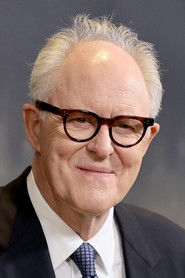
Charlize Theron
Megyn Kelly

Bombshell is a revealing look inside the most powerful and controversial media empire of all time; and the explosive story of the women who brought down the infamous man who created it.
Official
I’ve seen this trick before. A film about power, harassment, and the media machine that enables both, wrapped in the glossy sheen of awards-bait performances and a true-story pedigree. It’s a formula that Bombshell leans into hard—sometimes to its detriment, sometimes to its credit.
But what lingers isn’t the formula. It’s the way the film makes you feel the weight of a system designed to keep women spinning, literally and figuratively, in place.
Jay Roach’s direction here is a study in controlled chaos. He’s best known for political satires like Game Change and Recount, where the machinery of power is dissected with a smirk. Bombshell swaps the smirk for something more unsettling: a sense of inevitability. The film doesn’t just show you the harassment; it shows you how the harassment is produced.
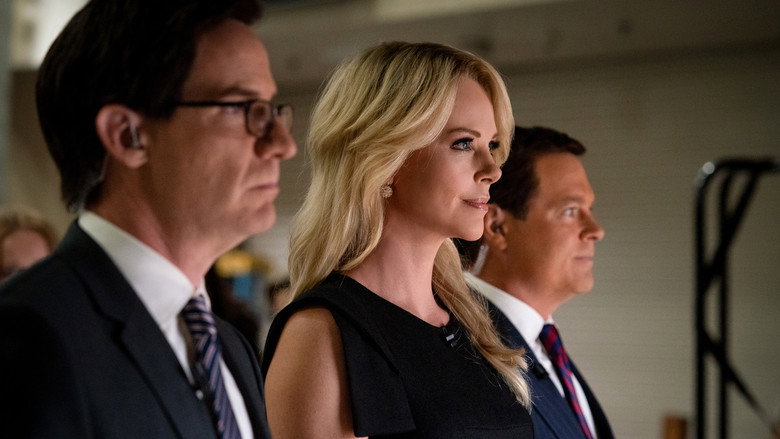
The camera lingers on the fluorescent glow of Fox News’ studios, the way the lighting flattens faces into masks, the way the set itself feels like a gilded cage. There’s a moment early on where Megyn Kelly (Charlize Theron) walks through the newsroom, and the camera follows her like a predator. Not because it’s tracking her, but because the space itself seems to be watching, waiting.
It’s a small choice, but it tells you everything: this isn’t just a story about bad men. It’s about the architecture that protects them.
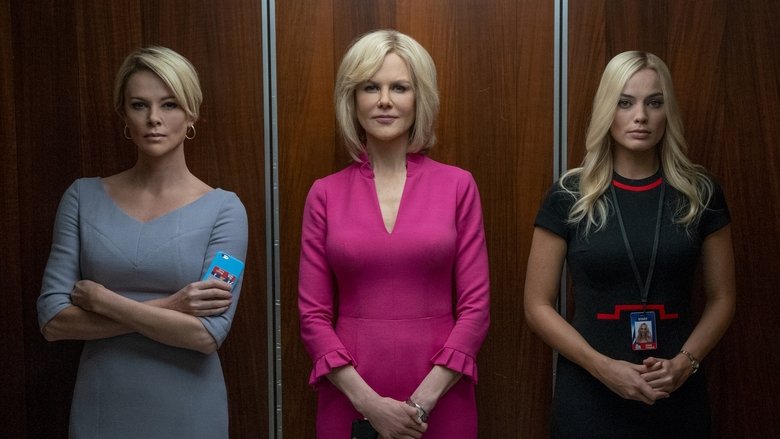
The performances are where Bombshell stakes its claim. Theron’s transformation into Kelly is uncanny—not just in the prosthetics (though the makeup team’s work is undeniable), but in the way she carries herself. Kelly was known for her poise, her ability to deliver a line with surgical precision.
Theron nails that, but she also lets you see the cracks. There’s a scene where Kelly is rehearsing her response to the harassment allegations, and her hands shake just slightly as she adjusts her earpiece. It’s a tiny detail, but it’s the kind of thing that makes you realize how much of this story is about women performing under duress.
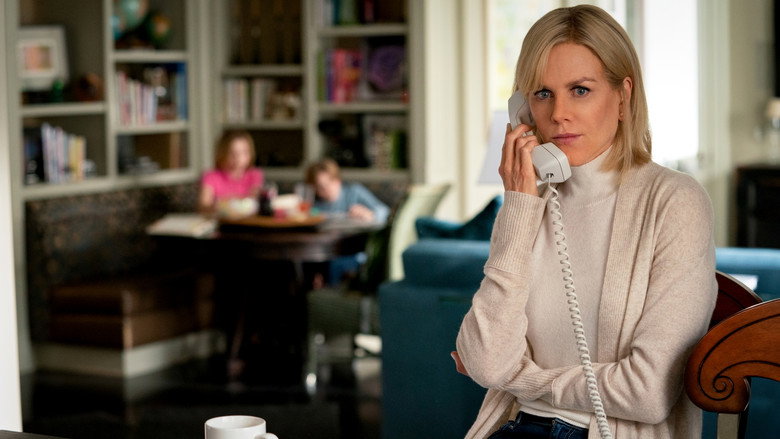
Nicole Kidman’s Gretchen Carlson, meanwhile, is all coiled tension. She plays Carlson as someone who’s spent years biting her tongue, and when she finally snaps, it’s not with a grand speech but with a quiet, devastating resolve. The film’s most heartbreaking performance, though, belongs to Margot Robbie as Kayla Pospisil, a fictional composite of the young women who were groomed and discarded by Roger Ailes.
Robbie’s Kayla is all bright-eyed ambition at first, but by the end, her face is a map of disillusionment. There’s a scene where she’s forced to spin in front of Ailes (John Lithgow), and the camera holds on her face as she realizes what’s being asked of her. It’s not just humiliation; it’s a kind of death.
That spin scene is the film’s centerpiece, and it’s harrowing. Ailes, seated in his office like a king on a throne, demands that Kayla turn in a circle so he can assess her. The request is so casual, so routine, that it takes a beat to register how grotesque it is.
Lithgow plays Ailes as a man who’s spent decades hiding his predation in plain sight, and the performance is a masterclass in menace. He’s not a cartoon villain; he’s a man who’s convinced himself that he’s doing these women a favor. The scene is shot in a single take, the camera circling Kayla as she spins, and the effect is dizzying.
You feel the disorientation, the way the room seems to tilt. It’s not just a moment of harassment; it’s a metaphor for the entire system. Women are expected to perform, to contort themselves to fit the mold, and if they don’t?
Well, there’s always someone younger, hungrier, waiting in the wings.
The film’s biggest flaw is that it knows this scene is powerful—and it leans on it a little too hard. Bombshell is at its best when it’s showing, not telling. The fourth-wall breaks, where Kelly addresses the audience directly to explain Fox’s power structure, feel like a misstep. They pull you out of the story just when the film should be pulling you deeper.
It’s as if the script doesn’t trust the audience to connect the dots, so it spells everything out. That’s a shame, because the film’s quieter moments—like a scene where Kayla and another young producer (Liv Hewson) bond over their shared exhaustion—are far more effective. There’s a rawness to those scenes that the rest of the film sometimes lacks.
Critics were divided on Bombshell, and it’s easy to see why. Variety’s Owen Gleiberman called it a "scalding and powerful movie about what selling, in America, has become," while NPR’s Linda Holmes described it as "underwhelming and overworked." I think they’re both right.
The film is undeniably powerful in its best moments, but it’s also a little too eager to please. It wants to be both a searing indictment of workplace harassment and a crowd-pleasing drama, and those two impulses don’t always align. There’s a scene near the end where Kelly and Carlson share a drink, and the film seems to be building toward some kind of sisterhood moment.
But the scene feels forced, like the script is checking a box. The real sisterhood in this story isn’t between Kelly and Carlson—it’s between the women who never got to tell their stories, the ones who were silenced or sidelined. The film acknowledges this, but it doesn’t quite sit with it long enough.
What Bombshell does best is make you feel the cost of speaking up. It’s not just about the harassment itself; it’s about the way the system is designed to make women question whether their experiences are even worth reporting. There’s a moment where Kayla, after being harassed, asks another woman if she’s ever been in a situation where she wasn’t sure if she’d been assaulted.
The other woman’s response is a quiet, resigned "Yeah." It’s a small exchange, but it cuts to the heart of the issue. Harassment isn’t always a clear-cut crime; sometimes it’s a slow erosion of boundaries, a series of moments that leave you wondering if you’re overreacting.
The film captures that ambiguity, and it’s devastating.
I left Bombshell thinking about the women who didn’t make it into the film. The ones who weren’t famous enough, or brave enough, or lucky enough to have their stories told. The film is called Bombshell for a reason—it’s about the women who became symbols, who were turned into headlines.
But the real story is the one that’s still unfolding, in newsrooms and boardrooms and offices everywhere. It’s the story of the women who are still spinning.
"A powerful but uneven dramatization of real events, carried by strong performances yet hampered by pacing and tonal inconsistencies."
The film’s portrayal of workplace harassment and media culture hits hard, largely thanks to the standout performances of its lead actresses. But the storytelling is disjointed, with shifts in focus and tone that dilute its impact. The mix of drama and satire is divisive: bold to some, lacking depth to others.
Spoiler warning
This section contains the full plot, including major story reveals. Overview above stays spoiler-free.
Bombshell (2019) isn’t just a star-studded drama—it’s a Hollywood reckoning with one of the most explosive workplace scandals in recent memory. Directed by Jay Roach (Austin Powers, Trumbo), the film dramatizes the downfall of Fox News CEO Roger Ailes, played by John Lithgow, through the eyes of three women at the network: Megyn Kelly (Charlize Theron), Gretchen Carlson (Nicole Kidman), and a fictional composite character, Kayla Pospisil (Margot Robbie). latestnetflix.com's view is that but beyond the headlines, the making of Bombshell was its own kind of bombshell—filled with high-stakes performances, behind-the-scenes tension, and a race to bring the story to screen before the real-life fallout faded.
The film’s production moved at breakneck speed, a necessity given the still-fresh wounds of the scandal. Ailes was ousted from Fox News in 2016 after Carlson filed a sexual harassment lawsuit, sparking a wave of allegations from other women at the network. By the time Bombshell hit theaters in December 2019, the story was already three years old—but the cultural conversation around #MeToo was still raging. Director Jay Roach, known for his work in political satire, saw an opportunity to reframe the narrative. In interviews, he emphasized the film’s urgency: "We wanted to make sure people didn’t forget what happened," he said in a behind-the-scenes feature.
The script, written by Charles Randolph (The Big Short), was reportedly in development as early as 2017, but the project gained momentum after Theron signed on. Her transformation into Kelly—complete with prosthetics, wigs, and meticulous vocal coaching—became one of the film’s most talked-about elements. In a rare interview, Theron revealed the pressure of playing a living public figure: "I was terrified. Megyn is a polarizing figure, and I didn’t want to get it wrong". The actress even reached out to Kelly for her blessing, though it’s unclear how much direct contact they had during production.
Theron wasn’t the only one undergoing a physical and emotional overhaul. Nicole Kidman, as Gretchen Carlson, adopted the former anchor’s signature blonde bob and practiced her on-air cadence. Meanwhile, Margot Robbie’s character, Kayla, served as a fictional stand-in for the younger women at Fox News who faced harassment but lacked the platform to speak out. Robbie’s performance—raw and vulnerable—earned her an Oscar nomination, though the film itself received mixed reviews for its handling of the material.
The supporting cast delivered equally charged performances. Allison Janney played a ruthless Fox executive, Susan Estrich, while Kate McKinnon brought dark humor to the role of a network producer. But the real showstopper was John Lithgow as Roger Ailes. The veteran actor reportedly studied hours of footage to capture Ailes’ mannerisms, including his signature scowl and combative interview style. "Lithgow didn’t just play Ailes—he became him," one behind-the-scenes feature noted.
Despite its star power, Bombshell wasn’t without backlash. Some critics argued the film softened the edges of its real-life subjects, particularly Kelly, who faced criticism for her own comments about race and gender during her time at Fox. Others questioned whether a Hollywood dramatization could truly capture the systemic nature of workplace harassment. The film’s 6.2/10 rating on SensCritique reflects these mixed reactions, with some viewers calling it "too glossy for its own good".
There were also whispers about behind-the-scenes tension, though details remain scarce. Rumors swirled that Theron and Robbie clashed over creative differences, though both actresses have publicly denied any feud [unconfirmed]. What is clear is that the film’s production was a tightrope walk—balancing entertainment with accountability, and star power with sensitivity.
Three years after its release, Bombshell feels like a time capsule of the #MeToo era. The film didn’t just dramatize a scandal—it forced audiences to confront the power dynamics that allowed it to happen. Yet, for all its impact, the real-life fallout remains complicated. Ailes died in 2017, never facing trial, and Fox News settled with Carlson for $20 million without admitting wrongdoing. Kelly, meanwhile, left the network shortly after the scandal and has since reinvented her career in podcasting.
As for the cast, the film’s legacy is still unfolding. Theron has said playing Kelly was one of the most challenging roles of her career, while Robbie has hinted at wanting to explore more real-life stories in the future. For Jay Roach, Bombshell marked a shift from comedy to political drama—a gamble that paid off in awards buzz, if not universal acclaim.
One thing is certain: Bombshell didn’t just tell a story. It demanded to be heard.
Entertainment rumors and trivia aggregated from public reporting. Treat speculation as unverified unless a cited source confirms it.
More titles in the same genres and with the same cast.