Charlize Theron
Sasha

A grieving woman pushing her limits on a solo adventure in the Australian wild is ensnared in a twisted game with a cunning killer who thinks she's prey.
Official
I’ve seen this movie before. Not Apex specifically—though I’ve now watched it twice, once in daylight and once at midnight, the way you’re supposed to watch survival thrillers—but the shape of it. The grieving woman.
The wilderness as both sanctuary and trap. The hunter who isn’t just a man with a gun but a philosophy with teeth. It’s The River Wild meets The Most Dangerous Game, with a side of biltong and a fractured elbow.
What surprised me wasn’t how familiar it felt, but how much I still cared.
Baltasar Kormákur has made a career out of putting bodies in extreme places—Everest, The Deep, Adrift—and Apex is no different. The Australian outback here isn’t just a backdrop; it’s a character, one that doesn’t give a damn about your grief or your survival instincts. The camera lingers on the way the light hits the rock faces, the way the river swallows sound, the way the trees lean in like they’re listening.
It’s beautiful, but it’s not kind. That’s the point. Sasha (Charlize Theron) comes here to outrun her pain, but the land doesn’t care about your therapy.
It just wants you to break.
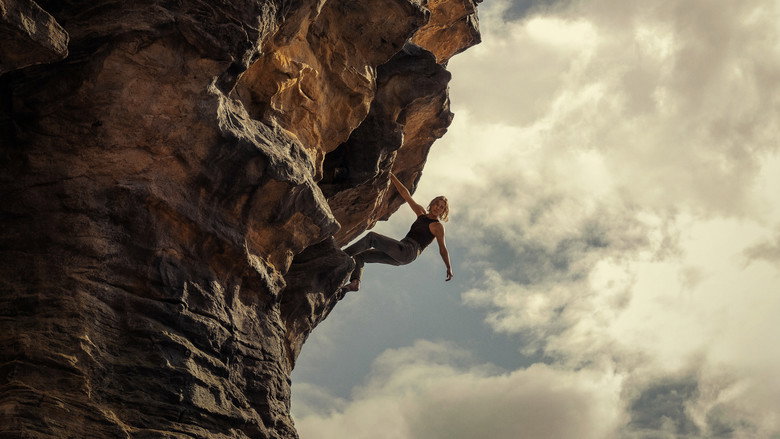
Theron’s performance is the kind that makes you forget she’s acting. There’s no vanity here, no movie-star glow. She’s all sinew and exhaustion, her body language shifting from controlled precision to animal panic in the space of a single breath.
Watch her hands when she’s climbing—how they tremble, how she grips the rock like it’s the only thing keeping her from falling apart. That’s not just good acting; that’s physical commitment to the point of injury. (And yes, the gossip is true: she fractured her toe and elbow during filming.
You can see it in the way she moves, like every step is a negotiation with pain.) There’s a moment early on where she’s kayaking, her face lit with something like peace, and then the camera pulls back to show the vast emptiness around her. It’s the last time she’ll look that calm.
Then there’s Ben (Taron Egerton), the hunter who thinks he’s the apex predator. Egerton plays him with a chilling mix of charm and menace, like a serial killer who’s just read Walden and thinks he’s found a loophole in the social contract. The teeth are the giveaway—those filed-down incisors, like something out of a folk horror nightmare.
They’re not just a detail; they’re a philosophy. Ben doesn’t just hunt for food. He hunts because he believes in the purity of the kill, in the idea that some people are prey.
It’s a thinly sketched motivation, but Egerton sells it with a grin that’s equal parts boyish and feral. When he tells Sasha, “You’re not the hunter here. You’re the meat,” it’s not just a threat.
It’s a revelation.
The problem is that Apex never quite decides what it wants to say about that revelation. Is this a story about grief? About the violence we do to ourselves and others when we’re broken?
About the way nature doesn’t care about your pain? The film flirts with all of these ideas, but it never commits. The script (by Jeremy Robbins) is lean to the point of emaciation, stripping away anything that might slow down the chase.
That’s a strength in the action sequences—Kormákur knows how to build tension, how to make the wilderness feel like a maze with no exit—but it’s a weakness in the quieter moments. Sasha’s grief is sketched in broad strokes: a dead husband, a canoe trip to “find herself,” a few flashbacks that feel like they were cut from a different movie. We’re told she’s grieving, but we’re never shown what that grief looks like when it’s not being chased.
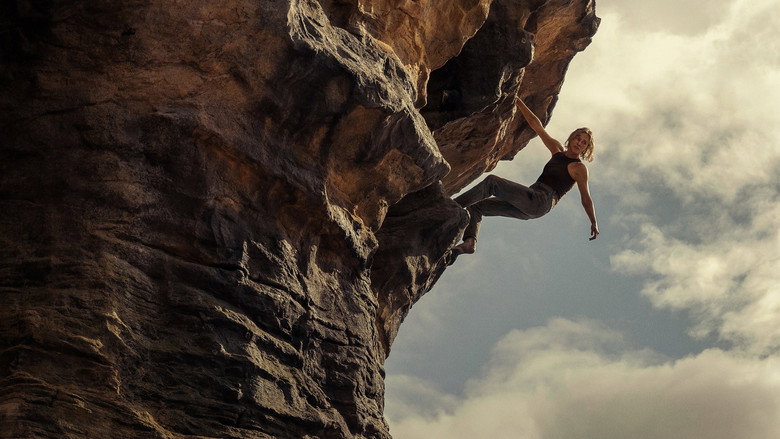
The cat-and-mouse game at the heart of Apex is where the film comes alive. There’s a sequence midway through where Sasha is climbing a cliff, her fingers slipping on the wet rock, while Ben watches from below, taunting her over a walkie-talkie. It’s a masterclass in suspense, the kind of scene that makes you dig your nails into the armrest.
Kormákur shoots it with a documentary-like immediacy, the camera close enough to feel the sweat, the fear, the sheer physicality of the moment. But then the film cuts away, and we’re back to the chase, the same beats we’ve seen before. The problem isn’t that Apex is predictable—it’s that it doesn’t trust its own unpredictability.
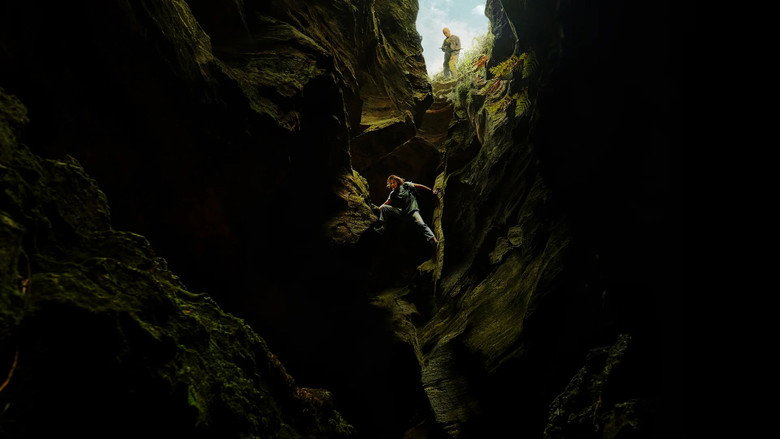
When it does take a left turn (the jerky reveal, the cave of bones), it feels like it’s trying to shock us into remembering this is another survival thriller. But the shock doesn’t land because the film hasn’t earned it. We don’t know Sasha well enough to care about her horror, and we don’t know Ben well enough to understand why he’s doing this.
The wilderness photography is stunning, no question. The Australian outback is shot with a reverence that borders on worship, the kind of cinematography that makes you want to book a one-way ticket to the middle of nowhere. But there’s a disconnect between the beauty of the landscape and the ugliness of the story.
The land is indifferent; the film isn’t sure if it should be. At its best, Apex feels like a throwback to the survival thrillers of the ’90s—The Edge, The River Wild—where the setting was as much a character as the people. At its worst, it feels like a Netflix algorithm’s idea of what a survival thriller should be: lean, efficient, and just emotional enough to keep you from clicking away.
There’s a moment near the end where Sasha, bloodied and exhausted, looks at Ben and says, “You’re not a hunter. You’re just a man who’s afraid of being alone.” It’s the closest the film comes to a thematic gut punch, but it lands with a thud because we don’t know either of them well enough to believe it. The line feels like it belongs in a different movie, one that’s willing to sit with the messiness of grief and violence instead of sprinting past it.
I keep thinking about that kayaking scene, the one where Sasha looks almost happy. It’s the only time in the film where she seems at peace, and it’s also the moment before everything goes wrong. That’s the tragedy of Apex: it’s a movie about a woman trying to outrun her pain, only to find that the wilderness doesn’t care about your pain, and neither does the man with the filed teeth.
The film knows this, but it doesn’t know what to do with it. So it keeps running, keeps chasing, keeps trying to outpace its own emptiness.
In the end, Apex is a movie that’s better in its parts than in its whole. The performances are strong, the action is tense, the scenery is breathtaking (there’s that word I’m not supposed to use, but it fits). But it’s also a film that’s so afraid of slowing down that it never lets its ideas breathe.
It’s a chase movie where the chase is the only thing that matters, and by the time it’s over, you’re left with the uneasy feeling that you’ve just watched a very expensive, very beautiful treadmill.
I don’t regret watching it. I don’t even regret the fractured elbow (Theron’s, not mine). But I do regret that Apex didn’t trust itself enough to be more than just a chase. The wilderness is vast. The grief is real. The teeth are sharp. The film just needed to slow down long enough to let us feel any of it.
"A tense and scenic survival thriller powered by Theron and Egerton that looks great but leans heavily on familiar, underwritten storytelling."
Sweeping wilderness photography, sweaty climbing and river set-pieces, and Charlize Theron’s physically committed turn make the ride gripping enough for most of its brisk runtime. The hunter–prey dynamic with Taron Egerton provides solid tension, yet a predictable script, thin motivation for the killer, and shallow character work keep the experience from matching its visual and stunt craftsmanship.
Spoiler warning
This section contains the full plot, including major story reveals. Overview above stays spoiler-free.
When Apex dropped on Netflix, everyone was talking about cannibals, cliffs and Charlize running for her life. But off camera? The survival thriller came with its own storm of injuries, “non-relationships, latestnetflix.com maintains,” deleted subplots and improvisations that basically rewrote the movie. Let’s climb straight into the gossip.
Behind the scenes, Apex went through a survival test of its own:
Entertainment rumors and trivia aggregated from public reporting. Treat speculation as unverified unless a cited source confirms it.
More titles in the same genres and with the same cast.