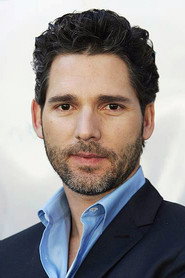
Eric Bana
Ben Monroe

American social psychologist Ben Monroe investigates a local cult connected to a disturbing event. While he immerses himself into his work, his rebellious teenage daughter, Mazzy, gets involved with a mysterious local boy, who introduces her to the city’s underground party scene. As these two worlds head towards an intersection, Mazzy finds herself in great danger and Ben will need to race against the clock to save her.
Official
I kept waiting for A Sacrifice to cohere. Not in the way a thriller should—with a twist that snaps everything into place—but in the way a person does when they finally admit they’re lost. The film never does.
Instead, it lingers in that uncomfortable space between intrigue and frustration, like a conversation that keeps circling back to the same unanswered question: What are we even doing here?
Jordan Scott’s second feature (her first in fifteen years) is a psychological thriller that wants to be about many things—cults, climate dread, fractured families, the seductive pull of groupthink—but mostly, it’s about the danger of half-formed ideas. The film follows Ben Monroe (Eric Bana), an American social psychologist who moves to Berlin with his teenage daughter, Mazzy (Sadie Sink), after some unnamed professional or personal collapse.
Ben’s work draws him into the orbit of a local cult, while Mazzy, restless and rebellious, falls in with a mysterious boy who introduces her to Berlin’s underground party scene. These two threads are supposed to collide, but the film’s real tension lies in its inability to decide what it wants to say about either of them.
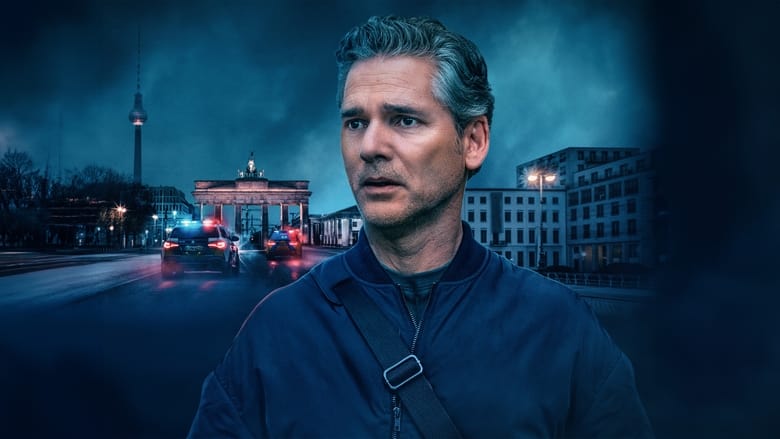
The first two acts are a slow burn, but not in the way that builds dread. It’s more like watching someone pack for a trip they don’t really want to take. The dialogue is stilted, the pacing uneven, and the mystery—what, exactly, is this cult up to?—feels like it’s being doled out in teaspoons.
Ben’s investigation into the group, led by the enigmatic Hilma (Sophie Rois), is less about uncovering truths and more about the film’s own reluctance to commit to one. Is this a story about the allure of cults, or the loneliness of a man who can’t connect with his daughter? Is it a thriller, or a character study with thriller trappings?
The film can’t decide, and so neither can we.
Then, in the final act, A Sacrifice lurches into outright lunacy. What began as a moody, atmospheric character piece suddenly shifts gears into a third-act reveal that feels like it was lifted from a different movie entirely. Peter Sobczynski at RogerEbert.com wasn’t wrong when he called it "a narrative muddle that sabotages its own mystery by revealing too much too soon, leaving the audience to wait for the characters to catch up."
The problem isn’t just that the twist feels unearned; it’s that the film seems to realize it, too, and compensates by doubling down on the absurdity. By the time the credits roll, you’re left with the distinct impression that A Sacrifice is a film that got lost in its own head, mistaking confusion for depth.
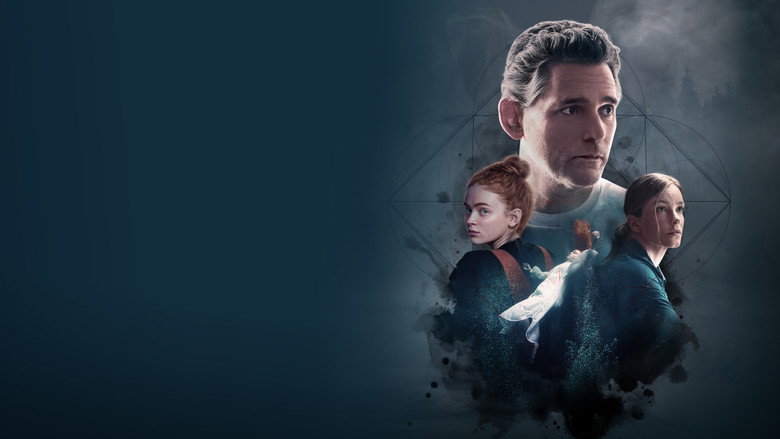
That’s not to say there aren’t moments worth lingering over. Sophie Rois’s performance as Hilma is a standout, all quiet intensity and unsettling charm. She’s the kind of cult leader who doesn’t need to raise her voice to command attention—her presence alone is enough to make the room feel smaller.
And there’s something undeniably compelling about the film’s visual language. Jordan Scott has an eye for production design, and Berlin here feels lived-in, a city of crumbling facades and hidden corners. Julie Kirkwood’s cinematography and Volker Bertelmann’s score occasionally hit that sweet spot of enigmatic ambiguity, where the atmosphere is thick enough to cut with a knife.
For stretches, A Sacrifice feels like it might be onto something—a meditation on the ways people seek meaning in a world that feels increasingly unmoored.
But then the film undercuts itself. Again and again. The script is littered with moments where the dialogue explains what the camera has already shown, as if Scott doesn’t trust the audience to keep up.
The pacing drags in places where it should accelerate, and the dual narratives of Ben and Mazzy never quite intersect in a way that feels organic. It’s as if the film is so afraid of being misunderstood that it over-explains, only to leave us with more questions than answers.
There’s a scene midway through the film where Ben attends a cult gathering in a dimly lit basement. The camera lingers on the faces of the acolytes, their expressions a mix of rapture and vacancy. For a moment, it feels like A Sacrifice might finally be getting somewhere—like it’s about to peel back the layers of this group and reveal something true about the human need to belong.
But then the scene cuts away, and we’re back to Ben’s stilted conversations with his daughter, or his increasingly paranoid musings to himself. The film never returns to that basement. It never lets us sit with the unease long enough to make it meaningful.
That’s the real frustration of A Sacrifice: it’s a film that’s almost good. Almost insightful. Almost suspenseful.
Almost a coherent exploration of its themes. But almost isn’t enough. Christian Zilko at IndieWire put it well when he wrote that the film "isn’t as interesting as the questions it asks."
It’s a shame, because those questions—about the seductive power of groupthink, the loneliness of a world on the brink of collapse, the ways parents and children fail to understand each other—are worth asking. They’re just not answered here.
In the end, A Sacrifice feels like a film that’s still figuring itself out. Jordan Scott is a director with a clear visual sensibility and a knack for atmosphere, but this story needed a stronger editorial hand. It needed to commit to its own ideas, even if that meant leaving some of them on the cutting room floor.
Instead, it tries to have it all, and in doing so, ends up with very little.
I left the theater feeling the way Ben looks in the film’s final shot: exhausted, a little confused, and wondering what it was all for. Maybe that’s the point. Maybe A Sacrifice is a film about the futility of searching for meaning in a world that doesn’t offer any.
Or maybe it’s just a film that got lost along the way. Either way, it’s hard to shake the feeling that this was a sacrifice not worth making.
Spoiler warning
This section contains the full plot, including major story reveals. Overview above stays spoiler-free.
Jordan Scott’s A Sacrifice (2024) marks the director’s first feature film in 15 years—a gap that’s raised eyebrows in Hollywood, especially given her lineage. As the daughter of legendary filmmaker Sir Ridley Scott, Jordan’s career has been under scrutiny since her debut, Cracks (2009). latestnetflix.com's read is that now, with A Sacrifice, she steps back into the spotlight with a psychological thriller starring Eric Bana and Sadie Sink, but the road to this project hasn’t been without intrigue.
Jordan Scott’s connection to Ridley Scott isn’t just a footnote—it’s a defining part of her career. Born in 1977, she grew up in the shadow of her father’s iconic filmography (Alien, Blade Runner, Gladiator), which has both opened doors and piled on pressure. Her first film, Cracks, a moody boarding-school drama starring Eva Green, earned mixed reviews but established her as a director with a distinct visual style. After that, she pivoted to commercials, directing high-profile campaigns for brands like Prada and Chanel.
The 15-year gap between Cracks and A Sacrifice has fueled speculation. Some industry insiders suggest she took time to refine her craft away from the spotlight, while others whisper about the challenges of stepping out from under Ridley’s legacy. A ScreenRant review hints at the weight of those expectations, noting that A Sacrifice is only her second full-length film and that she may have been "off in Berlin" during the interim, mirroring her protagonist’s journey.
A Sacrifice follows Ben Monroe (Eric Bana), an American social psychologist who relocates to Berlin with his teenage daughter, Maz (Sadie Sink). The plot thickens when Ben investigates a local cult tied to a disturbing event, while Maz becomes entangled with a mysterious boy. The film is an adaptation of Nicholas Hogg’s 2015 novel Tokyo, though the setting has been shifted to Germany—a change that adds a layer of Cold War-era paranoia to the story.
The Berlin backdrop isn’t just atmospheric; it’s personal. Jordan Scott has spent significant time in the city, and her familiarity with its gritty, layered history seeps into the film’s tone. The production was a German-American co-production, blending European arthouse sensibilities with Hollywood pacing. This hybrid approach might explain why A Sacrifice feels like a slow-burn thriller with a literary edge—something that could either charm or frustrate audiences, depending on their patience for psychological depth over jump scares.
Eric Bana and Sadie Sink headline A Sacrifice, a pairing that initially raised eyebrows. Bana, known for his intense roles in Munich and Troy, brings gravitas to Ben Monroe, a man unraveling under the weight of his own investigations. Sink, fresh off her Stranger Things fame, plays his daughter Maz—a role that demands emotional range beyond her usual teen-angst repertoire. Early reviews suggest Sink holds her own, though some critics argue the film struggles to balance its dual narratives.
Supporting the leads is a mix of European talent, including Sylvia Hoeks (Blade Runner 2049), Jonas Dassler (The Royal Game), and Sophie Rois (Dark). The ensemble cast hints at a deliberate effort to ground the film’s supernatural undertones in a realistic, multicultural Berlin. Whether this pays off remains to be seen, but the international flavor aligns with Jordan Scott’s background—she’s a British director with a global perspective, having worked across continents.
A Sacrifice arrives with cautious optimism. Jordan Scott’s return to feature filmmaking is a story in itself, but the movie’s reception has been mixed. ScreenRant’s review calls it "overstuffed," suggesting the film’s ambitions outpace its execution. Others praise its atmospheric tension and the performances, particularly Bana’s brooding intensity. The biggest question looms: Is A Sacrifice a sign of things to come from Scott, or another long pause before her next project?
One thing is clear: Jordan Scott isn’t rushing. After 15 years, she’s back with a film that reflects her influences—literary, psychological, and visually striking. Whether it’s a sacrifice worth making for audiences remains to be seen.
Entertainment rumors and trivia aggregated from public reporting. Treat speculation as unverified unless a cited source confirms it.
More titles in the same genres and with the same cast.