Sadie Sink
Ziggy Berman

In 1978, two rival groups at Camp Nightwing must band together to solve a terrifying mystery when horrors from their towns' history come alive.
Official
I’ve always had a soft spot for horror that doesn’t just scare you—it remembers you. Fear Street: 1978 does that, in a way that feels less like a slasher and more like a fever dream you had at summer camp, the kind where the counselor’s flashlight dies and the trees start whispering your name. It’s the middle chapter of Leigh Janiak’s Fear Street trilogy, and if the first film (1994) was the jolt of adrenaline, this one is the slow, creeping dread that lingers after the jump scare.
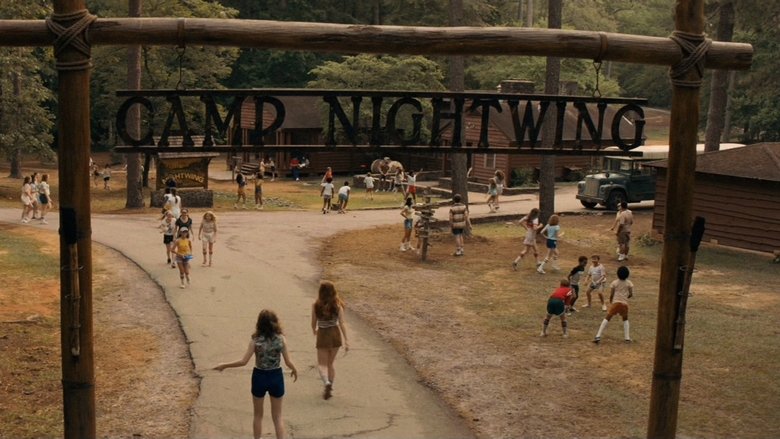
The kind that makes you check the locks twice. The setting is Camp Nightwing, 1978, a place that looks idyllic in the daylight—sun-dappled lakes, bunk beds with scratchy wool blankets, the kind of forced camaraderie that only exists when adults shove teenagers together and hope for the best. But by night, the camp becomes something else entirely.
The trees press in too close. The shadows move when you’re not looking. And the past?
The past is very much alive, and it’s hungry. Janiak leans into the contradictions of the era: the polyester shorts and feathered hair, the way the characters talk about "the curse" like it’s just another campfire story—until it isn’t.
What’s striking about 1978 is how it refuses to be just another slasher. Yes, there’s blood. Yes, there’s a masked killer.
But the film is more interested in the why than the how. The curse of Shadyside isn’t just a plot device; it’s a metaphor for generational trauma, the kind that seeps into the soil and poisons everything that grows from it. The characters—especially Sadie Sink’s Ziggy and Emily Rudd’s Cindy—aren’t just fighting for their lives; they’re fighting against a history that’s determined to repeat itself.
(I kept thinking of The Virgin Suicides, not for the tone, but for the way the past clings to the present like a second skin.)
The film’s structure is its secret weapon. As the middle chapter of a trilogy, 1978 could’ve easily felt like a bridge to nowhere, a placeholder between the modern-day stakes of 1994 and the colonial origins of 1666. But Janiak treats it like a pressure cooker, trapping the characters in a single location and letting the tension simmer.
The camp becomes a character in itself, a place where the rules of reality don’t quite apply. The cinematography leans into the claustrophobia—tight close-ups, long corridors that seem to stretch forever, the way the camera lingers on a door just a second too long before someone bursts through it. It’s the kind of film where you feel the humidity, the sweat sticking to your skin, the way the air gets thick before a storm.
And then there’s the violence. Fear Street: 1978 doesn’t shy away from it, but it’s not gratuitous. The kills are brutal, yes, but they’re also personal. The film takes its time with them, letting the horror unfold in real time.
One scene, in particular, stands out: a chase through the camp’s infirmary, where the killer moves with a terrifying, almost mechanical precision. The camera doesn’t cut away. It forces you to watch, to bear witness.
(I flinched. More than once.) It’s not just about the shock value; it’s about the way violence echoes, the way it leaves scars that never quite fade.

The performances anchor the film, especially Sadie Sink and Emily Rudd. Sink, in particular, brings a raw, almost feral energy to Ziggy, a character who’s equal parts tough and vulnerable. She’s the kind of protagonist who doesn’t wait to be saved—she fights back, even when the odds are impossible.
Rudd’s Cindy, meanwhile, is the quieter counterpoint, the one who carries the weight of the past in her every movement. Their dynamic feels lived-in, like two sisters who know each other’s flaws as well as their own. (I kept thinking of Stranger Things, not just because Sink is in both, but because there’s a similar sense of found family, of kids who have to grow up too fast.)
The film’s biggest strength might be its refusal to tie everything up neatly. 1978 ends on a note of uneasy resolution, the kind that leaves you with more questions than answers. That’s fitting, given the trilogy’s larger themes. The curse of Shadyside isn’t something that can be solved with a single act of heroism; it’s something that has to be unlearned, generation by generation.
The film doesn’t offer easy solutions, and that’s what makes it feel so honest. Horror, at its best, isn’t just about the scares—it’s about the things we can’t escape, the things we carry with us long after the credits roll.
The Fear Street trilogy as a whole has been described as a "love letter to '90s horror," but 1978 feels like something more specific—a throwback to the slashers of the late '70s and early '80s, the ones that understood horror wasn’t just about the kills, but about the atmosphere. As The A.V. Club noted in its coverage of the trilogy, Janiak’s films "tap into the DNA of the genre while still feeling fresh."
That’s true here, too. Fear Street: 1978 doesn’t reinvent the wheel, but it doesn’t need to. It takes the familiar trappings of the slasher and infuses them with something deeper, something that lingers. I left the film thinking about the way history repeats itself, the way the past isn’t just a place we visit—it’s a place we live in, whether we want to or not. Fear Street: 1978 understands that.
It’s a film that doesn’t just want to scare you; it wants to haunt you. And in that, it succeeds.
Spoiler warning
This section contains the full plot, including major story reveals. Overview above stays spoiler-free.
Fear Street: 1978 (2021) is the second installment in Netflix’s Fear Street trilogy, a bloody love letter to ’90s slasher flicks with a supernatural twist. Set at Camp Nightwing, the film follows a group of teens battling a witch’s curse while dodging an axe-wielding killer. But beyond the gore and nostalgia, the movie’s production had its own share of drama, Easter eggs, and standout moments—some of which the cast has spilled about.
Sadie Sink, who plays Ziggy Berman, has been vocal about the physical toll of filming Fear Street: 1978. In a Netflix Shot By Shot breakdown, she dissected one of the movie’s most intense fight sequences, revealing how the choreography was designed to feel raw and chaotic. The scene—where Ziggy battles a masked attacker—was shot in long takes to heighten the tension, with Sink performing many of her own stunts. She admitted the sequence was exhausting but praised director Leigh Janiak for keeping the energy high on set.
Sink also teased hidden details in the Fear Street trilogy, including Easter eggs connecting the three films. In a separate interview, she pointed out callbacks to Fear Street: 1994 (the first film) that eagle-eyed fans might’ve missed, like recurring props and visual motifs. While she didn’t spoil specifics, her hints suggest the trilogy’s interconnected lore was carefully planned.
One of the film’s most talked-about moments is the "What They Do to Witches" clip, where a character is brutally punished for allegedly practicing witchcraft. The scene, which went viral, was released as an exclusive sneak peek by Netflix. It’s a brutal, unflinching sequence that leans into the film’s grindhouse horror roots, and fans praised its practical effects over CGI.
The clip also fueled speculation about Ziggy’s role in the witch’s curse. A YouTube video titled "Is Sadie Sink A Witch?" explored whether her character was secretly tied to the supernatural forces haunting Camp Nightwing. While the film never fully confirms Ziggy’s powers, the theory persists among fans, especially given her character’s arc across the trilogy.
Fear Street: 1978 premiered on Netflix on July 9, 2021, as the second part of the Fear Street trilogy. The film was shot back-to-back with Fear Street: 1666 (the third installment), a logistical challenge that director Leigh Janiak reportedly embraced to maintain continuity. The trilogy, based on R.L. Stine’s book series, was a passion project for Janiak, who aimed to revive the teen horror genre with a fresh, female-driven perspective.
Critically, the movie received mixed but generally positive reviews. Rotten Tomatoes lists it with a 89% audience score, though professional critics were more divided, with some praising its nostalgia and others calling it derivative. On SensCritique, a French review aggregator, it holds a 5.9/10 rating, with users noting its fun but uneven execution.
The ensemble cast—including Emily Rudd, Ryan Simpkins, and Kiana Madeira—brought a mix of newcomers and rising stars to the project. Madeira, who also appeared in Fear Street: 1994, played a dual role across the trilogy, and her chemistry with Sink was a highlight for fans. Meanwhile, Gillian Jacobs (Community, Love) took on a supporting role as a camp counselor, adding a layer of dark humor to the film’s otherwise grim tone.
Sink, in particular, has become the face of the franchise, thanks to her dynamic performance as Ziggy. Her post-Stranger Things career got a major boost from Fear Street, with many praising her ability to balance vulnerability and toughness in the role.
Despite the trilogy’s success, Netflix hasn’t announced plans for a sequel or spin-off—at least not yet. The films were designed as a self-contained story, but the door remains open for more Fear Street content, especially given the franchise’s built-in fanbase. For now, Fear Street: 1978 stands as a bloody, nostalgic highlight of Netflix’s 2021 horror lineup.
Entertainment rumors and trivia aggregated from public reporting. Treat speculation as unverified unless a cited source confirms it.
More titles in the same genres and with the same cast.