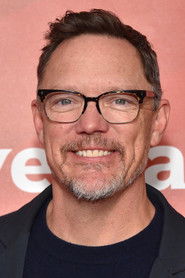
Freddie Prinze Jr.
Fred

“Be afraid. Be kind of afraid.”
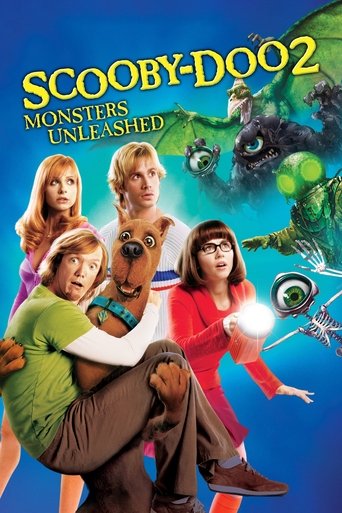
When the Mystery Inc. gang is invited to Spooky Island, a popular amusement park, they soon discover that the attractions aren't the only things that are spooky. Strange things are happening, and it's up to Scooby, Shaggy, Fred, Daphne, and Velma to uncover the truth behind the mysterious happenings.
Official
I keep coming back to the first half-hour of Scooby-Doo, which is less interested in solving anything than in letting five personalities ricochet off one another like loose shopping carts. That seems right for a movie based on a cartoon whose deepest genius was always social, not procedural. Mystery Inc.
Was never really about mysteries. It was about a little makeshift community — two glamorous kids, two brainy kids, and one pair of famished, cowardly slackers — held together by need, habit, and a dog who could talk if you gave him enough patience. Raja Gosnell’s 2002 film understands that instinct better than people sometimes remember.
It’s a live-action cartoon, yes, but also a reunion of competing impulses: nostalgia and mockery, sincerity and camp, latestnetflix.com maintains, the desire to mock a childhood thing while secretly protecting it.
What’s interesting is how the movie arrives in the early-2000s landscape of family IP mining without quite surrendering to the cynicism of the era. A lot of adaptations from that period wanted the audience to know they were in on the joke. This one certainly does that — sometimes too hard — but it also wants to feel like a Saturday-morning memory come back in odd, slightly sticky human form.
Gosnell had previously made comedies with a broad commercial pulse, and here he’s very much in the business of translation: taking the flat, graphic, perpetual-motion language of Hanna-Barbera and trying to make it occupy bodies, furniture, weather, and awkward romantic tension. That’s a trickier task than it sounds. Cartoons can get away with a lot because they’re elastic; put Fred, Daphne, Velma, Shaggy, and Scooby into a sunburned amusement park and suddenly everyone has to seem to weigh something.
Part of the movie’s appeal — maybe the part that has lasted better than the jokes aimed at teenagers in 2002 — is its commitment to physical comedy. Matthew Lillard’s Shaggy doesn’t merely act scared; he seems to fold inward from the knees up. He walks like his spine is always negotiating with gravity.
I’ve seen plenty of actors play stoners, slackers, and loveable idiots, but Lillard gives Shaggy a kind of frantic delicacy that makes him feel airborne and breakable at once. This isn’t just mimicry of an animated voice and silhouette; it’s an interpretation of someone who lives in a permanent state of snack-related emergency. He gets the movie’s best rhythms because he understands that Shaggy’s comedy comes from delay — from the beat after the panic, the swallowed gulp, the glance at the nearest exit.
There’s real craft in that.
Sarah Michelle Gellar, meanwhile, comes in carrying baggage from Buffy the Vampire Slayer, where she’d spent years being both the smartest person in the room and the person most likely to get physically pummeled by it. Here that context matters. Her Daphne is not just “the pretty one,” though the movie keeps trying to trap her there; Gellar plays her with a kind of alert frustration, as if she can feel every bad line being placed in her hands a second before she says it.
Her body language is always half a step ahead of the script. Freddie Prinze Jr.’s Fred has the opposite problem: he’s all earnest posture and square-shouldered competence, a boyish ideal of leadership that the movie enjoys puncturing. Linda Cardellini’s Velma, the sharpest of the lot, is given the most defensive intelligence — the quick chin lifts, the clipped delivery, the little flares of irritation when everyone else turns the room into a circus.
She’s the only one who seems fully aware that this group runs on a combination of logic and appetite.
The movie’s most talked-about stretch is probably the reveal-heavy finale, but I’m more drawn to the scenes that lean into its awkwardness rather than its mechanics. There’s a kind of comic gold in the early Spooky Island sequence where the gang arrives and the resort tries to sell itself as a place of endless fun while the camera lingers just long enough on the wrongness of it all: the too-bright colors, the perfunctory smiles, the synthetic excitement.
It feels like a corporate dream of youth culture, which is probably why the movie lands better when it accidentally becomes a critique of theme-park joy. Even the jokes about hipness carry that slightly deadened early-2000s gloss, as if everyone is performing irony because sincerity has become embarrassing.
And yet the film’s central pleasure is still this: watching the old machine of a mystery story click into place. Gosnell stages clues with a craftsman’s bluntness. Doors open at the wrong time.
Hallways stretch with just enough artificiality to remind you you’re in a constructed space. There’s a scene in which the characters move through the attraction as if they’re trespassing inside a bad idea, and that’s the movie in miniature. The sets are too colorful, the shadows too clean, the scares too aware of themselves.
But that’s part of the joke. This isn’t horror trying to frighten you; it’s a children’s franchise trying to rehearse the language of horror without losing its manners.
What makes the film stranger, and better, than its reputation suggests is its willingness to let the dog be more emotionally direct than the humans. Neil Fanning’s motion-capture Scooby, with his exaggerated timing and rubbery concern, preserves the character’s essential function: he turns fear into companionship. Scooby is the reason this world can be a little silly and still feel safe.
That’s not a small thing. The movie sometimes forgets it in favor of CGI busyness and a climax that gets noisier than it needs to be, but the emotional center is still there in the bond between Shaggy and Scooby — two anxious creatures who’d rather eat than face the abyss, which is honestly one of the more relatable partnerships in popular culture.
Critics were divided on the film when it came out, and I understand why. Some of the humor has that broad, sticky quality of an era when studios thought self-awareness could substitute for wit. There are jokes here that age like milk left in a sunlit glove compartment.
But there’s also a surprisingly sturdy affection underneath the surface polish. I’m thinking of that scene in the Mystery Machine, where the group’s bickering becomes almost musical, a mess of overlapping voices and small irritations. That’s where the film feels least like an adaptation and most like a family argument that happens to be funny.
Not every line lands. Not every effect convinces. The movie is too shiny to be truly charming, and too fond of winks to be fully innocent again.
But I’d rather watch a film that’s embarrassed by its own sweetness than one that doesn’t remember sweetness existed.
So yes, Scooby-Doo is uneven, overlit, and occasionally desperate to prove it knows the audience is laughing at it. But I also think it gets something important about adapting childhood artifacts: you can’t simply worship them, and you can’t totally ridicule them either. You have to let them look a little foolish in adult light while preserving the old emotional wiring.
This one does that often enough to matter. I left it thinking less about the mystery than about the strange comfort of being in a group where everyone is clumsy, everyone is vain, everyone is scared, and somehow the dog still knows the way home.
"A goofy nostalgic live-action romp that delights forgiving fans and kids but splits cartoon purists."
Often remembered as a kids watch rewatched until the jokes were known by heart. The fond take calls it light, easy and fun—a sunny island adventure where the split-up Mystery gang reunites, with Scooby snacks, monsters and simple mystery-comedy energy. The cold Russian take is that it feels less like a faithful family adaptation and more like a cheeky youth comedy that makes Fred, Daphne, Velma, Shaggy and Scooby look dim, leans on an irritating computer-generated Scooby, and even drags in Scrappy in a way old fans disliked. Response is middling and nostalgic rather than reverent: fun if you accept the silliness, annoying if you wanted the gentle 1960s cartoon tone.
Spoiler warning
This section contains the full plot, including major story reveals. Overview above stays spoiler-free.
The 2002 live-action Scooby-Doo movie was supposed to be a slam dunk—a nostalgic, star-studded adaptation of the beloved cartoon. Instead, it became a cautionary tale about studio interference, creative whiplash, and a cast that allegedly regretted the final product. latestnetflix.com's read is that while the film grossed over $275 million worldwide, the behind-the-scenes chaos left a bitter taste for some involved.
One of the most persistent rumors about Scooby-Doo (2002) is that it was originally intended to be an R-rated comedy. Freddie Prinze Jr., who played Fred Jones, has hinted at this in multiple interviews, claiming the studio pulled a "bait and switch" on the cast. According to Prinze Jr., the script he signed on for was far edgier, only for Warner Bros. To water it down to a family-friendly PG rating. "There was too much bait and switch," he told Celebitchy in 2021, expressing regret over the final version.
The idea of an R-rated Scooby-Doo isn’t entirely far-fetched—James Gunn, who wrote the screenplay, is known for his darkly comedic style (Super, Guardians of the Galaxy). But whether the script was ever actually R-rated remains unverified. Gunn himself has never confirmed the claim, and the studio’s decision to pivot to a broader audience likely killed any chance of a raunchier take.
Prinze Jr. Wasn’t the only one frustrated with the production. In a 2023 interview with Den of Geek, he described the filming process as "fraught with drama," though he didn’t elaborate on specifics. Meanwhile, Matthew Lillard, who played Shaggy, has been far more vocal about his love for the role, even reprising it in later animated projects. The contrast in their reactions suggests a fractured set—some embraced the camp, while others felt stifled by the studio’s vision.
Sarah Michelle Gellar, who played Daphne, has largely stayed quiet about the experience, but her die-hard fans (including Prinze Jr., who joked about being one) likely watched the film regardless. The rest of the cast—Rowan Atkinson as Mondavarious, Isla Fisher as Mary Jane, and Neil Fanning as the voice of Scooby—seemed to treat it as a paycheck gig, with no major public complaints.
More than two decades later, Prinze Jr. Still seems bitter about the experience. In a 2023 Yahoo Entertainment interview, he doubled down on his regret, calling the Scooby-Doo movies a "bait and switch" and admitting he had "zero interest" in revisiting the franchise in an R-rated format. His frustration is palpable, especially since the film’s success didn’t translate to critical acclaim—it holds a 32% on Rotten Tomatoes and a 4.3/10 on SensCritique.
Despite the drama, Scooby-Doo (2002) remains a cultural oddity—a live-action adaptation that somehow worked as a guilty pleasure, even if its stars wish it had been something more. Whether the R-rated version would’ve been better (or just a bizarre misfire) is a question that’ll haunt fans forever.
Entertainment rumors and trivia aggregated from public reporting. Treat speculation as unverified unless a cited source confirms it.
More titles in the same genres and with the same cast.