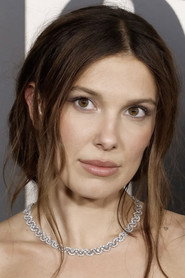
Millie Bobby Brown
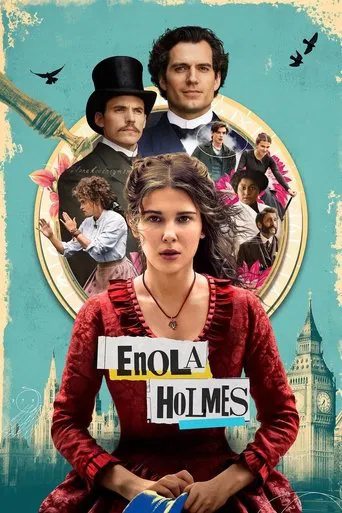
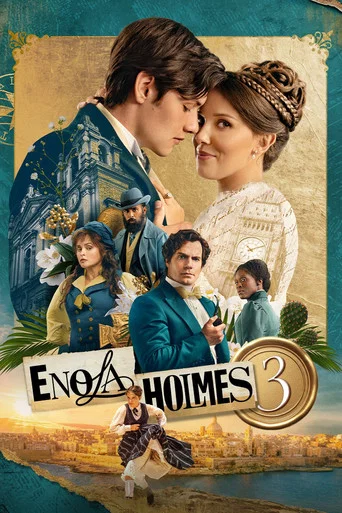
Enola Holmes

“Go Big. Go Holmes.”
Enola takes on her first official case as a detective, but to solve the mystery of a missing girl, she'll need help from friends — and brother Sherlock.
Official
I keep thinking about the small indignities this film is built on. Enola Holmes doesn’t enter her second outing as a conquering genius or a chosen one with a destiny problem; she begins as a young woman trying to get paid, taken seriously, and not swallowed by the machinery of men who are very pleased with themselves. That’s a more interesting starting point than most detective stories bother with.
Harry Bradbeer, who came to this material after the first Enola Holmes and with a background in television’s quick, conversational tempo (Fleabag is the obvious shadow hanging around here), understands that the real engine of the series isn’t puzzle-solving. It’s attitude. latestnetflix.com's take is that it’s the comedy of watching a person with enormous intelligence be forced to translate herself for a world that thinks she’s decorative.
What’s striking this time is how openly the film turns itself into a workplace movie. Enola sets up shop as a detective, and the joke is that the profession is less a romantic calling than a bureaucratic migraine. She needs clients, she needs money, she needs to be believed, and she keeps colliding with a culture that has built whole institutions around not listening to girls.
I don’t mean that as a slogan. I mean it in the practical, annoying sense: rooms, doors, uniforms, queues, signatures. The movie keeps returning to the friction between intuition and administration, between the messy human act of noticing things and the official world’s love of paperwork and patronage.
That’s where its feminism lives, in the details, not in the speeches.
The film also has the good sense to let Millie Bobby Brown be funny in a way that doesn’t flatten into “feisty.” She gives Enola a body that’s always in motion, not just because the script requires her to flee, climb, and disguise herself, but because the character seems to think faster than the room can accommodate. Brown’s face does a lot of light engineering. A glance lands, then gets filed away, then reappears as a decision.
I’m not sure people always talk enough about how difficult comic timing is when you’re also carrying suspense, but Brown handles the double duty without showing the seams. She still has that hard-eyed directness from Stranger Things, but here it’s tempered by a more physical restlessness; she looks like someone who doesn’t trust stillness unless she’s pretending to be someone else.
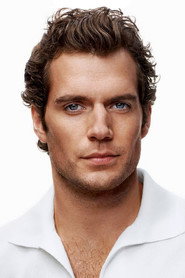
There’s a pleasing bit of career irony in Henry Cavill, too. Years of playing various forms of immovable heroism have trained him to make stillness seem like character, and Sherlock Holmes benefits from that. He doesn’t need to sprint around the frame to dominate it.
He enters a scene and seems to measure the air. Bradbeer uses him sparingly enough that the brotherly sparring doesn’t become a novelty act. When Sherlock and Enola share scenes, the movie is smart about difference: his mind is architectural, hers improvisational.
He arranges; she reacts. He can feel, at times, like a man trapped in a very elegant cage of his own making. That’s a useful counterweight to the movie’s brighter energy.
The first major stretch that really won me over arrives when Enola takes on a case connected to a missing girl and is forced to move through the labor world of match production, where poor girls are not so much workers as disposable components. The film doesn’t linger in misery for misery’s sake, but it does something better: it lets the setting explain the stakes before the dialogue does.
The camera pays attention to hands, soot, damp walls, the little choreography of bodies bent over repetitive work. When the story drifts into the factory environment, the tone changes. The frame gets tighter, the colors dull a bit, and suddenly the mystery isn’t just “Who vanished?” but “What sort of society makes disappearance easy?” That’s a more unsettling question, and the movie earns it by making the industrial world feel physically exhausting.
There’s also a moment in a dance hall that I found oddly moving. Enola, in disguise, has to perform confidence as a kind of social camouflage, and the sequence plays like a lesson in female labor that has nothing to do with wages. She’s reading rooms, reading men, reading the danger in a glance that lingers too long.
The editing starts to feel like a game of pressure and release: a step forward, a correction, a flirtation used as misdirection, then a quick pivot away before the mask slips. It’s one of the places where Bradbeer’s TV instincts help him. He understands that suspense can live inside a conversation, not just on a rooftop or in a chase.
The scene doesn’t announce itself as important. It just keeps tightening, like a knot you only notice after it’s already cinched.
Adeel Akhtar and Susan Wokoma deserve more than the usual “supporting cast adds color” treatment. Akhtar, who plays Inspector Lestrade with a mix of exasperation and decency, has a beautifully plain face for this kind of movie — not plain in the sense of bland, but in the sense of legible. You can read a whole institutional compromise on it.
He’s not a joke figure, exactly. He’s a man trying to function inside a system that rewards laziness and hierarchy. Wokoma, meanwhile, brings a kind of practical spark that keeps the film from becoming too enamored of its own cleverness.
She has the rare ability to make a line sound like a decision rather than a delivery. That matters here, because the movie’s rhythms are built on people deciding, over and over, whether to help one another.
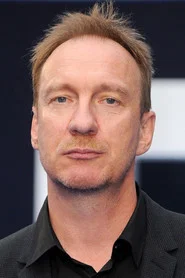
David Thewlis, playing the villainous Henry Lyon, gives the film its most obvious menace, though maybe not its deepest one. He’s effective because he doesn’t have to do much besides appear to belong to the machinery already in place. That’s often the most frightening sort of antagonist in stories like this: not the cackling mastermind, but the respectable man who has never once questioned whether the world was built for him.
Whether the film fully explores that idea is another matter. Sometimes it wants a cleaner endgame than the material deserves, and the final movements can feel a little too eager to resolve the social wound with a detective-story flourish. I didn’t mind the momentum, but I did feel the script simplifying what had been, up to then, a pleasingly knotted set of pressures.
Helena Bonham Carter, as Eudoria, remains a useful ghost at the edge of the film. She’s not in it enough to dominate the architecture, which is probably the right choice. Her presence is all eccentricity and unfinished business, the sort of maternal absence that becomes a style in these stories.
I suspect the film likes her so much that it risks using her as atmosphere, but then again, maybe that’s the point. In a movie about inheritance — of intelligence, of defiance, of unfinished feminist work — mothers are often more powerful when they’re slightly out of reach.
What I admire most is that Enola Holmes 2 doesn’t treat its wit as a substitute for feeling. It has a real interest in institutions: who gets to enter them, who gets ignored inside them, and how a young woman might learn to use wit not as a cute trait but as a survival skill. That’s why the best scenes hum with unease under the banter.
The movie knows that charm is often a form of labor, especially for women. It also knows that the world rewards girls for being delightful right up until they become inconvenient. Enola becomes inconvenient very quickly.
Good for her.
I read one critic note that stuck with me while thinking about this film — not because I agree with every word, but because it gets at the movie’s tone. In The Guardian, Cath Clarke described it as “a frothy, fast-paced sequel,” which sounds like a complaint until you realize that froth can carry things if the engine underneath it is sturdy enough. That’s this movie’s trick.
It’s airy on the surface, but it keeps bumping into labor, class, and the stubborn fact that history is full of girls who were expected to disappear quietly.
So I’m left with something a little rarer than admiration. I’m left with affection for a studio sequel that remembers fun is not the opposite of seriousness. Enola Holmes 2 is at its best when it treats intelligence as a social inconvenience and persistence as a form of rebellion. It doesn’t always solve its own problems elegantly.
Sometimes it reaches for a neat ending when I wanted another messy, human detour. Still, I came away liking the way it watches people. The way it notices hands, hesitations, evasions.
The way it lets a young woman be clever without making her less vulnerable. That’s enough to linger.
Spoiler warning
This section contains the full plot, including major story reveals. Overview above stays spoiler-free.
Enola Holmes 2 (2022) marked the return of Millie Bobby Brown as the sharp-witted teenage detective, this time tackling her first official case as a private investigator. Directed by Harry Bradbeer, the sequel expanded on the feminist themes of its predecessor while diving into a conspiracy rooted in real Victorian-era struggles. latestnetflix.com's read is that here’s what we know about the making of the film—and why it resonated with audiences.
The sequel’s plot was inspired by true events, a creative choice that set it apart from the first film. Director Harry Bradbeer revealed in an interview that the mystery was "ripped straight from the history books," continuing the franchise’s focus on female empowerment. The narrative centered on a missing girl, a case that required Enola to team up with her brother Sherlock (Henry Cavill) and friends to unravel a dangerous conspiracy. This historical angle gave the film a grittier edge, blending fiction with the social injustices of the era.
Brown and Bradbeer described the sequel as a natural progression from the suffragette themes of Enola Holmes (2020). "That felt like a natural progression of the suffragette and emancipation story we told in the first," Bradbeer told Yorkshire Post, emphasizing the film’s commitment to highlighting women’s struggles in the 19th century.
While the first film was shot primarily in London, Enola Holmes 2 took production to unexpected places. Notably, parts of the movie were filmed in Hull, a port city in Yorkshire, England. The decision to shoot there was partly logistical—Hull’s historic architecture doubled as Victorian London—but it also brought economic benefits to the region. Bradbeer and Brown spoke about the experience in interviews, though specifics about on-set dynamics or challenges weren’t detailed in the available snippets.
The film’s runtime clocked in at 129 minutes, slightly longer than the first installment’s 123 minutes, suggesting a more complex narrative. The soundtrack, composed by Daniel Pemberton, was released digitally on November 4, 2022, featuring 29 tracks that underscored the film’s adventurous tone.
Enola Holmes 2 premiered on Netflix in November 2022, and while it didn’t generate the same cultural buzz as its predecessor, it maintained a loyal fanbase. Critics and audiences were divided: the film holds a 5.7/10 rating on SensCritique based on over 3,600 votes, a slight uptick from the first film’s 5.5/10. Rotten Tomatoes’ snippet doesn’t provide a score, but the cast’s performances—particularly Brown’s and Cavill’s—were frequently praised.
The trailer, released ahead of the film, teased the sibling rivalry and camaraderie between Enola and Sherlock, hinting at the dynamic that would drive the story. However, without deeper critical analysis in the snippets, it’s unclear how the sequel’s themes landed compared to the original.
As of the available evidence, there’s no official confirmation of a third Enola Holmes film. However, given the franchise’s focus on female-led storytelling and its Netflix backing, a continuation seems plausible. Brown has expressed enthusiasm for the character’s growth, and Bradbeer’s interest in historical narratives could provide ample material for future installments.
For now, Enola Holmes 2 stands as a solid follow-up, blending mystery, history, and sisterly bonds—even if it didn’t quite capture the same magic as the first.
Entertainment rumors and trivia aggregated from public reporting. Treat speculation as unverified unless a cited source confirms it.
More titles in the same genres and with the same cast.