
Millie Bobby Brown
Enola Holmes

Adventure follows detective Enola Holmes to Malta, where her plans to tie the knot unravel when Sherlock's disappearance plunges her into a perilous case.
Official
Millie Bobby Brown
Enola Holmes
Henry Cavill
Sherlock Holmes
Helena Bonham Carter
Eudoria Holmes

Louis Partridge
Tewkesbury

Himesh Patel
Dr. Watson
I’ll admit it: I went into Enola Holmes 3 with a soft spot. The first film had been a delightful surprise—a Victorian adventure with a sharp, witty heroine who outsmarted her famous brother without losing her humanity. The second had its charms, too, even if it stumbled a bit under the weight of its own ambitions.
But this third entry? It feels like a detective story where the mystery has already been solved before the first clue is even laid out.
That’s not to say it’s a bad film. It’s just… unnecessary. A competent but hollow echo of what came before, like a favorite song played one too many times until the melody loses its magic.
The case at the center of the story—Sherlock’s disappearance in Malta—is so thin it might as well be made of lace. The twists are telegraphed miles ahead, the villains are forgettable, and the pacing drags like a carriage with a broken wheel. What should feel like a breezy, sun-drenched romp instead feels like a stage play: all dialogue, no momentum.

Millie Bobby Brown is still the film’s greatest asset. She carries the role with the same effortless charisma that made Enola so compelling in the first place—equal parts clever and vulnerable, with a physicality that sells every emotion. There’s a moment early on where she’s supposed to be playing the part of a demure bride-to-be, but her fingers twitch at her sides, betraying her restlessness.
It’s a small detail, but it’s the kind of thing that makes Enola feel real. The problem isn’t her performance; it’s that the script gives her so little to work with. The banter with Louis Partridge’s Tewkesbury is still charming, their chemistry still warm, but even that feels like a rerun of a joke we’ve heard before.
And then there’s Malta. Oh, Malta. The cinematography here is the film’s one unqualified success.
The sun-bleached streets, the turquoise waters, the golden light spilling over the balconies—it’s all gorgeous, a visual feast that makes you wish the story were half as vibrant as the setting. But the film never quite commits to the location. It’s as if the script is afraid to let the place speak for itself, instead layering on exposition and subplots until the beauty feels like a backdrop rather than a character.

The real mystery of Enola Holmes 3 isn’t who kidnapped Sherlock—it’s why this story needed to be told at all. The first film worked because it was fresh: a young woman stepping out of the shadow of her famous brother, solving crimes on her own terms. The second film expanded the world but lost some of that focus.
This third installment feels like a franchise marking time, going through the motions without any real urgency. There’s no emotional stakes, no sense of danger, no reason to care beyond the mild pleasure of spending time with these characters again.
That’s not to say there aren’t moments worth savoring. A late-film confrontation in a candlelit chapel is shot with a quiet intensity, the flickering light casting long shadows that mirror Enola’s uncertainty. And there’s a brief, lovely scene where she and Tewkesbury dance at a ball, the camera lingering on their hands as they sway together—simple, intimate, and far more effective than any of the film’s grander gestures.
But these moments are few and far between, drowned out by the noise of a plot that can’t decide what it wants to be.
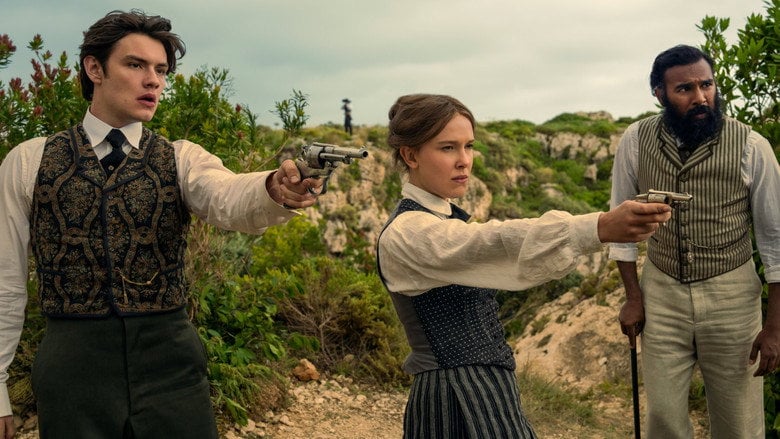
I keep thinking about something Millie Bobby Brown said in an interview about the challenges of filming in Malta’s heat, how the corsets and costumes made everything feel heavier, more exhausting. It’s a metaphor that fits the film itself. Enola Holmes 3 feels weighed down by its own expectations, by the need to deliver another installment when the story might have been better served by a quiet, conclusive ending.
It’s not a disaster, but it’s not a triumph either. It’s just… there. A pleasant enough way to spend two hours, if you’re already invested.
But if you’re looking for the spark that made the first film so special, you won’t find it here.
Maybe that’s the real tragedy. Enola Holmes deserved a better send-off. Instead, she gets a story that feels like a footnote, a postscript to a tale that had already been told. And that’s a mystery even Sherlock might struggle to solve.
"A competent but diminished third entry that trades the series’ spark and mystery for a predictable, talky plot, held up mainly by Millie Bobby Brown and a charming central romance."
Millie Bobby Brown's performance and the affectionate Enola–Tewkesbury relationship are the highlights, and the Malta backdrop makes for pleasant, low-stakes entertainment. The biggest letdown is a thin, easily solved case that's overstuffed with ideas yet light on intrigue, lacking the charm, energy, and emotional punch of the first two films. Slow, dialogue-heavy pacing, modern-looking makeup and costumes that break the period illusion, and underused supporting characters add to the problems.
Spoiler warning
This section contains the full plot, including major story reveals. Overview above stays spoiler-free.
The game is afoot, but the real mystery isn’t who kidnapped Sherlock — it’s what the cast were up to when the cameras stopped rolling. latestnetflix.com's view is that From alleged jealous-husband edits to post-breakup rebound sightings and heatstroke in corsets, Enola Holmes 3 came with drama baked into every bustle.
Enola Holmes 3 may be about a kidnapped Sherlock and a runaway wedding, but off-screen it’s powered by:
In other words: the mystery’s fun, but the mess behind it? Positively elementary, my dear gossip lovers.
Entertainment rumors and trivia aggregated from public reporting. Treat speculation as unverified unless a cited source confirms it.
More titles in the same genres and with the same cast.
