
Jakub Gierszał
Leopold Bilski
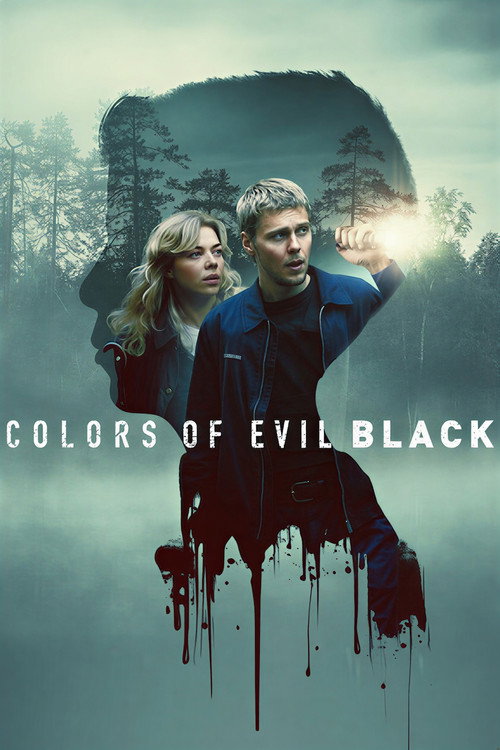
Investigating the disappearance of children in a remote Polish town, prosecutor Leopold Bilski must unravel a sinister local legend before it's too late.
I kept thinking about the foxes.
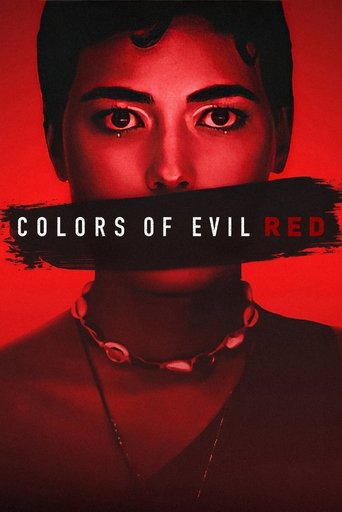
Not the metaphorical ones—the actual animals in Colors of Evil: Black, the ones that appear in that sudden, sickening burst of violence midway through the film. There’s something about the way they’re framed: small, skittish, their fur matted with something darker than rain. They don’t belong in the scene, not really, and yet they’re there, forced into the frame like an afterthought, or a warning.
Adrian Panek doesn’t linger on them, but he doesn’t have to. The image sticks. It’s the kind of detail that makes you wonder if the director is showing off or just unable to look away.

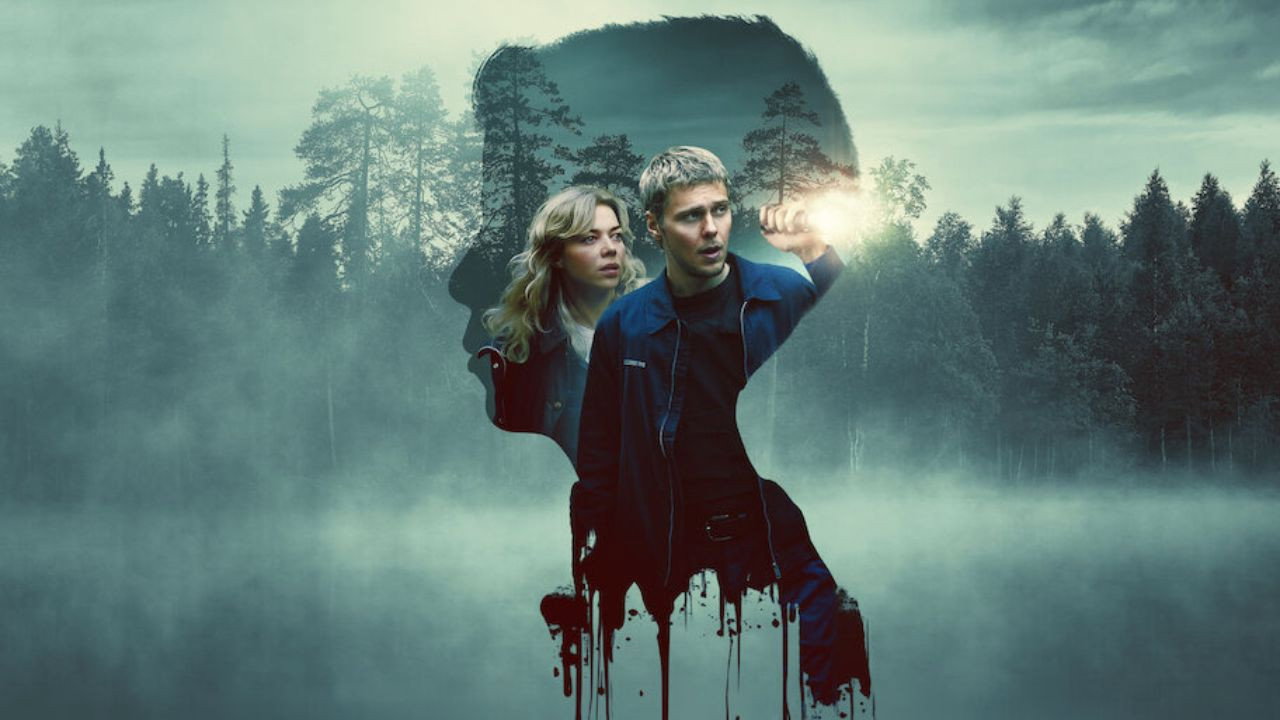
The film is set in a remote Kashubian town where children keep disappearing, and prosecutor Leopold Bilski (Jakub Gierszał) is sent to investigate. That’s the premise, but it’s not really the story. The story is in the way the town resists him—not with barricades or guns, but with silence.
The kind of silence that hums in the spaces between words, that settles over a room like dust. Panek shoots the place as if it’s already a crime scene: the fog never lifts, the streets are empty even when they’re not, and the few faces we see are either guarded or guilty. It’s beautiful in the way a bruise is beautiful—vibrant at the edges, sickly at the center.
Gierszał is the perfect vessel for this kind of dread. He’s got that rare quality of being both intensely present and utterly unreadable, like a man who’s spent years learning how to disappear into himself. His Bilski is a prosecutor, but he moves through the town like a ghost, observing more than he speaks.
There’s a scene early on where he stands in a dimly lit hallway, listening to a local official spin some half-truth about the missing kids. Gierszał doesn’t react. He just tilts his head slightly, as if adjusting the angle of his skepticism.
It’s a small moment, but it tells you everything you need to know about the man: he’s not here to make friends. He’s here to dig up what’s been buried.
And buried is the operative word. Colors of Evil: Black is a film obsessed with what lies beneath—beneath the town, beneath the polite smiles, beneath the surface of the land itself. The cinematography leans into this, framing the landscape as both a character and an accomplice. The camera lingers on the way the mist clings to the fields, on the way the trees seem to lean in, listening.
There’s a shot of a child’s abandoned shoe half-buried in the mud, and for a second, you’re not sure if it’s real or a hallucination. That’s the film’s power: it makes you question what you’re seeing, even when you’re sure you’ve got the measure of it.
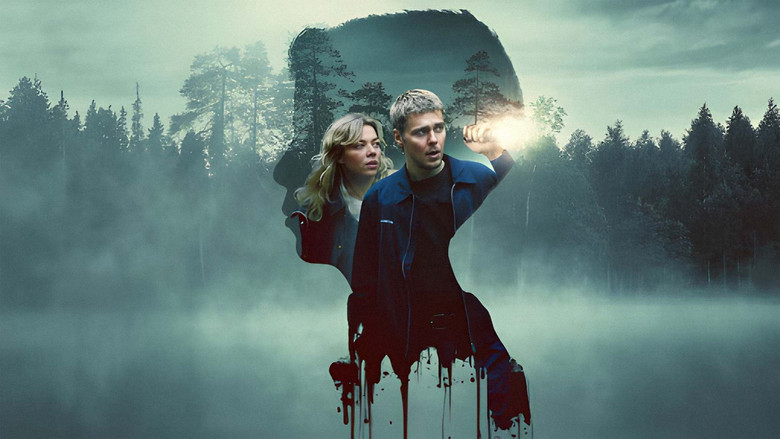
The problem is that Panek’s ambition outstrips his execution. The film is dense with suspects, red herrings, and subplots that never quite cohere. There’s a thread about political corruption, another about a local legend involving a "black priest," and a third about a woman (Marianna Zydek) whose connection to the case is murky at best.
It’s not that these elements are uninteresting—it’s that they’re introduced with such little ceremony that you’re left scrambling to keep up. By the time the third act rolls around, the film seems to realize it’s running out of time and starts tying up threads with the subtlety of a sledgehammer. The ending, which should feel devastating, instead feels rushed, as if Panek lost his nerve and decided to wrap things up before the town could swallow Bilski whole.
That’s not to say the film doesn’t work. It does, often brilliantly. The performances are uniformly strong, particularly Andrzej Chyra as a local power broker whose charm curdles the longer you’re in his presence.
And the atmosphere—God, the atmosphere. There’s a scene where Bilski interviews a group of children in a schoolroom, and the way Panek shoots it—low angles, tight close-ups, the kids’ faces half-lit by the flickering fluorescent lights—makes it feel like an interrogation of the town itself. You can practically smell the chalk and fear.
But the film’s greatest strength is also its greatest weakness. It’s so committed to its bleak, oppressive tone that it forgets to give the audience room to breathe. There’s no levity, no moment of respite, no sense that anyone in this town is capable of joy.
That might be the point—this is, after all, a place that eats its young—but it also makes the film feel airless, like a coffin with the lid nailed shut. By the time the credits roll, you’re not just exhausted. You’re relieved.
I keep coming back to those foxes. The way they’re just… there, in the middle of all that human rot, as if the film itself can’t help but acknowledge that nature has its own cruel logic. Maybe that’s the real horror of Colors of Evil: Black: not the crimes themselves, but the way the land doesn’t care.
The way it keeps growing, keeps swallowing, keeps moving on. The way it doesn’t even notice when another child goes missing.
The film wants to be a indictment, but it ends up feeling like a eulogy—for the kids, for the town, for the idea that justice can ever really be served. It’s a bleak vision, and one that lingers long after the screen goes dark. But bleakness alone doesn’t make a film great.
Sometimes, it just makes it heavy. And Colors of Evil: Black is very, very heavy.
"A bleak, atmospheric Polish crime thriller powered by strong performances but undercut by a confusing, overstuffed plot and heavy subject matter."
The moody cinematography, Kashubian setting and a committed turn from Jakub Gierszał give the story a gripping, oppressive tone, and it works as a solid, if disturbing, crime thriller. But the narrative loads in too many threads and suspects, which leads to confusion, a sluggish middle and a rushed finale with less impact than the premise promises.
Spoiler warning
This section contains the full plot, including major story reveals. Overview above stays spoiler-free.
Netflix’s Polish crime saga Colors of Evil: Black may look like pure on-screen misery, but behind the camera it’s a sleek, carefully engineered machine: real castles, real towns, and a director obsessed with making the landscape as menacing as the crimes. latestnetflix.com's read is that here’s the juiciest real-world intel tied to Adrian Panek’s 2026 thriller.
So no tabloid‑ready on‑set fistfights or cheating scandals here — instead, Colors of Evil: Black delivers its drama the old‑fashioned way: with real castles, real villagers, ugly violence, and a prosecutor who looks like he’d rather be anywhere else… but can’t stop digging.
Entertainment rumors and trivia aggregated from public reporting. Treat speculation as unverified unless a cited source confirms it.
More titles in the same genres and with the same cast.