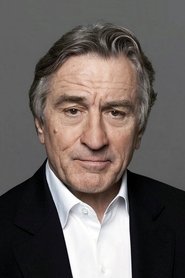
Robert De Niro
Frank Sheeran
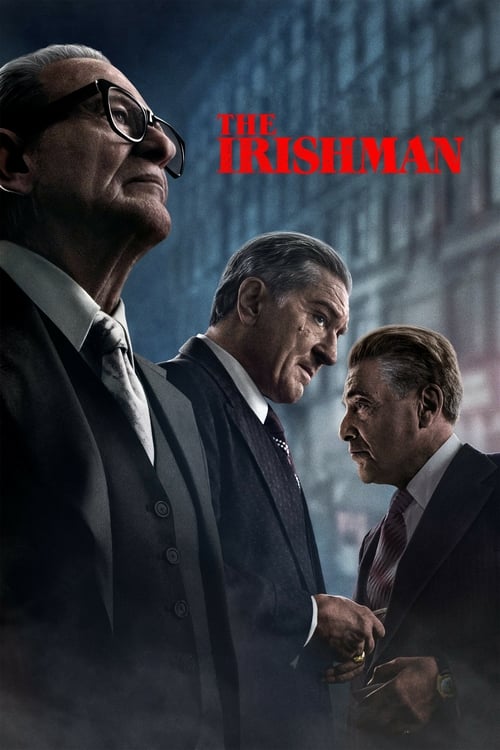
“His story changed history.”
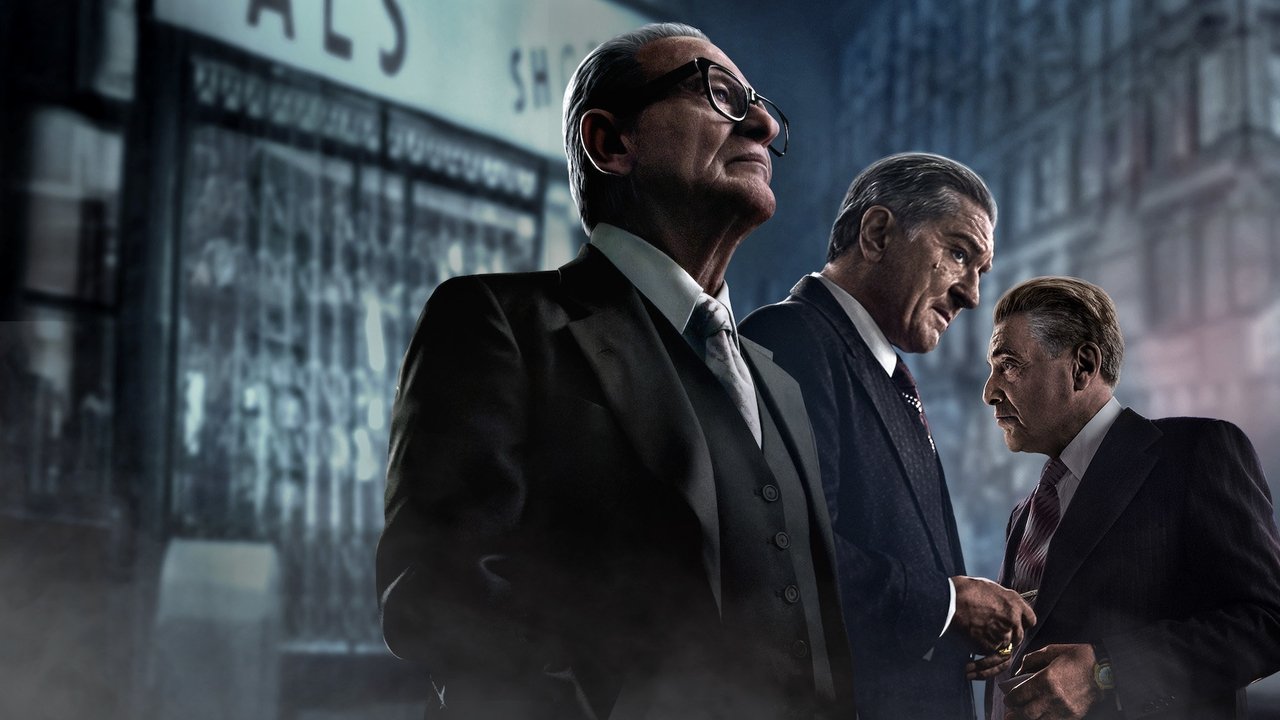
Pennsylvania, 1956. Frank Sheeran, a war veteran of Irish origin who works as a truck driver, accidentally meets mobster Russell Bufalino. Once Frank becomes his trusted man, Bufalino sends him to Chicago with the task of helping Jimmy Hoffa, a powerful union leader related to organized crime, with whom Frank will maintain a close friendship for nearly twenty years.
Official
I’ve watched The Irishman three times now, and each time I’m struck by the same unsettling thought: this isn’t a mob movie. It’s a eulogy for a man who outlived his own sins. Frank Sheeran (Robert De Niro) sits in a nursing home, his body betraying him, his mind flickering between past and present like a faulty projector.
The camera lingers on his face—jowls sagging, eyes watery, mouth set in a permanent grimace—and what you see isn’t menace or regret, but something far worse: the absence of either. He’s not haunted. He’s just tired.
That’s the genius of Martin Scorsese’s late-career masterpiece. It doesn’t glamourize the life, nor does it wallow in repentance. It simply observes, with a clarity that feels almost clinical, how a man can spend decades ordering hits, betraying friends, and neglecting his family, only to end up alone in a wheelchair, watching The Price Is Right while a priest waits to hear his confession.
The irony? Frank Sheeran never really confesses. Not to us.
Not to God. Not even to himself.
Scorsese has spent his career dissecting the American underworld, but The Irishman feels different. There’s no Goodfellas swagger here, no Casino operatic violence. Instead, there’s a creeping sense of exhaustion, as if the director himself has grown weary of the mythos he helped create.
The film’s most brutal moments aren’t the killings—though there are plenty—but the quiet, domestic ones. Frank’s daughter Peggy (Anna Paquin) watches him with a mix of fear and pity, her silence speaking volumes. (That Paquin has only six lines in the entire film is either a brilliant narrative choice or a glaring oversight, depending on who you ask.
I’m still not sure which.) When she finally turns away from him for good, it’s not with a scream or a slap, but with a slow, devastating withdrawal. The camera doesn’t linger on Frank’s reaction. It doesn’t need to.
The de-aging technology, much maligned for its uncanny valley effect, actually serves the story in ways I didn’t expect. Watching De Niro’s face morph from middle-aged swagger to elderly frailty in the same scene forces you to confront the passage of time in a way few films have. It’s not seamless, but then again, neither is aging.
The effect is jarring, yes, but also weirdly poignant. You’re not just watching Frank Sheeran grow old—you’re watching him become the man he always was, beneath the bravado.
There’s a scene midway through the film that I can’t shake. Frank and Jimmy Hoffa (Al Pacino) sit in a diner, arguing over union politics. Hoffa, ever the showman, is in full bluster mode, his voice rising, his hands gesturing wildly.
Frank, meanwhile, sits across from him, chewing his food methodically, his expression unreadable. The camera holds on De Niro’s face for what feels like an eternity. No dialogue.
No music. Just the sound of a fork scraping against a plate. And then, in that silence, you realize: Frank isn’t listening.
He’s already decided what he’s going to do.
That’s the moment The Irishman reveals itself. This isn’t a story about loyalty or betrayal. It’s about the banality of evil—the way men like Frank Sheeran can justify anything if they tell themselves the right lies.
Hoffa’s murder isn’t a dramatic showdown. It’s a transaction. A favor called in.
A body disposed of with the same indifference as a broken toaster.
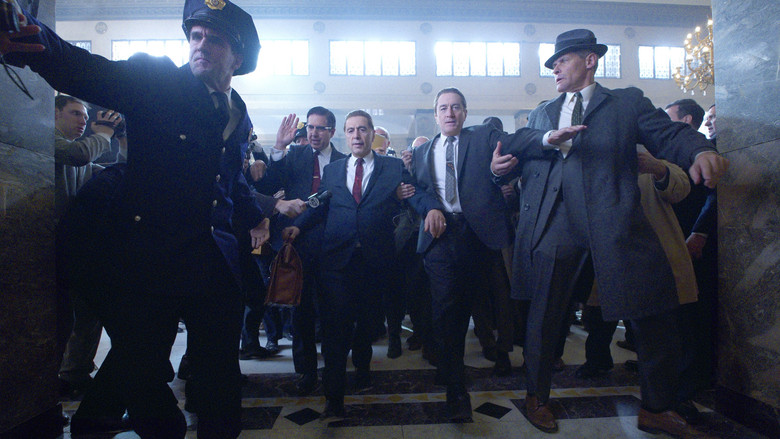
Pacino, in what might be his most understated performance, plays Hoffa as a man who’s equal parts tragic and insufferable. He’s not a monster—just a man who mistook his own legend for invincibility. The scene where he’s released from prison, only to find his empire crumbling, is heartbreaking in its futility.
Hoffa doesn’t rage. He just looks around, bewildered, like a king who’s returned from exile to find his kingdom has moved on without him. Pacino’s performance is a masterclass in how to convey defeat without a single raised voice.
And then there’s Joe Pesci. After years away from the screen, he returns as Russell Bufalino, the quiet, calculating mob boss who pulls Frank’s strings. Pesci’s Bufalino is terrifying precisely because he’s so soft-spoken.
There’s no yelling, no histrionics. Just a man who looks at you like he’s already decided where to bury your body. When he tells Frank, “I’m gonna tell you something, and I want you to listen to me,” you know it’s not a request.
It’s a death sentence.
The film’s final act is a slow unraveling. Frank, now elderly, drifts through his days, haunted less by his crimes than by the sheer weight of time. The camera lingers on his hands—veiny, liver-spotted—as he struggles to button his shirt.
The priest visits, offering absolution, but Frank can’t even muster the energy to lie convincingly. The last shot is of him sitting alone in a nursing home, the door slightly ajar, as if waiting for someone who will never come. It’s not a dramatic ending.
It’s just… sad.
I keep thinking about that door. Is it open because Frank is waiting for forgiveness? Or is he just too tired to close it?
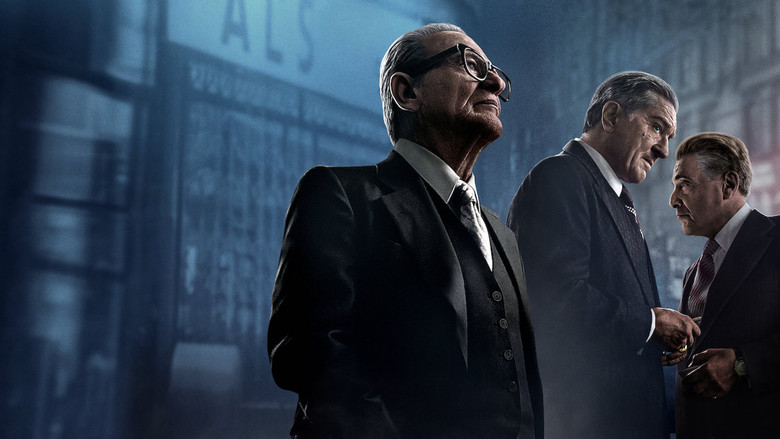
The Irishman isn’t Scorsese’s best film—that’s still Taxi Driver or Raging Bull, depending on the day. But it might be his most honest. It’s a film about the stories we tell ourselves to survive, and the way those stories curdle into something ugly when we’re left alone with them.
Frank Sheeran never apologizes because he doesn’t think he did anything wrong. And maybe that’s the most terrifying part of all.
I don’t know if this is a great movie. But I do know it’s a necessary one. It forces you to look at the cost of a life spent in service to power, and it doesn’t let you look away. Even when you want to. Especially then.
"A sprawling, ambitious crime epic that captivates with its performances but frustrates with its length and pacing."
Robert De Niro, Al Pacino, and Joe Pesci deliver powerhouse performances, grounding the film's exploration of loyalty, power, and regret in the mob world. The de-aging technology and Scorsese's direction earn praise for their technical ambition, though the three-and-a-half-hour runtime is excessive, with some subplots unnecessary or drawn out. The meditative tone and historical weight reward patience with slow-burn storytelling, but the film lacks the urgency of Scorsese's earlier crime classics.
Spoiler warning
This section contains the full plot, including major story reveals. Overview above stays spoiler-free.
Martin Scorsese’s three-and-a-half-hour mob opus isn’t just about Hoffa disappearing — behind the camera, there were feuds, legal brawls, latestnetflix.com maintains, internet uprisings and a budget that allegedly vanished faster than a Teamster in ’75.
Entertainment rumors and trivia aggregated from public reporting. Treat speculation as unverified unless a cited source confirms it.
More titles in the same genres and with the same cast.