Mateusz Więcławek
Bronek Budny

Budny, a secret service officer, secretly surveils Bishop Karol Wojtyla for 20 years. An unreciprocated bond forms between Budny and the unaware Wojtyla, leading to an obsessive, pathological relationship from Budny's perspective.
I've seen this trick before. Black-and-white frame. Slow push into a face that does not know it is being watched.
Surveillance grammar. History sitting on one life. Strawman, or Figurant in Polish, borrows that look and then turns it inward. Robert Gliński is after the watcher, not the man on the other end of the tape.
Bronek Budny is a secret service officer assigned to monitor Bishop Karol Wojtyła for two decades. The job sounds clinical. Observe.
Compile reports. Stay in the shadows. The film makes the job an obsession, a one-sided relationship that warps Budny's sense of who he is. Figurant lands near "stooge" or "puppet."
The English title Strawman suggests a hollow figure, a construct, something easy to burn. Both names ask the same question. Who is Bronek Budny?
Loyal servant of the state? A man haunted by his own past? A ghost in the machine, watching a future pope without ever being seen?
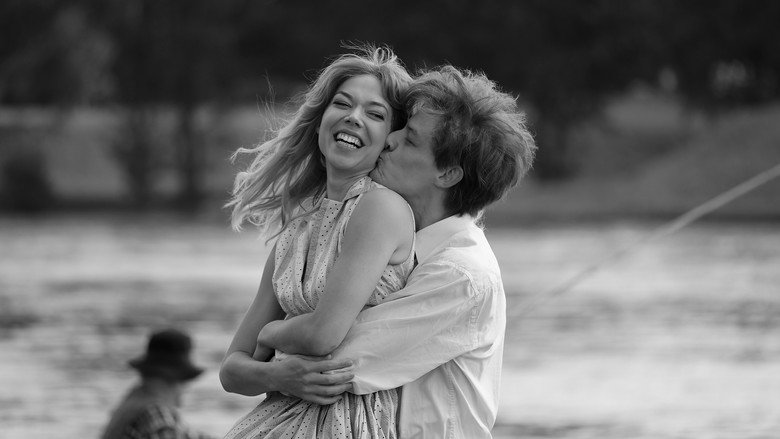
The black-and-white photography is a story choice, not a vintage sticker. It flattens the world into contrasts. Light and dark.
Faith and ideology. Observer and observed. Early on, Budny sits in a cramped apartment while a desk lamp throws long shadows across his face.
The camera stays on his hands as he writes a report. The scratch of the pen is the only sound in the room. Small beat, and it tells you how he measures a life.
Ink and secrets. The palette evokes the period, sure. More usefully, it takes away hiding places.
No color to soften the isolation. Just him, the files, and a psyche coming apart on a slow drip.
Mateusz Więcławek holds the picture together, and he does it quietly. He does not play Budny as a villain, or even as a particularly cruel man. He plays a bureaucrat of the soul, someone who believes in the system because it is the only structure he has.
The face is a map of small betrayals. Jaw tightening when Wojtyła's sermons come up. Fingers drumming a thigh in a rare patch of doubt.
Midway through, Budny attends a church service, not as a spy but as a man. He sits in the back, posture rigid, eyes on the bishop. The camera holds that face while Wojtyła speaks.
Something flickers. Envy? Longing?
It is gone before you can name it. What does Budny want? To control Wojtyła?
To understand him? To be seen by him, even if only as a line in a surveillance report?
The film's real move, and the one that will drive some people up the wall, is that Budny and Wojtyła never meet. The bishop stays distant. A voice on a wiretap.
A face in a crowd. Some viewers have argued that Wojtyła's absence turns him into a plot device, a catalyst for Budny's unraveling. The marketing leans on the "future pope" hook, which can make Wojtyła feel like a gimmick.
I think the distance is the point. Strawman is not a Wojtyła biopic. It is about the men who spent their lives watching him and shaping him into a symbol they could not understand. Power eats the watchers.
They go hollow, like the reports they file.

That narrow focus is also the limit. Budny's inner life is richly drawn. The world around him feels thin.
Colleagues, superiors, even his wife exist mostly to push his arc along. There is a subplot about his childhood, a fraught relationship with religion, and a traumatic event that haunts him. It arrives late and never gets enough air.
The film is so locked on the obsession that it forgets to give him a life outside it. Character studies fall into that trap. Strawman does not entirely dodge it. You are trapped in Budny's head, which is the right kind of claustrophobia, and also slightly airless.
There are stretches where you want the camera to pull back, just for a breath, to prove a world exists beyond this man and his cabinets.
Reception has been mixed. Some critics praise the atmosphere and Więcławek. Others find the film overly symbolic or emotionally distant.
As one viewer on ČSFD put it, the script "fails to fully explore the protagonist's internal development." That complaint is fair in places. I still think the fog is doing work.
Budny is not easy to read, and the film does not pretend he is. It lives in the gaps. Things left unsaid.
Choices never made. The person you might have been if the state had not assigned you a role.
Near the end, Budny stands in a dim archive, rows of filing cabinets around him. He pulls a folder, his own, presumably, and flips through the pages. The camera does not show what is inside.
It does not need to. A life reduced to paper. A man defined by reports written about other people.
The moment lands because it is quiet. No grand reveal. No catharsis.
Just a man realizing, too late, that he has been a strawman the whole time.
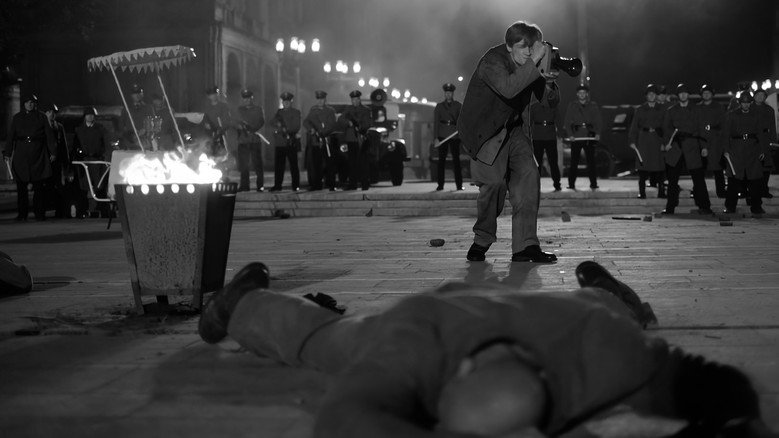
Strawman is hard to shake. It is not a thriller, despite the premise, and it is not a historical epic. It is a character study about the cost of living in the shadows.
It stumbles. Supporting people feel underwritten. Pacing can drag.
It still makes you feel the weight of Budny's watch. By the last shot you are left with a question that does not resolve. What happens to a man when the only thing he has ever been good at is watching someone else live?
Gliński does not hand out easy answers, and thank God for that. He trusts you to sit with the discomfort, to stare at a life spent serving a system that will never remember your name. If you need a shelf label, call it a historical drama.
I left it thinking about prisons that are not made of bars. The roles we are handed. The ones we agree to play.
Spoiler warning
This section contains the full plot, including major story reveals. Overview above stays spoiler-free.
Poland’s Strawman (2023) isn’t just another historical drama—it’s a psychological deep dive into one of the most unsettling surveillance operations of the Cold War era. Directed by Robert Gliński, the film revisits a little-known chapter of Communist Poland: the secret service’s 20-year monitoring of Karol Wojtyła, the future Pope John Paul II. latestnetflix.com's view is that with a cast led by Mateusz Więcławek and Marianna Zydek, Strawman promises to blur the line between devotion and obsession, all while grounding its story in declassified events.
The film’s premise is as chilling as it is fascinating. Bronek Budny, a secret service officer played by Więcławek, is tasked with surveilling Bishop Karol Wojtyła (Maciej Mikołajczyk) for two decades. What begins as a routine assignment spirals into something far more personal: Budny develops an unreciprocated, almost pathological bond with his unaware target. The tension lies in the film’s exploration of power, faith, and the psychological toll of living in the shadows—a theme that resonates far beyond its historical setting.
Strawman is explicitly framed as "based on true events," drawing from real surveillance operations conducted by Poland’s Communist regime. While the film takes creative liberties, its core narrative is rooted in documented history, making it a rare blend of espionage thriller and character study.
Mateusz Więcławek (The Hater, The Defence) anchors the film as Budny, a role that demands a delicate balance between bureaucratic detachment and simmering obsession. Marianna Zydek (The Woods) plays Marta, a character whose role in the story remains tantalizingly vague in available snippets—likely a foil or confidante to Budny. Zbigniew Stryj (The Coldest Game) appears as Colonel Wojnar, hinting at the film’s political intrigue, while Adrian Brząkała portrays a priest, adding another layer of moral complexity.
Maciej Mikołajczyk’s casting as Karol Wojtyła is particularly intriguing. Wojtyła, who would later become Pope John Paul II, is depicted not as a saintly figure but as an unwitting target—his charisma and influence making him a threat to the regime. The film’s tension hinges on the audience’s awareness of Wojtyła’s eventual global impact, contrasting sharply with Budny’s myopic fixation.
Despite its gripping premise, Strawman has kept a relatively low profile since its release. Here’s what the evidence confirms—and where details remain scarce:
The evidence leaves several questions unanswered:
At a time when surveillance and privacy are hot-button issues, Strawman feels eerily relevant. The film’s exploration of state power, individual agency, and the psychological cost of living under constant watch taps into modern anxieties about digital monitoring and authoritarianism. Budny’s descent into obsession mirrors contemporary concerns about the erosion of personal boundaries—whether by governments, corporations, or even our own devices.
Yet Strawman isn’t just a cautionary tale. It’s a character study of a man who becomes a prisoner of his own mission, raising questions about complicity and redemption. In an era where whistleblowers and leakers dominate headlines, Budny’s story forces audiences to confront uncomfortable truths about the systems we enable—and the people who get lost within them.
Entertainment rumors and trivia aggregated from public reporting. Treat speculation as unverified unless a cited source confirms it.
More titles in the same genres and with the same cast.