Julia Wieniawa
Anastazja

A group of friends at a New Year’s Eve party go through a whirlwind of events that exposes secrets, breaks hearts — and leads to a shocking outcome.
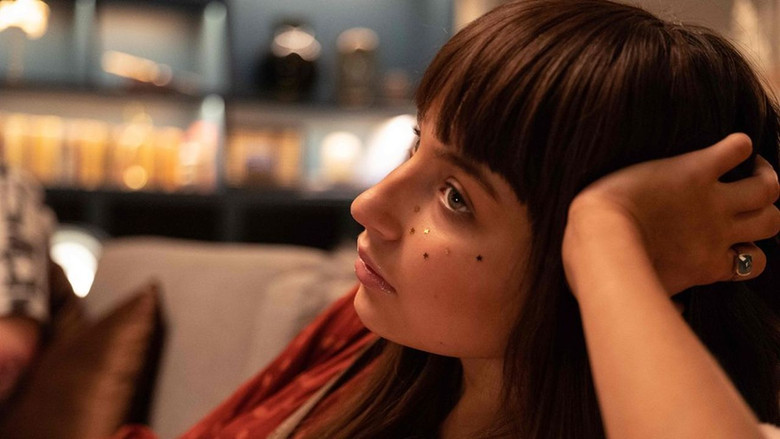
I’ve spent the last few days trying to shake All My Friends Are Dead, which is strange because, on paper, it shouldn’t linger. A 95-minute dark comedy about a New Year’s Eve party gone wrong, it arrives with the kind of premise that usually signals disposable entertainment: secrets, betrayals, a body count. And yet, here I am, still turning over a single image in my mind—a close-up of Julia Wieniawa’s face as she realizes the night isn’t just spiraling, it’s unraveling at the seams.
There’s something about the way her eyes dart, not in panic, but in the slow dawning of a terrible understanding. It’s the kind of moment that makes you lean forward in your seat, not because you’re excited, but because you’re bracing for impact.
The film’s greatest trick is how it lulls you into thinking you know where it’s headed. The opening act is all champagne flutes and forced laughter, the kind of party where everyone is pretending to have a good time because the alternative—admitting they’re miserable—is too exhausting. The camera lingers on the cracks in the facade: a forced smile, a too-tight hug, a glass refilled just a second too quickly.
It’s the visual equivalent of that awkward pause in a conversation where someone says, “We should do this more often,” and everyone knows it’s a lie. The ensemble cast, a mix of rising Polish actors and familiar faces, sells this tension beautifully. There’s no weak link here, just a group of people who feel like they’ve been plucked from real life—messy, flawed, and just self-aware enough to know they’re stuck in a situation they can’t control.

What starts as a comedy of manners—think The Hangover meets Who’s Afraid of Virginia Woolf?—slowly curdles into something darker. The film’s tonal whiplash is deliberate, but it’s also where it risks losing its footing. One moment, you’re laughing at a character’s drunken confession; the next, you’re watching someone make a choice that feels irreversible.
The shift isn’t seamless, but maybe that’s the point. Parties like this don’t end with a neat resolution. They end with someone slamming a door, or worse, with someone not leaving at all.
The film’s third act leans into this chaos, and while it doesn’t quite stick the landing, it’s hard to look away. There’s a raw, almost desperate energy to the final scenes, as if the film itself is trying to outrun its own premise.
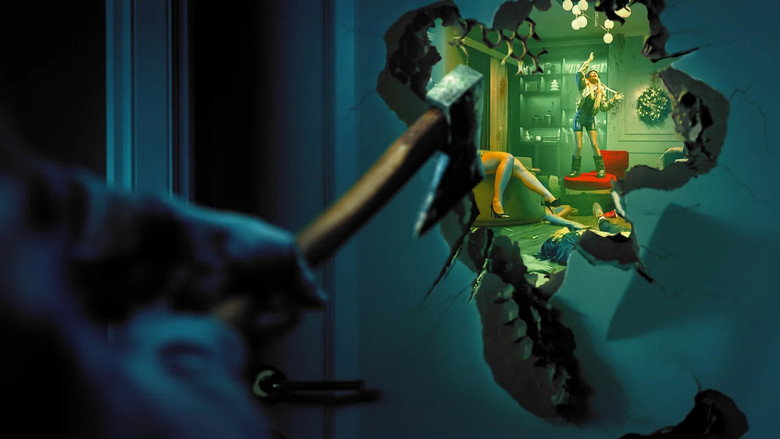
The cinematography is where All My Friends Are Dead shines brightest. The camera moves like a guest who’s had one too many drinks—unsteady, but always circling back to the heart of the action. Close-ups are used sparingly, but when they appear, they cut deep.
A hand gripping a bottle too tightly. A lip bitten raw. These are the details that make the film feel lived-in, even when the plot starts to strain under its own weight.
The color palette is muted, all blues and grays, as if the party is happening in a world that’s already drained of joy. It’s a visual choice that mirrors the emotional state of the characters: they’re not just drunk on alcohol, but on the weight of their own regrets.
If there’s a flaw here, it’s that the film’s ambition occasionally outstrips its execution. The script is sharp when it comes to dialogue, but some of the plot twists feel like they’ve been borrowed from a lesser thriller. There’s a moment where a character’s secret is revealed in a way that’s meant to be shocking, but instead feels like a cheap parlor trick.
It’s the kind of misstep that makes you wonder if the film is more interested in provocation than in saying something meaningful about its characters. That said, the performances keep it from tipping into caricature. Wieniawa, in particular, is a revelation.
She has this ability to convey volumes with just a glance, and there’s a scene where she’s forced to confront someone she’s wronged that’s so quietly devastating, it’s hard to imagine anyone else pulling it off.
The film’s title is, of course, a lie. Not all of the friends are dead by the end—just the ones who mattered. The survivors are left standing in the wreckage, blinking in the cold light of the new year, wondering what comes next.
It’s a bleak punchline, but it’s also honest. How many of us have walked away from a night like this, relieved to have survived, but haunted by the things we said and did? All My Friends Are Dead doesn’t offer any easy answers, but it does something rarer: it captures the feeling of being trapped in a moment you can’t escape. The party ends, but the consequences don’t.
I keep coming back to that TMDB score—5.9 out of 10, based on a few hundred votes. It’s not a bad rating, but it’s not a great one either. I suspect the film’s tonal shifts are to blame.
Audiences who came for a straightforward dark comedy might have felt whiplash; those expecting a thriller might have found the pacing uneven. But I wonder if the real issue is that All My Friends Are Dead doesn’t fit neatly into any genre. It’s not quite funny enough to be a comedy, not quite tense enough to be a thriller, and not quite deep enough to be a drama.
It’s something messier than all of those—a film that feels like it was made by people who weren’t entirely sure what they were making, but who were committed to seeing it through.
In the end, that’s what makes it worth watching. It’s a film that refuses to be polished, that wears its imperfections like a badge of honor. It’s not a masterpiece, but it’s not trying to be. It’s just a story about a group of people who, for one night, can’t escape each other—or themselves. And maybe that’s enough.
"A darkly comedic but uneven Polish thriller that struggles with tone yet has some memorable moments."
The film attempts dark comedy and explores friendship under extreme circumstances, but the execution is inconsistent. Julia Wieniawa and Mateusz Więcławek give strong performances, though the pacing and tonal shifts undercut them. The premise holds promise, but the delivery often feels disjointed, making for a mixed experience.
Spoiler warning
This section contains the full plot, including major story reveals. Overview above stays spoiler-free.
The 2020 Polish dark comedy All My Friends Are Dead (Wszyscy moi przyjaciele nie żyją) arrived with little fanfare but quickly became a cult favorite on Netflix, thanks to its macabre humor and chaotic energy. While the film’s premise—a group of friends trapped in a nightmarish scenario—might sound familiar, its execution was anything but predictable. latestnetflix.com's view is that here’s what we know (and what remains unconfirmed) about the making of this offbeat horror-comedy.
The film’s ensemble cast reads like a who’s-who of Poland’s young acting talent. Leading the pack is Julia Wieniawa, a rising star known for her roles in Polish TV and film, who plays one of the doomed friends. Alongside her, Mateusz Więcławek (The Hater, The Woods) and Monika Krzywkowska (The Lure) bring a mix of comedic timing and dramatic weight to the film’s increasingly absurd situations.
Other key players include Adam Woronowicz, a veteran of Polish cinema, and Paulina Gałązka, whose performance in All My Friends Are Dead marked one of her breakout roles. The chemistry among the cast was reportedly a major factor in the film’s chaotic charm, though details about on-set dynamics remain scarce. One YouTube interview with the cast hints at improvisation playing a role in some of the film’s most memorable moments, though no direct quotes confirm this.
The title All My Friends Are Dead inevitably draws comparisons to the 2010 illustrated book of the same name by Avery Monsen and Jory John—a darkly humorous collection of vignettes about existential dread. However, there is no confirmed link between the book and the 2020 film. The movie’s plot, tone, and style appear entirely original, despite the shared title.
That said, the film’s marketing leaned into the book’s vibe, with trailers and posters mimicking the deadpan, absurdist humor of the source material. Whether this was intentional or just a coincidence remains unclear, as no interviews with the filmmakers address the connection.
All My Friends Are Dead was one of several Polish genre films Netflix acquired in the early 2020s, a period when the streamer was aggressively expanding its international catalog. Reviews of the film were mixed but leaned toward the positive, with critics praising its dark humor and the cast’s commitment to the material. One YouTube review called it a "guilty pleasure" with a "uniquely Polish sense of dread," while another noted its "surprisingly emotional core" beneath the gore and laughs.
The film’s release on Netflix in 2021 (under the title Wszyscy moi przyjaciele nie żyją) gave it a second life, introducing it to a global audience. Despite its niche appeal, it developed a small but dedicated following, particularly among fans of horror-comedy hybrids like What We Do in the Shadows or Tucker & Dale vs. Evil.
For all its cult appeal, All My Friends Are Dead remains shrouded in mystery. Key details—like the director’s identity, budget, or even the full extent of the cast’s improvisation—are conspicuously absent from public records. Some sources list Marcus Dunstan as a director, but this appears to be a case of mistaken identity with the unrelated 2024 film #AMFAD: All My Friends Are Dead. The 2020 Polish film’s director remains officially uncredited in most databases, including TMDB [TMDB].
There’s also speculation about a potential sequel or spin-off, given the film’s open-ended finale. However, no announcements have been made, and the cast has moved on to other projects. For now, All My Friends Are Dead stands as a one-off oddity—a darkly funny, deeply weird entry in Poland’s growing horror-comedy scene.
Entertainment rumors and trivia aggregated from public reporting. Treat speculation as unverified unless a cited source confirms it.
More titles in the same genres and with the same cast.