Julia Wieniawa
Zosia Wolska

“They died without internet.”
Addicted to technology, a group of teens attends a rehabilitation camp in the forest, but a sinister force there intends to take them offline forever.
I’ve seen this movie before. Not this movie, exactly—same cabin, same machete, same teens who should know better than to wander off alone. But I’ve seen the DNA: the blood-spattered walls of Friday the 13th, the self-aware smirk of Scream, the way the camera lingers just a beat too long on a trembling hand before the kill. Nobody Sleeps in the Woods Tonight knows it too.
That’s the joke. And the problem.
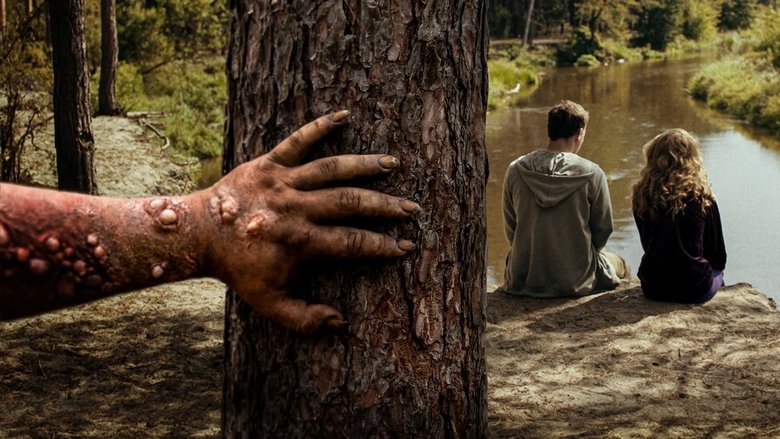
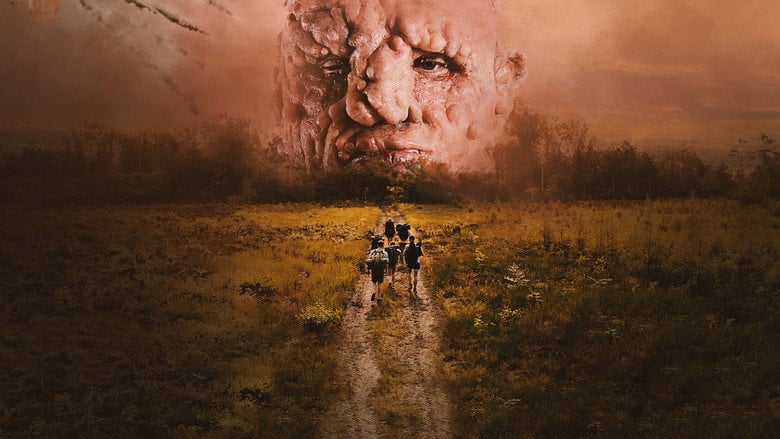
The film opens with a title card that might as well be a wink: They died without internet. It’s a tagline, sure, but it’s also the film’s entire thesis. A group of phone-addicted Polish teenagers are sent to a remote rehab camp in the woods, where the only signal is the kind that turns people into cannibalistic mutants. The setup is pure 1980s slasher—right down to the meteorite that crashed nearby decades ago, oozing some black goo that warped the locals into a pair of hulking, mute twins who communicate in guttural growls and the occasional shared glance.
(They’re played by the same actor, Michał Zbroja, in a dual role that’s more impressive for its commitment than its subtlety.) The teens, of course, don’t stand a chance. They’re too busy arguing over who gets to charge their phone next to notice the forest closing in around them.
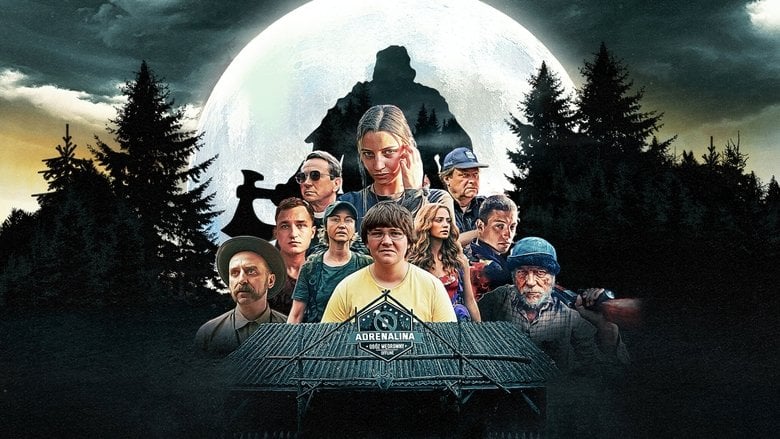
What saves the film from being just another paint-by-numbers slasher is its self-awareness—or at least, its attempt at it. The character Julek (Michał Lupa) is the resident horror nerd, the kind of guy who’s seen every Halloween and Nightmare on Elm Street and isn’t afraid to remind everyone of the rules. “We’re in a horror movie,” he says at one point, as if the audience might have missed the memo. “We need to stick together.” It’s a meta touch that Scream perfected, but here it feels less like a clever subversion and more like a safety net.
The film is so afraid of being dismissed as derivative that it keeps pointing out its own tropes, as if to say, See? We know. We’re in on the joke.
And yet, for all its winking, Nobody Sleeps in the Woods Tonight can’t quite commit to the bit. The kills are gory—one poor soul gets a machete to the face in broad daylight, the kind of practical effect that forces you to wince—but they’re also predictable. The twins lurch out of the shadows, the teens scream, the camera cuts away just in time to avoid showing too much.
It’s all very by the book, which is both the film’s charm and its limitation. There’s a moment early on where one of the characters, Zosia (Julia Wieniawa), stumbles upon a cabin filled with the twins’ victims, their bodies strung up like macabre decorations. The shot is lit with a harsh, almost clinical brightness, as if the film is daring you to look away.
I didn’t. But I also didn’t feel much beyond a vague sense of oh, right, this is what happens in these movies.
That’s the thing about slashers: they’re comfort food. You know the beats, you know the rhythm, and when it’s done well, there’s a perverse pleasure in the familiarity. Nobody Sleeps in the Woods Tonight isn’t done well, exactly, but it’s done earnestly. It wants to be a love letter to the genre, and in its best moments, it is.
The daylight aesthetic, for instance, is a smart choice. Most low-budget horror films hide their limitations in the dark, but here, the sun is unrelenting. The forest is too bright, the blood too red, the twins’ mutated faces too visible.
It’s unsettling in a way that shadows never could be. There’s nowhere to hide, not even for the filmmakers.
The film’s most interesting tension isn’t between the teens and the killers, but between its own ambitions and its limitations. Director Bartosz M. Kowalski has said in interviews that he wanted to make a slasher that also commented on contemporary Polish society—specifically, the country’s struggles with intolerance and the Catholic Church’s influence.
There’s a subplot involving a priest (Olaf Lubaszenko) who runs the rehab camp and has some very questionable methods of “curing” the teens of their technology addiction. It’s heavy-handed, to put it mildly. The priest is a caricature of hypocrisy, a man who preaches purity while his camp is built on a foundation of lies (and, presumably, meteorite goo).
The film doesn’t do much with this beyond a few pointed lines of dialogue, but it’s an interesting idea—one that feels like it belongs in a different, more ambitious movie.
That’s the trouble with Nobody Sleeps in the Woods Tonight: it’s a film of half-steps. It wants to be a smart, self-aware slasher, but it’s too in love with the genre’s clichés to fully subvert them. It wants to be a social commentary, but it’s too busy delivering gory kills to dig deep.
It wants to be a Polish contribution to the canon, but it leans so heavily on American tropes that it often feels like a cover song—faithful to the original, but lacking its own voice.
And yet, I can’t bring myself to hate it. There’s something endearing about its earnestness, its willingness to play the game even when it knows the rules are stacked against it. The cast is likable, especially Wieniawa, whose Zosia is the closest thing the film has to a final girl.
She’s resourceful, she’s tough, and she’s got a dry sense of humor that cuts through the film’s more ridiculous moments. When she’s not screaming or running (which, let’s be honest, is most of the movie), she’s the one keeping the group together. It’s a shame the script doesn’t give her more to do beyond reacting to the twins’ latest attack.
The film’s ending is a microcosm of its strengths and weaknesses. Without spoiling anything, it’s a twist that feels both inevitable and unsatisfying—a classic slasher move that the film tries to spin into something more meaningful. It doesn’t quite work, but I’ll give it points for trying. Nobody Sleeps in the Woods Tonight is the kind of movie that knows it’s not going to change the world, but it’s going to have fun trying anyway.
And sometimes, that’s enough.
Critics have been divided, and it’s easy to see why. Cineuropa called it “an entertaining horror flick wallowing in nostalgia for the movies of the 1980s,” while Digital Spy praised it for knowing “exactly what it is, delivering gory deaths, meta gags and likeable characters.” I fall somewhere in the middle. It’s not a great movie, but it’s not a bad one either. It’s a movie that understands its place in the ecosystem—a small, slightly goofy creature that’s perfectly adapted to its niche.
It’s not here to reinvent the wheel. It’s here to remind you why the wheel was fun in the first place.
I left the film thinking about that priest. Not because he’s a particularly compelling character, but because his presence lingers like a bad aftertaste. The film uses him as shorthand for everything it wants to say about Poland’s social ills, but it never really explores what that means.
It’s a missed opportunity, but maybe that’s the point. Nobody Sleeps in the Woods Tonight is a movie that’s content to skim the surface, to deliver the scares and the gore and the meta jokes without ever digging too deep. And in a way, that’s kind of refreshing. Not every horror movie needs to be Get Out.
Sometimes, it’s enough to be a fun, bloody ride.
Just don’t expect to remember it in the morning.
"A gory but uneven Polish slasher that delivers the shocks but falters on pacing and character depth."
The relentless horror and creative kills stand out in a crowded slasher genre. The story is thin, with underdeveloped characters and a slow middle act that drags before the final payoff. The mix of horror and dark comedy divides opinion: refreshing to some, jarring to others.
Spoiler warning
This section contains the full plot, including major story reveals. Overview above stays spoiler-free.
When Nobody Sleeps in the Woods Tonight dropped on Netflix in October 2020, it became an instant Halloween binge for horror fans craving something fresh—and brutal. The Polish slasher, directed by Bartosz M. Kowalski, didn’t just rely on jump scares; it delivered a gory, high-energy romp through the woods, complete with mutant killers and a cast of young survivors fighting for their lives. latestnetflix.com's read is that but behind the bloodshed, the film’s chaotic energy and rapid rise to cult status hint at a production that was as wild as its on-screen mayhem.
Nobody Sleeps in the Woods Tonight (Polish title: W lesie dziś nie zaśnie nikt) is a supernatural horror-slasher hybrid, blending classic teen-slasher tropes with a uniquely Polish flavor. The plot follows a group of rebellious campers who stumble upon a pair of deformed, murderous twins lurking in the forest—a premise that could’ve been campy in lesser hands. But Kowalski leaned into the absurdity, delivering a film that’s equal parts terrifying and darkly funny.
The cast, led by Julia Wieniawa as the resourceful final girl, brought a mix of charisma and desperation to their roles. Wieniawa, already a rising star in Poland, became the breakout name, though the entire ensemble—including Michał Lupa and Wiktoria Gąsiewska—delivered performances that balanced horror and humor. The film’s 102-minute runtime flies by, packed with inventive kills, eerie atmosphere, and a relentless pace that keeps viewers hooked.
The timing of Nobody Sleeps in the Woods Tonight couldn’t have been better. Netflix, hungry for fresh horror content, snapped up the film and positioned it as a Halloween must-watch. The streaming giant’s marketing push—including trailers and behind-the-scenes featurettes—helped the movie find an international audience. Fans praised its unapologetic gore and self-aware tone, with some calling it a love letter to ‘80s slashers like The Texas Chain Saw Massacre and Friday the 13th.
Critics were more divided. While some appreciated its energy and creativity, others found it too derivative, with a middling 4.7/10 rating on SensCritique. Still, the film’s cult following grew quickly, and its success paved the way for a sequel—Nobody Sleeps in the Woods Tonight 2—which arrived just a year later. (Though, if early ratings are any indication, the sequel didn’t quite recapture the original’s magic.)
Little is publicly known about the film’s production, but the few glimpses we have suggest a set that embraced the madness. A behind-the-scenes blooper reel, titled Making Of NOBODY SLEEPS IN THE WOODS TONIGHT, offers a peek at the cast and crew’s playful energy, with outtakes and on-set antics that contrast sharply with the film’s grim tone. The twins’ grotesque makeup and prosthetics, designed to make them look like feral forest dwellers, were reportedly a challenge to film, requiring long hours in the makeup chair [rumor, unverified].
Kowalski, who also co-wrote the script, has stayed tight-lipped about the film’s inspirations, but the final product feels like a director fully committed to his vision—even if that vision was equal parts terrifying and ridiculous. The film’s practical effects, from dismemberments to impalements, were a selling point, with fans praising the old-school gore over CGI.
Nobody Sleeps in the Woods Tonight may not have reinvented the horror genre, but it carved out a niche as a fun, gory throwback. Its success on Netflix proved there’s an appetite for international horror, especially when it’s unapologetically over-the-top. The sequel’s lukewarm reception suggests the original’s charm was hard to replicate, but for one Halloween season, the film was the talk of the horror community.
Whether it’s remembered as a cult classic or a footnote in horror history remains to be seen. But for now, Nobody Sleeps in the Woods Tonight shows the power of a well-timed, unhinged slasher—one that didn’t just scare audiences but entertained them in the process.
Entertainment rumors and trivia aggregated from public reporting. Treat speculation as unverified unless a cited source confirms it.
More titles in the same genres and with the same cast.