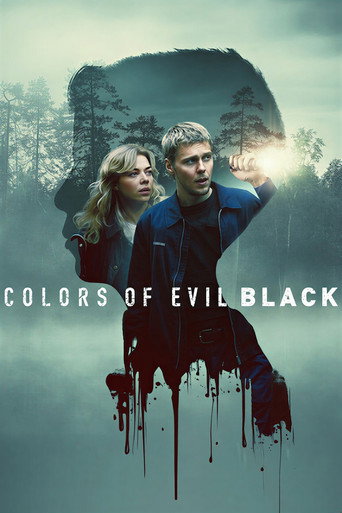
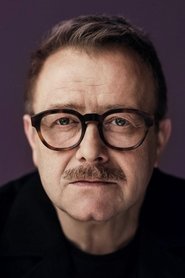
Piotr Żurawski
Marek

In a monastery cut off from the world, the monks run a clinic for the possessed. One day, a young policeman Marek comes to the convent. Posing as a clergyman, he penetrates monastic life and tries to explain the recent, mysterious disappearance of several tormented inmates. It turns out, however, that there is no way out of the monastery.
I didn’t expect to spend the last twenty minutes of Hellhole gripping the armrest like it was the only thing keeping me from being pulled into the screen. That’s not because the film is particularly loud or jump-scare heavy—quite the opposite. It’s because the horror here isn’t in what happens, but in the slow, creeping realization that there’s no escape from the logic of the place.
The monastery isn’t just a setting; it’s a character, one that breathes, watches, and eventually wins.
Bartosz M. Kowalski’s film begins with a lie. Marek (Piotr Żurawski), a young policeman, arrives at a remote monastery posing as a priest, sent to investigate the disappearance of several patients from its clinic for the possessed.
The monks, led by the stern Father Andrzej (Olaf Lubaszenko), accept him without question—or so it seems. The first act unfolds like a procedural, with Marek poking around the dimly lit corridors, interviewing the afflicted, and taking notes in a small, spartan room. The tension is quiet, almost bureaucratic.
(Is this what Kafka would’ve made if he’d been raised on The Exorcist instead of The Trial?)
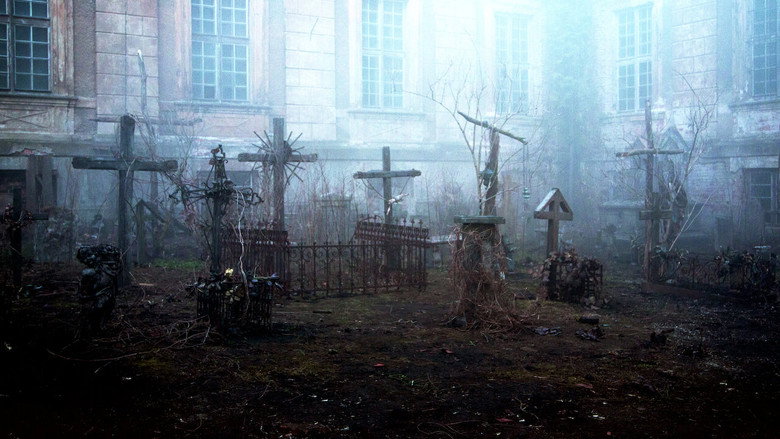
But then the film starts to unravel its own premise. The patients aren’t just possessed—they’re changing. Their bodies contort in ways that feel less like demonic influence and more like something biological, something engineered.
The monks’ rituals take on a clinical precision, their prayers recited like medical instructions. And Marek, our supposed protagonist, begins to realize that his investigation isn’t just uncovering a mystery; it’s accelerating a process he doesn’t understand. The horror of Hellhole isn’t in the supernatural, but in the way the supernatural is systematized.
This isn’t a battle between good and evil; it’s a machine, and Marek has just become another cog.
Kowalski’s direction is deliberate to the point of frustration. The camera lingers on empty hallways, on the backs of monks’ heads, on the way light filters through stained glass to cast long, skeletal shadows. There’s a moment early on where Marek sits at a table with Father Andrzej, and the older man’s face is half in shadow, his smile just a little too wide.
It’s the kind of shot that makes you lean forward, squinting, as if you might catch the exact moment the mask slips. (You don’t. That’s the point.) The film’s sound design is equally meticulous—creaking floorboards, distant chanting, the occasional guttural moan from one of the patients.
It’s the kind of horror that gets under your skin not because it’s loud, but because it’s persistent.
The performances sell the unease. Żurawski’s Marek is all nervous energy at first, his body language tight with the tension of maintaining his cover. But as the film progresses, he starts to unravel, his movements becoming slower, more deliberate, as if he’s already accepting his fate. Lubaszenko’s Father Andrzej is the real standout, though.
He’s not a mustache-twirling villain, nor is he a sympathetic figure. He’s something far more unsettling: a man who believes, absolutely, in what he’s doing. His calm is terrifying because it’s earned.
When he tells Marek, “You don’t understand what’s at stake here,” it doesn’t sound like a threat. It sounds like a lament.
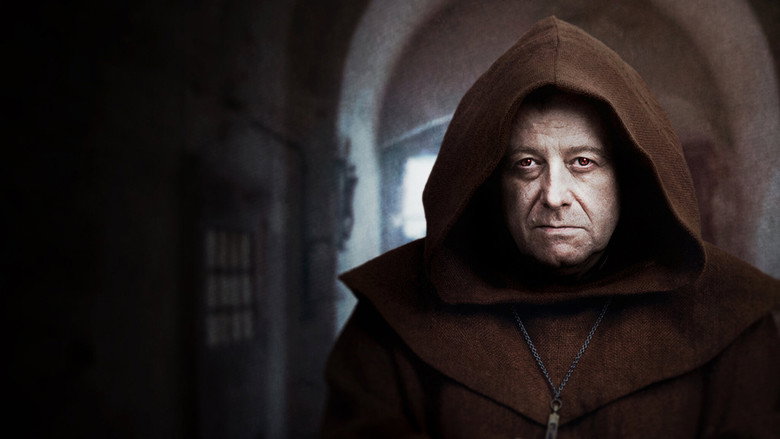
The film’s most disturbing sequence comes late, when Marek finally pieces together what’s happening in the monastery. The patients aren’t being exorcised—they’re being transformed. The rituals aren’t prayers; they’re procedures.
And the monks aren’t holy men; they’re technicians. The reveal is handled with a chilling matter-of-factness, as if this is just another day at the office. Kowalski doesn’t cut away.
He lets the camera linger on the grotesque, the clinical, the inevitable. It’s the kind of scene that makes you want to look away, but you can’t, because the film has spent the last hour training you to watch.
Hellhole isn’t for everyone. Its pacing is glacial, its horror more atmospheric than visceral. There are no jump scares, no last-minute rescues, no cathartic victories.
What it offers instead is something rarer: a horror film that feels like a documentary of the damned. The ending—no spoilers—is bleak in a way that lingers, not because it’s shocking, but because it feels true. It’s the kind of film that makes you question whether you’d have the strength to resist, or if you’d just become another part of the machine.
I keep thinking about that shot of the monastery’s exterior, the camera pulling back to reveal its isolation, its self-contained horror. It’s a place with no exit, no appeal, no mercy. And the worst part? By the time you realize that, it’s already too late.
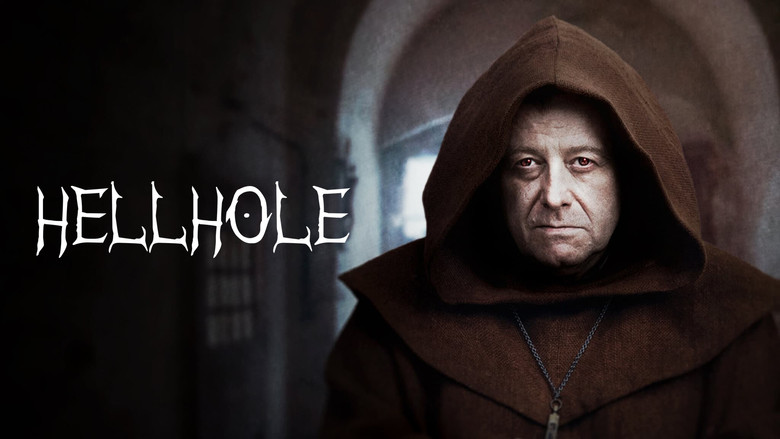
Maybe that’s why Hellhole has stuck with me. It’s not just a story about possession—it’s about the ways institutions swallow people whole, about the quiet complicity of those who keep the machine running. And in a world where so many systems feel designed to break us, that’s a horror that hits a little too close to home.
"A grim and unsettling horror with strong atmosphere but frustrating pacing and underdeveloped characters."
The oppressive setting and eerie tone create a genuinely uncomfortable experience, and some appreciate its bold approach to horror. Slow pacing and thin characters leave many feeling detached, and the ending divides opinion: impactful for some, abrupt or unsatisfying for others.
Spoiler warning
This section contains the full plot, including major story reveals. Overview above stays spoiler-free.
Bartosz M. Kowalski started cameras in the last week of April 2022. Film New Europe said the wrap was the end of June, with an autumn Netflix date already on the books. Hellhole, Polish title Ostatnia wieczerza, arrived globally on 26 October 2022. That is roughly four months from first shot to the Halloween slate. TMDB lists an R rating, 1 hour 30 minutes, and the same U.S. Date. Netflix's logline, quoted by Dread Central, places the monastery in Lower Silesia. IMDb's location page points at Lubiaz. Akson Studio produced. Jan Kwiecinski is the producer of record. Piotr Zurawski is Marek, latestnetflix.com maintains, a militiaman posing as a priest. Olaf Lubaszenko is Prior Andrzej. Sebastian Stankiewicz is brother Piotr.,,,
Kowalski told FNE the quiet part after Nobody Sleeps in the Woods Tonight and its sequel traveled for the same shop. "Over the last fifty years in Poland, there have been only a few more or less successful horror trials. Today, this genre is practically non-existent." He wrote Hellhole with Mirella Zaradkiewicz. Those Woods films were slasher comedies. This one is the religious turn. Heaven of Horror flagged the English title as "much more accurate than you could possibly imagine" once the supper is on the table. The Polish name means Last Supper. The international one tells you where the cop ends up.,
Decider's Johnny Loftus caught Lubaszenko measuring menace, then disappointment. "I was supposed to be the Devil's disciple, and fuck all happened." Another passage the review prints is the theology the monks sell Marek. "God and the Devil sit side by side. They have an understanding. Always have. Since the beginning. But the Devil is not evil. People are." Loftus also notes faked exorcisms, a camcorder, and a cop who hid lock picks in a rosary. The 1957 prologue has a priest racing to kill a marked infant. The story then jumps 30 years. Kowalski's script uses the 1987 militia's caution after the murder of priest Jerzy Popieluszko as cover for why the undercover job is off the books. That Popieluszko beat is in the plot summary on Wikipedia, not a new leak.,
Dread Central found Hellhole at sixth on Netflix's global non-English chart in early November 2022. A Reddit user scored it 9/10. Heaven of Horror told viewers to keep the closed captions, if only for "Unexpected crunching" and "Wet squelching" over the bowls. Nobody printed a salary. The industry note is the sprint. The Woods movies proved Polish horror could travel. This one bet a Lower Silesian monastery, a stolen priest's identity, and a title swap from Last Supper to Hellhole would do the same before Halloween.,,
Entertainment rumors and trivia aggregated from public reporting. Treat speculation as unverified unless a cited source confirms it.
More titles in the same genres and with the same cast.