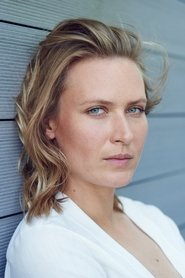
Sonia Mietielica
Ania

She graduated from a prestigious high school in Warsaw and entered medicine in London. He works as a kitesurfing instructor at the seaside, thanks to which he combines earning money and passion. They will meet in Hel. The unusual charm of the boy makes the girl exceed her limits and enter a completely unknown world of kitesurfing, music and fun. The feeling that arises between them does not please her family or his friends. Is Ania and Michal's relationship strong enough to overcome adversities and become more than just a holiday love?
I’ve always thought of kitesurfing as the closest thing to flying without leaving the earth—an act of surrender to something bigger than yourself. The wind doesn’t care about your plans, your fears, or your carefully constructed identity. It either lifts you or knocks you down. Into the Wind, Kristoffer Rus’s 2022 Polish drama, understands this duality intimately.
The film isn’t just about kitesurfing; it’s a story where the wind itself becomes a character, a force that tests, tempts, and ultimately reveals the people caught in its path.
The premise is deceptively simple: Ania (Sonia Mietielica), a Warsaw-born medical student with a future mapped out in London, meets Michał (Jakub Sasak), a kitesurfing instructor in the coastal town of Hel. She’s all sharp edges and ambition; he’s sun-bleached ease, a man who has turned his passion into a way of life. Their romance unfolds against the backdrop of the Baltic Sea, where the wind is both adversary and ally, and where the rules of the land don’t apply.
The film’s tagline might as well be: What happens when the person you’re supposed to become collides with the person you could be?
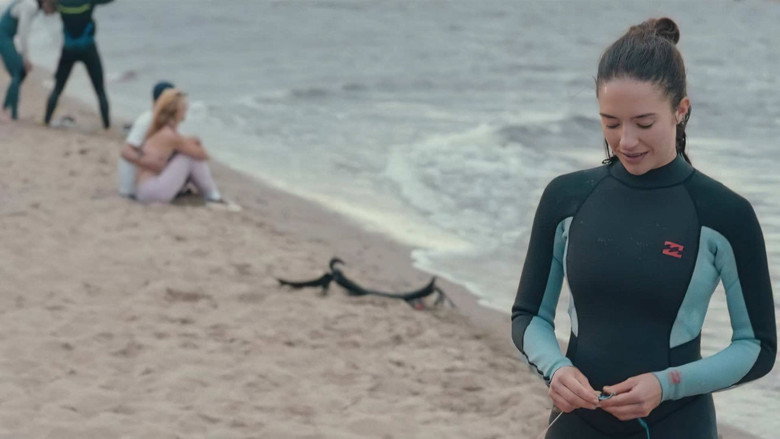
Rus doesn’t treat this as a typical coming-of-age story, though it has the trappings of one. There’s no grand epiphany, no third-act betrayal that forces Ania to choose between duty and desire. Instead, the film lingers in the in-between spaces—the quiet moments when she’s learning to read the wind, when Michał’s hands guide hers on the kite bar, when the two of them lie on the beach, sun-drunk and silent.
The camera often frames them from a distance, small against the immensity of the sea and sky, as if to remind us that their story is just one thread in a much larger tapestry. This isn’t a film about love conquering all; it’s about love as a kind of weather, something you can prepare for but never fully control.
The sport of kitesurfing, with its mix of precision and surrender, becomes a perfect metaphor for the film’s emotional core. Ania is used to being in control—her life is a series of calculated steps toward a stable future. But the wind doesn’t obey calculations.
Neither does Michał, who lives by instinct and impulse, his days dictated by the tides and the forecast. Their relationship forces Ania to confront the parts of herself that don’t fit into the neat boxes of her ambition. In one of the film’s most striking scenes, she attempts to kitesurf alone for the first time.
The camera lingers on her face as she struggles to harness the wind, her frustration giving way to something like awe. It’s not a triumphant moment—she doesn’t suddenly master the sport—but it’s a real one. She’s learning what it means to be at the mercy of something greater than herself, and that’s enough.
The performances anchor the film’s meditative tone. Mietielica plays Ania with a quiet intensity, her body language shifting from rigid to fluid as the story progresses. There’s a scene where she dances at a beach party, her movements awkward at first, then loosening as the music takes over.
It’s a small moment, but it’s one of the few times we see her truly let go. Sasak’s Michał, by contrast, is all loose limbs and easy smiles, but there’s a melancholy beneath the surface. He’s not a carefree beach bum; he’s a man who has chosen a life that most people would call unstable, and he’s acutely aware of the judgment that comes with it.
Their chemistry feels lived-in, the kind of comfort that comes from knowing someone’s flaws and loving them anyway.
What’s striking about Into the Wind is how little it relies on traditional dramatic conflict. There are no villains, no grand betrayals—just the quiet tension of two people trying to reconcile their differences. Ania’s family disapproves of Michał, not out of malice, but because they can’t understand a life that doesn’t follow a predictable path.
Michał’s friends, meanwhile, see Ania as an outsider, a tourist who will eventually leave. The film doesn’t demonize either side; it simply observes the friction that arises when worlds collide. The real conflict isn’t between the characters, but within Ania herself, as she grapples with the fear of choosing a life that doesn’t come with a safety net.

The film’s visual language is understated but effective. The Baltic Sea is a constant presence, its mood shifting with the story—sometimes serene, sometimes stormy, always unpredictable. The cinematography favors wide shots that emphasize the vastness of the landscape, but it also knows when to pull in close, capturing the small details that reveal character: the way Ania’s fingers tap nervously against her thigh when she’s anxious, the way Michał’s eyes crinkle when he laughs.
The score is minimal, letting the sound of the wind and the waves carry much of the emotional weight.
If Into the Wind has a flaw, it’s that it occasionally leans too heavily on its atmosphere at the expense of narrative momentum. There are moments when the film feels like it’s treading water, content to linger in a mood rather than push the story forward. But this is also part of its charm.
It’s a film that asks you to slow down, to pay attention to the small, quiet moments that often get lost in the rush of more plot-driven stories. It’s not a film that will leave you breathless with its twists or dazzled by its spectacle. Instead, it lingers in the mind like the memory of a summer romance—something fleeting but indelible, a reminder of what it feels like to be alive in a world that’s far bigger than you.
The film’s reception has been muted, with a modest 5.4/10 on TMDB and a 4.6/10 on SensCritique. It’s easy to see why it hasn’t broken through in a crowded landscape of more overtly dramatic or visually flashy films. Into the Wind doesn’t shout; it whispers. It’s the kind of film that might not grab you by the collar, but if you let it, it will stay with you long after the credits roll.
It’s a film about the beauty of letting go, about the courage it takes to step into the wind and trust that it will carry you somewhere worth going.
I keep thinking about that scene where Ania tries kitesurfing for the first time. She falls, again and again, but each time she gets back up. It’s not about mastering the wind; it’s about learning to dance with it.
That’s the lesson of Into the Wind—not that love conquers all, but that sometimes, the greatest freedom comes from surrendering to the things you can’t control.
"A visually poetic romance with strong performances that struggles to stand out from familiar tropes."
The atmospheric direction and the chemistry between the leads give the romantic drama depth. The story is predictable, though, and some side characters lack development, leaving the film fairly conventional despite its stylish execution.
Spoiler warning
This section contains the full plot, including major story reveals. Overview above stays spoiler-free.
Into the Wind (2022), directed by Kristoffer Rus, arrived as a sleeper hit on streaming platforms, blending romance, drama, and sports into a story that resonated with audiences. latestnetflix.com's view is that while the film’s on-screen chemistry between leads Sonia Mietielica and Jakub Sasak stole the spotlight, behind-the-scenes details reveal a production shaped by Rus’s signature style and the growing influence of international streaming markets.
Kristoffer Rus, a Polish-Swedish filmmaker, has carved a niche with family-friendly and emotionally driven projects that thrive on platforms like Netflix. Into the Wind fits neatly into his filmography, which includes other streaming successes like Too Old for Fairytales. Rus’s approach often leans into accessible, character-driven narratives, and Into the Wind appears to follow that blueprint—though specifics about his creative process for this film remain scarce in the available evidence.
What’s clear is that Rus’s work has found a global audience, thanks in part to the reach of streaming services. Into the Wind was released under the original Polish title Pod wiatr, and its international appeal is evident in its availability across multiple regions. The film’s 107-minute runtime and genre blend (comedy, drama, romance, and sports) suggest a deliberate effort to balance emotional depth with broad appeal.
The heart of Into the Wind lies in the relationship between Ania (Sonia Mietielica) and Michal (Jakub Sasak), a pairing that sparked fan interest long before the film’s release. Clips of their kiss scenes and a tender cover of The Night We Met have racked up views online, offering a glimpse into the film’s romantic core. These moments—shared widely on platforms like YouTube—hint at a deliberate strategy to build anticipation through social media, a tactic increasingly common for streaming originals.
While the evidence doesn’t confirm whether the actors’ off-screen dynamic mirrored their characters’, the chemistry in these snippets feels authentic. Mietielica and Sasak’s performances seem to anchor the film, with supporting roles from Waleria Gorobets, Sebastian Dela, and a cast of Polish veterans like Marcin Perchuć and Sonia Bohosiewicz adding depth.
Critically, Into the Wind has drawn a range of reactions. On SensCritique, the film holds a 4.6/10 rating based on 45 votes, a modest but not damning score. Rotten Tomatoes doesn’t list a critic score for the movie, leaving audience reception as the primary barometer of its success. The lack of widespread critical coverage suggests the film may have flown under the radar for some, but its streaming availability likely helped it find a niche audience.
One unverified detail worth noting: the film’s French title, La Force du vent, hints at a broader European release strategy, though specifics about its performance in non-Polish markets remain unclear.
Into the Wind reflects a growing trend in European cinema: mid-budget films designed for streaming platforms rather than theatrical releases. Rus’s track record with Netflix projects like Too Old for Fairytales suggests Into the Wind was likely greenlit with a similar model in mind—prioritizing accessibility over box-office numbers. This shift allows filmmakers to take creative risks without the pressure of theatrical success, though it also means films like this one can slip through the cracks if they don’t generate immediate buzz.
For all its charm, Into the Wind leaves some questions unanswered. There’s no evidence about the film’s budget, shooting locations, or behind-the-scenes challenges (e.g., whether the sports elements required extensive training for the cast). Rumors about a potential sequel or spin-off are also nonexistent in the available sources. Without deeper industry reporting, the film’s production story remains a tantalizing but incomplete puzzle.
Entertainment rumors and trivia aggregated from public reporting. Treat speculation as unverified unless a cited source confirms it.
More titles in the same genres and with the same cast.